Decoding Mood Necklace Color Meanings: Buying Guide
Discover the science behind mood necklace color meanings. Our buying guide covers thermochromic materials, metal grades, and care tips.

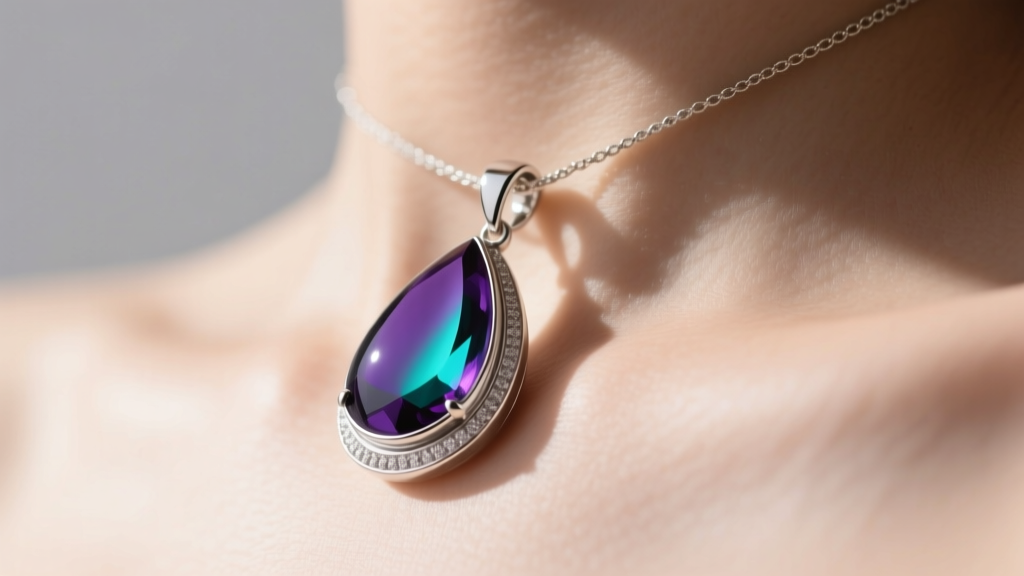
Once dismissed as a fleeting 1970s novelty, mood jewelry has experienced a massive resurgence in the 2020s, evolving from cheap carnival trinkets into sophisticated, science-backed accessories. At the heart of this revival is a fascination with the intersection of physiology and metallurgy. If you have been searching for a definitive guide to mood necklace color meanings, you are not just looking for a list of emotions—you are looking at a real-time, thermochromic map of your own nervous system.
In this comprehensive buying guide, we decode the actual science behind the color shifts, break down the material grades you should demand in 2026, and provide a structured framework for choosing a pendant that is as durable as it is expressive.
The Science: How Thermochromic Liquid Crystals Work
To understand mood necklace color meanings, you must first understand thermochromism. Modern mood pendants do not contain magic; they contain micro-encapsulated cholesteric liquid crystals (TLCs). These molecules are highly sensitive to thermal fluctuations.
When your skin temperature changes, the molecular structure of the liquid crystals physically twists. This twist alters the distance between the molecular layers, which in turn changes the wavelength of light they reflect. A cooler temperature causes the crystals to twist tightly, absorbing longer wavelengths and reflecting shorter ones (like deep blues or violets). Warmer temperatures relax the molecular structure, reflecting warmer hues like amber or green.
The Physiological Connection
How does this relate to your mood? It comes down to your sympathetic nervous system and capillary action. When you are stressed, anxious, or frightened, your body releases norepinephrine, causing blood vessels in your extremities (including your chest and neck) to constrict. This drops your surface skin temperature. Conversely, when you are relaxed, happy, or excited, your blood vessels dilate, bringing warm blood closer to the skin's surface. The pendant simply reads this thermal shift.
The Complete Mood Necklace Color Meanings Chart
While vintage charts from the 1970s were largely arbitrary, modern TLC calibration allows for much more accurate thermal mapping. Below is the industry-standard color chart based on surface skin temperature ranges.
| Color Display | Temperature Range | Traditional Mood Meaning | Physiological Reality |
|---|---|---|---|
| Black / Dark Brown | Below 72°F (22°C) | Stressed, Anxious, Cold | Extreme vasoconstriction; poor circulation or cold environment. |
| Amber / Gray-Green | 72°F - 75°F (22°C - 24°C) | Nervous, Restless, Mixed | Slight thermal fluctuation; baseline awakening state. |
| Emerald Green | 76°F - 80°F (24°C - 27°C) | Calm, Relaxed, Balanced | Normal resting capillary dilation; ideal homeostasis. |
| Teal / Cyan | 81°F - 84°F (27°C - 29°C) | Happy, Flirty, Engaged | Increased blood flow due to mild excitement or physical warmth. |
| Deep Violet / Purple | 85°F+ (29°C+) | Passionate, Ecstatic, Hot | Maximum vasodilation; high emotional arousal or physical overheating. |
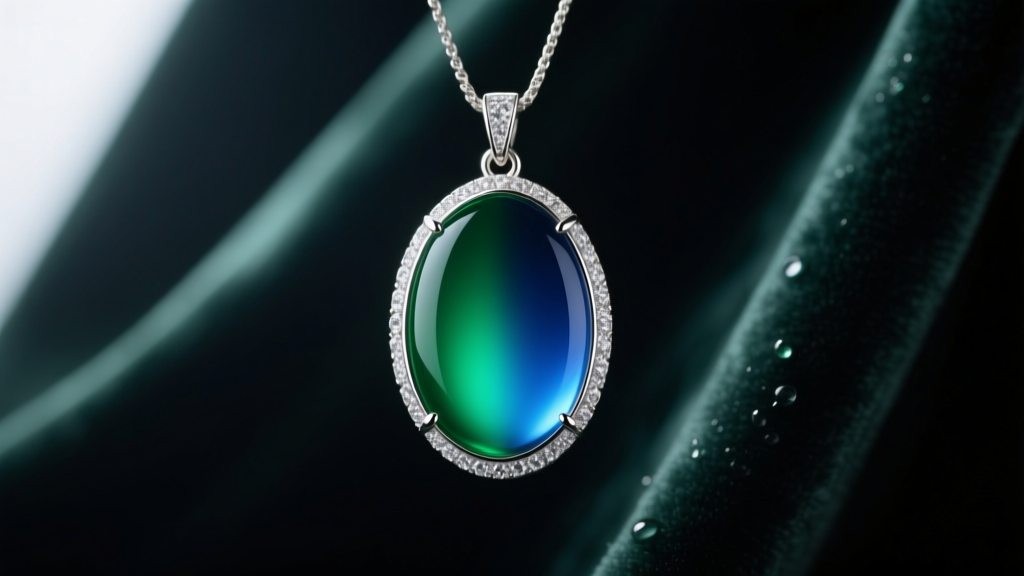
Buying Guide: Materials, Casings, and Hardware
Knowing the mood necklace color meanings is only half the battle. The true differentiator between a $5 gas station trinket and a $75 artisan pendant lies in the materials. Because the liquid crystals require precise thermal conductivity to function accurately, the metal bezel and chain you choose directly impact the jewelry's performance.
Base Metals vs. Premium Alloys
- Zinc Alloy & Brass (The Budget Tier): Often found in pendants under $15. These base metals are poor thermal conductors and frequently contain copper or nickel. Not only can they cause contact dermatitis or leave a green stain on your chest, but their slow heat-transfer rate will cause a 3-to-5 second delay in color changes.
- 316L Surgical Stainless Steel (The Mid-Tier): Priced between $25 and $45, 316L steel is hypoallergenic, highly resistant to tarnish, and offers excellent thermal conductivity. This is the sweet spot for everyday wearers who want accurate color readings without the premium price tag.
- 925 Sterling Silver & 14k Gold-Filled (The Premium Tier): Ranging from $60 to $120+, solid sterling silver provides the absolute best thermal transfer. Silver is naturally antimicrobial and reacts instantly to micro-shifts in your skin temperature, ensuring the pendant's colors are a real-time reflection of your physiological state.
The Crystal Encasement: Glass vs. Polymer
The liquid crystals must be sealed in an airtight cabochon to prevent degradation. Borosilicate glass or natural clear quartz cabochons are the gold standard. They offer flawless optical clarity, allowing the colors to pop vividly, and are highly resistant to scratching. Polymer resins are lighter and shatter-resistant, making them ideal for children's jewelry, but they tend to micro-scratch over time, which clouds the color display and degrades with prolonged UV exposure.
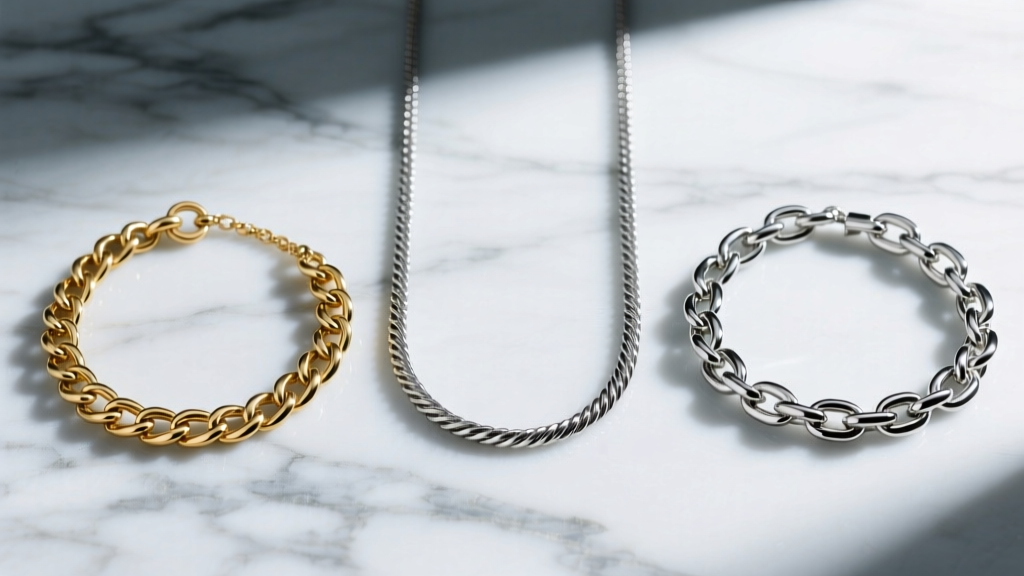
Pricing Tiers: What to Expect in 2026
When shopping for a thermochromic pendant, use this pricing framework to set your expectations regarding longevity and material safety.
'The evolution of micro-encapsulation means today's liquid crystals are far more stable than their 1970s predecessors, but they still require high-quality, non-reactive metal bezels to prevent chemical leaching that destroys the color matrix.' — Materials Science & Jewelry Fabrication Journal
- Under $20 (Novelty): Expect zinc alloy bases, polymer seals, and generic cable chains. The TLCs are often uncalibrated, meaning the pendant might skip 'green' entirely and jump straight from brown to blue. Fine for a nostalgic gift, but not for daily wear.
- $25 - $60 (Artisan / Mid-Range): You will find 316L stainless steel or silver-plated brass, glass cabochons, and calibrated TLCs that accurately reflect the full color spectrum. Chains are usually sturdy rope or box chains that resist tangling.
- $75+ (Fine Designer): Solid 925 sterling silver or 14k gold-filled settings, often featuring hand-cut quartz cabochons. The TLCs are precision-calibrated to human resting skin temperature (around 78°F), ensuring the 'calm' green baseline is perfectly centered.
Care and Maintenance: Avoiding the 'Black Screen of Death'
The most common complaint among mood jewelry owners is the pendant turning permanently black. In the industry, this is known as the 'Black Screen of Death,' and it is almost always caused by water ingress or UV degradation.
Three Golden Rules for Thermochromic Care
- Never Swim or Shower With It: If water breaches the microscopic seal between the glass cabochon and the metal bezel, it will mix with the liquid crystals, destroying their molecular structure. Once a mood stone turns black from water damage, it cannot be reversed.
- Limit Prolonged UV Exposure: While modern TLCs are more UV-resistant than vintage formulas, leaving your necklace on a sunny dashboard for weeks will break down the chemical bonds, causing the colors to fade to a permanent, muddy yellow.
- Clean With Microfiber Only: Never use ultrasonic jewelry cleaners, silver dip, or harsh chemical polishes. The vibrations and chemicals can compromise the resin seal holding the glass cabochon in place. Simply wipe the metal with a treated silver cloth, and buff the glass with a dry microfiber towel.
Final Verdict: Choosing Your Pendant
Understanding the true mood necklace color meanings transforms these pieces from simple novelties into fascinating, wearable bio-feedback tools. When making your purchase, prioritize thermal conductivity by opting for 316L stainless steel or 925 sterling silver, and always insist on a glass or quartz cabochon seal. By respecting the science of thermochromism and following proper care protocols, your mood necklace will remain a vibrant, accurate reflection of your inner state for years to come.


