Mookie Betts Necklace Guide: Pearl & Diamond Materials (2026)
Explore the materials behind the iconic Mookie Betts necklace. Compare Akoya vs. freshwater pearls, stringing options, and diamond pendants.


The Anatomy of the Mookie Betts Necklace Trend
When Los Angeles Dodgers superstar Mookie Betts stepped into the dugout wearing a strand of white pearls, it catalyzed a massive shift in men's fine jewelry. What began as a superstition and a personal style statement has evolved into a defining menswear accessory for 2026. However, replicating the exact aesthetic of the iconic Mookie Betts necklace requires more than just buying any strand of white beads. It demands a precise understanding of gemological materials, organic pearl grading, and structural stringing mechanics.
The classic "Betts" look relies on a specific triad of materials: high-luster white pearls (typically Akoya), a yellow gold pendant (often a diamond cross), and a flexible, durable stringing medium capable of withstanding the rigors of daily wear. In this comprehensive material guide, we break down the exact specifications, grading metrics, and structural properties required to build or authenticate a strand that meets this premium standard.
Pearl Material Comparison: Akoya vs. Freshwater vs. Tahitian
The core of the Mookie Betts necklace is the pearl strand itself. While Betts has been photographed wearing a few variations, the quintessential look features perfectly round, white pearls with a sharp, mirror-like luster. To achieve this, jewelers turn to specific saltwater and freshwater cultivars.
Akoya Pearls: The Gold Standard
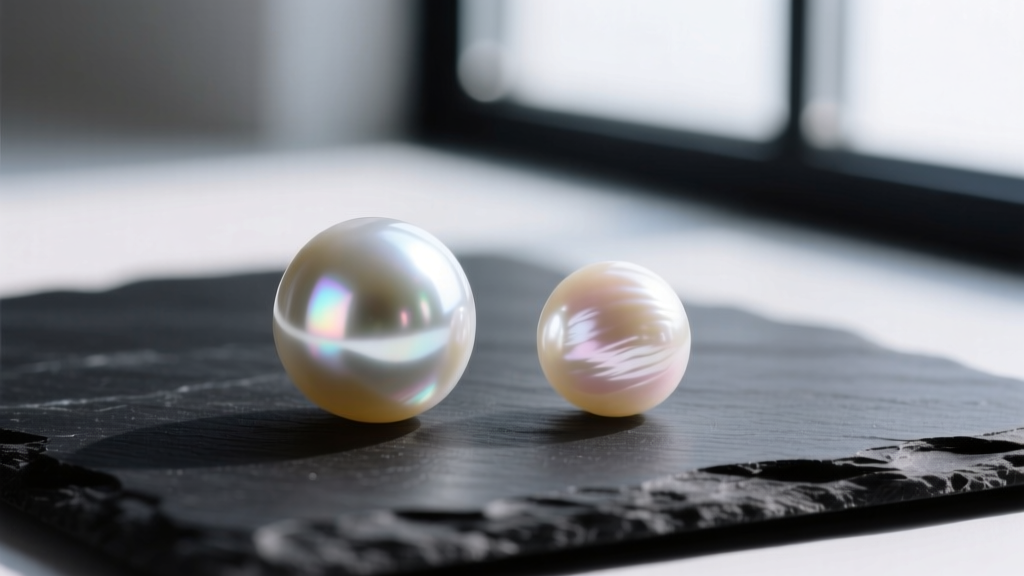
Akoya pearls, primarily cultivated in Japan and Vietnam, are the benchmark for the classic white pearl strand. According to the Gemological Institute of America (GIA), Akoya pearls are prized for their exceptional luster, which is a direct result of their unique nacre crystallization process. For a men's strand that mimics the Betts aesthetic, jewelers typically select Akoya pearls in the 6.5mm to 8.0mm range. This size offers substantial presence on the male neckline without appearing overly cumbersome. A high-quality Akoya strand will feature a nacre thickness of at least 0.4mm, though premium "Hanadama" grades boast 0.6mm or thicker, ensuring longevity and deep optical luster.
Freshwater Pearls: The Accessible Alternative
Historically, freshwater pearls were rice-shaped and lacked the sharp luster of saltwater varieties. However, modern cultivation techniques—specifically the use of round shell bead nuclei—have produced "Edison" and high-grade round freshwater pearls that closely rival Akoya. While they offer a softer, more satiny luster and come in larger sizes (8.0mm to 11.0mm) at a fraction of the cost, they lack the razor-sharp reflection that defines the traditional Mookie Betts necklace look.
Tahitian Pearls: The Edgy Variant
For those seeking a darker, more masculine interpretation of the trend, Tahitian black pearls offer a striking alternative. Ranging from 8.0mm to 12.0mm, these pearls feature natural overtones of peacock green, aubergine, and silver. While not the exact replica of Betts' original strand, they utilize the same structural layering principles with a dramatically different material palette.
Material Specification Matrix
| Pearl Type | Typical Size Range | Luster Profile | Nacre Thickness | 2026 Market Price (18" Strand) |
|---|---|---|---|---|
| Akoya (AAA Grade) | 6.5mm - 8.0mm | Mirror-Sharp, High Contrast | 0.4mm - 0.6mm | $1,200 - $3,500 |
| Round Freshwater | 7.0mm - 9.0mm | Soft, Satiny, Diffused | Solid Nacre | $300 - $800 |
| Tahitian (Dark) | 8.0mm - 10.0mm | Metallic, Peacock Overtones | 0.8mm - 1.2mm | $1,500 - $4,000 |
Stringing Materials: Silk Thread vs. Beading Wire
The structural integrity of a pearl necklace is just as critical as the gems themselves. Men's jewelry is subjected to higher tensile stress, sweat exposure, and accidental tugging than traditional women's fine jewelry. Therefore, the internal stringing material dictates the lifespan of the piece.
Traditional Silk Thread (Size E or F)
Authentic, high-end Akoya strands are almost exclusively knotted on pure silk thread. Size E (0.325mm) or Size F (0.350mm) silk is standard for 7mm pearls. The primary advantage of silk is its drape; it allows the necklace to lay flat and curve naturally against the collarbone. Furthermore, knotting between every single pearl prevents catastrophic loss if the strand snaps and stops the pearls from rubbing against one another, which would degrade the nacre. The downside? Silk degrades when exposed to the acidic pH of human sweat and must be professionally restrung every 12 to 18 months if worn daily.
Synthetic Beading Wire (Accu-Flex)
For athletes or individuals who refuse to take their Mookie Betts necklace off during physical activity, jewelers may opt for multi-strand stainless steel beading wire coated in nylon (such as 0.018" Accu-Flex). While this material is virtually unbreakable and impervious to sweat, it lacks the supple drape of silk. A wire-strung pearl strand will feel stiffer and may kink if stored improperly. Additionally, wire-strung pearls are typically not knotted, meaning a break at the clasp could result in the loss of the entire strand.
The Pendant Factor: Diamond Grades and Metal Alloys
The defining accent of the Mookie Betts necklace is the pendant—most frequently a small diamond cross suspended from a specialized bail. Sourcing the right pendant requires understanding metal alloys and diamond grading at a micro-scale.
Bail Sizing and Mechanics
The bail (the loop that connects the pendant to the chain) must be carefully calibrated. A standard Akoya pearl strand features a clasp and a small jump ring. If the pearls are 7.5mm, the pendant bail must have an inner diameter of at least 4.0mm to slide over the clasp and rest securely on the silk without causing friction against the adjacent pearl nacre. Hidden bails or tapered tube bails in 14k or 18k yellow gold are preferred for their seamless integration.
Diamond Clarity and Color in Micro-Pendants
Because the cross pendant is relatively small (usually ranging from 0.15 to 0.35 carats total weight), the strictness of diamond grading can be optimized for budget without sacrificing visual impact. According to GIA clarity standards, inclusions in SI1 or SI2 diamonds are often invisible to the naked eye in stones under 2.0mm (melee diamonds). Therefore, paying for VVS clarity is a waste of capital for a pearl pendant. A G-H color grade paired with SI1 clarity set in 14k yellow gold provides the optimal contrast against the white nacre of the Akoya pearls, creating the warm, luxurious aesthetic that defines the trend.
Pro-Tip for 2026: If you are commissioning a custom Mookie Betts necklace, request that the jeweler use a "soldered jump ring" on the pendant bail. This prevents the pendant from accidentally slipping off the strand when the clasp is opened.
Sourcing and Authenticating in 2026
As the demand for men's pearl jewelry has skyrocketed, the market has been flooded with imitation materials. Shell beads coated in pearlescent lacquer (often called Majorica pearls) or glass beads with chemical coatings are frequently passed off as cultured Akoya.
To authenticate the materials of a Mookie Betts necklace, utilize the "tooth test." Gently rub the pearl against the biting edge of your front teeth. Genuine cultured pearls, composed of microscopic aragonite crystals, will feel distinctly gritty or sandy. Imitation glass or plastic beads will feel perfectly smooth. Furthermore, examine the drill holes under a jeweler's loupe; genuine pearls will show a sharp transition from the nacre to the conchiolin core, whereas coated imitations often show peeling or flaking around the drill site.
Care and Maintenance for High-Wear Pearl Strands
Pearls are organic gemstones composed primarily of calcium carbonate, making them highly susceptible to chemical erosion. They rank a mere 2.5 to 3.0 on the Mohs hardness scale, meaning they can be easily scratched by metal chains or diamond pendants if stored together.
The most significant threat to a pearl strand worn by an active man is sweat. Human sweat is mildly acidic (pH 4.5 to 7.0) and will slowly dissolve the calcium carbonate nacre, leading to a permanent loss of luster and structural weakening of the drill holes. The GIA recommends wiping pearls with a clean, damp microfiber cloth immediately after removal. Never use ultrasonic cleaners, steamers, or ammonia-based jewelry dips, as these will strip the nacre and destroy the silk stringing thread. Always store the strand flat in a soft chamois pouch, separate from harder gemstones, to preserve the pristine materials that make the Mookie Betts necklace a modern menswear icon.


