Styling and Authenticating a Vintage White Glass Bead Necklace
Discover how to authenticate, restring, and style a vintage white glass bead necklace. Learn to spot milk glass, Murano, and French poured beads.

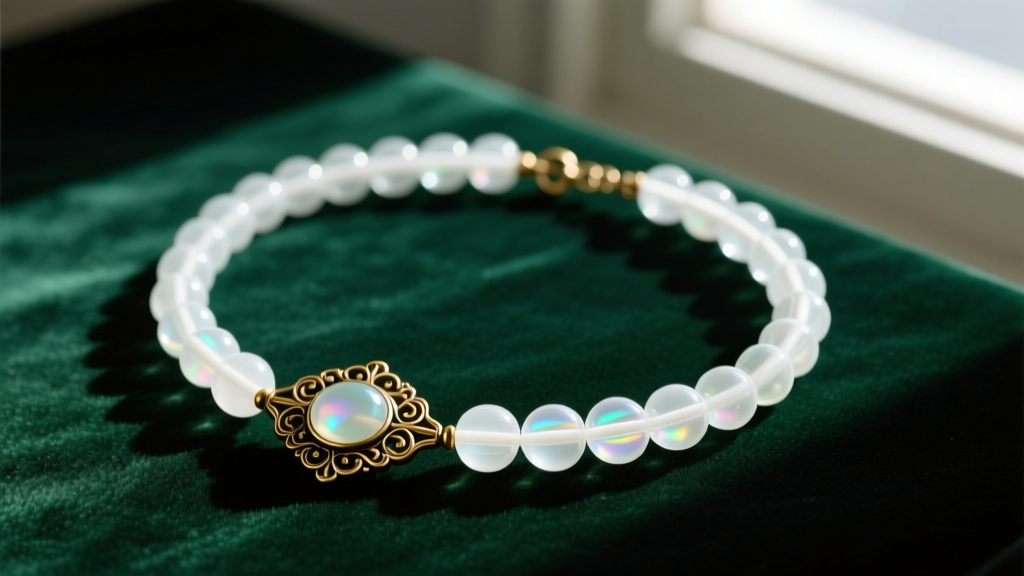
The vintage white glass bead necklace is a cornerstone of mid-century and antique jewelry collections. At first glance, a strand of white beads might seem like a simple, uniform accessory. However, to the trained eye, 'white glass' is a massive umbrella term encompassing everything from mass-produced American milk glass to exquisite, hand-poured French opaline and Venetian conterie. For beginners stepping into the world of vintage jewelry, understanding the nuances of these materials is the difference between scoring a $40 estate sale find and investing in a $500 museum-quality artifact.
This comprehensive guide will walk you through the material science, authentication frameworks, and structural maintenance required to properly collect, care for, and style a vintage white glass bead necklace.
The Material Matrix: Decoding 'White Glass'
Not all white glass is created equal. The opacity, translucency, and weight of the beads are dictated by the chemical compounds added to the silica base during the melting process. According to the Corning Museum of Glass, the historical methods of glassmaking heavily influence how these beads interact with light today.
Milk Glass (Opal Glass)
True milk glass is entirely opaque and possesses a dense, milky whiteness. Historically, glassmakers achieved this effect by adding tin oxide, bone ash, or fluorite to the glass batch. Vintage American milk glass beads (popular from the 1930s through the 1960s) are often heavier and feature a stark, porcelain-like finish. When held up to a strong light source, the edges of thinner milk glass beads may exhibit a faint, fiery orange-red glow, a phenomenon known as 'opaline edge effect' caused by the scattering of light through the opacifiers.
Opaline and Pâte de Verre (Poured Glass)
French poured glass, or pâte de verre, represents the high end of the vintage white glass bead market. Artisans like Gabriel Argy-Rousseau and Louis Brossard created beads by packing crushed glass and metallic oxides into molds. The resulting white beads are often translucent, featuring internal striations, tiny trapped air bubbles, and sometimes hidden metallic leafing that catches the light from within. These beads are significantly more valuable and fragile than their mass-produced counterparts.
Venetian and Murano Glass
White glass beads originating from Murano, Italy, often feature intricate surface treatments. You will frequently find white Murano beads adorned with hand-painted floral motifs, gold leaf encasement (aventurine), or layered with clear glass to create a magnifying 'cabochon' effect over a white core.
Authentication Framework: Spotting True Vintage Beads
The market is flooded with modern resin and plastic replicas designed to mimic the look of vintage glass. Use this three-step sensory framework to authenticate a vintage white glass bead necklace before purchasing.
- The Temperature Test: Glass is a thermal conductor, while plastic and resin are insulators. Hold the bead against your lower lip or the inside of your wrist. True vintage glass will feel distinctly cool to the touch and will take several seconds to warm up to your body temperature. Plastic will feel room-temperature or warm almost immediately.
- The Acoustic Test: Gently tap two beads together. Vintage glass produces a sharp, high-pitched 'clink' with a long resonance. Plastic or acrylic beads produce a dull, flat 'thud' with almost no resonance.
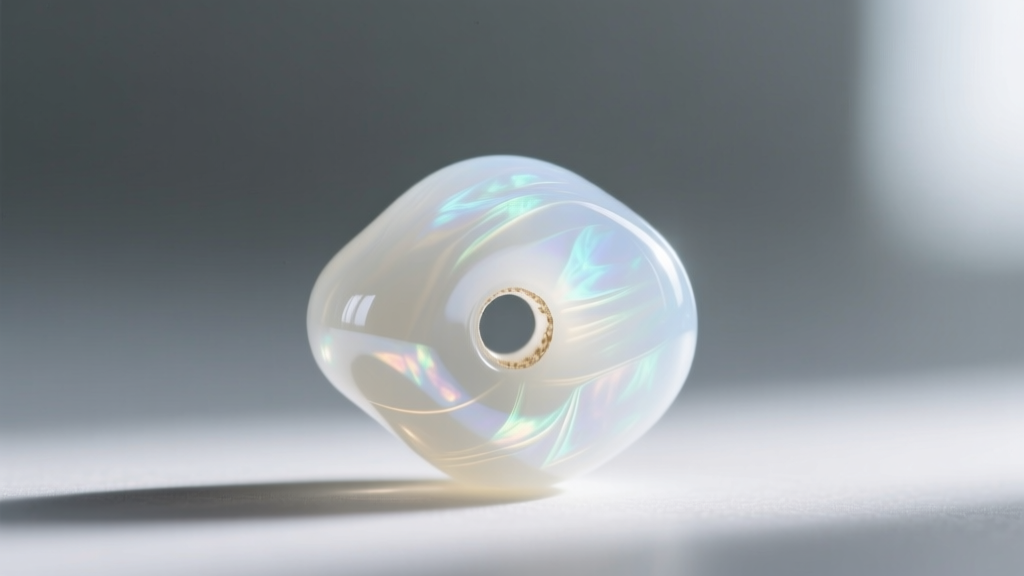
- The Drill Hole Inspection: Use a jeweler's loupe (10x magnification) to examine the drill holes. Modern machine-made beads have perfectly smooth, laser-drilled holes. Vintage glass beads were often cast with a wire core or hand-drilled, resulting in micro-chipping, asymmetric hole widths, or a slight 'frosting' around the entry and exit points of the bead.
Market Value & Origin Guide
Pricing a vintage white glass bead necklace requires identifying its origin and era. Below is a baseline market matrix for common vintage white glass styles in today's secondary market.
| Origin / Style | Typical Era | Average Price Range | Key Identifiers |
|---|---|---|---|
| French Poured (Brossard/Rousseau) | 1920s - 1950s | $150 - $600+ | Internal metallic leaf, heavy weight, signed barrel clasps |
| Venetian / Murano Conterie | 1950s - 1980s | $80 - $250 | Gold leaf inclusions, clear glass casing, intricate layering |
| American Depression-Era Milk Glass | 1930s - 1940s | $60 - $150 | Visible mold seams, heavy opacity, brass box clasps |
| Mid-Century Japanese Toyo Glass | 1960s - 1970s | $25 - $60 | Uniform size, lightweight, imitation pearl-like luster coating |
Structural Maintenance: The Art of Restringing
The most common cause of death for a vintage white glass bead necklace is not dropping it, but internal friction. The drill holes of vintage glass beads are essentially tiny, abrasive saws. Over decades of wear, the natural movement of the necklace causes the sharp internal edges of the glass to slowly saw through traditional cotton, silk, or nylon threads, leading to catastrophic string failure.
Choosing the Right Stringing Material
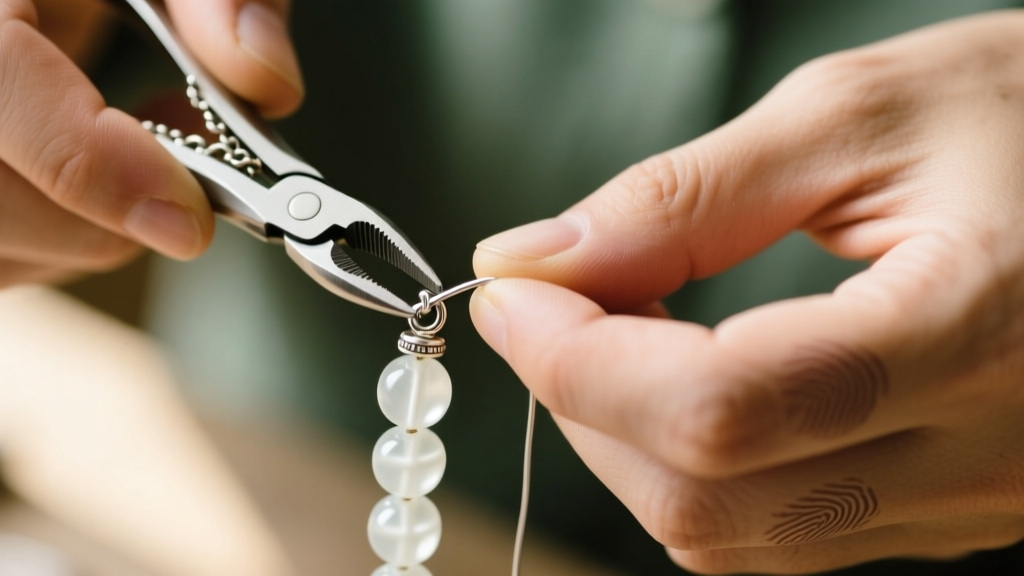
Never restring a heavy vintage glass necklace on silk thread unless you are knotting between every single bead (which alters the vintage drape). Instead, modern jewelers rely on multi-strand stainless steel wire coated in nylon. The industry standard, as recommended by experts at the Soft Flex Company, is a 49-strand, 0.018-inch diameter beading wire. This specific gauge provides the necessary tensile strength to support heavy glass while remaining flexible enough to allow the necklace to drape naturally around the collarbone.
Securing the Clasp
Finish the ends using 2x2mm sterling silver crimp tubes. Avoid base-metal crimp beads, as they can oxidize and stain the porous surface of certain vintage glass types over time. Always use a 'wire guardian' (a horseshoe-shaped metal finding) at the clasp loop to prevent the steel wire from sawing through the metal jump ring of the vintage clasp.
Cleaning Protocols: What to Avoid
Proper cleaning is vital, but modern jewelry cleaning techniques can destroy vintage glass. Never place a vintage white glass bead necklace in an ultrasonic cleaner. The high-frequency vibrations can exploit microscopic stress fractures inherent in antique glassmaking, causing the beads to shatter or develop internal 'crazing' (a network of fine cracks).
Instead, clean your necklace using a damp, lint-free microfiber cloth. If the beads have accumulated decades of skin oils and cosmetic residue, use a drop of pH-neutral dish soap on the cloth, gently wiping each bead individually. Dry immediately with a soft towel to prevent water spots, especially on opaline or poured glass varieties.
Styling Matrices: Necklines and Layering
A vintage white glass bead necklace is incredibly versatile, acting as a neutral anchor that brightens the face. Here is how to style specific lengths and weights:
The 16-Inch Choker Length
Best suited for heavier, opaque milk glass beads. This length sits snugly at the base of the neck and pairs beautifully with deep V-necklines, off-the-shoulder sweaters, or unbuttoned collared silk shirts. The stark white of the glass provides a high-contrast frame for the face without competing with complex garment patterns.
The 24-Inch Opera Length
Translucent opaline or smaller Venetian conterie beads excel at this length. An opera-length white glass necklace can be worn as a single, dramatic strand over a dark turtleneck, or doubled over to create a layered, 12-inch and 24-inch combination. This technique adds immediate textural depth to minimalist, monochromatic outfits.
Final Thoughts on Collecting
Building a collection of vintage white glass bead necklaces is a rewarding pursuit that bridges the gap between historical craftsmanship and modern wearability. By understanding the chemical origins of the glass, employing rigorous authentication tests, and utilizing modern stringing materials to preserve their structural integrity, you ensure that these luminous mid-century and antique treasures will survive for another century of wear.


