Heirloom Care & Quotes About the Pearl Necklace in The Great Gatsby
Explore famous quotes about the pearl necklace in The Great Gatsby while learning expert care, cleaning, and restringing tips for vintage pearls.

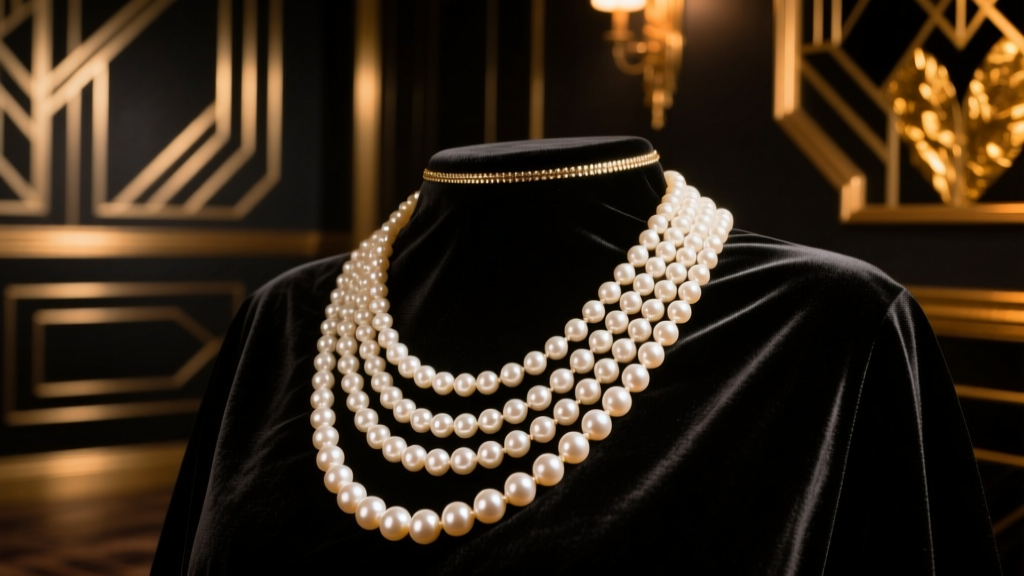
F. Scott Fitzgerald’s 1925 masterpiece, The Great Gatsby, is synonymous with the opulence, tragedy, and glittering excess of the Jazz Age. Among its most potent symbols of wealth and emotional turmoil is a legendary string of pearls. Today, as collectors and vintage jewelry enthusiasts seek out 1920s heirloom pieces, preserving these organic gemstones requires meticulous, science-backed care. Whether you own a family heirloom from the Roaring Twenties or a modern high-end strand, understanding the material vulnerability of pearls is essential to preventing irreversible nacre degradation.
The $350,000 Symbol: Quotes About the Pearl Necklace in The Great Gatsby
Many readers searching for quotes about the pearl necklace in the great gatsby are captivated by a single, pivotal scene recounted by Jordan Baker in Chapter IV. The night before her wedding to Tom Buchanan, an intoxicated Daisy Fay clutches a magnificent strand of pearls and declares her intention to call off the marriage. The pearls, a gift from Tom, were valued at a staggering three hundred and fifty thousand dollars (an astronomical sum in 1919, equivalent to millions today).
Daisy famously cries out, "Tell ’em all Daisy’s change’ her mind," while holding the necklace as if it were both a lifeline and a chain. Eventually, she is coaxed into the bath, the pearls are returned to their box, and the tragic trajectory of her life is sealed. According to archives at the Scott and Zelda Fitzgerald Museum, jewelry of this era was heavily influenced by the Art Deco movement, often featuring platinum clasps and perfectly matched natural saltwater pearls. Preserving a genuine 1920s pearl necklace today means protecting a piece of tangible literary and cultural history.
Material Science: Why Jazz Age Pearls Are Highly Vulnerable
Unlike diamonds or sapphires, pearls are organic gemstones. They are composed of microscopic aragonite crystals (calcium carbonate) held together by an organic protein matrix called conchiolin. This unique biological structure gives pearls their signature orient and luster but also makes them incredibly fragile.
- Mohs Hardness: Pearls rank between 2.5 and 4.5 on the Mohs scale, meaning they can be easily scratched by dust (which contains quartz, rating a 7.0) or harder gemstones.
- Chemical Sensitivity: Calcium carbonate is highly reactive to acids. Even the natural, mild acidity of human sweat can slowly etch the nacre over time, dulling the luster and causing permanent structural pitting.
- Dehydration Risk: The conchiolin protein requires a specific level of ambient humidity. If a pearl dries out, the organic matrix shrinks, leading to concentric cracking and peeling nacre.
Expert Cleaning Protocols for Heirloom Pearls
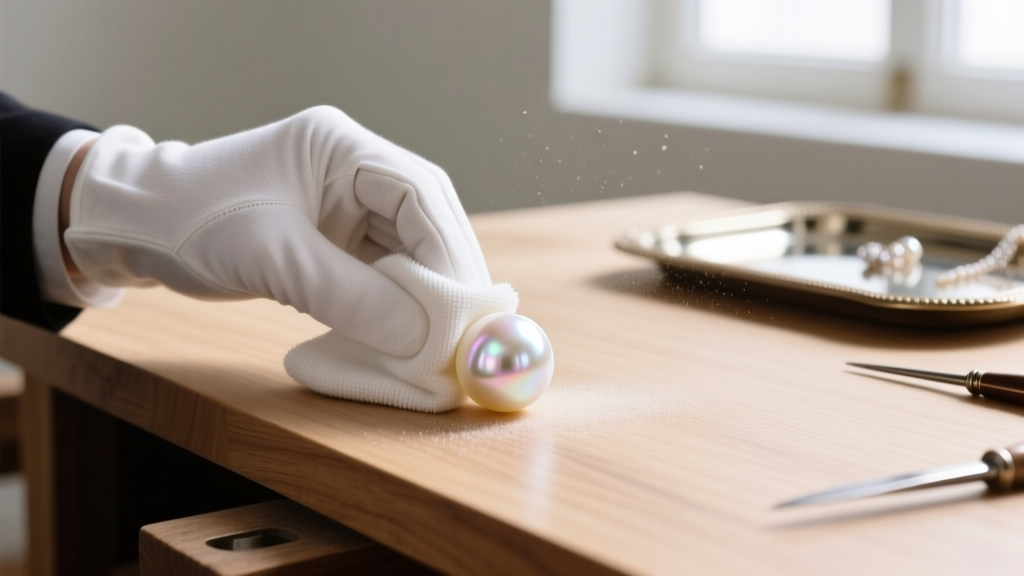
The most common mistake collectors make is applying standard jewelry cleaning methods to pearls. According to the Gemological Institute of America (GIA), ultrasonic cleaners and steamers are strictly forbidden for organic gems. The high-frequency cavitation bubbles in an ultrasonic tank will literally shatter the delicate nacre layers, while steam can melt the adhesives used in half-drilled pearl settings and severely weaken silk threading.
The Safe Damp-Cloth Method
To clean a vintage pearl necklace, follow this precise protocol after every wear:
- Wipe Down: Use a clean, lint-free microfiber cloth lightly dampened with distilled water (never tap water, as chlorine and fluoride can leave residue).
- Gentle Friction: Gently wipe each individual pearl to remove sweat, sebum, and cosmetic residue. Do not pull or stretch the silk thread while doing this.
- Air Dry Flat: Lay the necklace flat on a dry, clean towel. Never hang a wet pearl necklace, as the weight of the water-logged silk will cause the thread to stretch permanently, creating unsightly gaps between the knots.
If the pearls are heavily soiled, you may use a single drop of pH-neutral, unscented liquid castile soap in the distilled water. Avoid all commercial jewelry dips, ammonia, and baking soda.
Structural Maintenance: Silk Restringing and Knotting
A 1920s heirloom necklace is only as strong as its thread. Historically, high-end pearls were strung on pure silk, which degrades, stretches, and rots over time. If you can move the pearls slightly along the thread between the knots, or if the silk appears frayed or discolored, the necklace is at imminent risk of snapping.
| Wear Frequency | Environment / Exposure | Recommended Restringing Interval | Silk Thread Grade (for 6-7mm Pearls) |
|---|---|---|---|
| Occasional (1-2 times/year) | Climate-controlled, low sweat | Every 3 to 5 years | Size E (0.32mm) |
| Monthly Wear | Moderate humidity, cosmetics | Every 2 to 3 years | Size E or F (0.35mm) |
| Weekly / Heirloom Display | Variable conditions, handling | Annually | Size F or FF (0.40mm) |
The Importance of French Wire (Gimp)
When having your vintage pearls restrung, insist that the jeweler uses French wire (also known as gimp) at the clasp. This is a microscopic, coiled metal wire that acts as a protective sleeve for the silk where it loops through the metal clasp ring. Without gimp, the metal edge of an antique platinum or white gold clasp will act like a saw, slicing through the silk thread within months of regular wear.
Archival Storage: Preserving Nacre Hydration
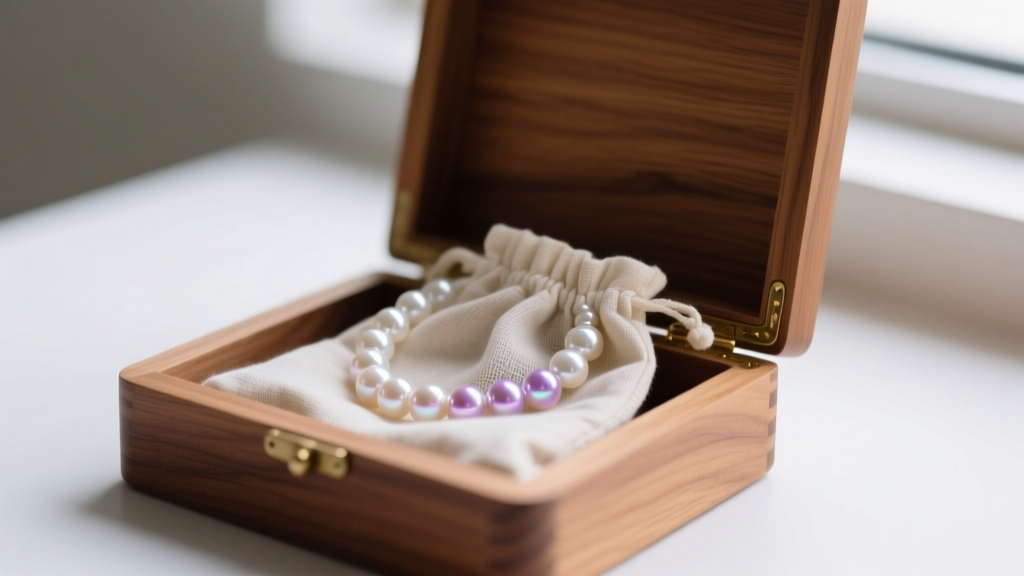
How you store your pearls is just as critical as how you clean them. The "Last On, First Off" rule dictates that pearls should be the final item you put on after applying perfumes, hairsprays, and lotions, and the first item you take off at night. However, post-wear storage requires an understanding of polymer chemistry.
Never store pearls in airtight plastic bags or polyethylene ziplocks. Plastic emits trace volatile organic compounds (VOCs) and completely blocks ambient humidity exchange. Trapped in a dry, plastic environment, the conchiolin in the pearls will dehydrate, leading to a phenomenon known as "crazing"—a network of microscopic surface cracks that destroy the pearl’s value and structural integrity.
Instead, store your heirloom necklaces in a breathable, acid-free cotton or linen pouch. Keep them in a climate-controlled room (ideally 40-60% relative humidity) and lay them flat in a cedar-lined or fabric-lined jewelry box to prevent the silk from stretching under the weight of the pearls. By treating these organic treasures with the reverence they demand, you ensure that the glittering legacy of the Jazz Age survives for generations to come.


