Moon Sun Necklace Pricing 2026: A Value Assessment
Discover the true value of a moon sun necklace in 2026. We break down fair pricing, enamel types, metal grades, and red flags before you buy.

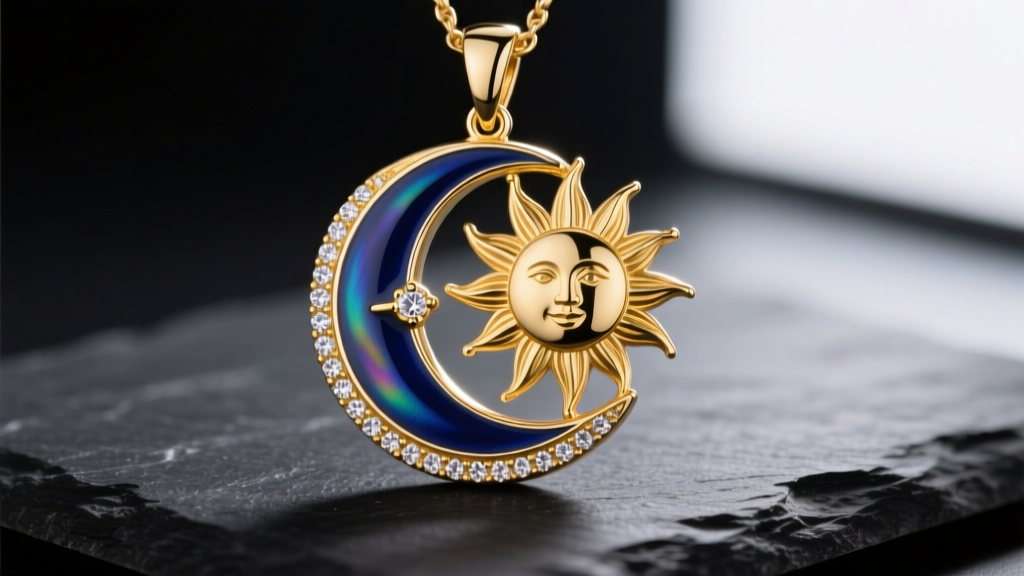
The celestial duality of the moon and sun has captivated jewelry designers for centuries, but navigating the modern market requires a sharp eye for metallurgy and manufacturing quality. In 2026, the market is saturated with moon sun necklace designs ranging from $12 dropshipped trinkets to $800 artisan-crafted heirlooms. As a consumer, how do you separate genuine craftsmanship from overpriced, mass-produced base metals? This comprehensive value assessment breaks down the exact material grades, enamel techniques, and hardware standards that dictate the true worth of a moon sun necklace.
The Metallurgy of Duality: Base Metals and Plating
The foundation of any pendant dictates its baseline value and longevity. When evaluating a moon sun necklace, the first step is identifying the core metal and any surface treatments. The Federal Trade Commission (FTC) maintains strict guidelines on how jewelry metals can be labeled, yet misleading terminology still plagues online marketplaces.
Sterling Silver vs. Vermeil vs. Solid Gold
- 925 Sterling Silver: The industry standard for mid-tier jewelry. A genuine piece will bear a '925' stamp. However, bare silver tarnishes when exposed to sulfur in the air. High-value silver pieces are often plated with a micro-layer of rhodium to maintain a bright, white luster. Expect to pay between $45 and $90 for a well-cast, rhodium-plated sterling silver pendant.
- Gold Vermeil: Not all gold plating is created equal. To legally be classified as vermeil, a piece must have a sterling silver base and a gold plating of at least 2.5 microns thick. In 2026, premium brands are pushing this to 3 or 4 microns for enhanced durability. If a listing simply says 'gold plated' without specifying the micron thickness or the silver base, it is likely a cheap brass or copper core with a flash plating of less than 0.5 microns that will wear off in weeks.
- Solid 14k or 18k Gold: The ultimate investment. Solid gold will not flake, peel, or cause contact dermatitis. A solid 14k gold moon sun pendant (weighing roughly 3 to 5 grams) should command a baseline price of $250 to $450, dictated by the daily spot price of gold and the complexity of the casting.
The Enamel Factor: Where Value is Won or Lost
Moon and sun motifs rely heavily on color contrast—deep midnight blues for the lunar crescent and radiant golds or blacks for the sunburst rays. This color is almost always achieved through enamel, but the type of enamel used is the single biggest indicator of a piece's true value.
Epoxy Resin (Cold Enamel)
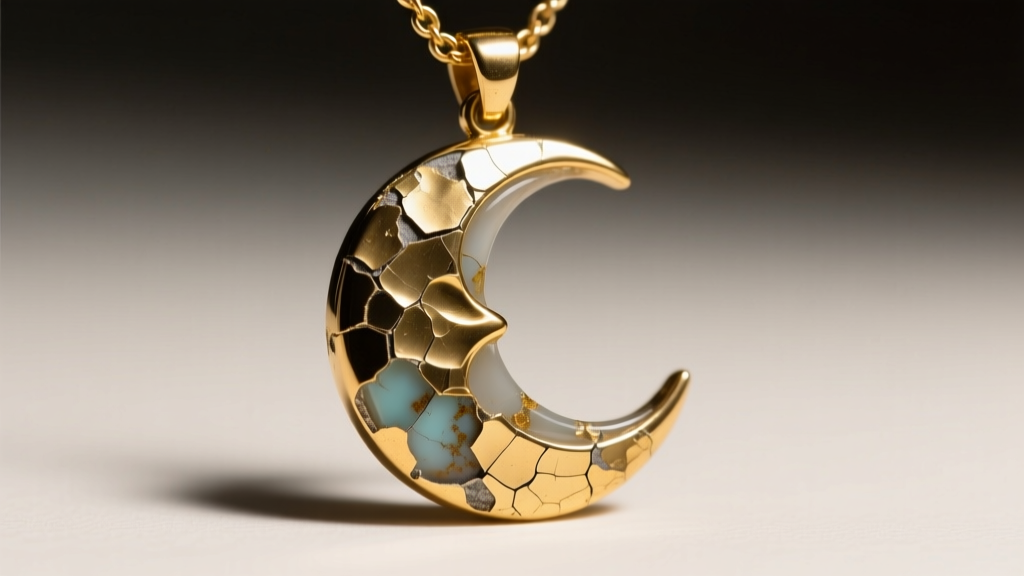
Budget-friendly necklaces utilize epoxy resin, a two-part plastic compound that is painted into the metal recesses and air-dried. While it allows for vibrant, glitter-infused colors, epoxy is highly susceptible to UV degradation. Within 12 to 18 months of daily wear, white and blue epoxy enamels will yellow, and the material will become brittle, eventually chipping out of the metal settings. If a moon sun necklace features epoxy and is priced above $60, it is severely overpriced.
Vitreous (Kiln-Fired) Enamel
True artisan craftsmanship employs vitreous enamel, which is essentially finely ground glass fused to the metal in a kiln at temperatures exceeding 1,400°F (760°C). According to the Gemological Institute of America (GIA), vitreous enamel has been used since antiquity because it is impervious to UV light, will never yellow, and possesses a deep, luminous translucency that epoxy cannot mimic. A moon sun necklace featuring genuine kiln-fired enamel requires immense skill to prevent the glass from cracking during the cooling process, justifying price points starting at $300 and climbing well past $1,000 for master-level guilloché work.
Manufacturing Methods: Cast vs. Stamped Filigree
The intricate rays of the sun and the delicate craters of the moon require specific manufacturing techniques. Understanding how the piece was formed will help you assess its structural integrity and fair market value.
| Manufacturing Method | Characteristics | Durability & Value | Fair 2026 Price Range |
|---|---|---|---|
| Die-Struck / Stamped | Cut from thin sheets of metal. Very lightweight, often features sharp, flat edges. | Low. Bends easily under pressure. High risk of warping. | $15 - $35 |
| Lost-Wax Casting | 3D depth, rounded edges, heavier weight. Allows for intricate, sculptural moon phases. | High. Excellent structural integrity if sprues are polished correctly. | $65 - $250 |
| Hand-Fabricated | Sawn, soldered, and textured by hand. Unique tool marks, asymmetrical charm. | Very High. Heirloom quality, supports independent artisans. | $350 - $800+ |
Hardware and Chain Integrity: The Hidden Cost Multiplier
A pendant is only as secure as the hardware holding it. Many mid-tier brands cut costs on the chain and clasps, leading to frustrating failure modes and lost jewelry.
The Jump Ring Vulnerability
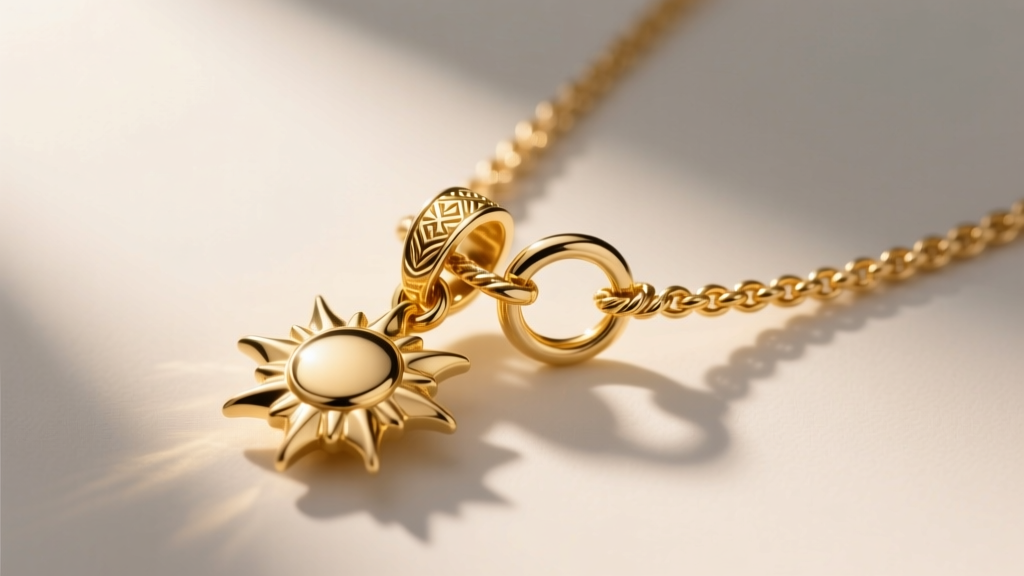
The jump ring is the small circular loop connecting the pendant to the chain. On budget necklaces, this ring is left 'open' (meaning there is a slit where the ends meet). Over time, the friction of the chain sliding back and forth will pry the open jump ring apart, resulting in the loss of the pendant. A high-value moon sun necklace will feature a soldered jump ring, where the slit is fused shut with a laser or torch, making it impossible to pull apart.
Clasp Tension and Chain Gauge
Celestial pendants, especially those with heavy vitreous enamel or solid gold, carry significant weight. A standard 0.8mm cable chain with a tiny spring-ring clasp is a recipe for disaster; the internal spring in cheap clasps frequently fails, popping open without warning. Look for chains with a minimum gauge of 1.1mm to 1.5mm (such as a rope or wheat chain) paired with a robust lobster clasp or a secure magnetic neodymium clasp. If a brand is selling a heavy solid-gold pendant on a flimsy 0.7mm chain, they are severely compromising the overall value and safety of the piece.
Red Flags in Online Listings
When shopping for a moon sun necklace online, be highly skeptical of the following marketing terms, which are often used to mask poor-quality materials:
- 'Tibetan Silver' or 'Antique Silver': This is not silver at all. It is typically a zinc, copper, and nickel alloy (pot metal) that can cause severe allergic reactions and turn your skin green. It holds zero intrinsic value.
- 'Gold Filled' on Complex 3D Pendants: Gold-filled wire is created by mechanically bonding a thick layer of gold to a brass core, which is only possible for simple wire shapes or flat sheets. If a listing claims a highly detailed, 3D-cast moon sun pendant is 'gold filled,' they are lying. It is almost certainly standard electroplated brass.
- 'CZ Diamonds': Cubic Zirconia is a synthetic simulant. While perfectly fine for budget jewelry, listings that use the word 'diamond' alongside CZ are attempting to manipulate search algorithms and deceive buyers. Ethical brands will clearly state 'white sapphire' or 'CZ' without the diamond moniker.
Final Verdict: Maximizing Your Investment
The true value of a moon sun necklace in 2026 is not determined by the brand name, but by the transparency of its materials and the permanence of its construction. If you are seeking an everyday piece that will survive the elements, target the $80 to $150 range for a heavily plated vermeil or rhodium-dipped sterling silver pendant with cold enamel and a soldered jump ring. If you are commissioning an heirloom to pass down through generations, invest the $400+ required for solid 14k gold and master-level vitreous enamel. By scrutinizing the micron thickness, the enamel firing process, and the hardware integrity, you can confidently navigate the celestial jewelry market and ensure every dollar spent translates into lasting, wearable art.