Mother Son Necklace Guide: Meanings, Metals, and Styles
Discover how to choose the perfect mother son necklace. Explore meaningful designs, durable metal grades, chain lengths, and pricing in our expert guide.

The bond between a mother and son is one of life’s most enduring relationships. When it comes to commemorating this connection, a mother son necklace serves as a tangible, daily reminder of that unbreakable tie. However, navigating the jewelry market can be overwhelming for beginners. Between deciphering metal hallmarks, understanding chain mechanics, and selecting a pendant that won't feel overly juvenile as a boy grows into a man, there are several technical and aesthetic factors to consider.
This comprehensive guide breaks down everything you need to know to choose a high-quality, meaningful necklace that stands the test of time, ensuring your keepsake survives the rough-and-tumble years of childhood and transitions seamlessly into adulthood.
The Symbolism Behind the Keepsake
Historically, keepsake jewelry was reserved for major milestones like graduations or weddings. Today, a mother son necklace is frequently gifted for birthdays, Mother’s Day, or simply as a spontaneous gesture of love. The core symbolism usually revolves around concepts of protection, eternal connection, and guidance. Because the son will likely wear his piece daily—often through sports, outdoor play, and adolescence—the jewelry must be designed with both emotional resonance and extreme physical durability in mind.
Choosing the Right Metal: Durability Meets Sentiment
The metal you choose dictates the necklace's longevity, skin compatibility, and price. According to the Gemological Institute of America (GIA), understanding alloy compositions is critical for daily-wear jewelry. Pure metals are often too soft for active lifestyles, which is why alloys are essential.
| Metal Type | Grade / Purity | Pros | Cons | Avg. Price Range |
|---|---|---|---|---|
| 14k Solid Gold | 58.5% Gold | Highly durable, resists tarnish, holds value, hypoallergenic. | Higher upfront cost, can still scratch under extreme force. | $250 - $800 |
| Sterling Silver | 92.5% Silver (925) | Classic look, affordable, easy to polish and repair. | Prone to oxidation (tarnish), requires regular maintenance. | $40 - $150 |
| 316L Surgical Steel | Iron/Chromium/Molybdenum | Virtually indestructible, hypoallergenic, waterproof. | Cannot be resized or easily soldered if broken, heavy. | $20 - $75 |
| Platinum | 95% Platinum | Naturally white, extremely dense, develops a soft patina. | Very expensive, heavier on the neck than gold. | $800 - $2,500+ |
Expert Tip: Avoid gold-plated or gold-filled chains for a son's necklace. The friction from daily wear, combined with exposure to sweat and body oils, will inevitably wear through the thin microscopic layer of gold, exposing the base metal underneath and causing skin irritation. Always opt for solid metals.
Chain Mechanics: Styles, Clasps, and Failure Modes
A pendant is only as secure as the chain holding it. When selecting a chain for an active boy or a busy mother, you must consider the structural integrity of the links and the clasp mechanism.
Chain Link Styles
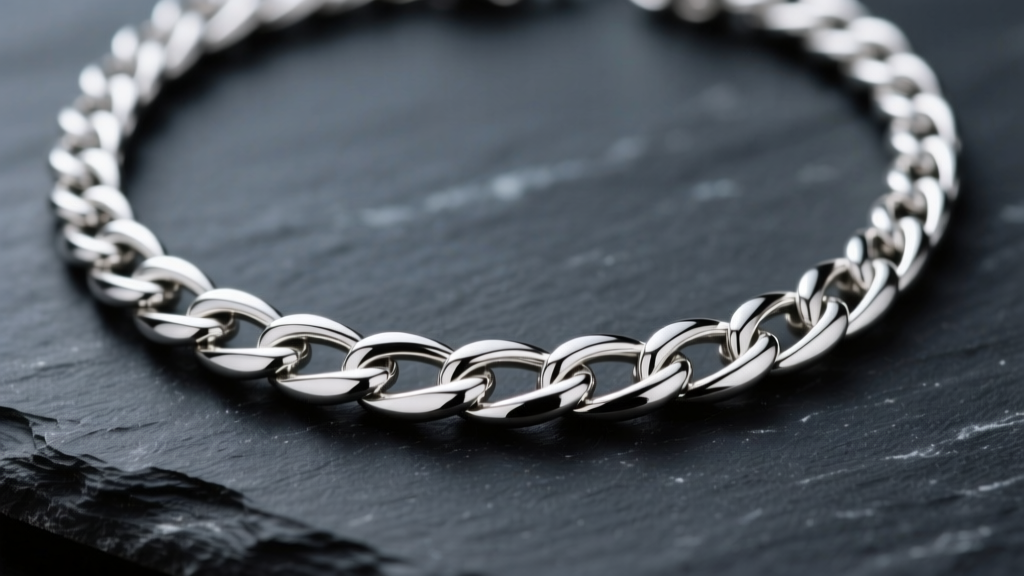
- Cable Chain: The classic, uniform oval links. It is lightweight, comfortable, and incredibly easy for a jeweler to repair if a link snaps.
- Box Chain: Made of square links connected to form a smooth, continuous tube. It is highly durable and resists tangling, but the sharp inner edges can sometimes catch and pull fine hair.
- Snake Chain: Features tightly joined wavy rings that create a flexible, tubular effect. Warning: Snake chains are notorious for kinking. Once a snake chain bends at a sharp angle, the structural damage is usually permanent. Avoid this style for young boys.
- Figaro Chain: A patterned chain (usually three short links followed by one long link). It offers a masculine, textured look that is highly popular for men's and boys' jewelry.
The Clasp: Where Necklaces Fail
Most entry-level necklaces come with a spring ring clasp. These contain a microscopic internal spring that frequently breaks or loses tension over time. Always upgrade to a lobster clasp. Lobster clasps use a solid lever mechanism that is significantly more secure and easier to operate with one hand. For thicker, heavier chains, look for a toggle clasp or a heavy-duty magnetic safety clasp.
Sizing and Length: Getting the Fit Right
A necklace that sits too high can feel choking, while one that hangs too low risks getting caught on objects. Use this general sizing framework:
- Young Boys (Ages 4-10): 14 to 16 inches. (Always ensure the chain has an extender or a breakaway safety feature for very young children to prevent choking hazards).
- Teens and Adult Men: 18 to 22 inches. An 18-inch chain sits at the collarbone, while a 20- or 22-inch chain rests on the chest, allowing the pendant to be worn over or under a t-shirt.
- Women (Mothers): 16 to 18 inches is the standard princess length, resting perfectly on the collarbone and framing the neckline.
Pendant Designs: Beyond the Basic Heart
While heart pendants are traditional, they can sometimes feel too feminine for a growing boy. Consider these sophisticated, gender-neutral alternatives that still convey deep meaning.
Interlocking Rings or Knots
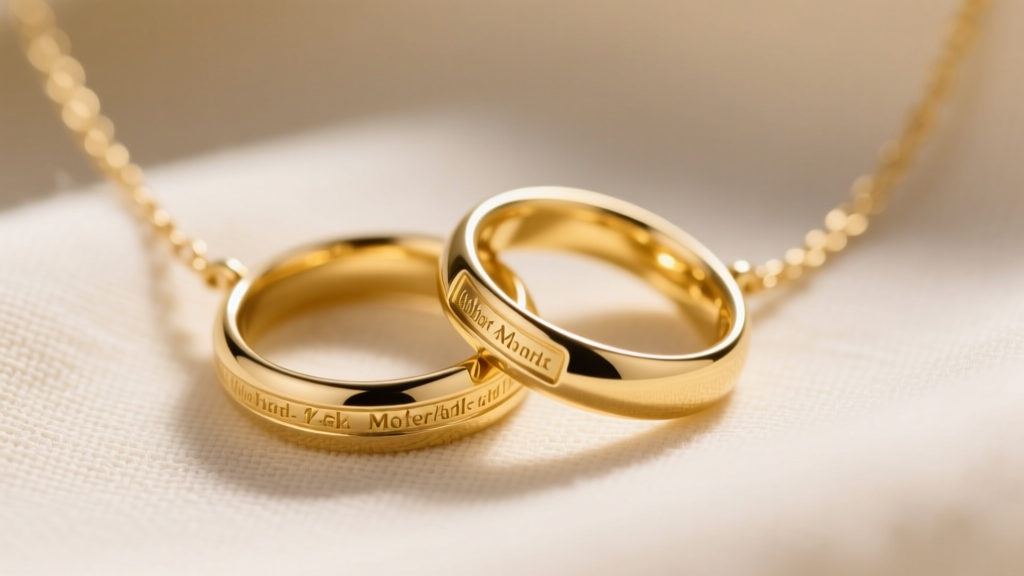
Two interlocking circles (often resembling a Venn diagram) represent two distinct lives that are forever connected. A square knot or Celtic sailor’s knot offers a more rugged, masculine aesthetic while symbolizing an unbreakable bond that cannot be untied.
Custom Engravings
Modern laser engraving technology allows for microscopic precision. Instead of a simple name, consider engraving the son’s actual baby footprint, a fingerprint, or a scanned image of his childhood handwriting. As noted in the Federal Trade Commission (FTC) Jewelry Guides, ensure any claims regarding custom precious metal work are accurately hallmarked and stamped by the manufacturer.

Birthstone Accents (With a Caveat)
Incorporating a birthstone adds a beautiful pop of color, but you must consider the Mohs hardness scale. Stones like Opal (5.5-6.5) or Pearl (2.5-4.5) are far too soft for a boy's daily wear and will scratch or crack easily upon impact. Instead, opt for highly durable stones like Sapphire (9), Ruby (9), or Black Onyx (7), or use high-fired vitreous enamel for a completely shatterproof color accent.
Care and Maintenance
To keep the necklace looking pristine, proper maintenance is required. The GIA's silver education guide recommends storing sterling silver in anti-tarnish cloth pouches to slow the oxidation process caused by sulfur in the air.
- Cleaning: Mix a few drops of mild, phosphate-free dish soap with warm water. Use a soft-bristled baby toothbrush to gently scrub the chain links and pendant bail, removing trapped sebum and dead skin cells.
- Chemical Avoidance: Remove the necklace before swimming in chlorinated pools or hot tubs. Chlorine can cause a chemical reaction that permanently weakens the solder points in gold and silver chains, leading to sudden, irreparable breakage.
Final Thoughts
Choosing the perfect mother son necklace is an investment in a lifelong memory. By prioritizing durable metals like 14k gold or 316L surgical steel, selecting a secure lobster clasp, and opting for a design that matures with the wearer, you ensure the piece remains a cherished staple in his jewelry collection for decades to come.


