Mothers Day Necklace Gold Guide: Budget & Value Assessment 2026
Discover how to assess value when shopping for a mothers day necklace gold piece. Compare karats, plating thickness, and 2026 pricing tiers.

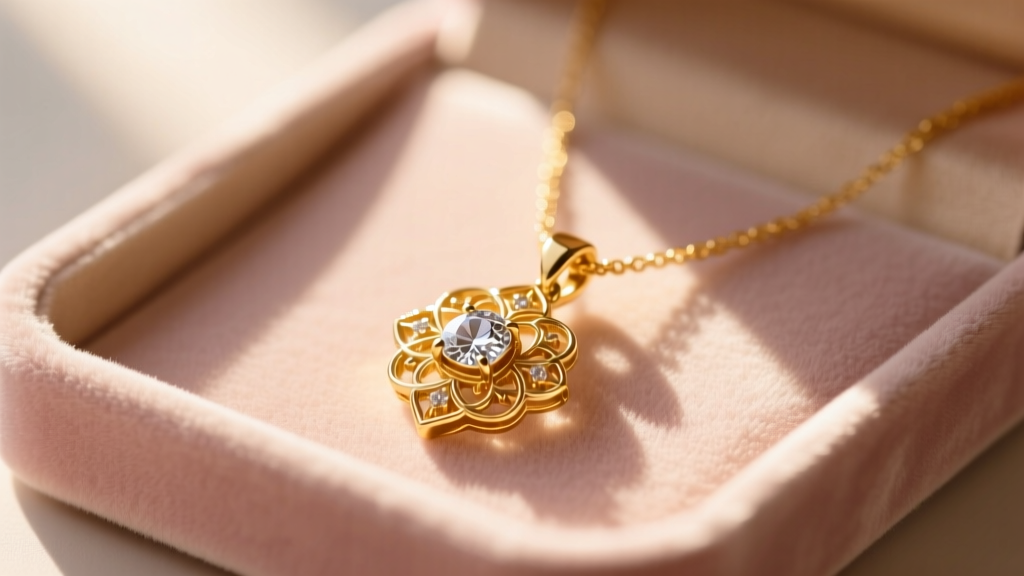
The True Cost of Sentiment: Navigating Gold Jewelry Value
Finding the perfect gift for a maternal figure often leads consumers to a highly specific search: a timeless, elegant, and enduring piece of jewelry. When evaluating a mothers day necklace gold option, shoppers are immediately confronted with a labyrinth of pricing, material claims, and marketing jargon. The emotional weight of the holiday frequently clouds objective financial assessment, leading many to overpay for thinly plated base metals or under-invest in pieces that will tarnish within a single season. In 2026, with gold spot prices continuing their historical upward trajectory, understanding the intersection of karat purity, manufacturing techniques, and structural longevity is no longer optional—it is essential for protecting your budget.
This comprehensive value assessment breaks down the exact material grades, micron thicknesses, and pricing matrices you need to know before purchasing a gold necklace. Whether your budget is $50 or $1,500, this guide ensures your investment aligns with the sentimental value of the occasion.
Decoding the Gold Spectrum: Plated, Vermeil, Filled, and Solid
To accurately assess value, you must first decode the terminology used by jewelry brands. The term 'gold' is frequently weaponized in marketing to describe items that contain less than 1% actual gold by weight. Here is the technical breakdown of what you are actually paying for.
Flash Plating and Gold Tone (The Budget Trap)
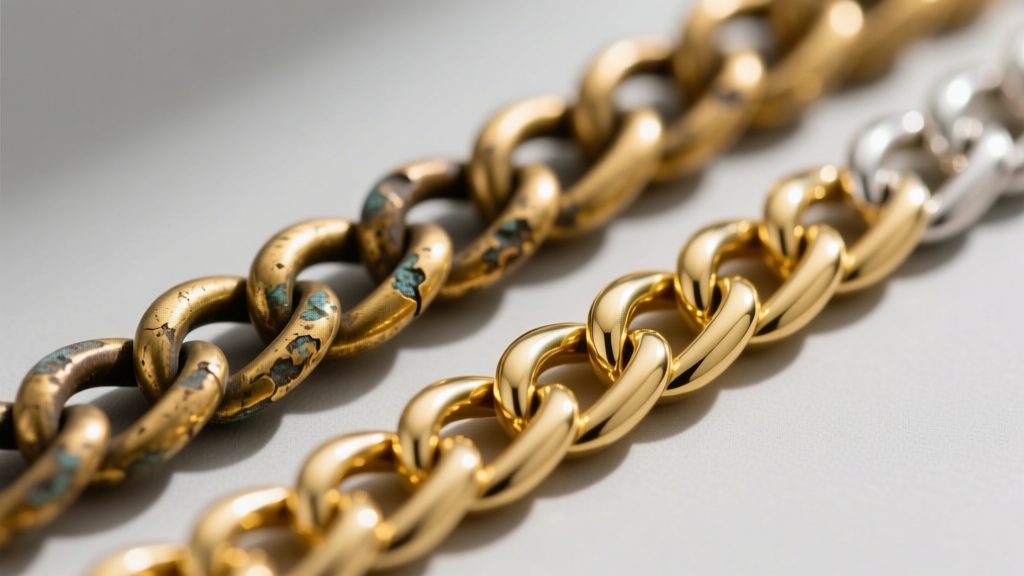
Flash-plated jewelry typically consists of a brass or copper base coated with a microscopic layer of gold measuring roughly 0.175 microns (7 millionths of an inch). According to the Federal Trade Commission (FTC) Jewelry Guides, this ultra-thin layer is prone to rapid friction wear. The primary failure mode is 'brass bleed-through,' where the base metal oxidizes against the skin's natural pH, resulting in green discoloration and skin irritation. While acceptable for fast-fashion trends, flash plating represents a poor long-term value for a sentimental gift.
Gold Vermeil (The Mid-Tier Standard)
For a piece to be legally classified as gold vermeil in the United States, it must feature a sterling silver (.925) base and a gold plating thickness of at least 2.5 microns. This provides a significantly longer lifespan than flash plating, often lasting 2 to 5 years with proper care. However, vermeil is still a surface treatment; once the 2.5-micron layer wears away from daily friction, the underlying silver will tarnish and require professional re-plating.
Gold-Filled (The Durability Sweet Spot)
Gold-filled jewelry is created by mechanically bonding a thick layer of solid gold (usually 12k or 14k) to a brass core using extreme heat and pressure. By law, the gold layer must constitute at least 1/20th (5%) of the total weight of the item. This results in a piece that is highly resistant to tarnishing and can easily last 10 to 30 years, offering exceptional value for budgets that cannot accommodate solid gold.
Solid Gold: 10k, 14k, and 18k
Solid gold is an alloy, mixed with metals like copper, zinc, or silver to increase tensile strength. As noted by the Gemological Institute of America (GIA), 14k gold (58.5% pure gold) remains the industry standard for everyday durability and rich color, while 18k (75% pure) offers a deeper yellow hue but is more susceptible to scratching. 10k gold (41.7% pure) is the most durable and affordable solid option, though it lacks the warm luster of higher karats.
The 2026 Price-to-Value Matrix for Gold Necklaces
Use the following matrix to benchmark retail prices against actual material value. If a brand's pricing falls outside these 2026 market parameters, you are likely paying an inflated 'brand tax' rather than intrinsic material value.
| Budget Tier | Expected Material | Chain Weight (16") | Expected Lifespan | Value Verdict |
|---|---|---|---|---|
| Under $60 | Gold-Filled or Heavy Vermeil | 1.5g - 3.0g | 3 - 10 Years | Excellent for trend-driven pendants; avoid for heirloom gifts. |
| $150 - $350 | Solid 10k or Lightweight 14k | 2.5g - 4.5g | Lifetime (with care) | The optimal entry point for genuine solid gold heirloom pieces. |
| $400 - $800 | Solid 14k (Standard Weight) | 5.0g - 9.0g | Generational | High intrinsic value; excellent structural integrity for daily wear. |
| $1,000+ | Solid 18k or Heavy 14k | 10.0g+ | Generational | Luxury tier; pay attention to craftsmanship and clasp mechanics. |
Structural Integrity: Chain Weaves and Clasp Mechanics
A common mistake when buying a mothers day necklace gold design is focusing entirely on the pendant while ignoring the chain's structural engineering. A fragile chain will inevitably snap, turning a beautiful gift into a source of frustration.
Chain Weave Durability
- Cable Chains: Classic and affordable, but the uniform oval links can easily stretch or pull apart if snagged. Best reserved for lightweight pendants under 5 grams.
- Box Chains: Constructed from interlocking square links, box chains offer superior tensile strength and resist kinking. They are the premier choice for everyday wear and heavier pendants.
- Rope Chains: While visually striking and excellent at reflecting light, the twisted links are notoriously difficult to repair if they snap. Proceed with caution for active recipients.
The Clasp Failure Point
Never accept a spring-ring clasp on a solid gold chain weighing more than 4 grams. Spring rings rely on a tiny internal steel spring that is highly susceptible to moisture, rust, and mechanical fatigue. Insist on a lobster clasp, which utilizes a solid metal lever mechanism that provides a vastly superior grip and longevity.
Red Flags: Avoiding the 'Gold Tone' Trap
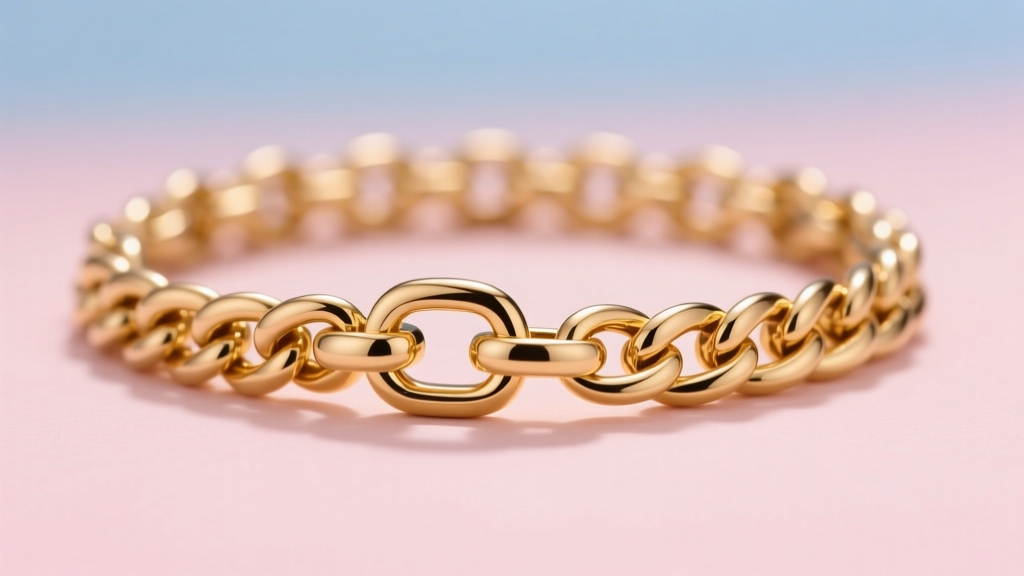
When shopping online or in boutique stores, be vigilant against deceptive marketing terminology. The phrase 'gold tone' or 'gold dipped' is entirely unregulated and usually indicates a base metal like nickel or brass with a microscopic cosmetic finish. Furthermore, always inspect the clasp or end-tag for a hallmark. A legitimate solid gold piece will be stamped with '10k', '14k', '18k', or '585'. A vermeil piece should bear a '.925' stamp alongside a maker's mark. If a piece priced over $150 lacks any hallmark, walk away immediately.
Expert Verdict: How to Allocate Your Budget
If your budget is strictly under $100, allocate 100% of your funds toward high-quality 14k gold-filled chains and pendants from specialized artisan makers rather than attempting to buy 'bargain' solid gold from mall retailers, which will inevitably be hollow and brittle. If your budget allows for $250 to $500, prioritize a solid 14k gold cable or box chain with a meaningful, solid-cast pendant. Avoid hollow-backed pendants, which dent easily and cannot be repaired by a jeweler. Ultimately, the best value in gold jewelry is found in transparency: brands that explicitly list metal weight in grams, karat purity, and origin will always outlast those relying on vague, sentimental marketing.


