Preserving the Most Expensive Necklace Types: High Jewelry Care
Discover museum-grade care, cleaning, and storage techniques used to preserve the most expensive necklace styles and haute joaillerie investments.

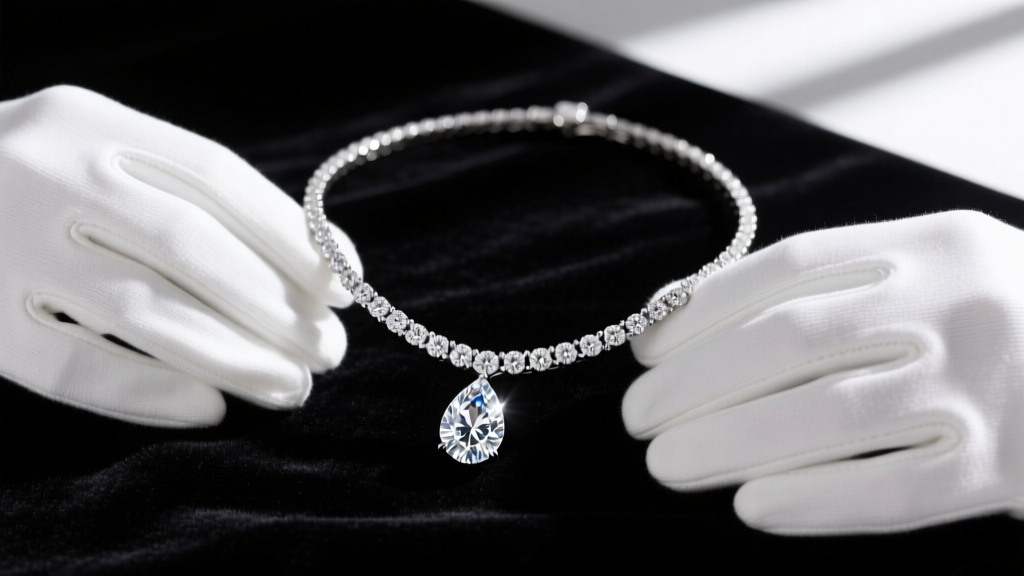
The Stewardship of Haute Joaillerie
When a collector, museum, or high-net-worth individual acquires a piece of haute joaillerie, they are not merely buying jewelry; they are accepting the stewardship of wearable art. Whether it is a historic museum piece or a contemporary masterpiece featuring Type IIa diamonds and untreated Kashmir sapphires, the protocols required to maintain these assets are vastly different from everyday jewelry care. In fact, applying standard commercial cleaning methods to the most expensive necklace in a private collection can result in catastrophic, irreversible damage.
According to the Gemological Institute of America (GIA), high jewelry often features complex, micro-pavé settings, fracture-filled gemstones, and organic materials that react violently to ultrasonic waves and harsh chemicals. As we navigate the luxury landscape in 2026, where provenance and pristine condition dictate millions in resale value, understanding museum-grade conservation is no longer optional—it is a financial necessity.
The Anatomy of Ultra-Luxury Necklaces: Why Standard Care Fails
Ultra-luxury necklaces are engineered with a focus on maximum optical performance and intricate articulation, often at the expense of structural robustness. A standard 18k white gold chain can withstand moderate tension, but a high jewelry collar necklace utilizing Platinum 950 (alloyed with ruthenium for hardness) features hundreds of micro-hinges and tension-set stones.
Metal Fatigue and Prong Wear
The sheer weight of a 50-carat center stone exerts continuous gravitational stress on the gallery wire and prongs. Over time, microscopic metal fatigue occurs. Standard ultrasonic cleaners vibrate at frequencies between 20,000 and 40,000 Hz. While this cavitation process is excellent for dislodging dirt from a simple solitaire, it can easily shake loose a micro-pavé diamond or exacerbate a microscopic fracture in a vintage platinum setting. For high jewelry, mechanical vibration is strictly prohibited outside of a master jeweler's bench.
Museum-Grade Cleaning Protocols
Conservators at institutions like the Smithsonian rely on chemical gentleness and meticulous manual agitation. When tasked with cleaning a multi-million-dollar high jewelry necklace, the process is entirely manual and heavily controlled.
The Conservator's Bath
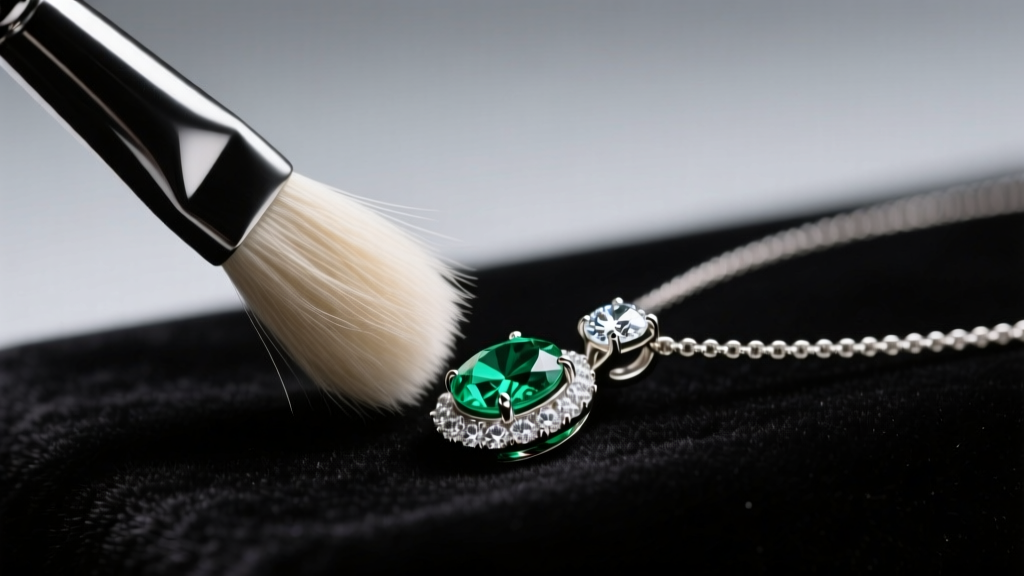
Instead of commercial jewelry dips, professionals use a solution of distilled water and a non-ionic surfactant, such as Orvus WA Paste (sodium lauryl sulfate). This pH-neutral agent lifts oils without reacting with the metal alloys or the porous surfaces of organic gems. The necklace is submerged for no more than three minutes. Agitation is performed using a soft, untreated goat-hair brush, gently sweeping in the direction of the stone settings to avoid catching and lifting the delicate platinum prongs.
Chemical Agents to Strictly Avoid
Understanding the chemical vulnerabilities of specific gemstones is critical. The GIA Emerald Care Guidelines explicitly warn against heat and chemicals, as the vast majority of emeralds are fracture-filled with cedar oil or synthetic resins like Opticon.
| Chemical / Method | Material Affected | Catastrophic Result |
|---|---|---|
| Ultrasonic Waves | Fracture-filled Emeralds | Oil expulsion, internal shattering, clouding |
| Steam Heat (100°C+) | Natural Pearls, Coral | Nacre delamination, internal cracking, loss of luster |
| Chlorine Bleach | 18k Gold / Platinum Alloys | Stress corrosion cracking, catastrophic prong failure |
| Ammonia-based Dips | Treated Diamonds, Opals | Surface etching, dehydration, crazing of opal matrix |
Advanced Storage & Environmental Controls
How a high jewelry necklace is stored is just as critical as how it is cleaned. Environmental factors—specifically humidity, light exposure, and atmospheric sulfur—are the silent destroyers of ultra-luxury assets.
Humidity and Organic Gems
According to GIA Pearl Care standards, natural pearls and untreated coral require a relative humidity (RH) environment of 40% to 60%. If stored in a dry safety deposit box where RH drops below 30%, the conchiolin (the organic protein binding the nacre) dries out, leading to irreversible crazing and peeling. Collectors must store pearl necklaces in archival-quality, unbleached cotton pouches alongside damp (not wet) sponges enclosed in breathable micro-perforated plastic to maintain ambient moisture.

Tarnish Mitigation for Silver and White Gold
For necklaces featuring high-karat gold or silver alloys, atmospheric hydrogen sulfide causes rapid tarnishing. Museum-grade storage utilizes Pacific Silvercloth or similar tarnish-proof flannel. This material is impregnated with zinc carbonate, which acts as a sacrificial anode, absorbing sulfur compounds from the air before they can react with the metal surface of the necklace. Never wrap high jewelry in standard tissue paper or plastic wrap (PVC), as the off-gassing of polyvinyl chloride can chemically etch soft gemstones like opals and turquoise.
Security, Appraisals, and Provenance Tracking in 2026
Caring for the most expensive necklace types extends beyond physical maintenance; it encompasses digital and physical security. In 2026, high jewelry insurance underwriters mandate rigorous, up-to-date provenance tracking and condition reporting.
Laser Inscriptions and Digital Twinning
Every major stone in a high jewelry necklace should feature a microscopic laser inscription on the girdle, corresponding to its GIA or SSEF (Swiss Gemmological Institute) dossier. Furthermore, modern collectors utilize "digital twinning"—creating high-resolution 3D photogrammetry models of the necklace. This not only aids in recovery in the event of theft but provides a baseline for conservators to monitor micro-movements in settings or metal fatigue over time.
Annual Condition Audits
A high jewelry necklace should never be worn without an annual condition audit performed by a certified master jeweler or gemologist. They will use a 10x triplet loupe and darkfield illumination to inspect the integrity of every micro-prong, check for gallery wire distortion, and ensure that the articulation hinges are free of abrasive grit. By treating these masterpieces with the same reverence and scientific rigor as museum antiquities, collectors ensure that their investments remain flawless for generations to come.


