Necklaces Baseball Players Are Wearing: 2026 Technical Guide
Discover the exact necklaces baseball players are wearing in 2026. We break down titanium performance tech, diamond dust pendants, and MLB rules.


The intersection of high-stakes athletics and luxury jewelry has never been more technically advanced. If you have been watching the 2026 MLB season, you have likely noticed the distinct glint of gold and the matte finish of woven fibers around the necks of your favorite athletes. The necklaces baseball players are wearing today are not just fashion statements; they are highly engineered pieces of equipment, custom-milled status symbols, and deeply ingrained superstitious talismans.
As a jewelry technical analyst, I have spent the last decade tracking the metallurgical and gemological shifts in sports jewelry. From the dugout to the Jumbotron, here is an expert deep dive into the exact materials, specs, and safety protocols defining baseball necklaces in 2026.
The Metallurgy of the Diamond: 14k vs. 18k Gold Alloys
When a player steps into the batter's box or slides into second base, their jewelry is subjected to immense kinetic force, friction, and highly corrosive sweat. While casual consumers often chase the purity of 18-karat or 22-karat gold, professional ballplayers overwhelmingly opt for 14-karat gold for their on-field chains.
14-karat gold contains 58.3% pure gold, alloyed with copper, silver, and zinc. This specific alloy matrix yields a Vickers hardness (HV) of approximately 140-160 HV. By contrast, 22-karat gold sits at a soft 60 HV. When a 200-pound shortstop makes a desperate dive for a ground ball, a 22k gold Miami Cuban link is highly susceptible to link deformation and clasp failure. 14k gold maintains structural rigidity, ensuring the chain survives the brutal mechanics of the sport.
Chain Profiles Dominating the Dugout
- Miami Cuban (8mm - 12mm): The undisputed king of sports flex. The interlocking, flat-surfaced links distribute weight evenly and lay flat against the collarbone, reducing the chance of catching on a jersey button.
- Franco Chains (4mm - 6mm): Preferred by players who want a heavier drape without the wide profile. The V-shaped, four-sided links offer immense tensile strength and are virtually impossible to kink.
- Rope Chains (3mm - 5mm): Often used as the base chain for heavy custom pendants due to their high load-bearing capacity and classic light-refraction properties.
Performance Wearables: The Phiten Phenomenon
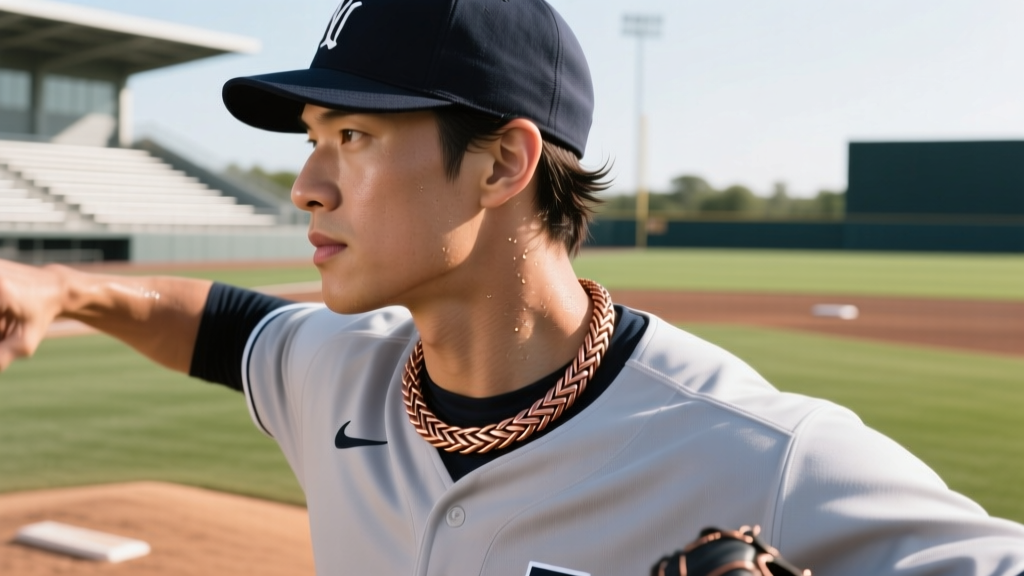
You cannot watch a baseball broadcast without spotting the braided, matte-black or navy cords around the necks of elite pitchers and sluggers. These are Phiten Rakuwa necklaces, a staple in Japanese and American baseball since the early 2000s. But what is the actual science behind them?
Phiten utilizes a proprietary technology called AquaTitan. According to Phiten's official material science documentation, this process involves breaking down titanium into microscopic spheres and bonding them to nylon or cotton fibers using a water-based carbonization technique.
Understanding X-Levels: X50 vs. X100 vs. X500
The numbers you see on Phiten tags refer to the concentration of titanium micro-spheres relative to their standard baseline.
| Model Tier | Titanium Concentration | Primary User Base | Material Feel & Durability |
|---|---|---|---|
| Rakuwa X50 | 50x Baseline | Rookies, Position Players | Soft cotton blend, high sweat absorption, requires frequent replacement. |
| Rakuwa X100 | 100x Baseline | Starting Pitchers, Veterans | Coated nylon, water-resistant, retains shape during heavy perspiration. |
| Rakuwa X500 | 500x Baseline | Elite Superstars, Endorsers | Premium silicone/leather hybrids, highest tensile strength, maximum kinesthetic feedback. |
While the medical community continues to debate the physiological efficacy of titanium-infused fabrics on muscle relaxation, the kinesthetic feedback is undeniable. The physical weight and texture of the braided cord provide a sensory grounding effect—a crucial psychological anchor for a pitcher trying to slow their heart rate before delivering a 98-mph fastball.
The "Diamond Dust" Shift: Moissanite vs. Lab Diamonds
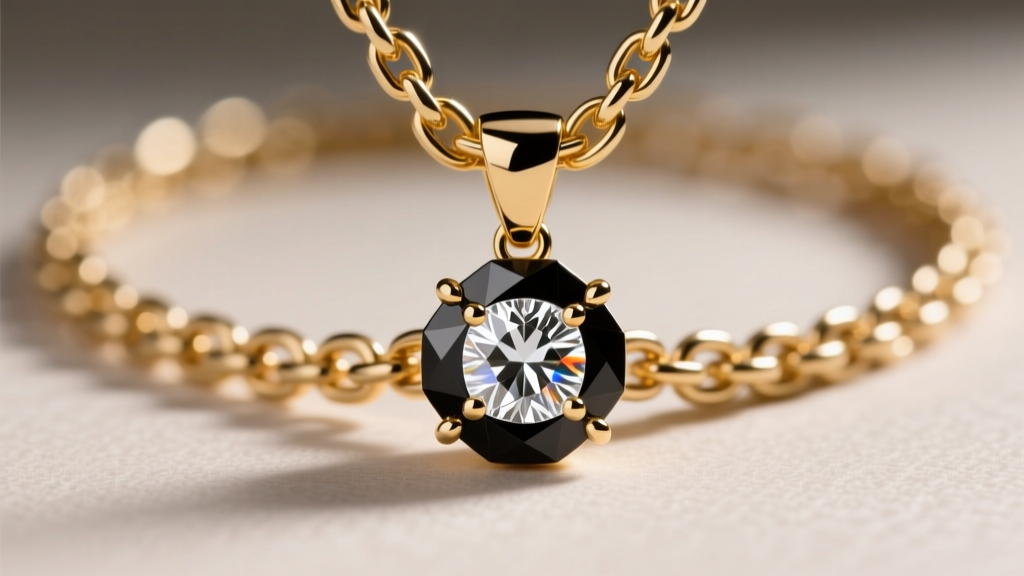
The era of natural, mined diamonds dominating baseball pendants is rapidly ending. In 2026, the custom sports jewelers crafting pieces for the game's biggest stars have pivoted heavily toward Moissanite.
Why the shift? It comes down to optical physics and stadium lighting. Modern MLB parks have upgraded to ultra-bright, 5000K LED lighting arrays to improve broadcast clarity. Under these specific light temperatures, Moissanite's optical properties outshine natural diamonds. According to the Gemological Institute of America (GIA), Moissanite possesses a refractive index of 2.65 (compared to a diamond's 2.42) and more than double the dispersion (0.104 vs 0.044). This means moissanite fractures light into intense, rainbow-colored flashes—the exact "disco ball" effect players want when the Jumbotron camera pans to them in the dugout.
Setting Techniques for High-Impact Sports
A common failure mode in cheap sports jewelry is the use of industrial adhesives to set stones. Sweat, Gatorade baths, and humid summer nights will dissolve glue, leading to lost stones. Expert sports jewelers exclusively use micro-pave prong settings carved directly from the 14k gold or sterling silver base. The metal prongs are physically bent over the girdle of the moissanite stone, ensuring the pendant survives the violent vibrations of running the bases.
MLB Regulations and On-Field Safety Protocols
Wearing heavy metals on a baseball diamond is not without risk. According to the Official Baseball Rules regarding uniforms and equipment, players are generally permitted to wear jewelry. However, umpires possess the absolute authority to ban any item deemed a safety hazard to the player or their opponents.
The Sliding Hazard: A 150-gram solid gold Cuban link worn outside the jersey poses a severe laceration and degloving risk if an infielder's cleat catches the chain during a slide into second base.
To mitigate this, equipment managers and team trainers enforce strict protocols:
- The Tuck Rule: Chains must be worn under the undershirt, or tucked securely beneath the outer jersey, leaving only the top clasp and a few links visible at the collar.
- Breakaway Clasps: For players who insist on wearing chains over the jersey during batting practice, jewelers are now installing magnetic or low-tension breakaway clasps. These are engineered to snap open when subjected to more than 15 pounds of lateral pull force, preventing catastrophic neck injuries if the chain gets snagged on a bat or base.
- Pendant Weight Limits: Custom pendants exceeding 80 grams are generally reserved for off-field wear, pre-game introductions, or post-game interviews. On-field pendants are kept under 30 grams to prevent whiplash and cervical strain during explosive rotational movements like swinging a bat.
Sizing the Athlete: Length and Drop Metrics
Standard jewelry sizing goes out the window when factoring in the thick, moisture-wicking undershirts and the structured collars of modern baseball jerseys. The necklaces baseball players are wearing are custom-measured to achieve a very specific "drop" relative to the uniform.
- 20-Inch Chains: Sit tightly at the base of the neck. Rarely worn on-field as they sit above the jersey collar and cause chafing against the neck pads of catching gear or batting helmets.
- 22-Inch Chains (The Standard): The sweet spot for MLB players. This length allows the chain to rest perfectly just below the collarbone, visible when the top two buttons of the jersey are undone, but short enough that a heavy pendant will not swing into the player's face during a swing.
- 24 to 26-Inch Chains: Reserved for "dugout flex" and off-field arrivals. These longer drops rest on the sternum and are almost always tucked under the jersey during actual gameplay to comply with safety norms.
Final Verdict: Form, Function, and Superstition
The evolution of baseball jewelry is a masterclass in adapting luxury goods to extreme physical environments. The necklaces baseball players are wearing in 2026 represent a perfect synthesis of material science (AquaTitan-infused nylons), optical engineering (moissanite dispersion), and pragmatic metallurgy (14k gold alloys). Whether it is a pitcher relying on the tactile grounding of a Phiten X100 cord, or a slugger stepping into the box with a custom micro-pave moissanite cross, every piece of jewelry on the diamond is calculated, engineered, and worn with purpose.


