How to Clean and Maintain Your Metal Collar Necklace
Learn expert techniques to clean, polish, and store your metal collar necklace. Discover specific care protocols for steel, silver, and brass.

The Unique Vulnerabilities of Rigid Neckwear
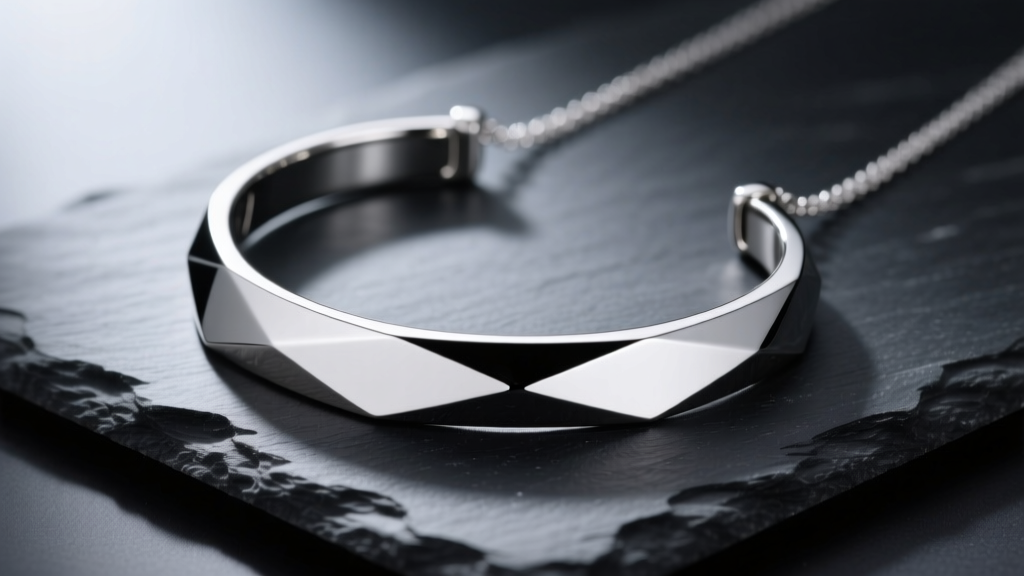
As architectural jewelry continues to dominate fashion in 2026, the metal collar necklace remains a definitive statement piece. Unlike flexible chain necklaces that drape and move, a rigid collar sits flush against the clavicle, creating a striking, sculptural silhouette. However, this structural rigidity introduces unique maintenance challenges. Because a collar cannot bend to absorb impact, it is highly susceptible to warping, hinge stress, and localized tarnish from constant friction against the skin and clothing.
Maintaining the pristine finish and structural integrity of a rigid neckpiece requires moving beyond generic jewelry cleaning advice. You must understand the specific metallurgy of your piece, the mechanics of its clasps, and the environmental factors that degrade its surface. According to the Jewelers of America, improper cleaning techniques cause more micro-abrasions and structural failures in rigid jewelry than daily wear itself. This guide provides a masterclass in preserving your investment.
Metallurgy and Tarnish: Know Your Alloy
Before applying any cleaning agent, you must identify the base metal of your collar. The chemical reaction that causes tarnish varies wildly between alloys, and using the wrong solvent can permanently ruin the finish.
- 316L Surgical Steel & Titanium (Grade 23): These alloys are highly inert. 316L steel contains molybdenum, which prevents pitting and corrosion from chlorides (like sweat). Titanium develops a passive oxide layer that protects it from oxidation. These metals do not tarnish; they only accumulate surface oils and dead skin.
- 925 Sterling Silver: Composed of 92.5% silver and 7.5% copper. The copper is the culprit behind tarnish. When exposed to hydrogen sulfide in the air and sulfur compounds in human sweat, the copper reacts to form a dark layer of silver sulfide (Ag2S) on the surface.
- Solid Brass & Bronze: These copper-heavy alloys oxidize rapidly, developing a dark, mottled patina. While some collectors appreciate this vintage look, a polished brass collar requires aggressive maintenance to retain its high-shine gold appearance.
Step-by-Step Cleaning Protocols by Metal Grade
Forget toothpaste and baking soda pastes—these are highly abrasive and will leave microscopic scratches on mirror-polished finishes. Instead, rely on chemistry and gentle mechanical action.
Protocol A: Stainless Steel and Titanium Collars
For inert metals, your goal is simply to degrease. Mix a few drops of mild, phosphate-free dish surfactant (like Dawn) into a bowl of distilled water. Submerge the collar for five minutes to soften sebum and cosmetic buildup. Use a baby toothbrush with ultra-soft bristles to gently agitate the areas around the clasp and hinges. Rinse thoroughly with distilled water and dry immediately with a lint-free microfiber cloth. If your steel collar features a PVD (Physical Vapor Deposition) coating—such as black or rose gold—avoid ultrasonic cleaners, as the 42kHz cavitation can cause microscopic peeling if the substrate has any flaws.
Protocol B: Sterling Silver (The Electrochemical Bath)
For heavily tarnished silver collars, abrasive polishing removes a microscopic layer of silver every time. Instead, use an electrochemical reduction bath to convert silver sulfide back into pure silver. Line a glass bowl with aluminum foil (shiny side up). Place the silver collar on the foil. Add one tablespoon of baking soda and a pinch of non-iodized salt, then pour boiling distilled water over the piece. The aluminum acts as a sacrificial anode, pulling the sulfur away from the silver. Within 60 seconds, the tarnish will vanish. Remove with wooden tongs, rinse, and dry. Industry suppliers like Rio Grande recommend this method for preserving the exact weight and engraving details of solid silver pieces.
Protocol C: Solid Brass (Acidic Chelation)
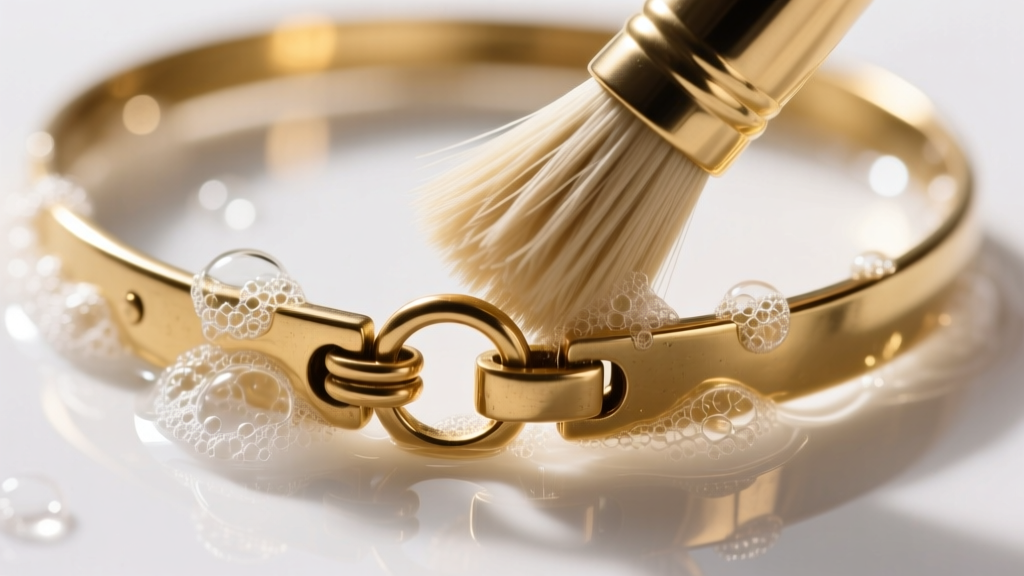
Brass requires a mild acid to strip oxidation without scratching. A commercial brass dip containing thiourea works rapidly, but for a household alternative, submerge the collar in a mixture of equal parts white vinegar and warm water with a teaspoon of salt for no more than three minutes. The acetic acid dissolves the copper oxide. Neutralize the acid immediately by washing the collar in a baking soda and water solution, then rinse and dry. Finish by buffing with a jeweler's rouge-impregnated polishing cloth to restore the mirror shine.
Mechanical Maintenance: Hinges, Links, and Clasps
The most common point of failure on a metal collar necklace is not the metal itself, but the hardware. Rigid collars rely on hinges, tension clasps, or magnetic closures to open and close around the neck.
Hinge and Link Lubrication
If your collar features articulated links or a barrel hinge, friction and skin cells will eventually cause the joints to stiffen or grind. Never use WD-40 or standard household oils, which contain solvents that degrade metal finishes and attract dust. Instead, use a synthetic watch oil (such as Moebius 9010). Apply a microscopic drop to the hinge pin using a fine needle oiler. Work the hinge back and forth to distribute the lubricant, then wipe away any excess with a microfiber swab.
Tension Clasp Calibration
Many minimalist steel and titanium collars use a tension clasp, where a small metal nub snaps into a recessed groove. Over time, repeated bending to open the collar can cause 'spring fatigue,' leading to a loose fit. If the clasp feels weak, you can gently squeeze the male and female ends closer together using nylon-jaw pliers. Never use standard steel jewelry pliers, as their serrated teeth will permanently gouge the collar's surface.
Pro-Tip from the Bench: If your collar uses tiny Torx or hex screws to secure the end caps, check them every six months. Vibrations from daily wear can back these screws out. Apply a microscopic dot of blue Loctite (threadlocker) to the threads before tightening them back down with a precision jeweler's screwdriver.
The Ultimate Metal Collar Storage Matrix
How you store a rigid necklace is just as critical as how you clean it. Tossing a collar into a standard jewelry box guarantees micro-scratches from other pieces and accelerates tarnish due to trapped humidity. Use the matrix below to build the ideal storage environment based on your metal type.
| Metal Type | Ideal Container | Anti-Tarnish Additive | Humidity Target |
|---|---|---|---|
| 316L Steel / Titanium | Individual microfiber pouch | None required | Ambient (under 60%) |
| 925 Sterling Silver | Airtight polyethylene bag | 3M Anti-Tarnish strip + Silica gel | Below 35% |
| Solid Brass / Bronze | Flannel-lined rigid box | Chalk or activated charcoal packet | Below 40% |
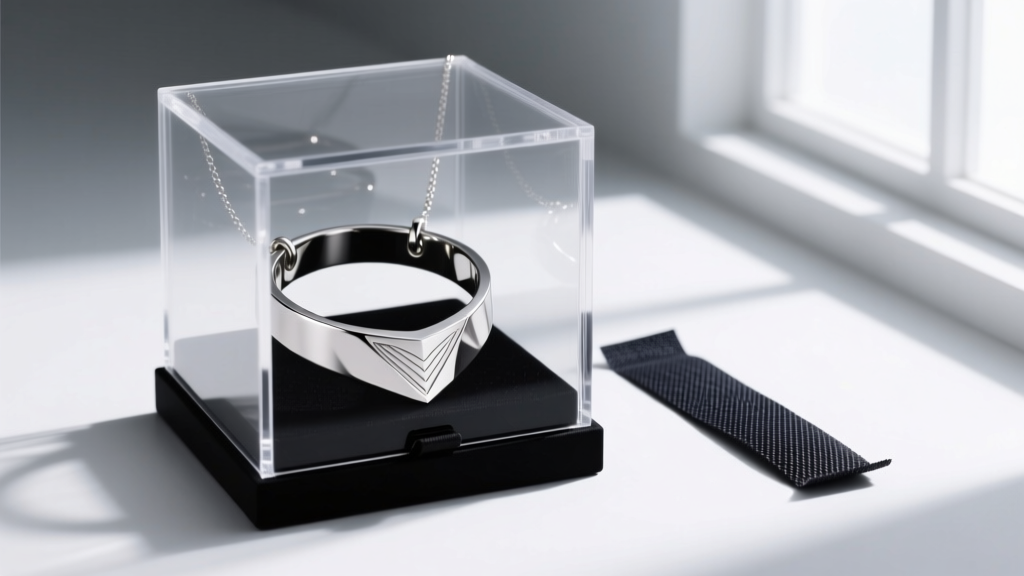
| PVD-Coated Metals | Suspended on a rigid acrylic stand | None required | Ambient |
For silver and brass collars, the airtight polyethylene bag is non-negotiable. Standard ziplock bags made of PVC emit sulfur-bearing gases as they degrade, which will actually cause your silver to tarnish faster inside the bag. Always use archival-safe, sulfur-free polyethylene bags.
Critical Mistakes That Ruin Rigid Neckwear
Even with the best intentions, jewelers frequently see collars destroyed by well-meaning owners. Avoid these catastrophic errors:
- Using Paper Towels or Tissues: Paper products are made from wood pulp, which contains hard silica fibers. Wiping a mirror-polished steel or silver collar with a paper towel will leave a web of permanent micro-scratches that dull the reflection.
- Ultrasonic Cleaning Plated Collars: If your collar is gold-plated or rhodium-plated over brass, the high-frequency vibrations of an ultrasonic cleaner will cause the thin plating layer to flake and peel, exposing the base metal beneath.
- Bending to Remove: Never pull the ends of a rigid collar apart by more than a few millimeters. Metal has a 'yield point.' Once you bend the collar past this threshold to force it over your head, it will permanently deform and lose its perfect circular geometry, causing it to sit unevenly on your collarbone.
Conclusion
A metal collar necklace is an investment in structural elegance. By respecting the specific metallurgical properties of your alloy, utilizing chemical cleaning rather than abrasive force, and maintaining the mechanical hardware, your rigid neckwear will retain its architectural perfection for decades. Treat your collar not just as an accessory, but as a piece of precision engineering, and it will reward you with a flawless, enduring shine.


