2026 Iridescent Necklace Gift Guide: Match Stones to Occasions
Discover the perfect iridescent necklace for every occasion in our 2026 gift guide. Match moonstone, opal, and labradorite to your recipient.

Why Iridescent Jewelry Makes the Ultimate Gift
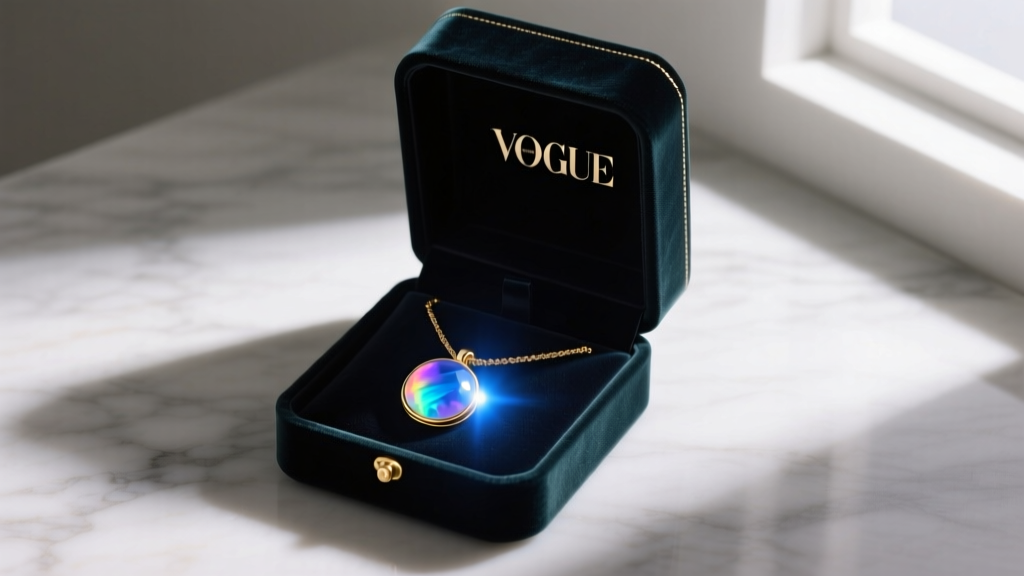
Finding a gift that feels deeply personal and visually captivating can be a challenge. Enter the iridescent necklace—a category of jewelry that defies static color palettes and shifts dynamically with the wearer's movements. Unlike traditional faceted gemstones that rely on simple light reflection, iridescent gems interact with light on a microscopic level, producing optical phenomena that feel almost magical. Whether you are shopping for a milestone anniversary, a graduation, or a significant career transition, understanding the specific gemological properties of these stones will help you select a piece that resonates emotionally and aesthetically.
Decoding Iridescent Materials: A Gemologist's Breakdown
To choose the right iridescent necklace, you must first understand the science behind the shimmer. The term 'iridescence' is often used as a catch-all, but gemologists categorize these effects into distinct optical phenomena based on their structural causes.
Adularescence in Moonstone
Rainbow moonstone (which is gemologically a transparent variety of labradorite) and true orthoclase moonstone exhibit adularescence. This milky, billowy blue or rainbow sheen is caused by light scattering between ultra-thin, alternating layers of orthoclase and albite feldspar. According to GIA's Moonstone Overview, the thinnest layers produce the most prized blue flashes. When gifting moonstone, you are offering a stone historically tied to new beginnings and intuition, making it perfect for weddings or the birth of a child.
Labradorescence in Labradorite
Labradorite displays 'labradorescence'—a peacock-like play of metallic greens, blues, and golds. This occurs due to light interference within microscopic lamellar twinning planes inside the crystal structure. It is a bolder, more opaque stone than moonstone. GIA's Labradorite Description notes that the highest quality stones exhibit a full spectrum of colors across the entire cabochon. This stone is ideal for graduates or entrepreneurs, symbolizing resilience and the uncovering of hidden talents.
Play-of-Color in Precious Opal
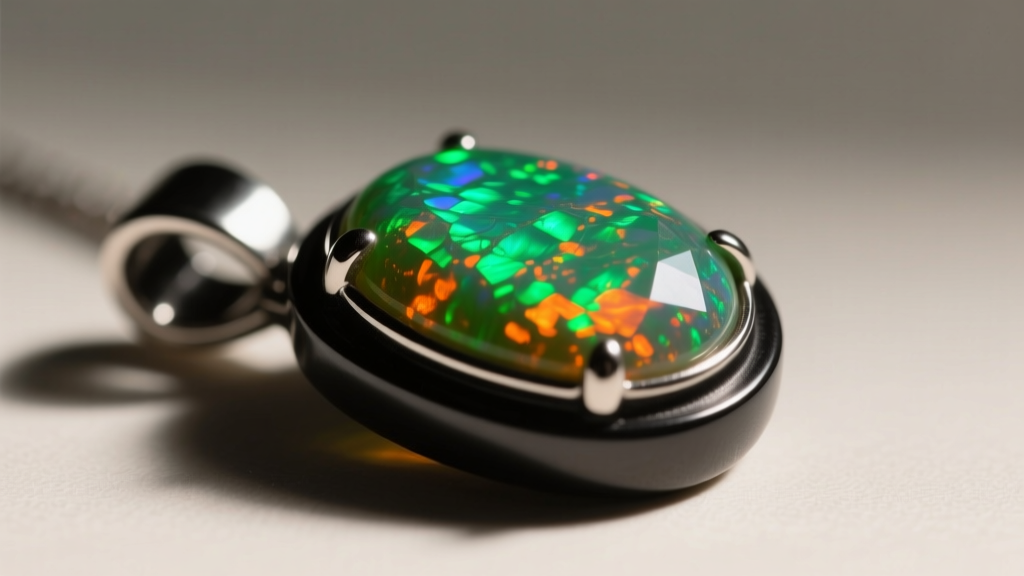
Opal's iridescence is technically termed 'play-of-color,' caused by the diffraction of light through a three-dimensional grid of microscopic silica spheres. As detailed in GIA's Opal Guide, the size and uniformity of these spheres dictate the colors seen. A crucial E-E-A-T buying tip for 2026: distinguish between Australian solid opals (stable, non-porous) and Ethiopian Welo opals (hydrophane, meaning they absorb water and can temporarily lose their color or crack if exposed to extreme humidity changes). For a low-maintenance gift, always opt for Australian boulder or solid white opals.
Thin-Film Interference in Mystic Topaz
Unlike the natural structural phenomena of feldspars and opals, Mystic Topaz achieves its kaleidoscopic rainbow effect through human engineering. A natural, colorless topaz (Mohs 8.0) is coated with an ultra-thin metallic oxide film via chemical vapor deposition. This creates thin-film interference, similar to oil on water. Because the iridescence is a surface treatment, it requires specialized bezel settings to protect the coating from abrasion. Mystic topaz is a brilliant, budget-friendly gift for vibrant personalities or 4th-anniversary celebrations, offering intense color without the opal price tag.
The Occasion Matcher: Which Stone for Which Milestone?
Matching the gemstone's metaphysical associations and visual impact to the recipient's milestone ensures your gift carries profound meaning. Below is a structured framework to guide your selection.
| Gemstone | Optical Phenomenon | Mohs Hardness | Ideal Occasion | 2026 Price Range (8x10mm Cab) |
|---|---|---|---|---|
| Rainbow Moonstone | Adularescence | 6.0 - 6.5 | Weddings, 13th Anniversary, New Mothers | $80 - $250 |
| Labradorite | Labradorescence | 6.0 - 6.5 | Graduations, Career Shifts, 7th Anniversary | $40 - $150 |
| Australian Opal | Play-of-Color | 5.5 - 6.5 | 14th Anniversary, Creative Milestones | $300 - $2,500+ |
| Mystic Topaz | Thin-Film Interference | 8.0 | 4th Anniversary, Vibrant Birthdays | $60 - $180 |
Chain Pairings and Metal Settings
The metal you choose fundamentally alters the perception of an iridescent pendant. White metals like platinum, palladium, or 14k white gold act as a neutral canvas, amplifying the cool blue and green flashes of labradorite and moonstone. Conversely, 14k or 18k yellow gold provides a warm contrast that enhances the fiery oranges and reds found in boulder opals.
For chain selection, durability is paramount. Opals and moonstones are relatively soft (Mohs 5.5-6.5) and can be damaged if a heavy pendant repeatedly strikes a fragile chain clasp. Opt for a 1.2mm to 1.5mm solid box chain or a 1.0mm wheat chain. These structures offer high tensile strength without visually overpowering the gemstone. Avoid delicate 0.5mm cable chains for any iridescent cabochon over 3 carats, as the weight will eventually kink the links and stress the jump ring.
Sizing, Layering, and Neckline Matching
An iridescent necklace requires light to perform. If the pendant sits hidden beneath a thick turtleneck, its optical properties are wasted. Consider the recipient's typical wardrobe:
- 16-Inch Choker Length: Ideal for open collars, boat necks, and summer dresses. Keeps the stone high on the clavicle where it catches ambient room light.
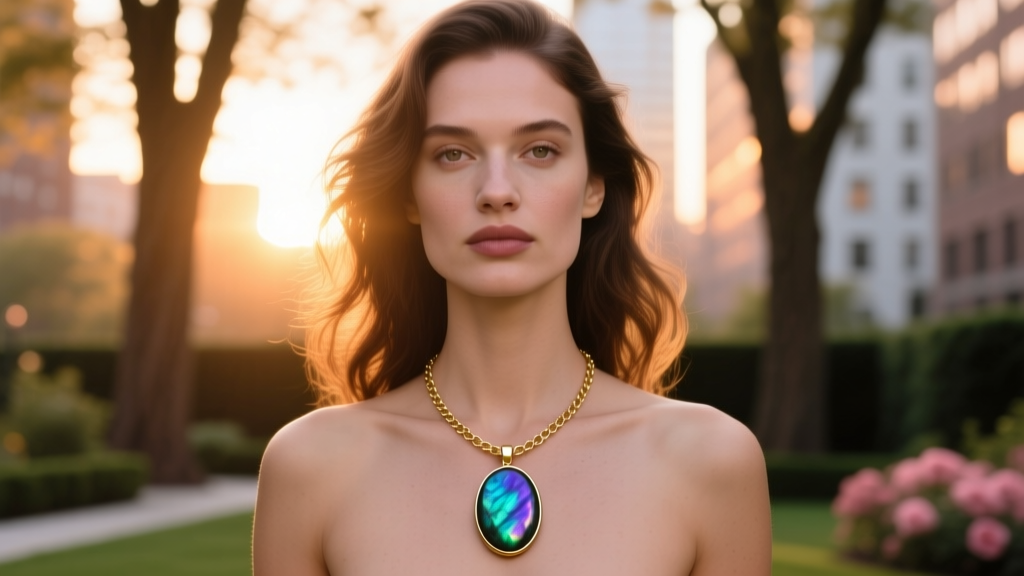
- 18-Inch Princess Length: The most versatile standard. Sits perfectly on the sternum, pairing flawlessly with V-necks and button-down shirts.
- 20 to 24-Inch Matinee/Opera Lengths: Best reserved for larger, statement-sized labradorite or opal pendants worn over solid-colored knitwear or dresses.
Care and Maintenance for Shifting Colors
Gifting an iridescent necklace also means gifting the knowledge of how to care for it. Because these stones rely on internal microscopic structures to create color, physical shocks and chemical exposures are their greatest enemies.
Never place an opal, moonstone, or labradorite necklace in an ultrasonic cleaner. The high-frequency vibrations can cause internal fracturing along the stone's cleavage planes, permanently destroying the iridescent effect.
Instead, advise the recipient to clean their necklace using only lukewarm water, a drop of mild dish soap, and a soft-bristled baby toothbrush. Furthermore, always store iridescent jewelry in a soft pouch separate from diamonds or sapphires, which sit at 9 and 10 on the Mohs scale and will easily scratch the polished surface of a feldspar or opal cabochon, dulling its light-catching ability.
Spotting Fakes and Synthetics
As demand for unique jewelry rises, so does the market for imitations. When shopping for an iridescent necklace, beware of 'opalite'—a term frequently used to sell cheap, iridescent glass. True opalite is a rare mineral, but 99% of commercial 'opalite' is mass-produced glass that lacks the directional color shifts of real silica spheres. Similarly, 'Gilson' synthetic opals exhibit a distinct 'lizard skin' columnar structure under magnification, which differs from the natural, random patchwork of precious opal. Always request a certificate of authenticity or purchase from jewelers who explicitly disclose whether a stone is natural, lab-created, or a doublet/triplet assembly.
By understanding the gemological nuances, structural requirements, and stylistic pairings of these captivating gems, you can confidently select an iridescent necklace that will serve as a cherished, dynamic heirloom for years to come.


