The Ultimate Technical Guide to Choosing a Lighting Necklace
Explore the engineering behind the modern lighting necklace. We analyze LED types, battery life, IP ratings, and wire gauges for illuminated jewelry.

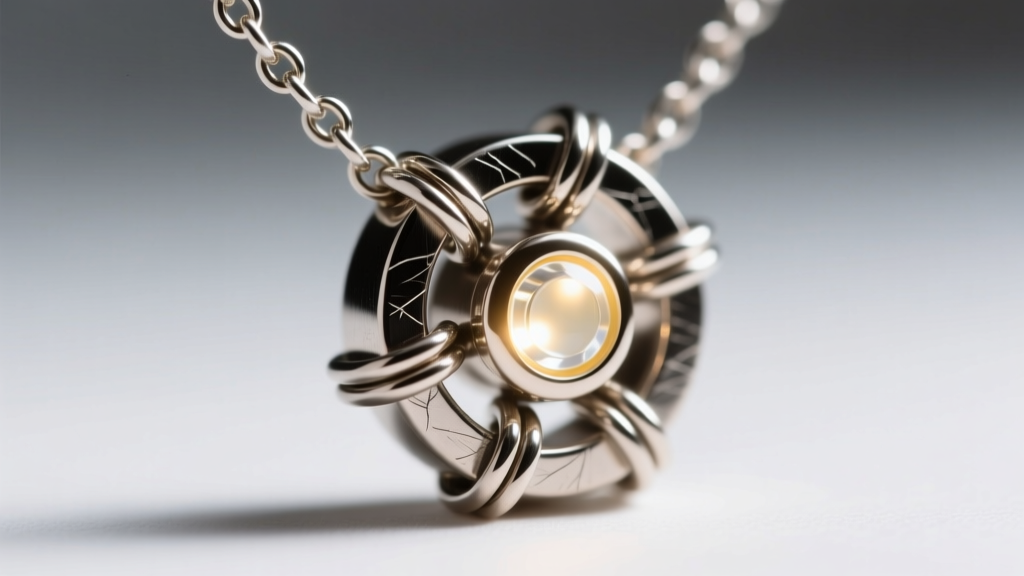
The evolution of the modern lighting necklace has transformed it from a novelty festival accessory into a sophisticated piece of wearable technology. In 2026, illuminated jewelry bridges the gap between horological engineering and fine adornment. For collectors, makers, and technical enthusiasts, understanding the micro-electronics, metallurgical choices, and waterproofing protocols behind a high-end lighting necklace is essential before making an investment. This guide provides a deep dive into the technical specifications that separate premium illuminated pendants from mass-produced novelties.
The Engineering of Illuminated Jewelry
Designing a reliable lighting necklace requires balancing three competing factors: miniaturization, thermal management, and structural durability. Unlike standard jewelry, an illuminated piece must house a power source, a microcontroller (for dynamic pieces), current-limiting resistors, and the light-emitting diodes themselves, all within a pendant that rarely exceeds 25mm in diameter. The chassis must act as both an aesthetic shell and a protective Faraday cage, shielding delicate micro-SMD (Surface Mount Device) solder joints from the mechanical shock of daily wear and the corrosive effects of human sweat.
Core Components: LEDs, Optics, and Diffusers
The heart of any premium lighting necklace is the LED emitter. High-end pieces utilize micro-SMD LEDs, specifically in the 0402 (1.0mm x 0.5mm) or 0603 (1.6mm x 0.8mm) imperial packages. These microscopic components require precise forward voltage (Vf) management. For instance, a white or blue SMD LED typically requires a Vf of 2.8V to 3.2V, while red emitters operate at 1.8V to 2.2V. Without a properly sized current-limiting resistor (often a 0402 100-ohm SMD resistor), the LED will experience thermal runaway and fail within minutes.
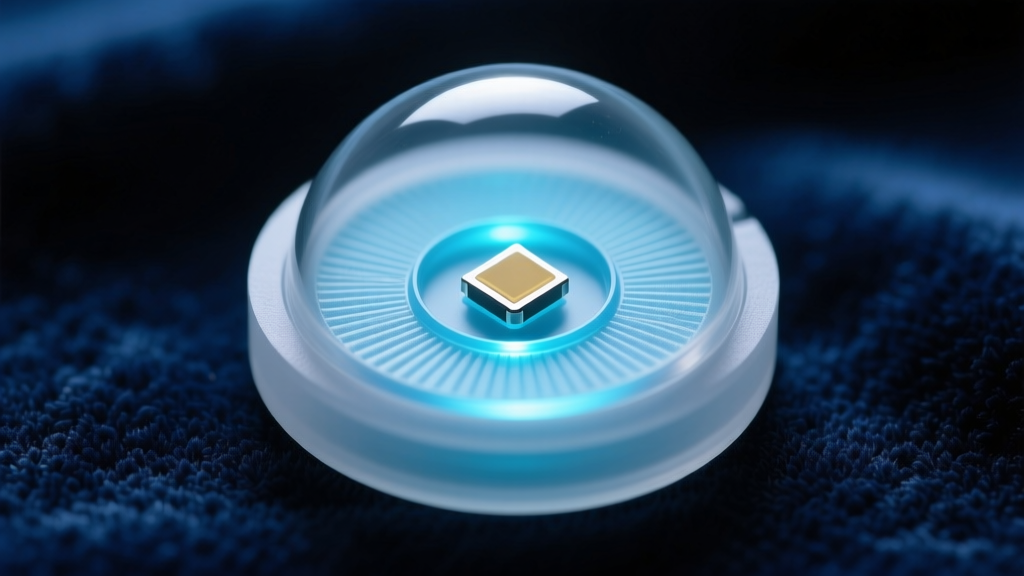
To prevent the harsh, directional glare typical of bare LEDs, expert jewelers employ optical-grade diffusers. Platinum-cured silicone with a Shore A hardness of 10 to 20 is the industry standard for 2026. It offers superior light scattering and remains flexible, preventing micro-fractures when the pendant is dropped. Cast acrylic is sometimes used for rigid, geometric pendants, but it requires precise sanding and vapor polishing to achieve a uniform glow. For deeper technical specifications on micro-emitters, Adafruit's LED component database remains an invaluable resource for jewelry engineers.
Power Systems: Coin Cells vs. Micro-LiPo Batteries
Power delivery dictates the lifespan and form factor of a lighting necklace. The choice of battery chemistry fundamentally alters the pendant's architecture.
| Battery Type | Nominal Voltage | Typical Capacity | Rechargeable? | Best Application |
|---|---|---|---|---|
| CR1220 Lithium Coin | 3.0V | 40 mAh | No | Ultra-thin, minimalist pendants |
| CR2032 Lithium Coin | 3.0V | 225 mAh | No | Larger statement pieces, long runtime |
| Micro-LiPo Pouch | 3.7V | 100 - 150 mAh | Yes | High-output RGB, Bluetooth-enabled smart jewelry |
| Solid-State Micro | 3.3V | 20 - 50 mAh | Yes | Next-gen seamless casting, extreme miniaturization |
For rechargeable LiPo systems, modern lighting necklaces utilize magnetic pogo-pin charging contacts. This eliminates the need for USB-C or micro-USB ports, which are primary failure points for moisture ingress. The magnetic contacts are typically gold-plated beryllium copper to ensure low contact resistance and high corrosion resistance against skin oils.
Wiring, Soldering, and Wire Gauges
Routing power inside a jewelry clasp or pendant chain requires specialized conductors. Standard stranded wire is far too bulky. Instead, master jewelers use polyurethane-enameled copper magnet wire, typically ranging from AWG 38 to AWG 42. This wire is incredibly thin—AWG 42 is just 0.063mm in diameter—allowing it to be threaded through fine chain links or hidden inside tubular metal bezels.
Soldering Micro-Gauges
Soldering AWG 40 wire requires a temperature-controlled micro-soldering iron with a 0.5mm chisel tip and 63/37 rosin-core solder paste. Because the polyurethane enamel acts as an insulator, it must be stripped before soldering. Thermal stripping (using the iron to burn off the enamel) can leave carbon residue that increases resistance. Chemical stripping using specialized enamel-removing solvents is the preferred method for ensuring a pristine, low-resistance copper joint.
Waterproofing and IP Ratings in Lighting Necklaces
A critical failure mode for illuminated jewelry is moisture ingress, which causes galvanic corrosion on the micro-SMD joints. High-end lighting necklaces are rated to specific Ingress Protection (IP) standards.
- IP65: Protected against low-pressure water jets. Suitable for sweat and light rain, achieved via silicone O-ring seals on battery compartments.
- IP67: Protected against temporary submersion (up to 1 meter for 30 minutes). Requires conformal coating on the PCB.
- IP68: Continuous submersion. Requires full epoxy potting of the internal electronics cavity.
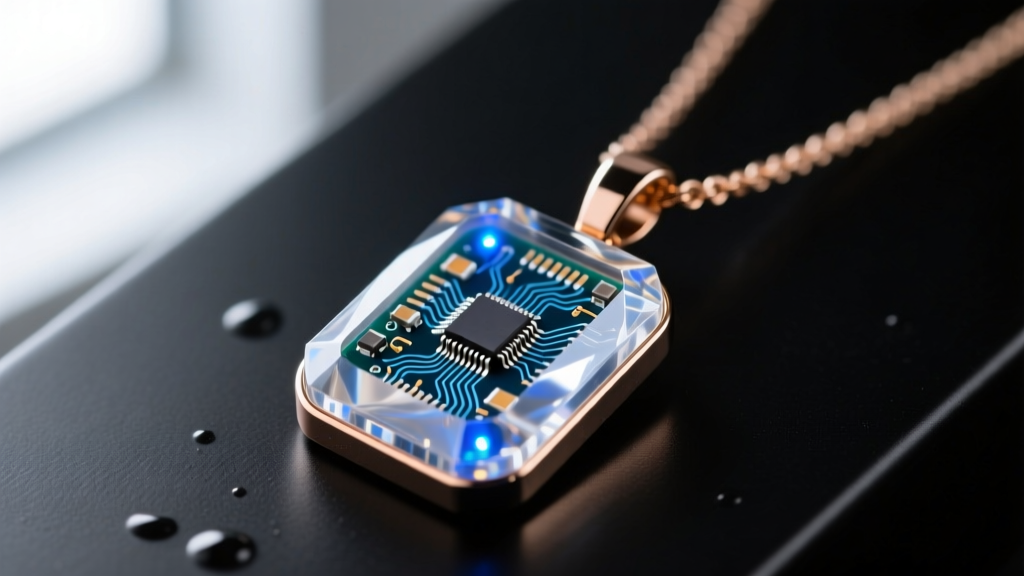
Epoxy potting involves encasing the entire micro-controller and LED array in a two-part, optically clear jeweler's epoxy. This not only provides an IP68 waterproof seal but also acts as a secondary structural shock absorber. However, epoxy potting makes battery replacement impossible, meaning the piece is designed for a sealed, rechargeable lifecycle.
Metal Alloys and Thermal Management
While micro-LEDs produce minimal heat compared to traditional lighting, high-density RGB arrays in smart pendants can generate enough thermal energy to cause discomfort against the skin. The choice of metal alloy plays a vital role in thermal dissipation. According to Rio Grande's metallurgical guides, different jewelry metals exhibit vastly different thermal conductivities:
Thermal Conductivity (W/m·K):
Sterling Silver: ~429
Brass: ~109
Titanium (Grade 5): ~21.9
Sterling silver is an exceptional heat sink, pulling thermal energy away from the battery and LED array efficiently. Titanium, while highly prized for its hypoallergenic properties and lightweight strength, is a poor thermal conductor. If a lighting necklace features a high-output LED array, a titanium shell must be engineered with internal thermal vias or copper core inlays to prevent localized heat buildup that could degrade the LiPo battery.
Sourcing, Pricing, and Authenticity
When evaluating a lighting necklace, the price should directly correlate with the engineering complexity and material grades used.
- Entry-Level ($20 - $60): Usually features fiber-optic strands rather than true micro-SMD LEDs. Housed in injection-molded acrylic or base metals. Powered by disposable CR1220 cells with no waterproofing.
- Mid-Tier ($80 - $200): Genuine SMD LEDs, optical silicone diffusers, and sterling silver or brass housings. May feature basic IP65 splash resistance and magnetic switch activation.
- High-End / Bespoke ($250 - $800+): Fully potted IP68 electronics, micro-LiPo batteries with magnetic pogo-pin charging, CNC-milled titanium or 14k/18k gold chassis, and programmable Bluetooth microcontrollers.
Understanding these technical parameters ensures that you are investing in a piece of wearable technology that will endure. A true lighting necklace is not just a pendant; it is a triumph of micro-engineering wrapped in fine art.


