Multi Colored Diamond Necklace Buying Guide: What to Look For
Discover how to choose the perfect multi colored diamond necklace. Learn about color grading, natural vs. lab-grown stones, and setting styles.

The Allure of Fancy Color Diamonds
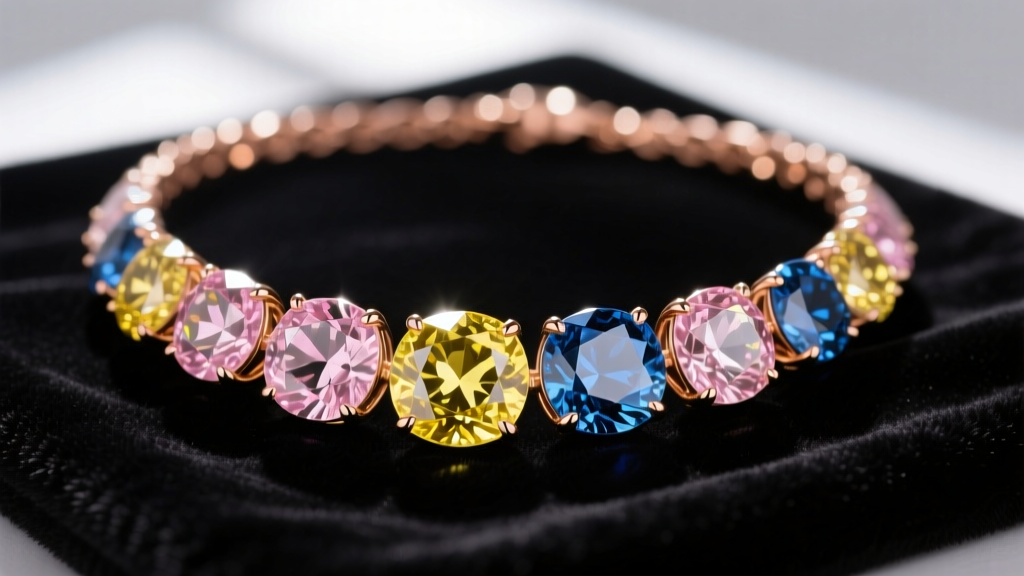
A multi colored diamond necklace is more than just a piece of jewelry; it is a wearable spectrum of geological miracles. While colorless diamonds are prized for their lack of hue, fancy color diamonds are celebrated for their vibrant saturation. In nature, only about 1 in 10,000 diamonds possesses a distinct natural color, making a necklace featuring multiple hues an exceptionally rare and curated masterpiece. Whether you are looking at a gradient ombre design or a scattered 'rainbow' tennis necklace, understanding the nuances of color origin, grading, and structural integrity is critical before making a high-ticket investment.
Natural vs. Lab-Grown: Navigating the Modern Market
As of 2026, the jewelry market offers unprecedented access to fancy color diamonds through both natural mining and advanced laboratory creation. Lab-grown diamonds possess the exact same chemical, physical, and optical properties as their mined counterparts. However, the pricing and investment trajectories differ vastly.
According to the Federal Trade Commission (FTC) Jewelry Guides, retailers must clearly disclose the origin of the stones and any post-growth or post-mining treatments used to enhance color. Many natural fancy color diamonds undergo irradiation and high-heat annealing to stabilize or improve their hue. While these treatments are generally permanent, a natural, untreated fancy color diamond commands a massive premium over a treated or lab-grown equivalent.
| Feature | Natural (Untreated) | Natural (Treated) | Lab-Grown (CVD/HPHT) |
|---|---|---|---|
| Color Origin | Trace elements (e.g., Nitrogen, Boron) | Irradiation & Annealing | Controlled gas mixtures & pressure |
| Price per Carat (Avg) | $15,000 - $500,000+ | $2,000 - $15,000 | $400 - $2,500 |
| Resale Value | High (Auction grade) | Low to Moderate | Minimal |
| Color Consistency | Difficult to match across 30+ stones | Easier to match via treatment | Highly consistent, easy to match |
Understanding the GIA Color Grading System
Unlike the D-to-Z scale used for colorless diamonds, fancy color diamonds are graded on a completely different system developed by the Gemological Institute of America (GIA). The GIA evaluates fancy colors based on three dimensions: hue (the actual color), tone (lightness or darkness), and saturation (intensity).
The Intensity Scale
The GIA intensity scale for fancy colors includes nine grades: Faint, Very Light, Light, Fancy Light, Fancy, Fancy Intense, Fancy Vivid, Fancy Deep, and Fancy Dark. When commissioning or buying a multi colored diamond necklace, visual harmony is paramount. A necklace that mixes 'Fancy Light' stones with 'Fancy Vivid' stones will look disjointed. Expert jewelers typically curate stones that fall within the same intensity bracket—most commonly 'Fancy' to 'Fancy Intense'—to ensure the necklace reads as a cohesive design rather than a chaotic assortment.
Harmonizing the Spectrum
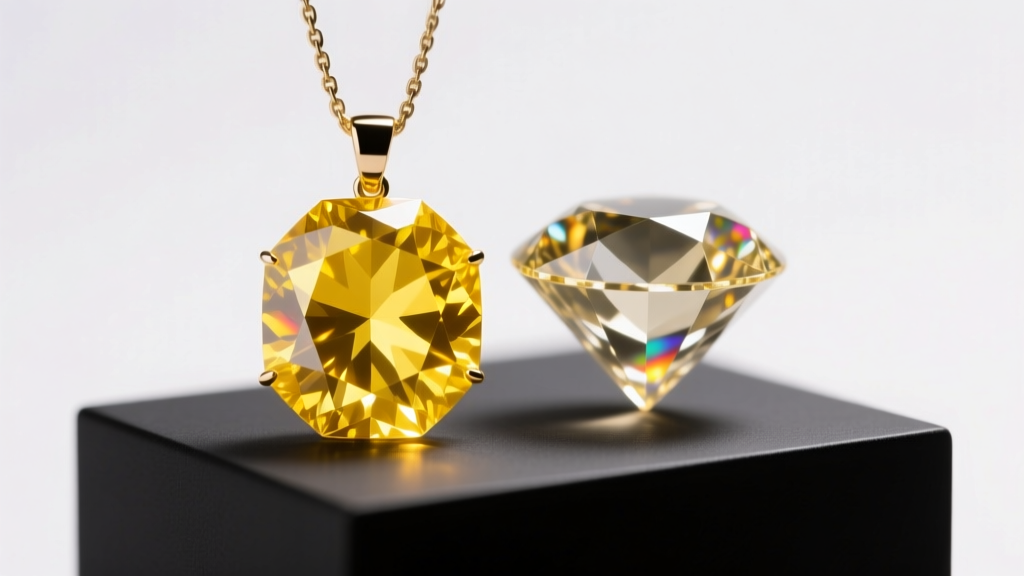
Color theory plays a massive role in necklace design. 'Analogous' multi colored diamond necklaces feature colors adjacent on the color wheel (e.g., yellow, orange, and pink), creating a warm, sunset-like gradient. 'Complementary' designs might mix blue and orange diamonds for high-contrast vibrancy. When evaluating a multi-stone piece, view it in natural daylight. Store lighting is often heavily calibrated to make diamonds sparkle, but it can wash out subtle secondary hues like purplish-pinks or greenish-yellows.
Metal Choices and Setting Security
The metal you choose acts as the canvas for your multi colored diamond necklace. Because fancy color diamonds are often cut to maximize color retention rather than brilliance, the setting must be engineered to both protect the stone and enhance its hue.
- 18k Rose Gold: The copper alloy in rose gold naturally amplifies the warmth of pink, peach, and orange diamonds. It is the premier choice for sunset-gradient necklaces.
- Platinum & 18k White Gold: These neutral, highly reflective metals provide a stark contrast that makes cool-toned diamonds (blues, greens, and purples) pop. Platinum is highly recommended for heavy tennis necklaces due to its tensile strength.
- Two-Tone Settings: High-end bespoke pieces often use yellow gold prongs for yellow diamonds and white gold bezels for blue diamonds within the same necklace to optimize each stone's individual color profile.
Prong vs. Bezel Settings
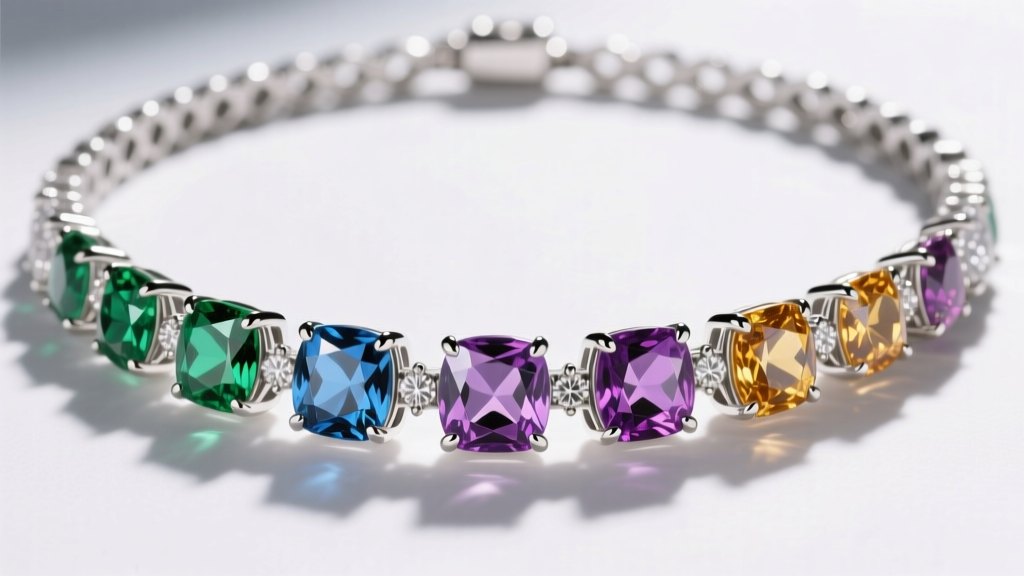
While traditional prong settings allow maximum light entry, they leave the girdle of the diamond exposed. For a multi colored diamond necklace worn frequently, a half-bezel or full-bezel setting is vastly superior. Bezels protect the vulnerable edges of fancy-shaped stones (like pears or marquises, which are common in color gradients) and prevent the stones from snagging on fabrics, which can eventually loosen the setting.
Pricing Realities and Investment Potential
Pricing a multi colored diamond necklace is complex because it is not merely the sum of its carat weights. The 'matching premium' is a significant factor. Sourcing 40 natural fancy color diamonds that share similar clarity, cut quality, and intensity grades can take a master gemologist years. Consequently, a natural multi-stone necklace will cost exponentially more per carat than a single solitaire of the same weight.
For buyers focused on aesthetics rather than generational wealth transfer, lab-grown multi colored diamond necklaces offer a brilliant alternative. In 2026, a 15-carat lab-grown rainbow tennis necklace featuring Fancy Vivid equivalents can be acquired for $8,000 to $15,000, whereas a natural equivalent would easily exceed $250,000.
The Pre-Purchase Inspection Checklist
Before finalizing your purchase, run through this rigorous checklist to ensure you are getting exactly what you are paying for:
- Verify the Origin Report: Ensure every major stone (or the necklace as a whole) is accompanied by a GIA or AGS report explicitly stating 'Natural' or 'Laboratory-Grown'.
- Check for Treatment Disclosures: Look for the phrase 'irradiated and annealed' on the certificate. This is standard for many colors but must be factored into the price.
- Assess Clarity Pragmatically: Do not overpay for VVS clarity in fancy colors. SI1 or SI2 clarity is perfectly acceptable as long as the inclusions are not visible to the naked eye and do not compromise the stone's structural integrity.
- Test the Clasp Mechanism: A heavy multi-stone necklace requires a box clasp with a figure-eight safety latch. Standard lobster clasps are a liability for high-value, heavy pieces.
- Evaluate the Drape: Ask to see the necklace on a bust or neck form. Multi-stone necklaces must articulate fluidly; if the links are too rigid, the necklace will kink and sit awkwardly on the collarbone.
By prioritizing color harmony, demanding transparent origin reports, and selecting the appropriate structural settings, you can confidently acquire a multi colored diamond necklace that is as durable as it is breathtaking.


