The Multi Strand Seed Pearl Necklace: A Material & Nacre Guide
Discover how to evaluate a multi strand seed pearl necklace. Compare nacre thickness, luster grades, stringing materials, and clasp hardware.

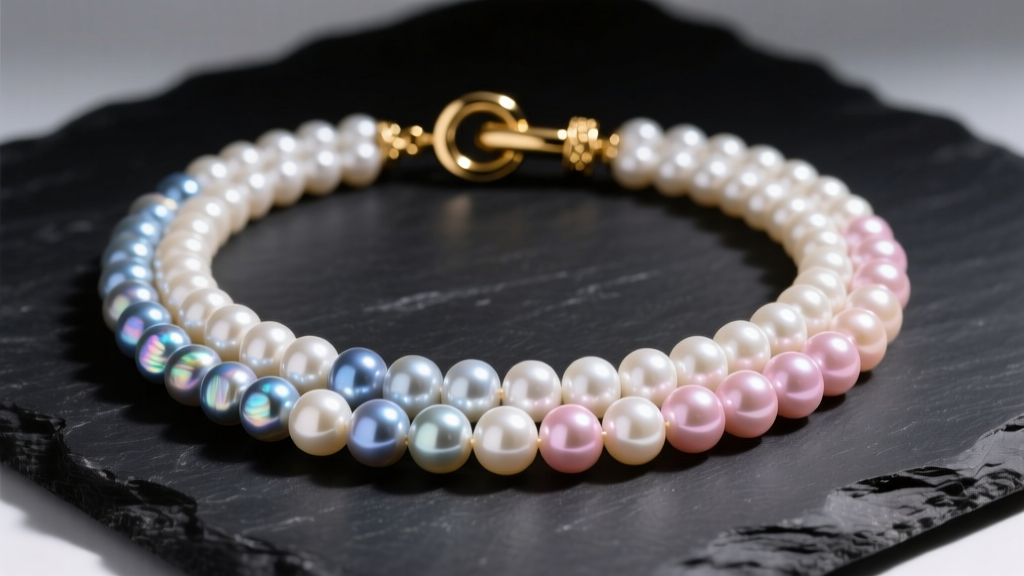
A multi strand seed pearl necklace is a masterclass in texture, light reflection, and intricate craftsmanship. Unlike single-strand statement pieces, multi-strand constructions rely on the cumulative visual weight of hundreds of tiny pearls, typically ranging from 2mm to 4mm in diameter. However, the sheer volume of material used in these designs makes understanding the underlying properties—nacre quality, stringing mediums, and hardware tension—critical for long-term wearability. In this comprehensive material guide, we break down the exact specifications you need to evaluate before investing in these complex jewelry pieces.
The Core Material: Freshwater vs. Akoya Seed Pearls
The term 'seed pearl' historically referred to any pearl under 3mm, but modern gemological standards generally classify them as pearls ranging from 2mm to 4mm. When shopping for a multi strand seed pearl necklace, you will primarily encounter two biological origins: freshwater and saltwater (Akoya).
The Freshwater Advantage: Solid Nacre
The vast majority (over 95%) of seed pearls on the market are freshwater, cultivated primarily in the Hyriopsis cumingii mussel in China. Freshwater pearls are tissue-nucleated, meaning a tiny piece of mantle tissue is inserted into the host mussel without a solid bead. The result is a pearl that is 100% solid nacre. For seed pearls, this is a massive structural advantage. Because they are so small, a 100% nacre composition ensures they will never 'peel' or flake, even after decades of friction against the skin and adjacent strands.
The Akoya Rarity: Bead-Nucleated Fragility
Akoya pearls (Pinctada fucata martensii) are bead-nucleated. A perfectly round shell bead is implanted, and the oyster secretes nacre over it. For an Akoya pearl to be classified as a seed pearl (e.g., 3mm), the internal bead must be roughly 2mm to 2.5mm, leaving only 0.25mm to 0.5mm of nacre on the surface. While Akoya seed pearls possess a sharper, more mirror-like luster, their thin nacre makes them highly susceptible to chipping and peeling, especially in multi-strand designs where the pearls constantly rub against one another.
Expert Insight: If a retailer claims to sell a multi strand seed pearl necklace made of 'natural' saltwater seed pearls at a sub-$500 price point, it is almost certainly a misrepresentation. True Akoya seed pearls are exceptionally rare and command premium pricing due to the high mortality rate of oysters nucleated with such tiny beads.
Nacre Thickness and Luster Grading
Because multi-strand necklaces rely on a unified glow, luster consistency across all strands is paramount. The Gemological Institute of America (GIA) evaluates pearl luster based on the sharpness of light reflections on the surface.
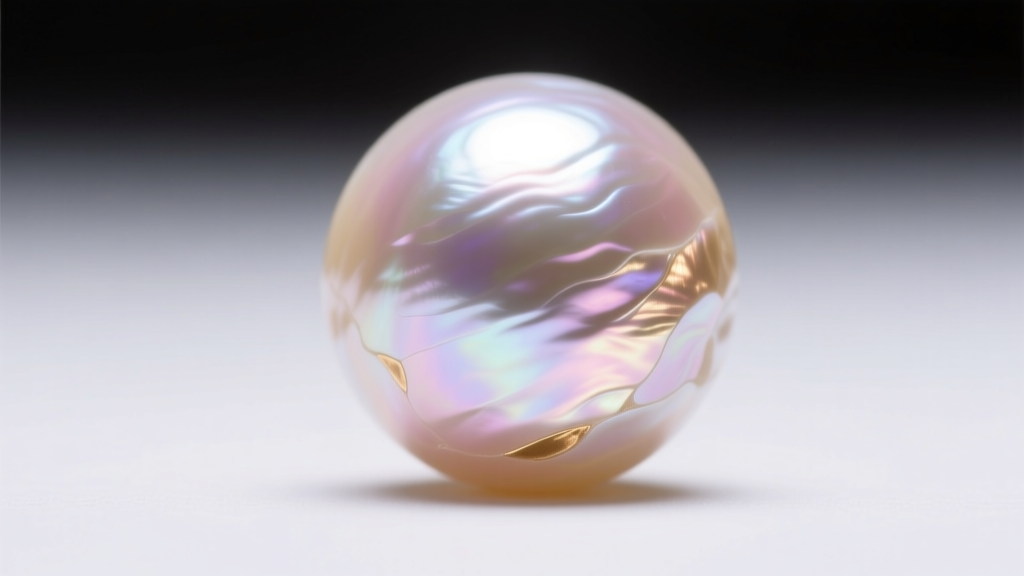
- Excellent Luster: Reflections are bright, sharp, and distinct. You can clearly see the outline of the light source on the pearl's surface. This requires a cultivation period of at least 18 to 24 months for freshwater varieties.
- Good Luster: Reflections are bright but slightly hazy around the edges. Common in commercial-grade multi-strand necklaces.
- Fair/Poor Luster: Reflections are dim, chalky, or completely diffused. This indicates premature harvesting (often under 6 months) where the aragonite crystals in the nacre have not fully compacted.
When inspecting a multi strand seed pearl necklace, hold it under a single, direct light source. If the pearls at the center of the necklace reflect light sharply, but the pearls near the clasp appear chalky, the manufacturer has mixed gem-grade and commercial-grade pearls to cut costs.
Stringing Mediums and Structural Integrity
The stringing material is the unseen skeleton of a multi strand seed pearl necklace. A 5-strand necklace containing 2.5mm pearls can easily comprise over 800 individual pearls, creating significant cumulative weight and lateral tension. The choice of stringing medium dictates the drape, durability, and maintenance cycle of the piece.
| Stringing Material | Tensile Strength | Stretch Factor | Best Application |
|---|---|---|---|
| Griffin 100% Natural Silk | Low (Size 00 or 0) | High (Stretches 5-10% over time) | Knotted, single or double-strand designs. Requires restringing every 2-3 years. |
| PowerPro Braided Nylon | High (10lb - 15lb test) | Negligible (Under 1%) | Unknotted multi-strand designs requiring fluid drape and high tensile strength. |
| SoftFlex Stainless Wire | Very High (.010" or .013" gauge) | Zero | Heavier multi-strand designs or patterns incorporating crystal spacers. |
For true seed pearls (2mm-3mm), the drill holes are exceptionally small, typically ranging from 0.4mm to 0.6mm. This precludes the use of standard beading wire. Jewelers must use micro-filament nylons or ultra-fine silk (Size 00, which is 0.30mm thick). If a multi-strand necklace is unknotted to allow for a fluid, liquid-like drape, high-test braided nylon is the industry standard to prevent catastrophic snapping.
Clasp Hardware and Tension Management
The clasp on a multi strand seed pearl necklace is not merely a decorative closure; it is a critical load-bearing component. A standard spring-ring or lobster clasp will fail under the multi-directional pull of three or more strands, leading to warping or accidental unhooking.
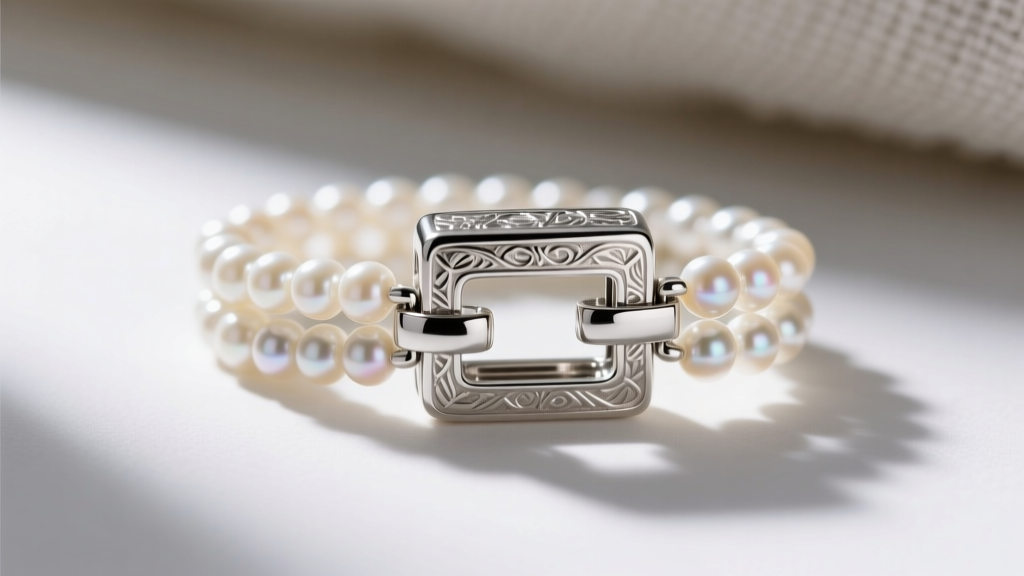
Box Clasps with Figure-8 Safeties
The gold standard for multi-strand pearl jewelry is the multi-strand box clasp. This mechanism features a folded metal 'tongue' that compresses and snaps into a secure box housing. Crucially, high-quality versions include a figure-8 safety latch—a secondary wire loop that snaps over a button on the opposite side. This ensures that if the primary box mechanism is snagged and pulled open, the necklace remains secured to the neck.
French Wire (Bullion) Protection
When silk or nylon is used, the friction of the pearls and the clasp rubbing against the stringing material will eventually cause it to fray and snap. Authoritative jewelers, as noted by the American Gem Society (AGS), utilize French wire (also known as bullion or gimp)—a tiny, hollow coil of fine sterling silver or gold-filled wire. The stringing material passes through this coil before looping into the clasp ring, acting as a sacrificial metal shield that absorbs 100% of the friction.
Price vs. Value: What You Are Actually Paying For
Understanding the material properties allows you to accurately assess the pricing of a multi strand seed pearl necklace. The market is segmented into three distinct tiers based on material authenticity and construction quality:
- Imitation / Shell Pearl ($30 - $80): Made from glass or plastic beads coated in a synthetic pearlescent essence (often derived from fish scales or synthetic mica). They are perfectly round and uniform but lack the deep, glowing orient of real nacre. The stringing is usually cheap nylon, and clasps are base metal.
- Commercial Freshwater ($150 - $400): Real freshwater seed pearls with 'Good' luster. You may notice slight variations in shape (off-round or oval) and minor blemishes. Typically strung on unknotted nylon with gold-plated brass clasps.
- Gem-Grade Freshwater ($600 - $1,500+): Top 1% of freshwater harvests. Perfectly round (or deliberately uniform baroque), 'Excellent' mirror luster, and clean surfaces. Strung on premium micro-filament with solid 14k gold or platinum multi-strand box clasps, finished with French wire protection.
When evaluating a piece, always inspect the clasp for hallmarks (e.g., 14K, 925) and look closely at the drill holes. If you see a sharp, painted-looking edge around the drill hole, or if the luster appears to 'flake' at the edges, you are likely looking at a coated imitation rather than genuine nacre. By prioritizing solid nacre composition, appropriate stringing mediums, and secure tension hardware, your multi strand seed pearl necklace will remain a resilient and luminous staple in your collection for decades.


