Styling a Vintage Aurora Borealis Necklace: 2026 Trend Guide
Discover how to authenticate, value, and style a vintage aurora borealis necklace in 2026. Expert tips on mid-century AB glass and modern layering.

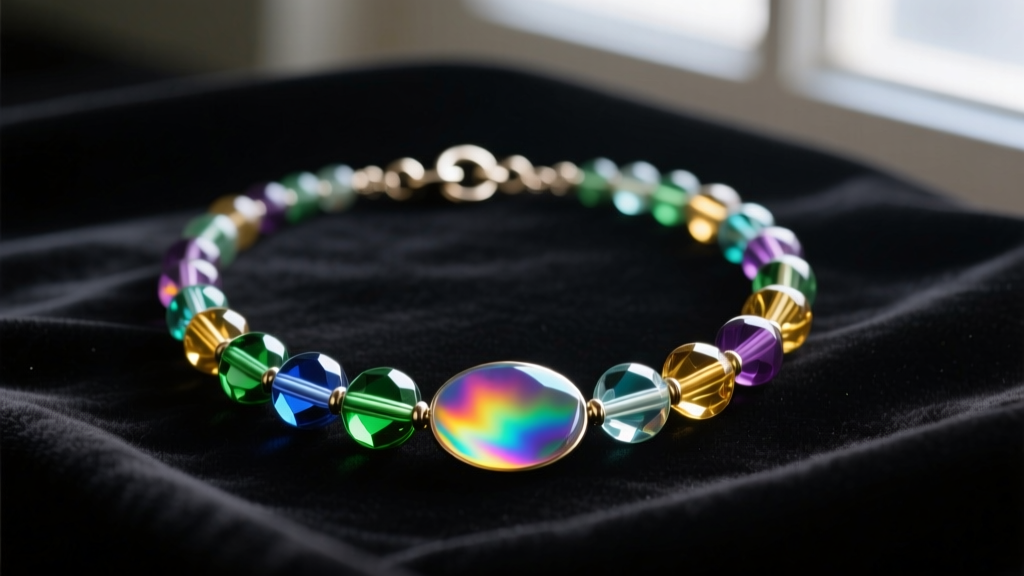
The jewelry landscape in 2026 is defined by a fascinating paradox: a craving for hyper-modern aesthetics paired with a deep reverence for mid-century craftsmanship. At the epicenter of this movement is the vintage aurora borealis necklace. Once relegated to the back of estate sale display cases, these iridescent masterpieces have reclaimed their status as essential components of the modern maximalist and curated-vintage wardrobes. But navigating the secondary market for mid-century glass requires more than just an eye for sparkle; it demands an understanding of material science, historical manufacturing techniques, and contemporary styling frameworks.
The Science of the Shimmer: Vacuum Deposition Explained
To truly appreciate a vintage aurora borealis necklace, one must understand the technology that birthed it. The 'AB' finish was not a simple paint or dye. Invented in 1955 through a collaboration between Manfred Swarovski and Christian Dior, the aurora borealis effect was achieved through a complex process called vacuum deposition. Glass crystals were placed in a vacuum chamber where microscopic layers of vaporized metal—typically gold or silver—were bonded to the surface of the glass.
This metallic vapor coating is what creates the signature rainbow refraction when light hits the facets of the crystal. According to Swarovski Group's historical archives, the original mid-century AB crystals were cut from high-lead-content glass, which provided a higher refractive index than the lead-free crystal mandated by modern environmental standards. This means that a genuine 1950s AB necklace will possess a depth of rainbow fire that modern reproductions, often reliant on surface sprays or titanium-dioxide coatings, simply cannot replicate.
Authentication Protocols: Identifying True Mid-Century Vintage
As the demand for vintage aurora borealis necklaces surges, the market has been flooded with 1980s and contemporary reproductions. Distinguishing a true mid-century piece requires a systematic approach to examining the hardware and setting techniques.
Prong Settings vs. Adhesive
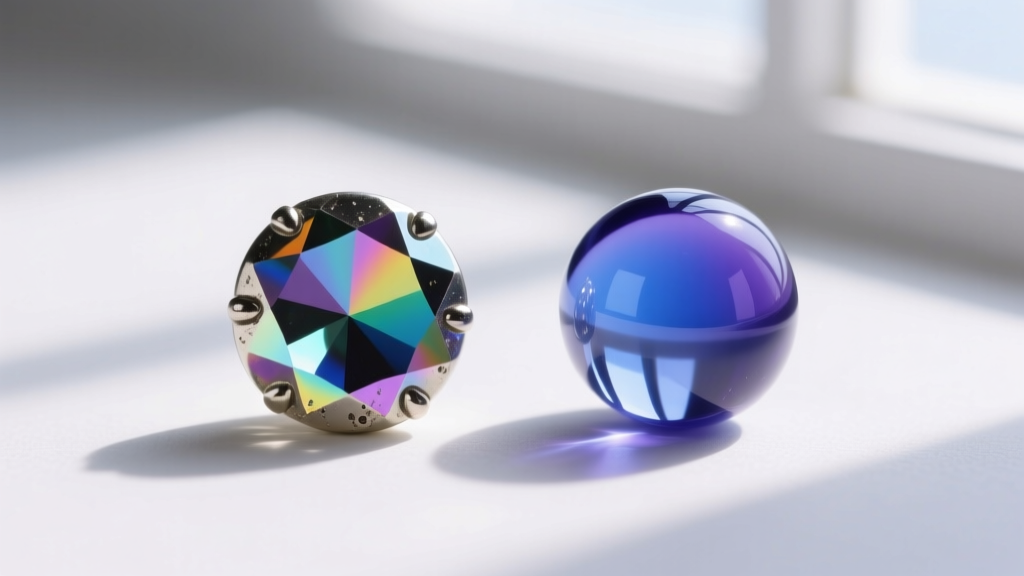
High-end vintage costume jewelry houses like Trifari, Coro, and Miriam Haskell almost exclusively used metal prong settings to secure their AB chatons and navette stones. If you examine the reverse side of the necklace and see a flat metal backing with visible glue residue or a smooth, untextured surface where the stone sits, you are likely looking at a later reproduction. True vintage pieces will feature open-back settings or carefully folded metal prongs gripping the girdle of the glass stone.
Clasp and Hardware Signatures
The evolution of jewelry clasps provides a reliable timeline for authentication. A genuine 1950s to early 1960s vintage aurora borealis necklace will typically feature a barrel clasp, a simple hook-and-eye, or an early fold-over clasp with a smooth, un-textured release lever. The ubiquitous 'lobster claw' clasp was not widely adopted in costume jewelry until the late 1970s and 1980s. Furthermore, examine the metal links; mid-century pieces often feature rhodium-plated brass or white metal that has developed a specific, mellow patina, unlike the harsh, bright shine of modern electroplated alloys.
Market Valuation: 2026 Collector Pricing Tiers
The secondary market for vintage AB necklaces has stratified into distinct collector tiers. Pricing is heavily influenced by the manufacturer's mark, the complexity of the design, and the condition of the vapor coating. Below is a comparative analysis of current market valuations for authenticated pieces in excellent condition.
| Manufacturer | Prime Era | Signature Mark | 2026 Market Price Range |
|---|---|---|---|
| Christian Dior | 1955–1965 | 'Chr. Dior' or 'Dior' stamped on plaque | $350 – $1,200+ |
| Miriam Haskell | 1950s–1960s | 'Miriam Haskell' oval plaque | $400 – $1,500 |
| Trifari | 1950s–1960s | 'Trifari' with crown symbol | $120 – $350 |
| Coro / Vendome | 1950s–1970s | 'Coro' script or 'Vendome' | $65 – $225 |
| Unsigned / European | 1950s–1960s | None (identified by clasp/weight) | $45 – $150 |
When evaluating unsigned pieces, collectors often refer to the Victoria and Albert Museum's jewelry collection archives to compare setting styles and glass cuts with known European manufacturers from the same era, such as Weiss or Kramer.
2026 Styling Frameworks: Curated Dissonance
The most critical mistake modern wearers make with vintage costume jewelry is treating it as a literal costume. In 2026, the prevailing trend is 'curated dissonance'—the intentional clashing of highly formal, sparkling vintage pieces with relaxed, utilitarian, or matte garments. A vintage aurora borealis necklace should not be worn with a sequined gown; it should be used to elevate the mundane.

The Matte-and-Shimmer Contrast
The iridescent flash of AB glass is best highlighted when placed against light-absorbing textures. Pair a heavy, multi-strand vintage AB bib necklace with a distressed, heavyweight charcoal cashmere sweater or a matte black silk slip dress. The lack of competing shine in the garment forces the eye directly to the rainbow refraction of the crystals. Avoid pairing AB necklaces with satin, velvet, or high-gloss synthetics, as the competing light reflections will muddy the visual impact of the jewelry.
Asymmetrical Layering with Industrial Metals
Layering a delicate vintage AB pendant or choker with heavier, industrial-style chains is a hallmark of current styling. To execute this without damaging the fragile vintage piece, use a 2mm to 3mm oxidized sterling silver curb chain or a matte-black PVD-coated stainless steel rope chain. The dark, muted tones of oxidized silver provide a striking, moody backdrop that makes the pastel rainbow hues of the AB finish appear almost holographic. Ensure the vintage piece sits at least two inches higher on the clavicle than the heavier chain to prevent the metal links from grinding against the delicate glass coating.
Preservation: Protecting the Microscopic Coating
The vacuum-deposited metallic layer on a vintage aurora borealis necklace is incredibly durable against light and air, but it is highly vulnerable to friction, chemicals, and ultrasonic vibrations. Improper cleaning is the leading cause of 'wear spots'—bald patches on the crystal where the rainbow effect has been permanently stripped away, leaving only clear or pale-colored glass beneath.
- Never Use Ultrasonic Cleaners: The high-frequency cavitation bubbles generated by ultrasonic jewelry cleaners will strip the AB coating off mid-century glass in a matter of seconds.
- Avoid Ammonia and Alcohol: Commercial glass cleaners, rubbing alcohol, and ammonia-based solutions will chemically degrade the metallic bond.
- The Distilled Water Method: To clean your necklace, mix a single drop of pH-neutral baby shampoo into a bowl of distilled water. Dip a lint-free microfiber cloth into the solution, wring it out until it is barely damp, and gently dab the crystals. Never rub or apply pressure.
- Drying Protocol: Allow the piece to air dry on a clean cotton towel. Do not use a hairdryer or compressed air, as the heat and propellants can damage the finish.
By understanding the material science, mastering authentication, and applying modern styling dissonance, you can seamlessly integrate a vintage aurora borealis necklace into a contemporary 2026 wardrobe. These mid-century artifacts are not just jewelry; they are wearable examples of post-war technological innovation, capturing a spectrum of light that continues to captivate collectors and stylists alike.