Why Is My Necklace Tarnishing? A Metal Properties Guide
Discover why your favorite jewelry reacts to skin. We compare metal properties, tarnish rates, and durability to answer: why is my necklace turning green?

The Chemistry of Tarnish: Why Metals React
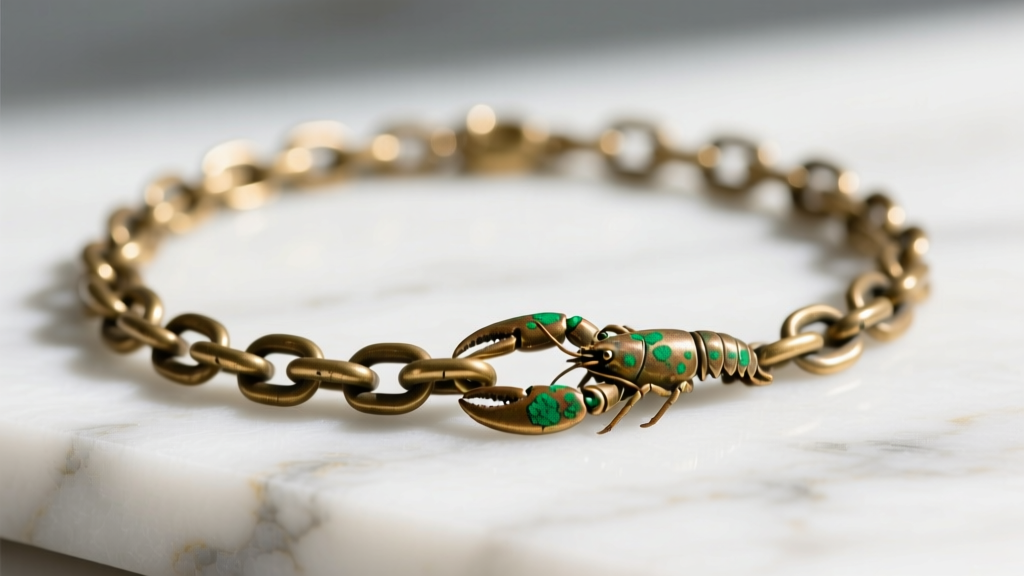
When you pull your favorite chain from the jewelry box only to find it dull, discolored, or leaving a green ring on your neck, the immediate question is often: why is my necklace tarnishing or turning my skin green? The answer lies in metallurgy and basic chemistry. Pure gold and pure platinum are highly unreactive, but they are rarely used in their pure form for chain necklaces because they lack the tensile strength required for daily wear. Instead, they are alloyed with base metals like copper, zinc, and nickel.
When these base metals are exposed to environmental factors—specifically oxygen, sulfur, and the chlorides and lactic acid present in human sweat—they undergo oxidation. Copper, a common alloying agent in both gold and silver, reacts with sweat to form copper chloride, which manifests as that notorious green residue on your skin. Silver, on the other hand, reacts with hydrogen sulfide in the air (and in common foods like eggs and onions) to form silver sulfide, resulting in a dark, blackened patina. Understanding these chemical triggers is the first step in diagnosing your jewelry's degradation.
Metal Comparison Chart: Durability vs. Reactivity
Not all chains are created equal. The Gemological Institute of America (GIA) emphasizes that a metal's hardness and its alloy composition dictate both its lifespan and its maintenance requirements. Below is a comparative breakdown of common necklace materials, measuring their Vickers Hardness (HV), reactivity, and market positioning.
| Metal / Alloy | Purity / Hallmark | Vickers Hardness (HV) | Tarnish Resistance | Avg. Price Tier |
|---|---|---|---|---|
| Platinum 950 | Pt950 | 120-140 | Excellent | $$$$$ |
| 18k Yellow Gold | 750 | 130-150 | Very Good | $$$$ |
| 14k Yellow Gold | 585 | 150-170 | Good | $$$ |
| Sterling Silver | 925 | 60-70 | Poor (Requires Care) | $$ |
| Jeweler's Brass | N/A | 80-110 | Very Poor | $ |
Notice the inverse relationship between purity and hardness. 18k gold (75% pure gold) is softer and more prone to scratching than 14k gold (58.5% pure gold), but it is significantly more resistant to tarnishing because it contains less reactive copper and zinc. Sterling silver, while beautiful, sits at the bottom of the hardness scale and requires the most rigorous maintenance to prevent silver sulfide buildup.
Decoding Hallmarks: What Your Jewelry Stamps Really Mean
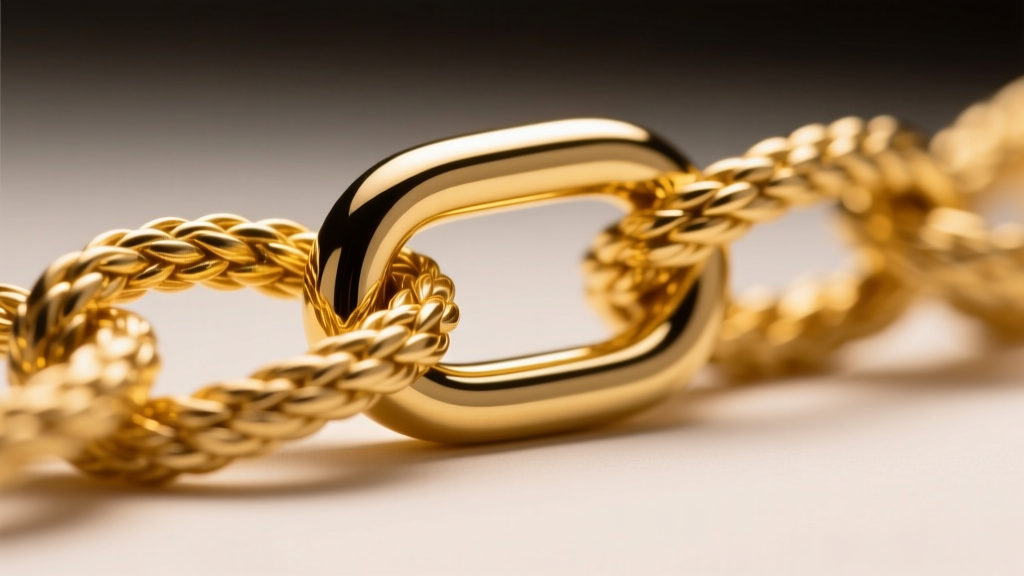
To truly understand your necklace's properties, you must read its hallmark. According to The London Assay Office, a hallmark is a legal guarantee of a metal's fineness. However, consumers often misinterpret these stamps.
- 925 (Sterling Silver): Contains 92.5% pure silver and 7.5% copper. That 7.5% copper is the culprit behind black tarnish and occasional green skin reactions if the wearer has highly acidic sweat.
- 750 (18k Gold): Contains 75% pure gold. The remaining 25% is usually a mix of silver and copper. High-quality 18k chains will rarely tarnish unless exposed to harsh household chemicals like bleach.
- 585 (14k Gold): Contains 58.5% pure gold. The higher concentration of alloy metals makes it the gold standard for durable, everyday chain necklaces, though it can dull over years of exposure to lotions and perfumes.
- 417 (10k Gold): Contains only 41.7% pure gold. Highly durable and scratch-resistant, but the massive 58.3% alloy content makes it highly susceptible to oxidation and skin discoloration.
Expert Insight: If your necklace lacks a hallmark or features stamps like "18k HGE" (Heavy Gold Electroplate) or "14k GF" (Gold Filled), you are dealing with surface treatments over a base metal core, which fundamentally changes the chain's structural integrity and care requirements.
The Micron Reality: Plating vs. Solid Metals
Many consumers ask, "Why is my necklace peeling?" The answer usually involves plated jewelry. The World Gold Council notes that the longevity of plated jewelry is entirely dependent on the thickness of the gold layer, measured in microns.
Flash Plating vs. Vermeil vs. Gold-Filled
Flash Plating: Often found in fast-fashion jewelry, flash plating deposits less than 0.5 microns of gold over a brass or copper base. This microscopic layer wears away within weeks of daily friction, exposing the reactive base metal to your skin and causing immediate tarnishing and green discoloration.
Gold Vermeil: To be legally classified as vermeil, a piece must feature a sterling silver base coated with at least 2.5 microns of gold (usually 14k or 18k). While vastly superior to flash plating, the friction of a chain rubbing against itself will eventually wear through the 2.5-micron layer, especially at the clasp and jump rings.
Gold-Filled: This is a mechanical bonding process where a thick layer of solid gold (constituting at least 1/20th of the total weight) is heat-bonded to a brass core. Gold-filled chains can last decades without tarnishing, making them the most cost-effective alternative to solid gold for heavy chain styles like Cuban links.
Failure Modes: Why Chains Snap and Clasps Fail
Material properties also dictate how and why a necklace breaks. A chain snapping is rarely a mystery; it is usually a failure of tensile strength or mechanical fatigue.
The Weak Link: Solder Joints
In chains like the Figaro, Curb, or Mariner, every individual link is soldered shut. If a jeweler uses a solder with a lower melting point or poor flow, the joint becomes a microscopic fault line. When subjected to tensile stress—such as getting caught on a sweater—the chain will snap exactly at the solder joint rather than the wire bending.
Clasp Mechanics and Fatigue
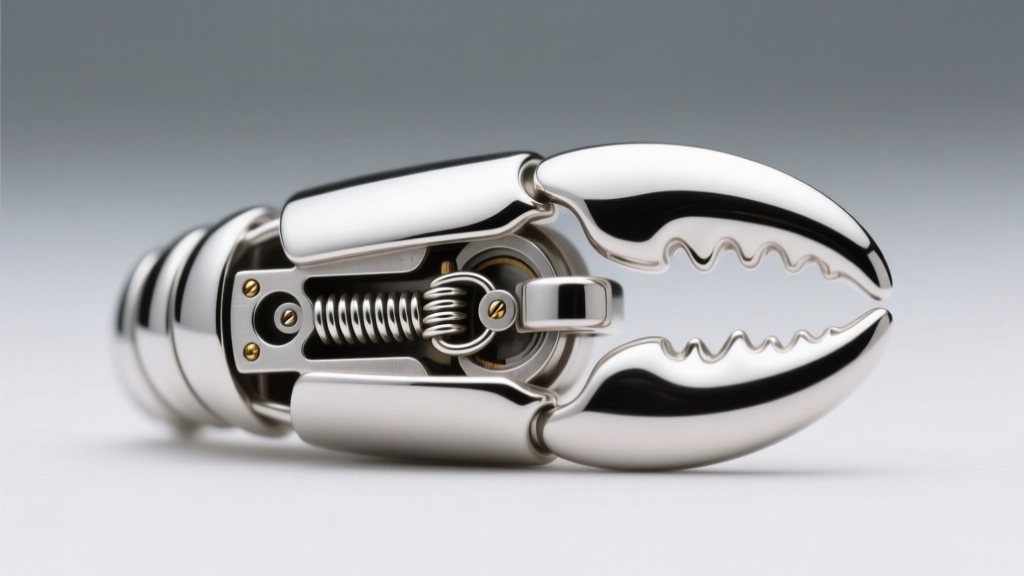
The clasp is the most common point of failure. Spring ring clasps rely on a tiny internal carbon steel spring. If moisture breaches the hollow gold or silver shell, the steel spring rusts, loses its tension, and fails to retract. Lobster clasps are generally more secure, but the tiny lever is attached via a micro-solder joint. Repeated lateral pressure on the lever will eventually snap this joint, rendering the clasp useless. For heavy pendants, always upgrade to a solid cast lobster clasp or a box clasp with a secondary figure-eight safety catch.
Actionable Care: Prolonging Your Chain's Lifespan
Understanding your necklace's material allows you to tailor your maintenance routine. Banish generic "jewelry cleaner" advice and adopt metallurgically sound practices:
- For Sterling Silver: Avoid ultrasonic cleaners if your chain has oxidized (blackened) detailing, as the high-frequency vibrations will strip the intentional patina. For heavy, unintentional tarnish, use a thiourea-based silver dip, but rinse immediately with distilled water to prevent micro-pitting of the copper alloys.
- For Solid Gold (14k/18k): A simple soak in warm water with a few drops of degreasing dish soap (like Dawn), followed by gentle agitation with a baby-soft toothbrush, will remove sebum and lotion buildup that dulls the metal's refractive index.
- For Plated/Vermeil: Never use polishing cloths on plated jewelry. Polishing cloths are embedded with mild abrasives (like jeweler's rouge) that will physically strip the thin micron layer of gold, exposing the base metal beneath.
By matching your care routine to the specific alloy composition and structural design of your chain, you can halt the tarnishing process and ensure your necklace remains a staple in your wardrobe for decades.


