The Gemologist's Guide to Choosing an Orange Agate Necklace
Discover the gemological differences between natural and dyed orange agate necklaces, including lapidary cuts, chain pairings, and expert buying tips.

The Gemological Reality: Natural vs. Dyed Specimens
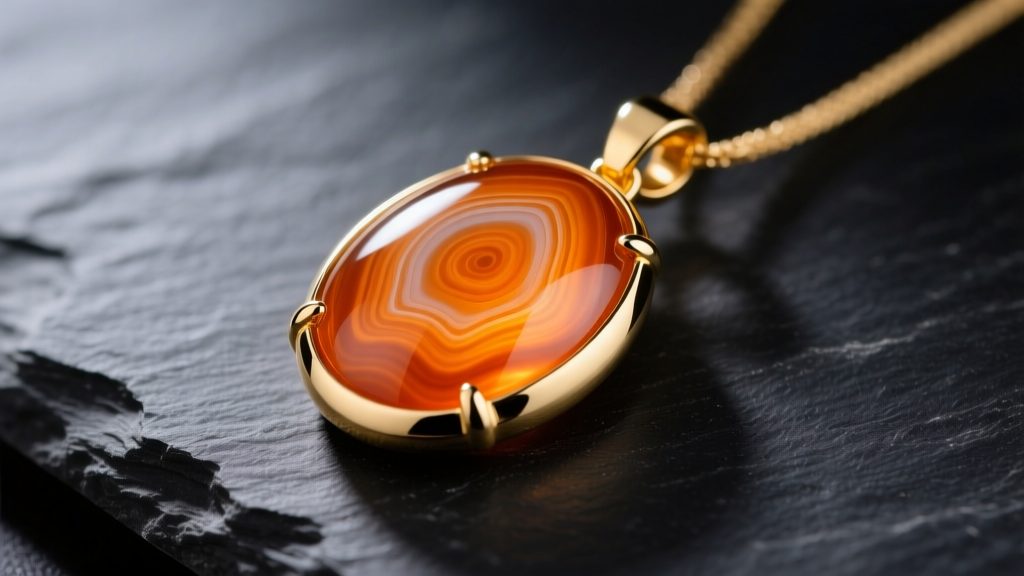
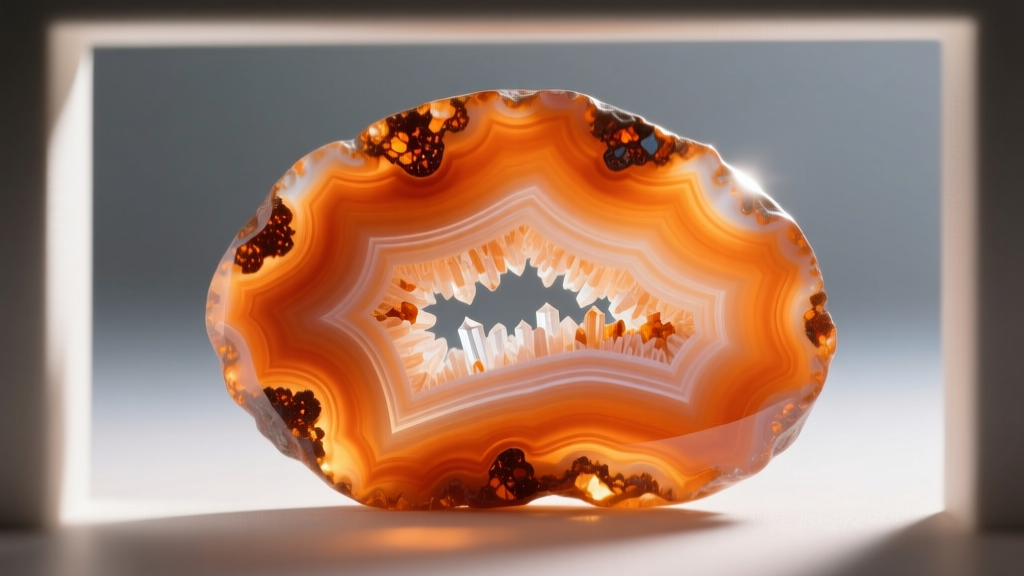
When evaluating an orange agate necklace, the first technical hurdle for any serious collector or stylist is distinguishing between natural geological formations and laboratory-enhanced stones. Agate is a cryptocrystalline variety of quartz, characterized by its fine banding and microscopic quartz crystals. According to the Mindat mineralogical database, natural agate possesses a refractive index (RI) of 1.530 to 1.540 and a specific gravity (SG) of 2.60 to 2.65. True, untreated orange agate is relatively rare in nature; its warm hue is typically the result of microscopic iron oxide inclusions (hematite or limonite) trapped within the silica gel during its formation in volcanic vesicles.
Identifying Heat-Treated and Dyed Agate
Because natural orange specimens are scarce, the commercial jewelry market is heavily saturated with treated stones. The most common enhancement is the iron nitrate method. Porous, pale agate is soaked in a solution of iron nitrate (Fe(NO3)3) and then baked in kilns at temperatures around 250°C to 300°C. This thermal process causes the iron to precipitate and oxidize, permanently altering the stone's color to vibrant orange or red. While the Gemological Institute of America (GIA) considers this a permanent and generally accepted treatment in the gem trade, it must be disclosed by ethical lapidaries. To identify treated stones, examine the color distribution under a 10x loupe: dyed and heated agates often display hyper-saturated, uniform color pooling along microscopic fractures, lacking the subtle, organic color-zoning seen in natural specimens.
Lapidary Cuts and Light Performance
The way an agate is cut fundamentally dictates how it interacts with light and, consequently, which chain styles will complement it best. Unlike high-refractive gemstones like diamonds or sapphires, agate is rarely faceted with brilliant cuts because its RI is too low to produce significant internal light return. Instead, lapidaries rely on surface polish and geometric shaping to highlight the stone's translucency and banding.
| Lapidary Cut | Light Interaction | Durability Profile | Best Chain Pairing |
|---|---|---|---|
| High-Dome Cabochon | Surface reflection; highlights internal banding and chatoyancy. | High (no sharp edges to chip). | 2.0mm - 3.0mm Rope or Curb chains. |
| Rose Cut (Flat Base) | Subtle surface sparkle; allows light to pass through the stone. | Moderate (faceted crown can abrade over decades). | 1.2mm - 1.5mm Box or Snake chains. |
| Intarsia / Inlay | Contrasting colors; matte or high-polish mixed finishes. | Low (inlay seams are vulnerable to impact). | 1.0mm - 1.2mm Delicate Bead chains. |
| Tumbled / Rough | Diffuse scattering; earthy, organic aesthetic. | Very High (retains natural structural integrity). | Leather cords or 4.0mm heavy Cuban links. |
Metallurgical Pairings: Selecting the Right Chain
Pairing an orange agate pendant requires an understanding of metallurgical color theory and alloy composition. Orange is an inherently warm, advancing color. To enhance its natural fire, the metal setting and chain should either harmonize with its warmth or provide a deliberate, high-contrast backdrop.
- 14k and 18k Yellow Gold: Yellow gold alloys contain copper and silver. The copper content in 14k gold (which is 58.5% pure gold) inherently pulls warm, creating a seamless, luxurious harmony with the orange agate. An 18k gold chain (75% pure gold) will offer a richer, deeper yellow that elevates high-end cabochons.
- Oxidized Sterling Silver: Standard sterling silver (92.5% silver, 7.5% copper) is often rhodium-plated to prevent tarnish. However, rhodium's icy, blue-white undertone visually clashes with warm orange agate, making the stone look muddy. Instead, seek out intentionally oxidized sterling silver. The dark, gunmetal-grey patina provides a striking, earthy contrast that makes the orange banding pop, ideal for bohemian or artisan-crafted necklaces.
- Rose Gold: While rose gold contains high copper, its pinkish hue can sometimes compete with the orange tones of the agate, resulting in a visually confused palette. Use rose gold only if the agate has distinct brown or deep rust banding.
Bail Mechanics and Setting Tensions
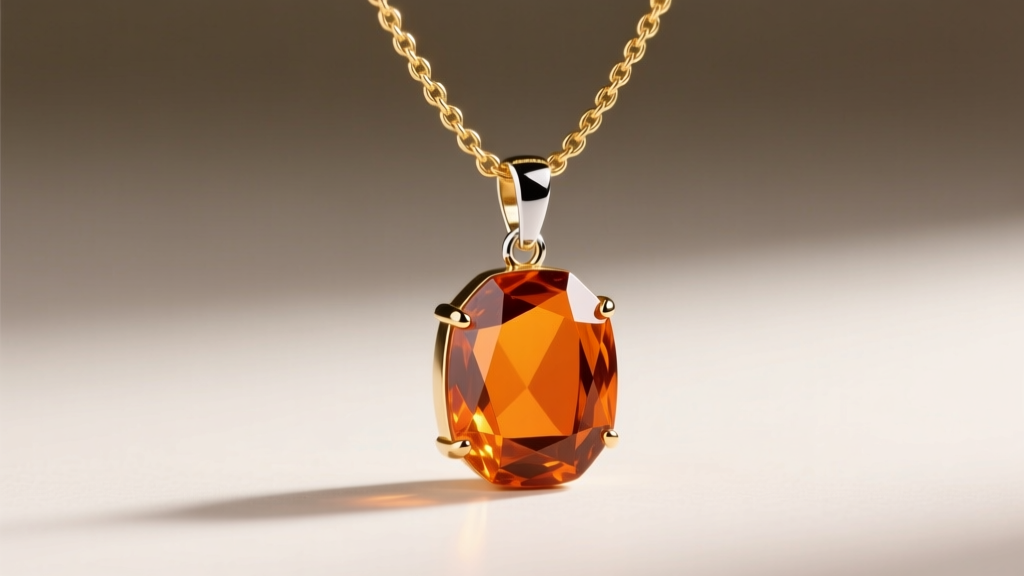
The structural integrity of an orange agate necklace often fails not at the chain, but at the bail—the component connecting the stone to the chain. Because agate is typically cut en cabochon without a drilled hole, lapidaries must use glue-on bails or bezel settings.
If you are commissioning a custom piece or repairing a vintage necklace, avoid cheap cyanoacrylate (super glue) for bail adhesion. Agate is non-porous once polished, and cyanoacrylate becomes brittle over time, leading to catastrophic pendant loss. Professional jewelers use two-part jeweler's epoxy, such as Devcon 5-Minute Epoxy or G-S Hypo Cement, applied to a lightly sanded bail pad to create a mechanical bond. For stones thicker than 6mm, a custom-fabricated bezel cup with a push-over lip is vastly superior, as it relies on metal tension rather than chemical adhesion, completely eliminating the risk of the stone detaching during wear.
Mohs Hardness and Daily Wear Vulnerabilities
With a Mohs hardness of 6.5 to 7, orange agate is highly suitable for daily wear in a necklace format, as it is well above the threshold of atmospheric dust (which contains quartz particles at Mohs 7). However, agate possesses a conchoidal fracture and lacks cleavage planes, meaning it will not split cleanly but will chip or shatter if subjected to sharp, localized impacts.
Expert Maintenance Warning: Never place a dyed or fracture-filled orange agate necklace in an ultrasonic cleaner. The high-frequency cavitation can strip the chemical dyes from the stone's micro-fissures and cause thermal shock, resulting in internal fracturing. Always clean agate jewelry using lukewarm water, a drop of pH-neutral dish soap, and a soft microfiber cloth.
Final Verdict for Collectors and Stylists
An orange agate necklace is a masterclass in organic geometry and warm-tone styling. For the purist collector, sourcing a verified, untreated natural orange agate with distinct fortification banding is a rewarding pursuit that requires patience and a trusted lapidary. For the fashion-forward stylist, embracing the vibrant, heat-treated stones set in high-dome cabochons and paired with oxidized silver or 14k gold offers an accessible, durable, and visually arresting accessory. By understanding the gemological treatments, lapidary cuts, and metallurgical pairings detailed above, you can curate a piece that is not only aesthetically striking but structurally enduring.