Navajo Silver Turquoise Necklace: 2026 Authenticity Guide
Discover how to authenticate, evaluate, and buy a genuine Navajo silver turquoise necklace. Learn about turquoise grades, silver hallmarks, and fair pricing.

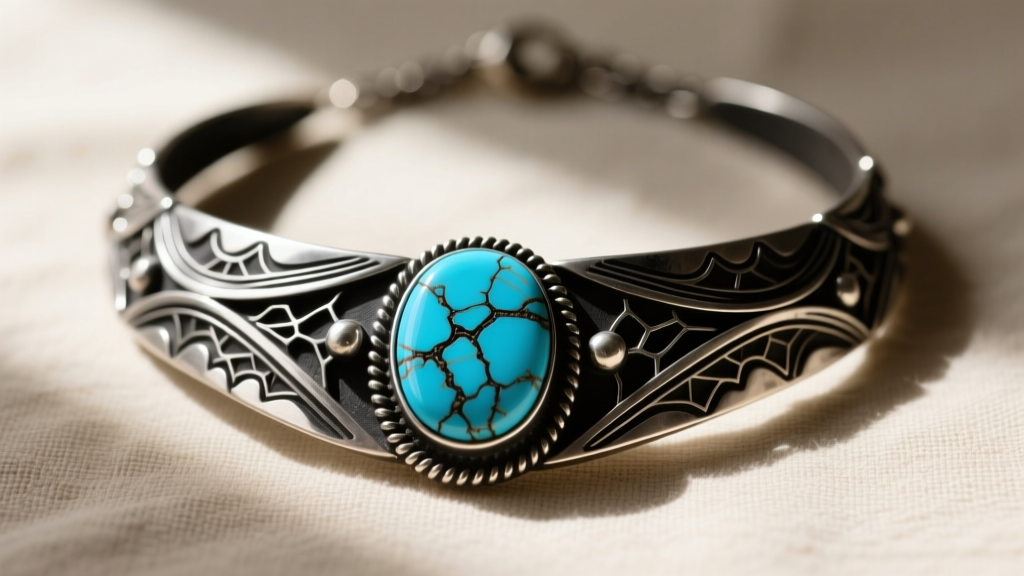
The Legacy and Anatomy of Navajo Silversmithing
When collectors and enthusiasts seek out a Navajo silver turquoise necklace, they are investing in a rich cultural heritage that dates back to the mid-19th century. The Navajo (Diné) were the first Native American tribe to master silversmithing, learning the craft from Mexican plateros around 1850. Today, the market is saturated with mass-produced, overseas imitations labeled as 'Southwestern style.' For the discerning buyer in 2026, understanding the structural and material hallmarks of genuine Navajo craftsmanship is non-negotiable.
Authentic Navajo jewelry is characterized by its bold, heavy silverwork and the prominent use of large, individually bezel-set turquoise cabochons. Unlike the intricate stone-to-stone inlay of the Zuni or the negative-space silver overlay of the Hopi, Navajo artisans let the natural beauty of the turquoise dictate the design. The most iconic Navajo necklace is the Squash Blossom, featuring a central Naja (crescent-shaped pendant) and tri-petal beads inspired by Spanish pomegranate motifs. However, heavy bolo ties, concho belts converted into necklaces, and substantial single-pendant statement pieces are equally revered.
Distinguishing Navajo Craftsmanship from Other Tribes
A common pitfall for novice buyers is misidentifying the tribal origin of a piece. While all authentic Native American jewelry holds value, the techniques differ drastically:
- Navajo: Focuses on heavy gauge sterling silver, repoussé (stamping from the reverse side to create relief), and large, singular turquoise stones with prominent matrix patterns.
- Zuni: Renowned for 'petit point' (tiny, teardrop-shaped stones), 'needlepoint' (long, narrow stones), and complex channel inlay work using turquoise, coral, jet, and mother-of-pearl.
- Hopi: Famous for 'silver overlay,' where two sheets of silver are soldered together. The top sheet features cut-out designs (often representing water, clouds, or bear claws), while the bottom sheet is oxidized and textured to create deep contrast. Stones are rarely used.
Decoding Turquoise: Mines, Matrix, and Treatments
The soul of a Navajo silver turquoise necklace lies in its stones. Turquoise is a hydrous phosphate of copper and aluminum, and its color and structural integrity vary wildly depending on its geological origin. In the current market, knowing your mines and treatments is the ultimate mark of an educated buyer.
The Big Three: Kingman, Bisbee, and Sleeping Beauty
While there are dozens of historic mines across Nevada and Arizona, three names dominate the high-end Navajo jewelry market:
- Kingman (Arizona): Famous for its brilliant, deep blue stones laced with striking black or brown 'spiderweb' matrix. Kingman turquoise is highly stable and remains a favorite among contemporary Navajo silversmiths.
- Bisbee (Arizona): Known for a unique, intense lavender-to-blue hue often accompanied by a distinctive red-brown 'smoky' matrix. Genuine Bisbee turquoise is incredibly rare today, as the Lavender Pit mine closed decades ago. Pieces featuring verified Bisbee stones command premium prices.
- Sleeping Beauty (Arizona): Prized for its pure, robin's-egg sky blue color with little to no matrix. The mine closed in 2012, making authentic, untreated Sleeping Beauty turquoise highly coveted and frequently faked using dyed howlite or magnesite.
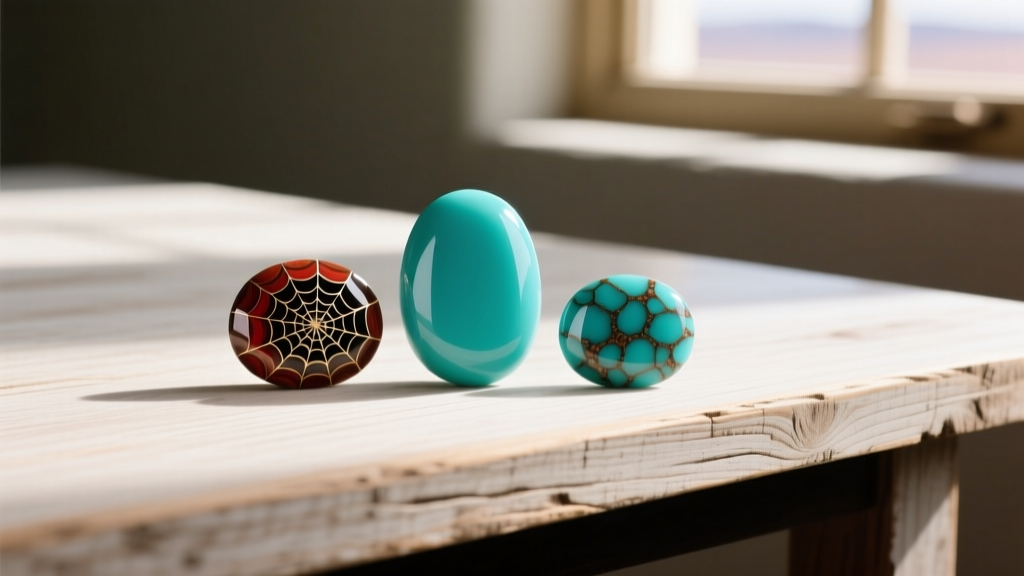
Turquoise Treatment Spectrum
Not all turquoise is created equal. The Gemological Institute of America (GIA) categorizes turquoise based on its level of human intervention. Use this framework when evaluating a necklace:
| Treatment Type | Description | Market Acceptance | Value Impact |
|---|---|---|---|
| Natural | Untreated, unaltered stone. Only cut and polished. Highly porous and may change color over time from skin oils. | Purist / Collector | Highest Premium |
| Stabilized | Infused with a clear epoxy or resin under pressure to harden the stone and lock in color. Standard industry practice for softer stones. | Widely Accepted | Standard / Fair |
| Enhanced / Dyed | Treated with chemicals or dyes to artificially alter or deepen the color. Often used on low-grade chalk turquoise. | Low Acceptance | Severely Depreciates |
| Block / Imitation | Reconstituted turquoise dust mixed with resin, or entirely synthetic materials like dyed howlite. Not true turquoise. | Unacceptable for Authentic Pieces | Worthless as Gemstone |
Silver Purity and Metal Markers
The metalwork in a genuine Navajo silver turquoise necklace should always be solid silver, never plated. However, the purity can vary based on the era in which the piece was crafted.
- Sterling Silver (.925): The modern standard. Composed of 92.5% pure silver and 7.5% copper for added durability. Most contemporary and mid-century vintage pieces will be stamped 'Sterling' or '.925'.
- Coin Silver (.900): Common in older, vintage Navajo pieces (pre-1950s). Silversmiths would melt down US silver coins to forge jewelry. Coin silver is slightly softer and contains 90% pure silver. These pieces are highly prized by antique collectors and often lack a purity stamp, relying instead on the artist's hallmark and patina for authentication.
- Nickel Silver (German Silver): Beware. Despite the name, nickel silver contains absolutely zero elemental silver. It is an alloy of copper, nickel, and zinc. It is frequently used in cheap, mass-produced tourist-trade jewelry. If a piece is magnetic or unusually lightweight and lacks tarnish, it is likely nickel silver or base metal plated in silver.
Hallmarks and the Indian Arts and Crafts Act
Authentication goes beyond visual inspection; it is also a matter of federal law. The Indian Arts and Crafts Board (IACB) enforces the Indian Arts and Crafts Act of 1990, a truth-in-advertising law that prohibits misrepresentation in marketing of Indian arts and crafts products within the United States. It is illegal to offer or sell any art or craft product in a manner that falsely suggests it is Indian-produced.
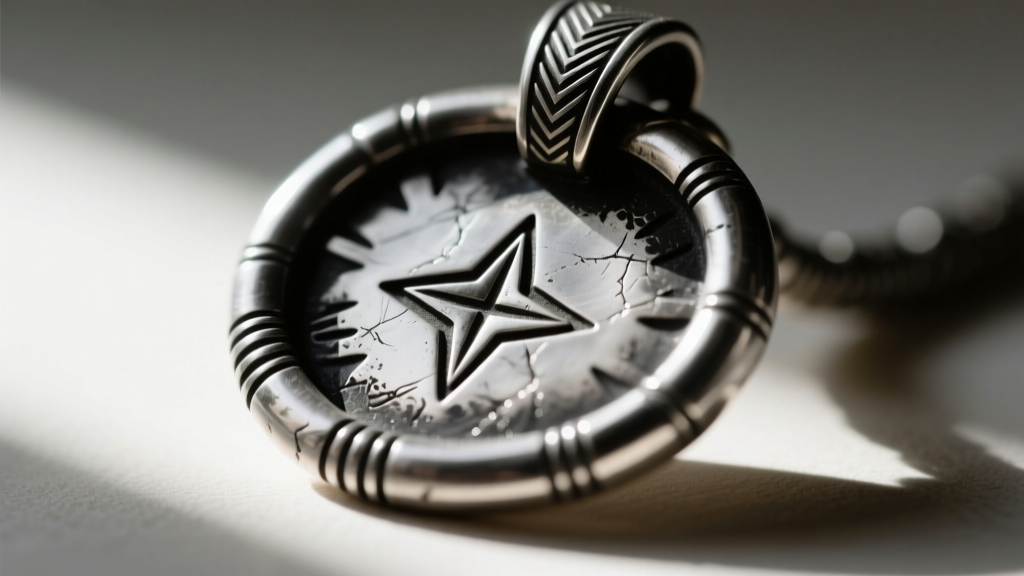
When buying a Navajo silver turquoise necklace, look for the artist's hallmark on the back of the pendant or the clasp. Navajo silversmiths typically use stamped initials (e.g., 'TC' for Tommy Singer, though styles vary) or specific clan symbols. However, the absence of a hallmark does not automatically mean a piece is fake; many older, traditional artisans did not hallmark their work, and some contemporary artists use removable tags that are lost over time. Always request a certificate of authenticity or a written receipt from the dealer that explicitly states the artist's name, tribal affiliation, and the materials used.
2026 Market Pricing and Valuation Framework
Pricing a Navajo silver turquoise necklace requires evaluating the intersection of material quality, artist renown, and age. Here is a realistic breakdown of what to expect in the current market:
- $30 - $90 (The Tourist Trade): Mass-produced items, often manufactured overseas. Features nickel silver, dyed howlite, or block turquoise. Avoid if seeking authentic Native American art.
- $250 - $800 (Authentic Contemporary): Genuine sterling silver and natural or stabilized turquoise, crafted by emerging or established Navajo silversmiths. Pricing scales with the weight of the silver and the rarity of the turquoise mine (e.g., a heavy squash blossom with Lone Mountain turquoise will sit at the top of this bracket).
- $1,500 - $5,000 (Master Artisans & High-End Vintage): Pieces by renowned master silversmiths (e.g., Raymond Yazzie, Tommy Singer, or Gary Reeves) or exceptional vintage squash blossom necklaces from the 1970s boom era featuring top-tier, untreated stones.
- $10,000+ (Museum Quality / Antique): Early 20th-century coin silver pieces, historical squash blossoms with provenance, or necklaces featuring exceptionally rare, large-cut Bisbee or Lander Blue turquoise.
Care and Maintenance for Porous Gems
Turquoise is a relatively soft and porous gemstone, ranking between 5 and 6 on the Mohs hardness scale. A genuine Navajo silver turquoise necklace requires specific care to maintain its structural integrity and color.
Never use ultrasonic jewelry cleaners, steam cleaners, or harsh chemical dips on turquoise. These methods can strip the natural oils from the stone, cause stabilized resin to cloud, or completely dissolve dyed imitations. Instead, clean the silver portions with a soft, dry polishing cloth, carefully avoiding the stones. When wearing your necklace, apply perfumes, lotions, and hairsprays before putting the jewelry on, as the chemicals in cosmetics can alter the color of natural, untreated turquoise over time. Store the necklace in a soft cloth pouch, separate from harder gemstones like diamonds or sapphires that could easily scratch the silver and the turquoise cabochons.


