How to Secure Two Rings on a Necklace: Troubleshooting Guide
Learn how to safely wear two rings on a necklace. Troubleshoot chain breakage, metal scratching, and clasp failures with expert jewelry tips.

The Hidden Dangers of Threading Two Rings on a Chain
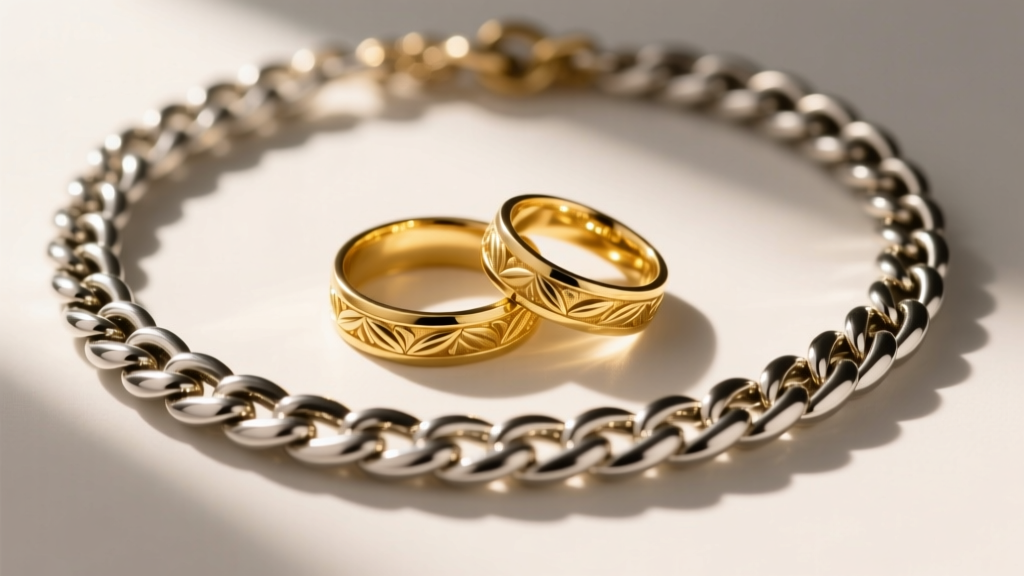
Wearing two rings on a necklace is a highly practical solution for healthcare workers, athletes, pregnant individuals experiencing finger swelling, or anyone needing to keep a bridal set safe during manual labor. However, threading multiple heavy metal bands onto a single chain introduces severe mechanical stress points that most standard jewelry is not engineered to withstand. When you double the payload, you exponentially increase the pendulum effect, metal-on-metal friction, and clasp tension. This comprehensive troubleshooting guide addresses the specific failure modes of dual-ring necklaces and provides actionable, metallurgically sound solutions to secure your most sentimental pieces.
Problem 1: Chain Breakage and Link Distortion
The most common catastrophic failure when wearing two rings on a necklace is chain snapping. A standard 1.2mm cable chain might easily hold a single 3-gram pendant, but two 18k gold wedding bands can easily weigh 12 to 16 grams combined. When you walk, run, or bend over, the rings act as a pendulum. The kinetic energy transfers directly to the weakest point of the chain—usually the jump ring connecting the clasp or the individual links resting at the nape of the neck. Over time, this repetitive stress causes work hardening, making the metal brittle and leading to micro-fractures that eventually snap without warning.
Chain Link Anatomy: What Fails First?
To troubleshoot chain breakage, you must upgrade both the link style and the wire gauge. Round cable links have a single contact point between each ring, creating high localized friction. Instead, you need chains with interlocking surface areas that distribute weight evenly.
| Chain Style | Link Structure | Tensile Strength | Friction Risk | Best For Dual Rings? |
|---|---|---|---|---|
| Cable | Round/Oval interlocking | Low | High | No (High snap risk) |
| Box | Square interlocking | Medium | Medium | Yes (If >2.0mm gauge) |
| Wheat | Braided oval links | High | Low | Yes (Excellent weight distribution) |
| Rope | Twisted helix links | Very High | Very Low | Yes (Maximum security) |
Expert Fix: Discard any chain under 2.0mm in thickness. For two heavy precious metal rings, opt for a 2.5mm to 3.5mm solid Wheat or Rope chain. Ensure the chain is stamped with a quality mark (e.g., 14K, 925, or PT950) to guarantee it is not hollow-core, as hollow links will crush under the dynamic weight of swinging rings.
Problem 2: Metal-on-Metal Friction and Scratching
When two rings share a chain, they inevitably slide together and grind against one another. This is not just a cosmetic issue; it is a matter of material science. According to data published by the Gemological Institute of America (GIA), different metals possess vastly different hardness ratings on both the Mohs scale and the Vickers Hardness (HV) scale. If you thread a Tungsten Carbide band (Mohs 8.5-9, HV 1500+) alongside a 14k Gold band (Mohs 3.5-4, HV 130-160), the tungsten will act like sandpaper, rapidly shaving away the gold and compromising any prongs holding gemstones.
Troubleshooting: Spacers and Sleeves
You cannot change the hardness of your metals, but you can eliminate the contact point.
- PTFE (Teflon) Tubing: Purchase food-grade PTFE tubing (2mm inner diameter) from a hardware or laboratory supply store. Cut a 5mm sleeve and slide it onto the chain between the two rings. PTFE has an incredibly low coefficient of friction and is completely impervious to sweat and lotions.
- Silicone Ring Guards: Small, clear silicone O-rings (often sold as earring backs or ring snuggies) can be threaded onto the chain to act as soft bumpers between the metal bands.
- Soldering (For Bridal Sets Only): If the two rings are an engagement and wedding band meant to be worn together, take them to a master jeweler to be laser-soldered into a single unit. This eliminates internal friction entirely and reduces the overall profile on the chain.
Problem 3: Clasp Failure and Accidental Slippage
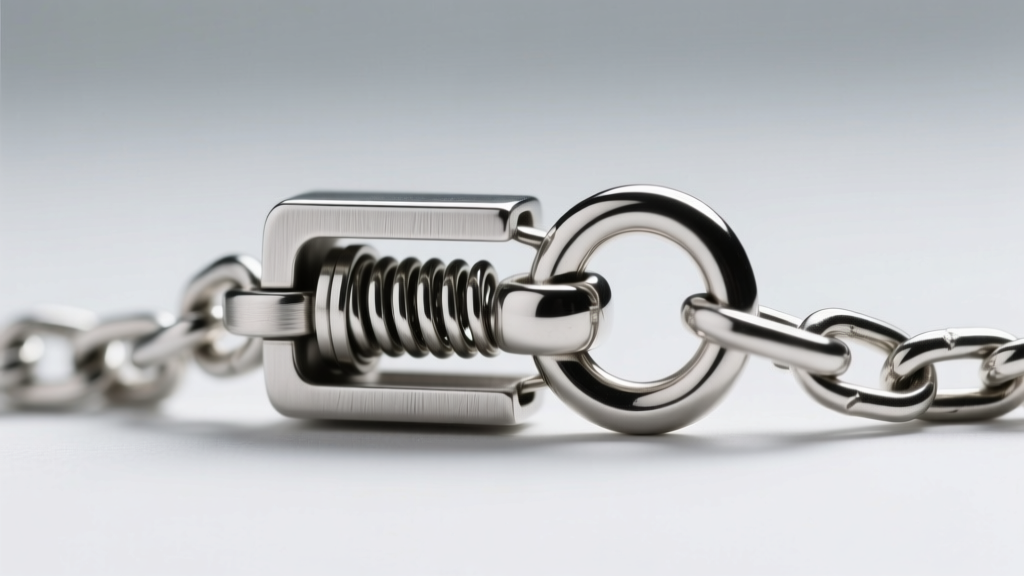
The clasp is the single most vulnerable component of any necklace. When supporting the weight of two rings, the constant downward pull can warp the metal of the clasp or fatigue the internal spring mechanism. Furthermore, if the rings slide up the chain during physical activity, they can strike the clasp, accidentally depressing the lever and releasing the necklace.
Clasp Failure Rates and Upgrades
Standard Spring Ring clasps have the highest failure rate for dual-ring setups. The tiny internal coil spring degrades quickly under heavy loads, and the hollow outer shell can easily warp. Lobster clasps are a marginal improvement, offering a solid body and a stronger spring, but the lever remains exposed to accidental bumps from sliding rings.
Expert Fix: Upgrade to a Barrel Clasp (also known as a screw clasp) or a Parrot Clasp with a secondary safety catch. Barrel clasps thread together via a precision screw mechanism, making them virtually impossible to open via accidental impact. For chains over 3.0mm, a heavy-duty magnetic clasp with a secondary locking latch provides both security and ease of use.
Problem 4: The "Spin and Tangle" Effect
Have you ever looked down to find your rings facing backward, or worse, the chain twisted into a tight knot? This happens because two loose rings will constantly seek the lowest center of gravity, sliding to the exact bottom of the chain. As they move, they twist the chain links. Over time, this twisting causes severe work-hardening in the neck zone of the chain, leading to kinks that are nearly impossible to remove without professional ultrasonic and steam treatment.
Center of Gravity Solutions
To stop the spin, you must restrict the lateral movement of the rings.
- The Rubber Gasket Method: Slide a small, tight-fitting rubber O-ring onto the chain, then thread your two rings, followed by a second O-ring. Push the O-rings tight against the sides of the rings to lock them in the center of the chain. This prevents them from sliding up toward the clasp or twisting the chain.
- Pendant Bails with Set Screws: Invest in a heavy-duty pendant bail designed for thick chains. Some specialized bails feature a tiny, hidden set screw that tightens against the chain link, locking the rings in a fixed forward-facing position.
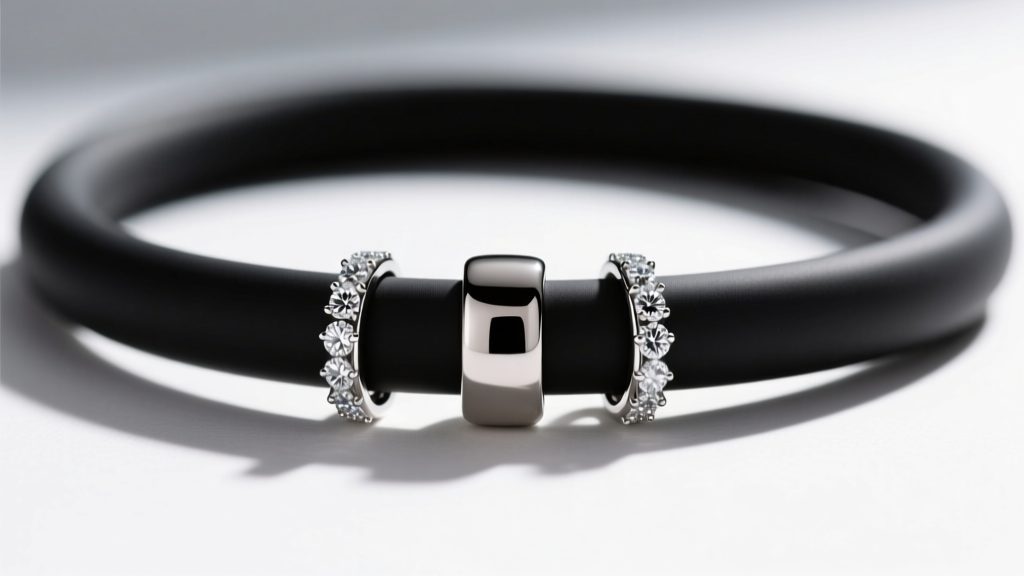
- Alternative Cords: If metal chains continue to tangle, switch to a 2.5mm black silicone or leather cord. These materials do not kink, and their higher surface friction naturally grips the inside of the rings, reducing the pendulum spin effect.
Expert Action Plan: Building a Fail-Safe Ring Necklace
To guarantee the safety of your jewelry, follow this final checklist recommended by professionals at Jewelers of America for heavy pendant wear:
- Verify the Jump Ring: Ensure the jump ring connecting the clasp to the chain is soldered shut. An unsoldered jump ring will easily pull apart under the 15+ gram dynamic load of two swinging rings.
- Check for Galvanic Corrosion: If your chain is sterling silver and your rings are titanium or stainless steel, prolonged contact mixed with human sweat can cause galvanic corrosion, degrading the silver. Keep the metals separated with PTFE spacers.
- Bi-Annual Stress Testing: Every six months, hold the clasp and let the rings hang. Gently tug the chain near the clasp and the center. If you feel any stretching, hear a clicking sound, or see distorted links, retire the chain immediately and replace it.
Wearing two rings on a necklace shouldn't feel like a liability. By upgrading your chain gauge to a minimum of 2.5mm, utilizing low-friction PTFE spacers, and securing the payload with a threaded barrel clasp, you transform a risky makeshift solution into a highly engineered, fail-safe jewelry system. For further guidelines on metal standards and hallmarking, always refer to the Federal Trade Commission (FTC) Jewelry Guides to ensure your replacement chains meet strict precious metal purity requirements.


