Nazar Necklace Care: Troubleshooting Tarnish, Breaks & Fading
Is your nazar necklace tarnishing, fading, or broken? Discover expert troubleshooting tips to clean, repair, and restore your evil eye jewelry safely.

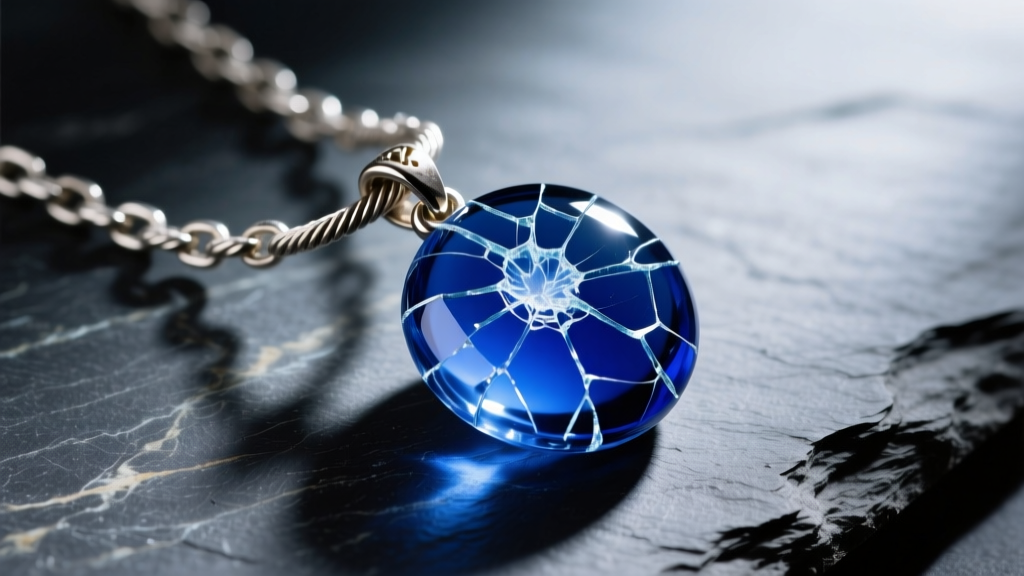
The Anatomy of a Nazar Necklace: Why They Fail
Nazar necklaces, universally recognized for their protective "evil eye" symbolism, present a unique set of care challenges. Unlike solid metal pendants, a traditional nazar combines reactive metals with fragile, porous, or light-sensitive materials. The classic Turkish nazar boncuğu is crafted from layered glass colored with cobalt oxide, while modern mass-market alternatives frequently substitute glass with cold enamel (epoxy resin) or vitreous hot enamel. When these materials are set into 925 sterling silver, 14k gold vermeil, or brass, the intersection of differing material properties creates specific failure points. Understanding these vulnerabilities is the first step in troubleshooting your nazar jewelry.
Troubleshooting Tarnish and Metal Discoloration
The most common complaint with nazar necklaces is tarnishing or skin discoloration. This is rarely an issue with the "eye" itself, but rather the metal setting and chain.
Silver Sulfide and the Tarnish Problem
Sterling silver reacts with hydrogen sulfide in the air to form silver sulfide, resulting in a black or yellowish film. Many owners instinctively reach for commercial liquid silver dips to clean their necklaces. Do not do this. These dips contain thiourea, a harsh chemical that can strip cold enamel, cloud the finish of polished glass, and degrade the adhesive holding rhinestone accents in place. Instead, use a dry, untreated microfiber polishing cloth for routine maintenance. For heavy tarnish on solid glass nazar pendants (without glued stones), an aluminum foil and baking soda bath is safe, provided you keep the pendant submerged for no more than three minutes and rinse thoroughly with distilled water.
Green Skin and Copper Chloride
If your nazar necklace is leaving a green or black mark on your chest, the setting is likely brass or a low-karat gold alloy containing copper. When copper reacts with the chlorides and fatty acids in your sweat, it forms copper chloride. To troubleshoot this, apply a micro-thin layer of clear jeweler's lacquer or even clear nail polish to the back of the pendant where it touches your skin. Alternatively, upgrade your findings to solid 14k gold or platinum, which are entirely hypoallergenic and non-reactive.
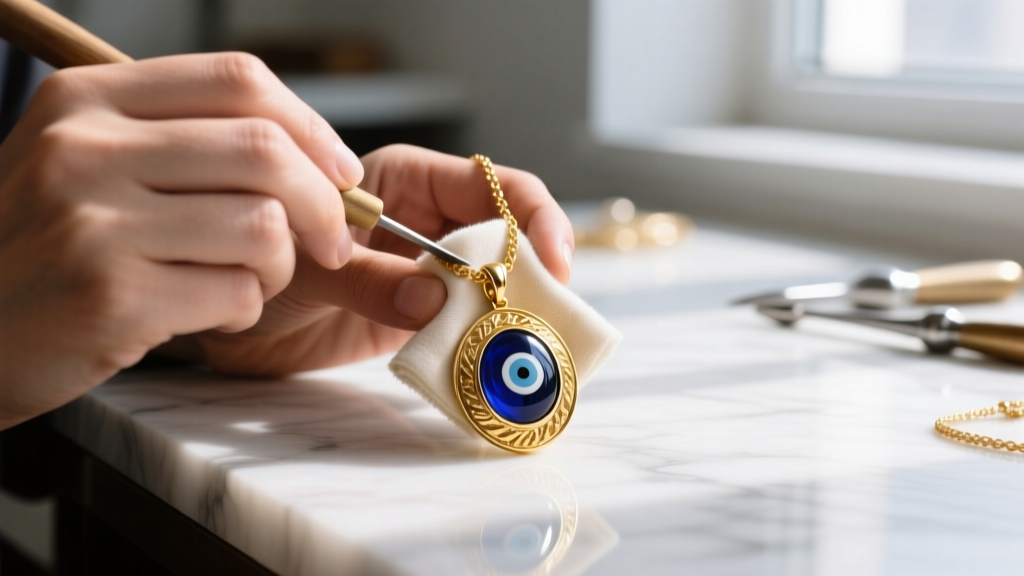
Fixing Faded or Cracked Glass and Enamel
The vibrant blue center of the nazar is its defining feature, but it is highly susceptible to environmental degradation depending on the manufacturing technique used. According to the GIA Gem Encyclopedia, glass and enamel require vastly different care protocols due to their distinct molecular structures.
| Material Type | Composition | Primary Vulnerability | Repairability |
|---|---|---|---|
| Traditional Glass | Fused silica, cobalt oxide | Thermal shock, hard impacts | Cannot be repaired; must be replaced |
| Cold Enamel | Epoxy resin, pigments | UV yellowing, alcohol solvents | Can be sanded and re-poured by a specialist |
| Vitreous Enamel | Fused glass powder on metal | Chipping from drops, bending | Requires kiln-firing by a master enamelist |
Troubleshooting Yellowed Resin (Cold Enamel)
If your blue nazar has taken on a sickly green or yellow tint, it is likely made of epoxy resin that has degraded under UV exposure or reacted with alcohol-based perfumes. Unfortunately, UV damage to resin is permanent. However, if the damage is purely superficial chemical etching from cosmetics, a jeweler can carefully wet-sand the resin with 2000-grit sandpaper and polish it with a plastic-safe compound to restore clarity.
Chain Breakage: Weak Points and Soldering Solutions
Nazar pendants are heavy relative to the delicate chains they are often strung on. A standard 0.9mm cable chain paired with a solid glass 20mm nazar pendant creates a severe weight imbalance. The most frequent point of failure is the jump ring connecting the chain to the pendant bail.
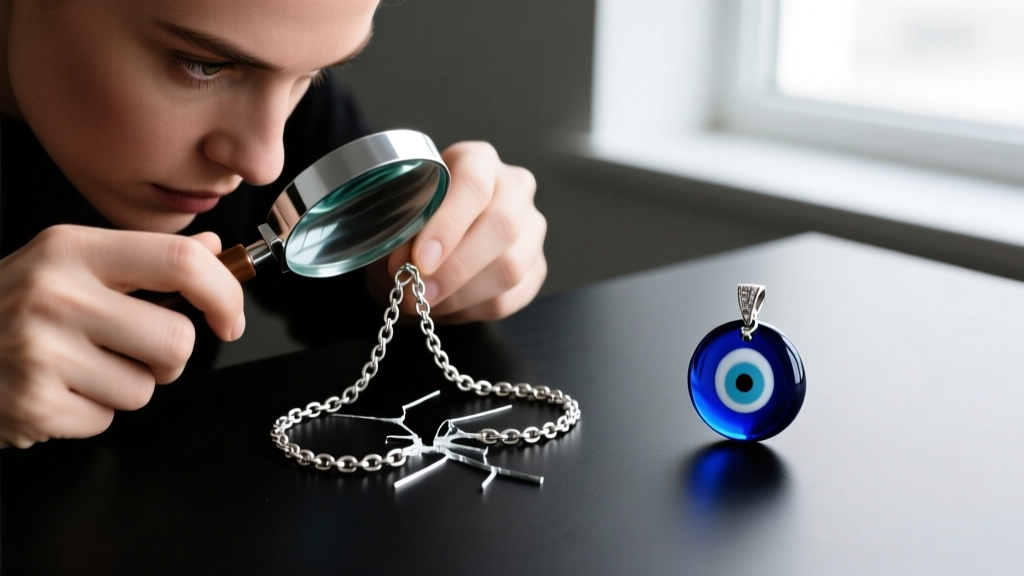
Upgrading the Jump Ring
Most commercial nazar necklaces use 22-gauge or 20-gauge open jump rings. Under the pendulum-like stress of a heavy glass eye, these thin rings slowly pull apart. The immediate troubleshooting fix is to have a jeweler replace the open jump ring with an 18-gauge soldered (closed) jump ring. This single upgrade eliminates 90% of pendant-loss incidents.
Soldering Near Glass: The Thermal Shock Hazard
If the chain itself breaks near the clasp or pendant, traditional torch soldering is incredibly dangerous for nazar jewelry. The intense, localized heat of a jeweler's torch will cause the glass or enamel to expand unevenly, resulting in immediate thermal shock and catastrophic shattering. As of 2026, reputable jewelers utilize laser welding for these repairs. A laser welder concentrates a high-energy beam (typically 40-60 watts) onto a microscopic point, fusing the silver or gold link in milliseconds without transferring ambient heat to the adjacent glass pendant. Always verify your jeweler has laser welding capabilities before handing over a nazar necklace for chain repair.
The "Broken Nazar" Dilemma: Superstition vs. Repair
When a glass nazar pendant physically cracks or shatters, you face a unique intersection of jewelry repair and cultural superstition. In Levantine, Anatolian, and broader Mediterranean cultures, the nazar functions as a metaphysical shield. A widely held belief dictates that when the glass breaks, it means the amulet has successfully absorbed a heavy concentration of the "evil eye" (negative energy or ill intent) directed at the wearer, and it has shattered to protect you.
Expert Insight: From a cultural and energetic standpoint, repairing a shattered glass nazar is generally discouraged. The consensus among traditional artisans is that the glass has "done its job." The recommended troubleshooting step is to salvage the precious metal chain and setting, recycle the broken glass safely, and purchase a brand-new nazar pendant to restore your protective ward.
If your pendant is made of vitreous enamel or resin and has merely chipped, the superstition is less stringent, and professional repair is perfectly acceptable.
Preventative Maintenance Checklist
To avoid these common nazar necklace failures, implement the following care protocols based on guidelines from the Jewelers Mutual Care Guide:
- The Perfume Rule: Always apply perfumes, hairsprays, and lotions at least 10 minutes before putting on your nazar necklace. Alcohol and oils are the primary enemies of cold enamel and porous glass.
- Water Avoidance: Never wear your nazar in swimming pools or hot tubs. Chlorine and bromine will aggressively attack the copper alloys in sterling silver and gold vermeil, leading to irreversible pitting and structural weakness.
- Proper Storage: Store the necklace flat in an airtight anti-tarnish bag. Hanging heavy glass pendants on jewelry trees puts constant lateral stress on the bail and the top link of the chain, accelerating metal fatigue.
- Friction Checks: Inspect the bail (the loop holding the pendant) every six months. If the metal shows a deep groove from the friction of the chain, take it to a jeweler to have the bail replaced before it snaps.
By understanding the specific material science behind your nazar necklace and respecting its structural and cultural boundaries, you can ensure this meaningful piece of jewelry remains both physically intact and symbolically powerful for years to come.


