The Ultimate Necklace 50 cm Buying Guide & Fit Tips
Discover how to choose the perfect necklace 50 cm in length. Explore chain styles, material grades, and neckline pairings in our expert buying guide.


When navigating the vast landscape of jewelry sizing, the necklace 50 cm (approximately 19.68 inches) stands out as one of the most versatile and universally flattering lengths available. Often categorized at the boundary between the traditional 'Princess' and 'Matinee' lengths for women, and serving as the quintessential standard collarbone-resting length for men, a 50 cm chain offers a perfect middle ground. It is long enough to drape elegantly over crew necks and button-downs, yet short enough to maintain a deliberate, structured presence on the body. However, buying a 50 cm necklace requires more than just selecting a length; it demands a careful evaluation of chain width, metallurgical durability, clasp engineering, and pendant compatibility. In this comprehensive buying guide, we break down the exact specifications you need to look for to ensure your investment lasts a lifetime.
The Anatomy of a 50 cm Fit: Where Does It Fall?
Understanding the physical drape of a 50 cm chain is critical before making a purchase. According to standard jewelry sizing charts, such as those outlined by Blue Nile's necklace education guide, a 20-inch (50 cm) chain behaves very differently depending on the wearer's anatomy and gender.
- For Women: A 50 cm necklace typically falls just below the collarbone, resting on the upper sternum. It is the ideal length for showcasing a medium-sized pendant without it getting lost in the neckline of a blouse. It bridges the gap between a choker-style 40 cm chain and a deep-plunging 60 cm opera chain.
- For Men: On the average male frame, a 50 cm chain sits precisely at the base of the neck or just above the collarbone. It is the standard length for men who want a chain that is visible above a t-shirt but can be easily tucked underneath a dress shirt collar.
Because the 50 cm length rests on a highly mobile part of the body (the lower neck and upper chest), the chain must possess enough weight and fluidity to move with the wearer without constantly flipping over or tangling.
Proportional Widths: Choosing the Right Chain Profile
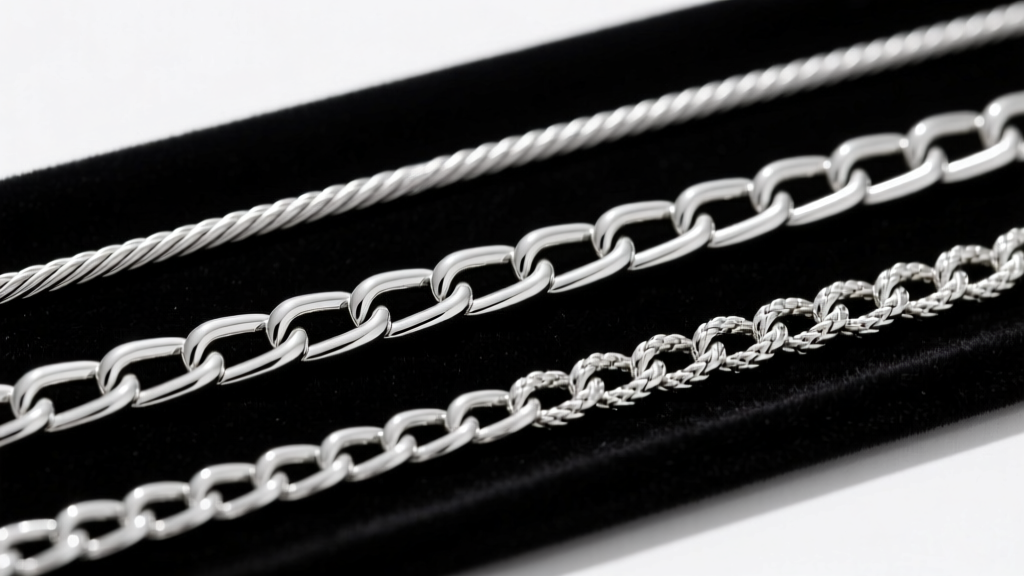
A common mistake buyers make is ignoring the proportional width of the chain relative to its 50 cm length. A chain that is too thin will lack the structural integrity to drape properly, while a chain that is too thick will feel rigid and heavy. Here is the expert framework for matching chain profiles to a 50 cm length:
1. Cable and Box Chains (1.5mm to 2.5mm)
These are the premier choices for pendant-bearing necklaces. A 2mm box chain at 50 cm provides excellent tensile strength and a flat surface that prevents pendant bails from catching. Avoid cable chains under 1.2mm at this length, as the increased surface area makes them highly susceptible to micro-tangles and kinking.
2. Curb and Cuban Chains (3.0mm to 5.0mm)
For standalone statement pieces, the curb chain is king. At 50 cm, a 4mm curb chain offers a substantial, luxurious drape that lays flat against the sternum. The interlocking flat links distribute weight evenly, preventing the 'choking' sensation that thicker, rigid chains can cause.
3. Figaro and Rope Chains (2.5mm to 4.0mm)
Figaro chains introduce a rhythmic pattern (usually three small links followed by one long link) that adds visual texture. A 3mm Figaro at 50 cm is a classic unisex choice. Rope chains, which twist light dynamically, should be kept between 2.5mm and 4mm; anything thicker at 50 cm becomes excessively heavy and prone to catching on body hair or fabrics.
Metallurgy and Material Grades: A Durability Matrix
The longevity of your necklace is dictated by its metallurgical composition. When shopping for a 50 cm chain, you are buying a significant amount of metal, making material grade a primary driver of both price and skin safety. The Gemological Institute of America (GIA) emphasizes the importance of understanding alloy compositions, particularly for silver and steel.
| Material Grade | Tarnish Resistance | Best Use Case for 50 cm | Avg. Price Range |
|---|---|---|---|
| 316L Stainless Steel | Excellent (Marine Grade) | Everyday wear, showering, thick curb chains | $25 - $60 |
| 925 Sterling Silver | Poor (Requires Polishing) | Occasional wear, delicate pendant chains | $40 - $120 |
| Argentium 935 Silver | Very High (Germanium Alloy) | Low-maintenance luxury, bright white finish | $80 - $180 |
| 14k Solid Gold | Excellent | Lifetime investment, daily wear, high durability | $300 - $800+ |
| 18k Solid Gold | Excellent (Softer Alloy) | High-end pendants, rich color, careful wear | $500 - $1,500+ |
Expert Tip: If you are buying a 925 Sterling Silver 50 cm chain, ensure it features a rhodium plating of at least 0.2 microns. This delays the inevitable sulfur-induced tarnishing that plagues standard silver, keeping the chain bright and protecting the skin from copper-alloy oxidation.
Clasp Engineering: Preventing Failure at 50 cm
The clasp is the single most common point of failure on any necklace. Because a 50 cm chain has a longer drop than a choker, the kinetic energy and leverage applied to the clasp during movement are significantly higher. Therefore, clasp selection is not merely an aesthetic choice; it is a structural necessity.
Spring Ring Clasps: Avoid for 50 cm Chains
Spring rings are cheap, circular clasps with a tiny internal spring. They are notoriously difficult to operate with one hand and have a high failure rate on chains longer than 45 cm. The tension required to keep a 50 cm chain secure often overworks the microscopic spring, leading to sudden snaps. Only accept spring rings on ultra-fine (under 1.5mm) lightweight chains.
Lobster Clasps: The Industry Standard
The lobster clasp, named for its resemblance to a lobster's claw, features a robust, spring-loaded lever. For a 50 cm chain, look for a lobster clasp that is at least 10mm in length and features a soldered jump ring on the opposing end. The soldered ring prevents the chain from slipping through an open gap, a common issue with cheap, unsoldered wire loops.
Box Clasps with Safety Latches
For heavy 50 cm chains (such as a 6mm Cuban link weighing over 50 grams), a standard lobster clasp will warp under the tensile load. A box clasp, which slides a folded metal tab into a locked housing, distributes the weight across a wider surface area. Always ensure the box clasp includes a secondary 'figure-8' safety latch on the side to prevent catastrophic loss if the primary tab is accidentally depressed.
Pendant Pairing and Bail Sizing
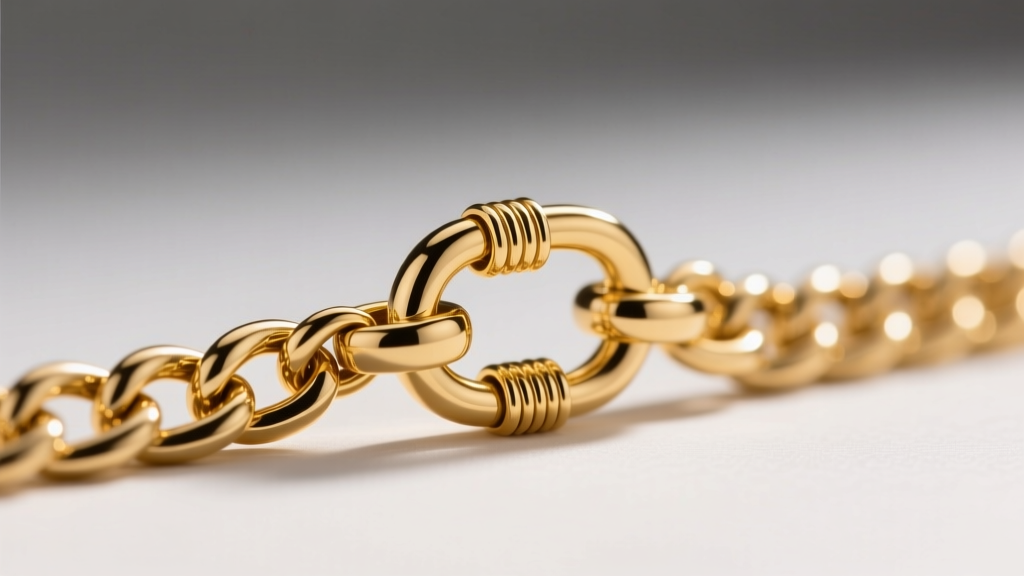
If your primary goal in purchasing a necklace 50 cm in length is to suspend a pendant, you must calculate the bail-to-chain ratio. The bail is the loop on the pendant that slides over the chain. A 50 cm chain naturally creates a wider, shallower 'V' shape on the chest compared to a shorter chain. If the pendant's bail is too small, it will slide too far up the sides of the chain rather than resting at the center apex.
As a general rule, the inner diameter of the pendant's bail should be at least 20% larger than the width of your 50 cm chain. For example, if you are using a 4mm curb chain, the bail must have an inner clearance of at least 5mm to allow the pendant to glide smoothly to the center and lay flat against the sternum without catching on the interlocking links.
The 2026 Layering Framework: The 45-50-60 Rule
Layering remains a dominant trend in contemporary jewelry styling. When building a layered stack, the 50 cm necklace serves as the crucial anchor piece. To avoid a cluttered, tangled mess, jewelry stylists recommend the '45-50-60 Rule' to ensure distinct visual separation between each tier.
- Tier 1 (45 cm): A delicate, lightweight chain (like a 1.5mm cable) sitting close to the collarbone. Often features a small, minimalist bezel-set gemstone.
- Tier 2 (50 cm - The Anchor): A slightly more substantial chain (like a 2.5mm box or Figaro) that bridges the gap. This is where your primary statement pendant or medallion should hang.
- Tier 3 (60 cm): A longer, heavier chain (like a 3mm rope or bead chain) that rests on the mid-chest. This tier grounds the stack and draws the eye downward, elongating the neckline.
By maintaining a strict 5 cm to 10 cm variance between layers, you prevent the chains from intertwining and ensure that each piece catches the light independently.
Expert Verdict: Who Should Buy a 50 cm Chain?
The necklace 50 cm is the ultimate 'Goldilocks' length. It is highly recommended for buyers who find 40 cm chokers too restrictive and 60 cm opera chains too dramatic for daily wear. It is the definitive choice for men seeking a classic, understated chain that rests perfectly on the collarbone, and for women looking for a versatile piece that transitions seamlessly from a casual t-shirt to an elegant V-neck evening dress. By prioritizing proportional widths, investing in proper clasp engineering, and selecting the right metallurgical grade for your lifestyle, a 50 cm chain will become the most reliable and frequently worn piece in your jewelry collection.


