Evil Eye Necklace for Men: 2026 Budget & Value Guide
Discover the true value of an evil eye necklace for men. We break down 2026 pricing tiers, material grades, and hidden failure modes.

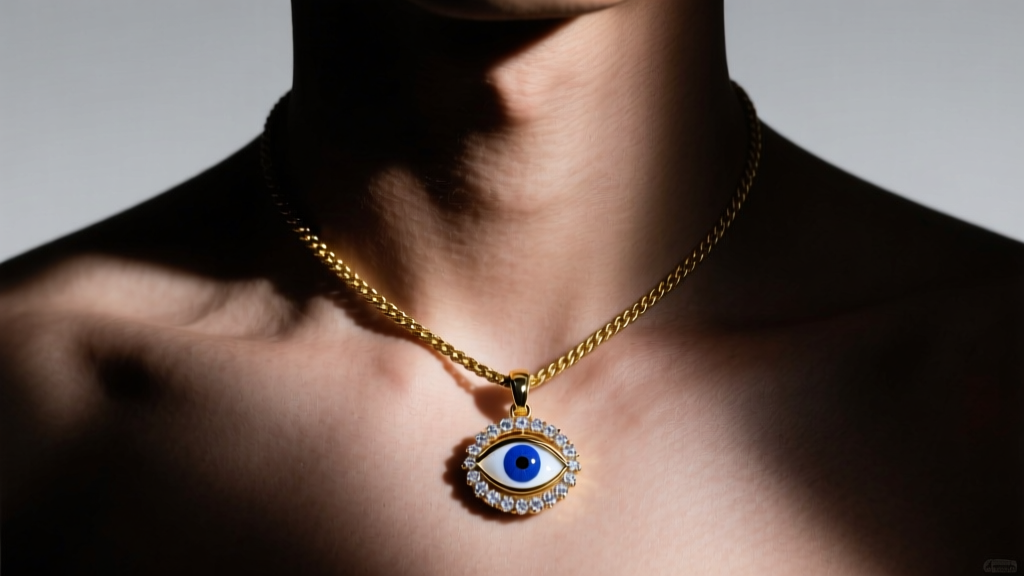
The Cultural and Sartorial Shift
The evil eye (Nazar) has transcended its ancient Mediterranean and Middle Eastern roots to become a staple in contemporary men's jewelry. As we navigate the 2026 market, the demand for an evil eye necklace for men has surged, driven by a blend of cultural appreciation, streetwear aesthetics, and a desire for meaningful talismans. However, this massive surge in popularity has flooded the market with everything from $15 dropshipped zinc alloys to $5,000 solid gold masterpieces. For the discerning buyer, separating genuine value from overpriced costume jewelry requires a deep understanding of metallurgy, gemology, and structural integrity. This guide strips away the marketing fluff to evaluate what you are actually paying for.
Material Grades: What You Are Actually Paying For
The foundation of any pendant's value lies in its base metal. Men's jewelry endures significant environmental stress, including sweat, friction from clothing, and exposure to the elements. Here is how the primary materials stack up in terms of budget and long-term value.
316L Surgical Stainless Steel (The Ultra-Budget Tier)
For budgets under $50, 316L stainless steel is the undisputed king. Unlike cheap brass or zinc alloys that will turn your skin green and cause contact dermatitis—a well-documented issue with nickel-heavy base metals according to the American Academy of Dermatology—316L is highly biocompatible. The critical value factor here is the finishing. A PVD (Physical Vapor Deposition) coated steel pendant will retain its color 10 times longer than traditional electroplating, making it a high-value proposition for daily wear.
925 Sterling Silver (The Mid-Tier Sweet Spot)
Sitting in the $70 to $150 range, 925 sterling silver offers intrinsic metal value. However, raw silver tarnishes when exposed to sulfur in the air and sweat. The true value in this tier comes from finding pieces plated with a thick layer of rhodium or platinum. This not only prevents tarnishing but gives the silver a bright, white-gold-like luster that appeals to modern men's styling.
Solid 10k and 14k Gold (The Investment Tier)
Starting around $300 and climbing well past $1,000, solid gold is for the buyer seeking generational longevity. 14k gold (58.5% pure gold) offers the perfect balance of rich color and structural hardness. Unlike plated metals, a solid gold evil eye pendant can be polished indefinitely to remove scratches, retaining its structural integrity and intrinsic melt value over decades.
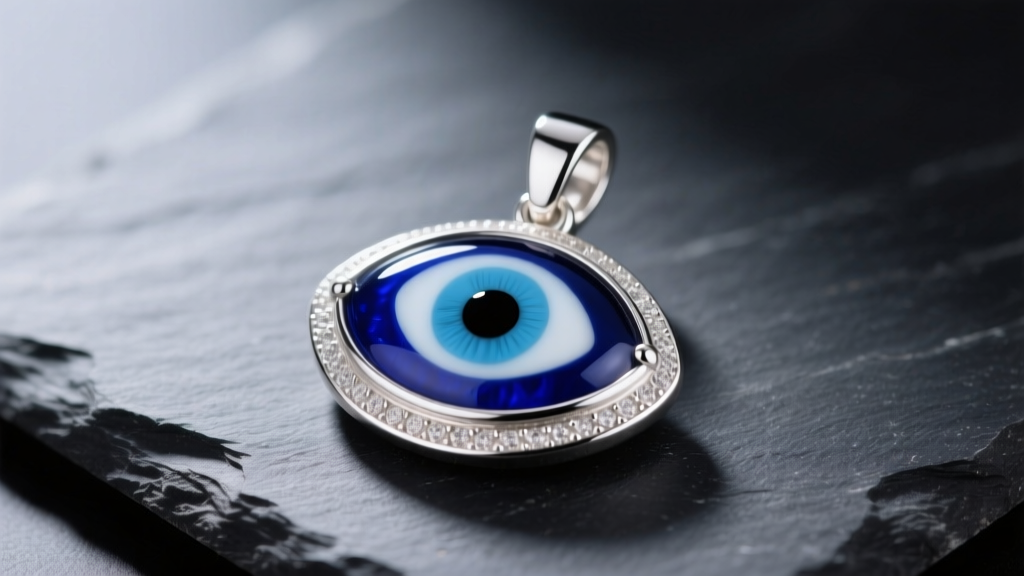
The Anatomy of the 'Eye': Glass vs. Gemstone
The 'pupil' and 'iris' of the evil eye dictate both the aesthetic and the price point. Budget pendants typically use cobalt-blue glass or painted enamel. While traditional, enamel is prone to micro-chipping when dropped on hard surfaces like bathroom tiles.
In the mid-to-high tiers, jewelers substitute glass with natural gemstones. According to the Gemological Institute of America (GIA), Lapis Lazuli is a popular premium choice, offering a deep, regal blue with natural pyrite (gold) flecks. However, Lapis sits at a 5.5 to 6 on the Mohs hardness scale, meaning it can scratch if stored improperly. For maximum durability, high-end brands utilize Blue Sapphire (Mohs 9) or synthetic spinel, which offer superior scratch resistance for active men. Another excellent alternative cited in the GIA Gem Encyclopedia is Tiger's Eye, which provides a masculine, earthy brown-and-gold chatoyancy that pairs exceptionally well with yellow gold settings.
The 2026 Value Matrix: Price Tiers vs. Longevity
To help you allocate your budget effectively, we have mapped the current market pricing against expected lifespans and overall value ratings.
| Material Tier | Price Range (2026) | Expected Lifespan | Value Rating |
|---|---|---|---|
| 316L Steel (PVD Coated) | $25 - $60 | 5-10 Years | High (Budget) |
| 925 Silver (Rhodium Plated) | $70 - $150 | 20+ Years | Excellent |
| 10k Solid Gold | $250 - $400 | Lifetime | Good |
| 14k Solid Gold | $450 - $900+ | Lifetime | Investment |
Hidden Failure Modes in Budget Necklaces
When assessing value, you must look beyond the pendant itself. The jewelry industry frequently cuts corners on components that are not immediately visible in product photos. Here are the most common failure modes to avoid:
- The Gold Vermeil Trap: Many brands sell 'gold vermeil' (a thick layer of gold over sterling silver) for $120-$180. While better than flash plating, the friction of a pendant resting against chest hair and skin will eventually wear through the gold layer, exposing the silver beneath. For daily wear, PVD steel or solid gold offers better long-term value.
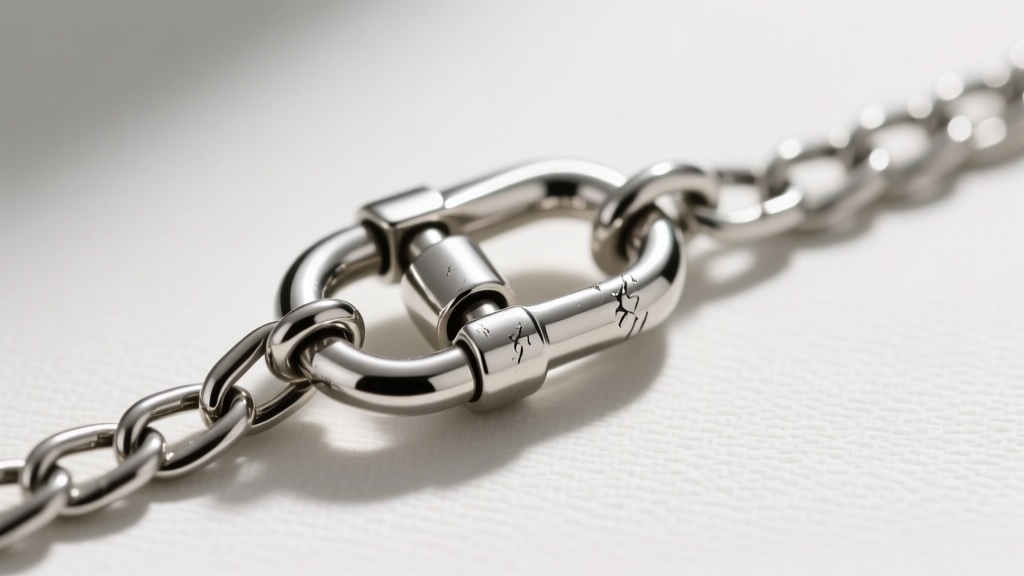
- Weak Jump Rings: The jump ring connects the pendant to the chain. In budget pieces, these are often left unsoldered (a simple slit in the metal). A heavy pendant will easily pull this slit open, resulting in a lost piece. Always inspect product macro-shots to ensure the jump ring is fully soldered shut.
- Enamel Degradation: As mentioned, painted or cold-enamel 'eyes' will chip. If you want a blue eye on a budget, look for kiln-fired vitreous enamel or solid glass inlays rather than painted resin.
Sizing and Proportions for the Male Physique
A common mistake men make when buying an evil eye necklace is choosing a pendant size that clashes with their proportions. Value is also about aesthetic utility—a poorly sized piece will sit unworn in a drawer.
The Pendant Sweet Spot
For most men, the ideal evil eye pendant diameter sits between 18mm and 24mm. Anything under 15mm tends to read as delicate or feminine and can easily get lost in chest hair or beneath a t-shirt collar. Conversely, pendants exceeding 30mm often cross the line from stylish talisman to costume jewelry, unless specifically styled within an avant-garde streetwear context.
Chain Pairing and Clasp Integrity
The chain must support the visual and physical weight of the pendant. A 20mm solid silver evil eye pendant weighs roughly 8 to 12 grams. To support this without looking disproportionate, opt for a chain thickness between 2.5mm and 4.5mm. Excellent chain styles for men's evil eye pendants include the Figaro, the Cuban link, and the Rope chain. Avoid box chains under 2mm, as their internal links are prone to kinking and snapping under the pendulum-like motion of a heavy pendant.
Furthermore, ensure the clasp is a sturdy lobster clasp rather than a fragile spring-ring. A 5mm lobster clasp provides the necessary tensile strength to ensure your investment stays securely around your neck.
Final Verdict: How to Allocate Your Budget
If your budget is strictly under $60, do not attempt to buy gold-plated brass or silver; instead, invest in a high-quality 316L stainless steel pendant with PVD coating and a vitreous glass eye. It will survive the gym, the shower, and daily friction without degrading.
If you can stretch your budget to the $100–$150 range, 925 sterling silver with natural gemstone inlays (like Lapis Lazuli or Tiger's Eye) offers the best intersection of intrinsic material value, cultural authenticity, and masculine aesthetics. Ultimately, the true value of an evil eye necklace for men lies not just in its protective symbolism, but in the craftsmanship and metallurgical integrity that allows it to be worn every day for years to come.


