Expert Cleaning and Care for a Hebrew Necklace
Learn expert cleaning, tarnish removal, and storage tips to keep your Hebrew necklace shining. Protect intricate letter engravings and delicate chains.

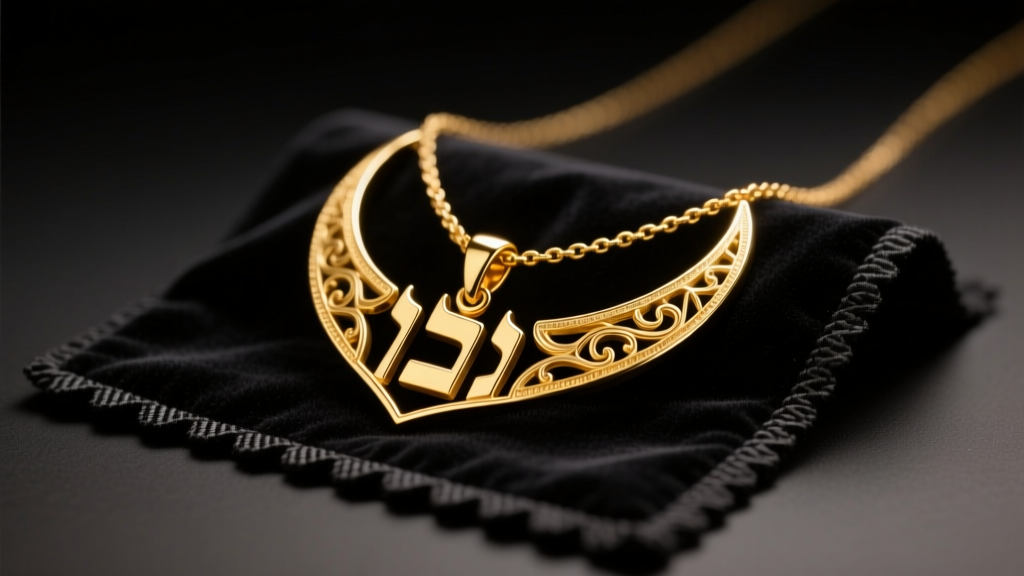
A Hebrew necklace is more than just an accessory; it is a profound expression of faith, heritage, and identity. Whether you wear a classic Chai (life) pendant, an intricately cut-out Shema Yisrael medal, or a personalized Hebrew nameplate, these pieces feature complex geometries, deep engravings, and delicate chains that require specialized maintenance. The very details that make Hebrew lettering beautiful—the sharp angles, deep grooves, and interlocking strokes—are also prime traps for sebum, cosmetic residue, and environmental tarnish.
In this comprehensive guide, we break down the exact metallurgical vulnerabilities of your jewelry and provide a professional-grade maintenance protocol to keep your Hebrew necklace pristine for generations.
Understanding the Metallurgy of Hebrew Jewelry
Before applying any cleaning solution, you must identify the base metal and any secondary treatments. The cleaning method for a high-polish 18k gold Chai pendant will severely damage an oxidized sterling silver Hamsa necklace.
Sterling Silver and Intentional Oxidation
Most silver Hebrew necklaces are crafted from 925 sterling silver (92.5% silver, 7.5% copper). The copper provides structural integrity for thin chains and detailed letter cut-outs but is highly reactive to hydrogen sulfide in the air, causing tarnish (silver sulfide). Furthermore, many artisans apply intentional oxidation (a dark patina) to the recessed grooves of Hebrew letters to create high contrast and legibility. Using harsh chemical dips will strip this patina, leaving your pendant looking flat and washed out.
Gold Alloys and Porous Gemstone Inlays
Hebrew pendants, particularly Star of David or Hamsa designs, frequently incorporate inlays of turquoise, lapis lazuli, or opal. While 14k and 18k gold alloys are relatively stable, the porous nature of these gemstones means they can absorb liquid cleaners, leading to irreversible discoloration or structural fracturing.
The Professional Step-by-Step Cleaning Protocol
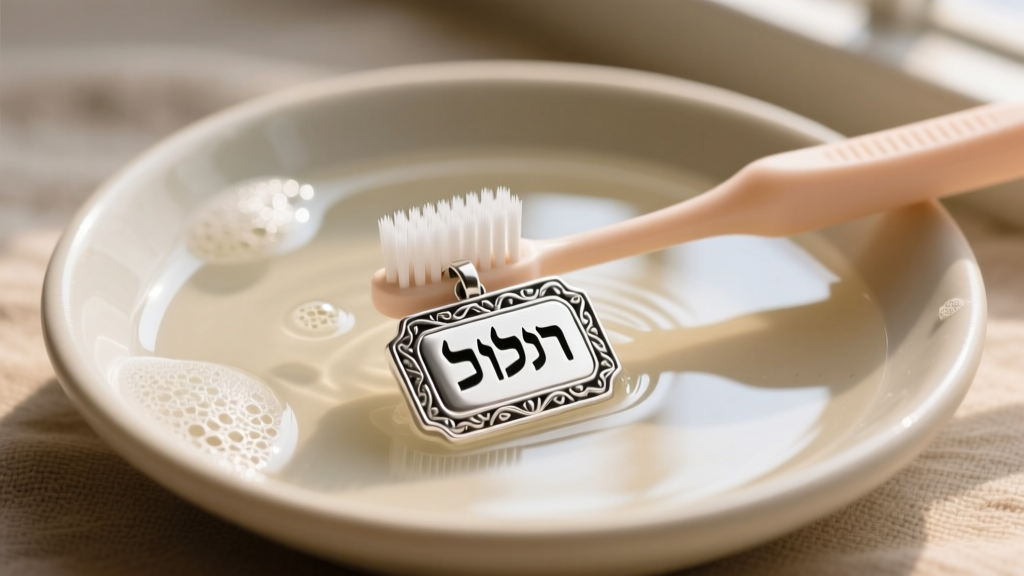
For routine maintenance of standard gold and non-oxidized silver Hebrew necklaces, a gentle surfactant bath is the safest and most effective method. According to the Gemological Institute of America (GIA), mild liquid dish soap is the gold standard for loosening organic oils without damaging metal alloys or most durable gemstones.
Tools Required
- Extra-soft baby toothbrush (bristles under 0.1mm to prevent micro-scratches on high-polish gold)
- Mild, phosphate-free liquid dish soap
- Distilled or filtered lukewarm water (hard water leaves calcium deposits in letter crevices)
- Lint-free microfiber polishing cloth
The Cleaning Process
- Prepare the Bath: Mix three drops of mild dish soap into a ceramic bowl of lukewarm water. Avoid metal bowls, which can cause galvanic reactions.
- Soak: Submerge the Hebrew necklace for 5 to 10 minutes. This allows the surfactant to break down the lipid bonds of skin oils trapped in the Hebrew letter joints.
- Agitate Gently: Using the baby toothbrush, lightly brush the pendant. Always brush with the grain of any brushed finishes, and use the tip of the bristles to flick debris out of the sharp corners and inner loops of complex letters like Aleph or Shin.
- Rinse and Dry: Rinse under a gentle stream of distilled water. Pat dry with a microfiber cloth, then use a hairdryer on the 'cool' setting to blast moisture out of the chain links and pendant bails.
Tackling Tarnish in Engraved and Cut-Out Designs
When a sterling silver Hebrew necklace develops heavy black or yellow tarnish, soap and water will not suffice. You must use a chemical or electrolytic reduction method. However, you must choose carefully to protect the intricate lettering.
| Method | Best For | Risk to Hebrew Details |
|---|---|---|
| Aluminum Foil & Baking Soda (Electrolytic) | Heavy, all-over tarnish on solid silver chains | High: Can strip intentional oxidation from letter grooves and damage gemstone inlays. |
| Commercial Silver Dip (Thiourea-based) | Quick tarnish removal on plain chains | Severe: Highly acidic; will instantly ruin oxidized finishes and pit porous stones. |
| Impregnated Polishing Cloth (Jeweler's Rouge) | Surface tarnish on high-polish letter faces | Low: Safest for preserving groove oxidation, but cannot reach deep into narrow cut-outs. |
| Q-Tip with Silver Polish (Targeted) | Specific tarnished spots on letter edges | Low: Allows precise application without touching darkened grooves. |
For oxidized Hebrew pendants, the targeted Q-tip method combined with a polishing cloth for the raised surfaces is the only safe approach. Apply a tiny amount of non-abrasive silver paste to a cotton swab and carefully trace the raised, polished edges of the Hebrew letters, avoiding the darkened recesses entirely.
Environmental Damage and Daily Wear Prevention
Prevention is vastly superior to restoration. A Hebrew necklace worn daily is exposed to a barrage of corrosive elements. The Jewelers of America emphasizes that everyday chemicals are the leading cause of premature jewelry degradation.
Expert Rule of Thumb: Your Hebrew necklace should be the last thing you put on when getting dressed, and the first thing you take off when returning home. This minimizes exposure to aerosolized cosmetics and perfumes.
Specific Threats to Avoid
- Chlorine and Bromine: Never wear your necklace in swimming pools or hot tubs. Chlorine reacts with the copper and zinc alloys in 14k gold, causing 'stress corrosion cracking' that can snap delicate cable chains and break pendant bails.
- Kosher Salt and Sweat: Salt is highly corrosive to sterling silver. If you wear your necklace during exercise or while cooking, wipe it down with a damp cloth immediately afterward.
- Ultrasonic Cleaners: While popular for diamond rings, ultrasonic waves create microscopic cavitation bubbles that can shatter turquoise or opal inlays commonly found in Hebrew Hamsa pendants, and will violently strip oxidized finishes.
Proper Storage Techniques for Delicate Chains
How you store your Hebrew necklace when it is not being worn dictates how much cleaning it will require in the future. Improper storage leads to both severe tarnishing and mechanical damage (tangles and kinks).
Anti-Tarnish Environments
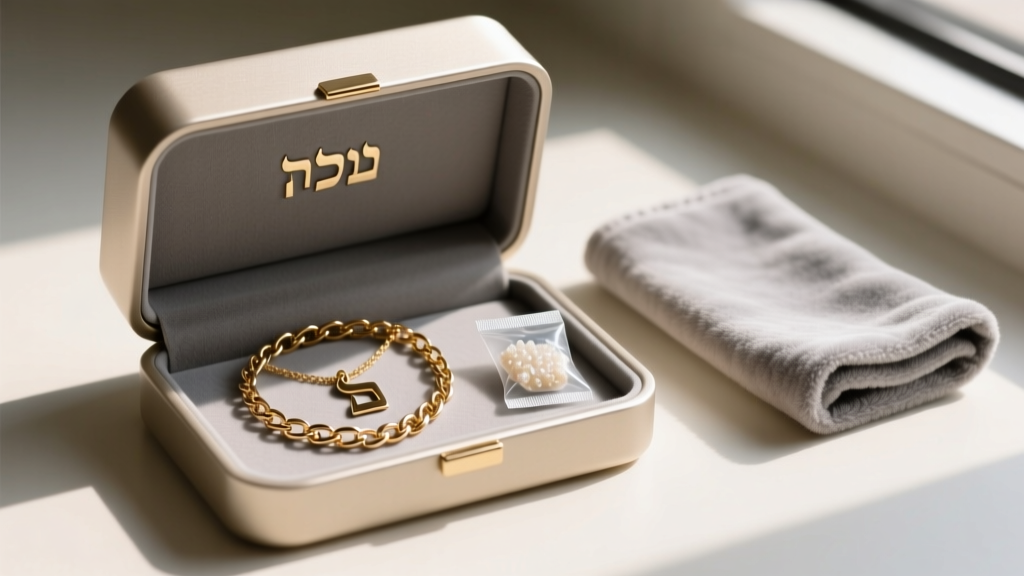
Silver tarnishes when exposed to sulfur compounds in the air. Store your necklace in an airtight polyethylene ziplock bag (never PVC, which contains sulfur-emitting plasticizers). Drop a 3M anti-tarnish strip or a simple silica gel desiccant packet into the bag to absorb ambient moisture and neutralize sulfur gases.
Preventing Chain Tangles and Kinks
Thin Hebrew nameplate necklaces often feature delicate 1mm box chains or cable chains that are notoriously prone to knotting. To prevent this:
- Always fasten the clasp before storing.
- Thread one end of the chain through a plastic drinking straw and clasp it. This keeps the chain rigid and physically prevents it from wrapping around itself.
- Alternatively, hang the necklace on a multi-tiered jewelry tree with felt-lined hooks to keep the Hebrew pendant suspended and free from surface scratches.
By understanding the specific metallurgical needs of your jewelry and following these targeted cleaning protocols, your Hebrew necklace will remain a brilliant, legible, and cherished symbol of your heritage for a lifetime.


