Marni Necklace Materials: 2026 Guide to Resin, Brass & Enamel
Discover the material properties of authentic Marni necklaces. Compare resin, enamel, brass, and glass to understand weight, durability, and care.

The Architecture of Avant-Garde: Decoding Marni Necklace Materials
When discussing luxury costume jewelry, few houses command the same reverence as Marni. Known for its bold, architectural silhouettes and unapologetic use of color, a Marni necklace is less about precious gemstones and more about material innovation and sculptural form. As we navigate the 2026 vintage and secondary markets, understanding the specific material properties of Marni's designs is critical for authentication, valuation, and long-term care. According to Vogue's analysis of Marni's jewelry evolution, the brand's commitment to unconventional materials has redefined modern costume jewelry, elevating plastics and base metals to high-art status.
This guide provides a deep-dive material comparison for collectors and enthusiasts, examining the exact physical properties, failure modes, and authentication markers of authentic Marni necklaces.
The Core Materials in Marni Necklaces
Marni's design team primarily relies on three distinct material categories to achieve their signature chunky, avant-garde aesthetic. Each material possesses unique physical properties that dictate how the necklace drapes, ages, and survives daily wear.
High-Density Cast Resin & Acrylic
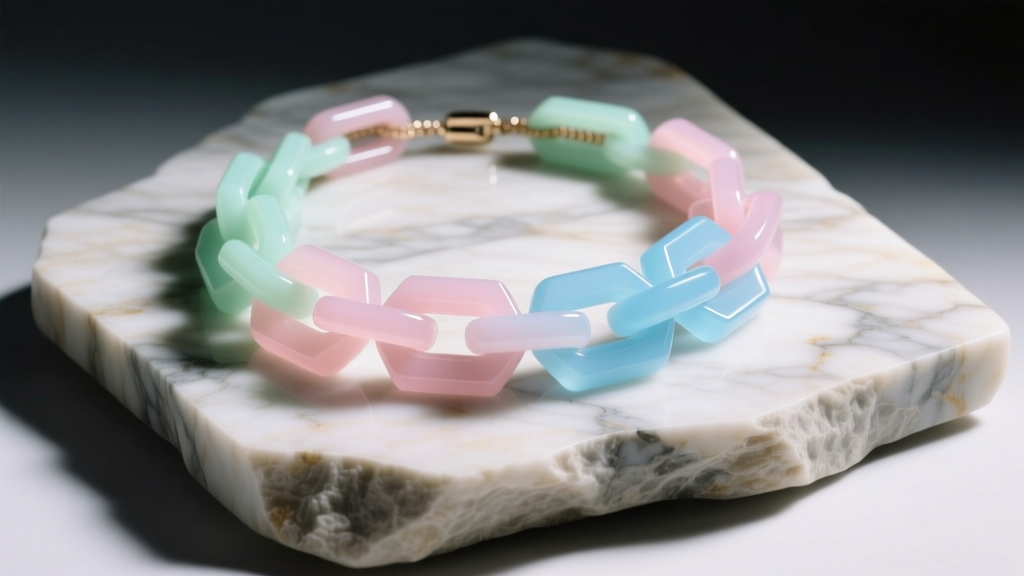
The backbone of Marni's most iconic collars and link necklaces (such as the Tropicalia collection) is high-density cast polyurethane or acrylic resin. Unlike the injection-molded plastics used in fast-fashion jewelry, Marni utilizes a slow-cure casting process. This results in a material with a specific gravity of approximately 1.18 to 1.20 g/cm³. This density gives authentic Marni resin necklaces a substantial, premium drape, with a single statement collar often weighing between 90g and 140g. Cast resin also allows for deep, opaque color saturation and internal marbling effects that injected acrylic cannot replicate.
Enameled Brass & Galvanized Alloys
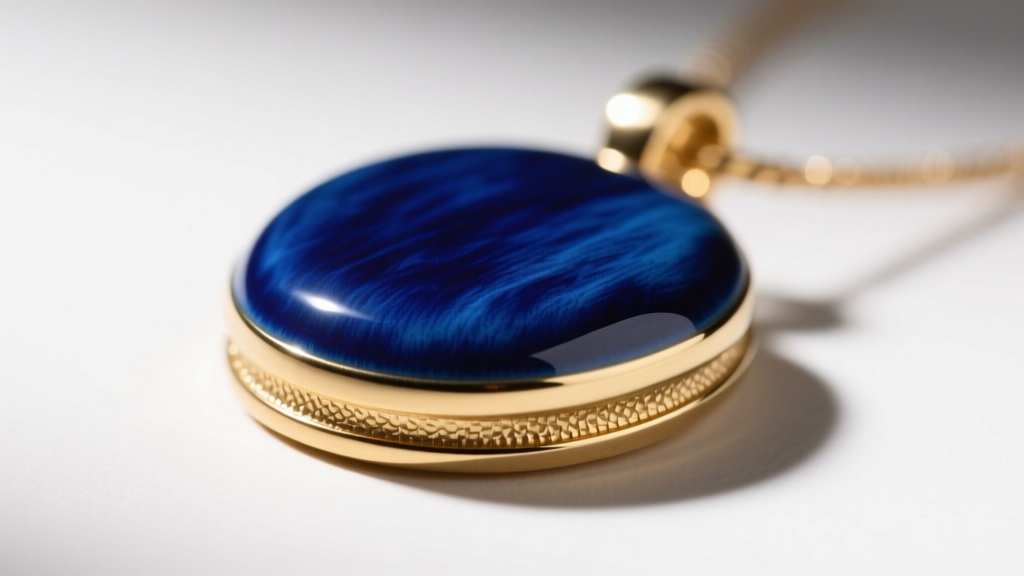
For pieces requiring structural rigidity or metallic luster, Marni utilizes solid brass (often CZ121 or CW614N jewelry casting grades) as a base metal. However, Marni rarely leaves brass bare. The brand frequently employs "cold enamel" (a two-part epoxy or polyurethane resin) rather than traditional vitreous (kiln-fired) enamel. As noted by the Gemological Institute of America (GIA), cold enamel is preferred in complex, chunky costume jewelry because vitreous enamel requires firing at temperatures exceeding 800°C, which can warp intricate, large-scale brass castings. Cold enamel allows Marni to achieve thick, 1.5mm to 2mm opaque color blocks that are highly resistant to chipping but vulnerable to chemical solvents.
Hand-Blown Murano Glass
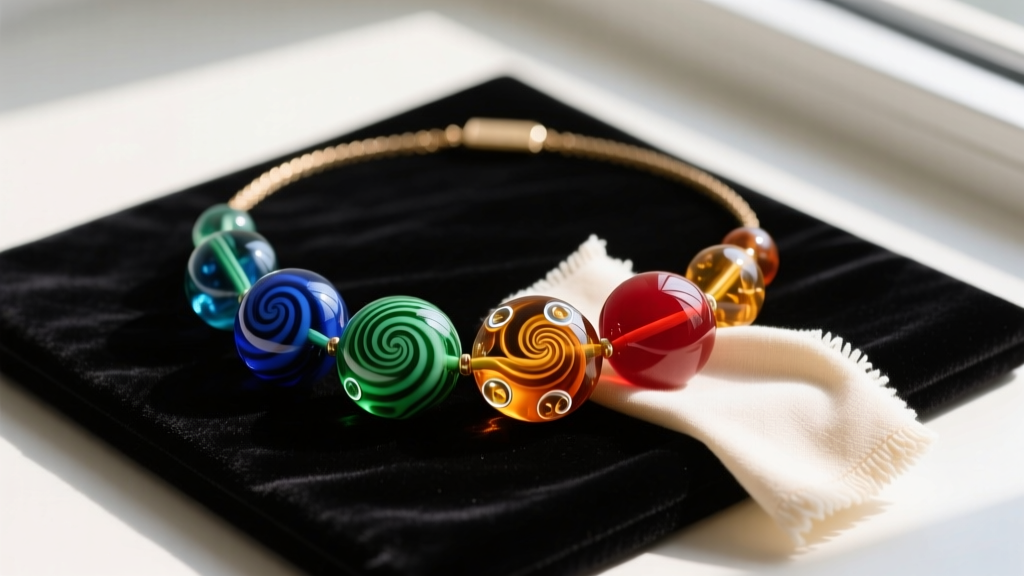
In their more delicate or bohemian-leaning seasonal collections, Marni incorporates hand-blown Murano glass beads. These are not mass-produced pressed glass; they exhibit the slight asymmetrical variations, internal bubbles, and high refractive index characteristic of traditional Venetian glasswork. While visually stunning, glass beads introduce a significant fragility factor, requiring specialized storage to prevent micro-fractures.
Material Comparison Matrix
The following table breaks down the physical properties and market realities of Marni's primary necklace materials as of 2026.
| Material | Base / Composition | Avg. Weight (18" Collar) | Durability & Failure Modes | Secondary Market Value |
|---|---|---|---|---|
| Cast Resin | Polyurethane / Acrylic Polymer | 90g - 140g | Highly durable. Fails via UV yellowing or deep scratching. | $350 - $850 |
| Cold Enamel | Epoxy Resin over Brass Base | 110g - 180g | Moderate. Fails via chemical clouding or impact chipping. | $400 - $1,200 |
| Murano Glass | Silica, Soda, Lime (Hand-blown) | 60g - 90g | Low impact resistance. Fails via shattering or bead cracking. | $250 - $600 |
| Hardware | Brass / Stainless Steel | N/A | High. Plating may wear if micron thickness is under 2.0. | N/A |
Authentication Clues Based on Material Properties
The secondary market for Marni jewelry is flooded with sophisticated counterfeits. However, replicating the exact material properties of Marni's supply chain is cost-prohibitive for counterfeiters. Here is how to use material science to authenticate a Marni necklace:
- The Weight Test: Authentic Marni resin and brass pieces are remarkably heavy. A chunky Marni link necklace should feel substantial in the hand, typically exceeding 100g. Fakes often use hollow, injection-molded ABS plastic or lightweight zinc alloys, resulting in pieces that weigh less than 45g and feel unnaturally light.
- Seam Lines vs. Gate Marks: Examine the edges of resin links. Authentic cast resin is poured into silicone molds, leaving a very faint, raised seam line that is hand-polished but often still visible under magnification. Injection-molded fakes will have a distinct "gate mark" (a small circular divot where the plastic was injected) and uniform, machine-perfect edges.
- Hardware Plating Thickness: Marni uses heavy gold or silver plating on their brass lobster clasps and jump rings, typically ranging from 2.0 to 3.0 microns. Counterfeits use "flash plating" (less than 0.1 microns), which appears overly yellow, overly shiny, and will rub off to reveal gray zinc alloy within weeks of wear.
- Enamel Depth: Run your fingernail over the boundary where the enamel meets the metal on an enameled brass pendant. Authentic Marni cold enamel is poured thick, creating a distinct, raised topographical edge. Fakes often use sprayed-on paint or thin epoxy that sits flush with the metal.
Care & Maintenance by Material Type
Because Marni necklaces are classified as costume jewelry, they cannot be cleaned using traditional fine jewelry methods. Ultrasonic cleaners and chemical dips will permanently destroy these pieces. According to insights from the Business of Fashion, preserving the material integrity of luxury costume jewelry requires highly specific care protocols.
Caring for Cast Resin
Resin is highly susceptible to UV degradation. Prolonged exposure to direct sunlight will cause the polyurethane chains to break down, resulting in irreversible yellowing, particularly in white, pastel, or translucent pieces. Store resin necklaces in a dark, climate-controlled jewelry box. To clean, use only a damp microfiber cloth with a drop of mild, pH-neutral dish soap. Never use alcohol-based cleaners, which will cloud the resin surface.
Caring for Cold Enamel
Cold enamel is essentially a hardened plastic. It is impervious to water but highly reactive to solvents. Perfumes, hairsprays, and acetone-based products will cause the epoxy to soften, cloud, or peel away from the brass base. Always apply cosmetics before putting on an enameled Marni necklace. If the enamel becomes dull, polish it gently with a dry, untreated jeweler's cloth—never use silver polishing liquids, as they will strip the enamel's glossy top layer.
Caring for Murano Glass
Glass beads are chemically stable but structurally vulnerable. The primary risk is bead-on-bead impact, which can cause micro-fractures that eventually lead to shattering. Always store Marni glass bead necklaces flat or hanging individually. Never toss them into a communal jewelry drawer where the heavy glass beads can strike one another.
Final Thoughts on Material Investment
Investing in a Marni necklace is an investment in industrial design and material experimentation. By understanding the difference between heavy cast resins, thick cold enamels, and artisanal glass, collectors can confidently navigate the secondary market, authenticate their pieces, and ensure their avant-garde jewelry survives for decades to come.


