A Buyer's Guide to Authentic Cloisonne Bead Necklaces
Discover how to evaluate, authenticate, and price cloisonne bead necklaces. Learn to spot vitreous enamel, wire gauges, and avoid common damage.


The Allure of Cloisonne: Beyond the Surface
When evaluating a cloisonne bead necklace, buyers are often captivated by the vibrant, jewel-toned compartments and intricate metallic wirework. However, the market is saturated with mass-produced imitations that lack the metallurgical and glassworking mastery of authentic pieces. True cloisonne (from the French word for 'compartment') is an ancient technique where fine metal wires are soldered to a metal base to create cells, which are then packed with vitreous enamel and fired in a kiln. According to The Metropolitan Museum of Art, this technique reached its zenith in China during the Ming and Qing dynasties, particularly in the form of Jingtai Lan (Jingtai Blue). Today, whether you are hunting for a mid-century export piece or a contemporary artisan creation, understanding the structural anatomy of these beads is critical to making a sound investment.
Vitreous Enamel vs. Cold Enamel: The Critical Distinction
The single most important factor in determining the value and longevity of a cloisonne bead necklace is the enamel medium. Authentic, high-end cloisonne utilizes vitreous enamel—essentially finely ground glass (silica, flux, and metal oxides) that is fired at temperatures exceeding 1,400°F (760°C). This fuses the glass to the metal base, creating a surface with a Mohs hardness of 5 to 6, making it highly resistant to scratching and UV fading.
Conversely, the majority of inexpensive, modern 'cloisonne' beads on the market use cold enamel (epoxy or polyurethane resin). Cold enamel is poured into glued wire compartments and cured at room temperature. While it can mimic the look of glass, it is soft (Mohs 2-3), prone to yellowing, and easily scratched by everyday wear. The Gemological Institute of America (GIA) notes that distinguishing between fired glass and resin is a fundamental skill in jewelry appraisal.
| Feature | Vitreous (Fired Glass) | Cold Enamel (Resin/Epoxy) |
|---|---|---|
| Hardness (Mohs) | 5.0 - 6.0 (Scratch Resistant) | 2.0 - 3.0 (Easily Scratched) |
| Thermal Reaction | Withstands heat; melts at extreme temps | Melts, burns, or discolors with mild heat |
| Visual Depth | Translucent to opaque; deep optical clarity | Flat appearance; often contains micro-bubbles |
| Longevity | Centuries (if base metal is protected) | 5-15 years before yellowing or crazing |
| Weight | Noticeably heavier due to glass and copper | Lightweight; feels 'plastic' to the touch |
Anatomy of a High-Quality Cloisonne Bead
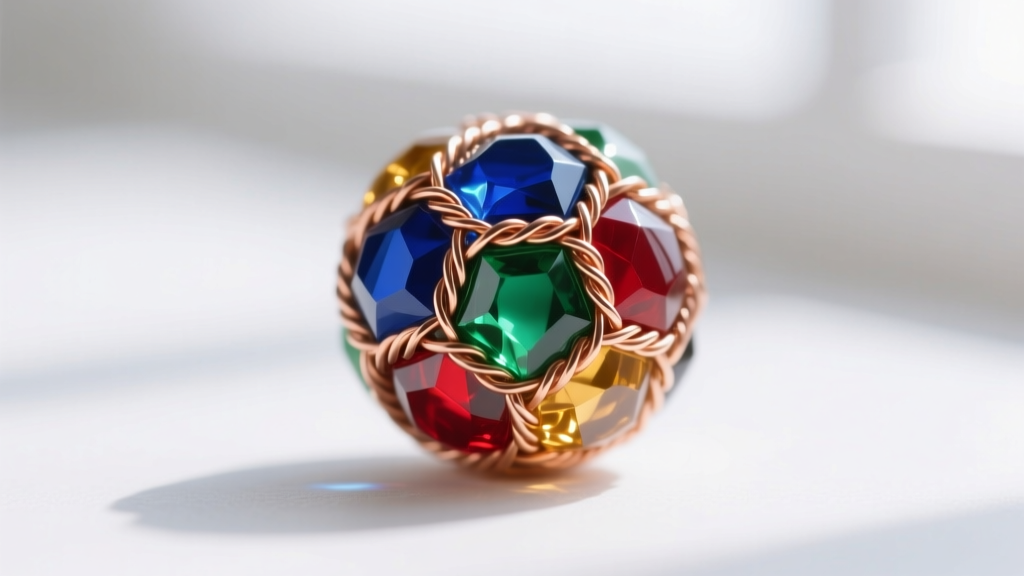
To properly assess a cloisonne bead necklace, you must examine its structural components under magnification (a 10x jeweler's loupe is ideal).
1. The Base Metal
Traditional Chinese and Japanese cloisonne beads are almost exclusively formed over a copper or brass base. Copper is preferred for its excellent thermal conductivity during the kiln-firing process and its ability to bond with vitreous enamel. High-end contemporary pieces may use sterling silver or fine silver, which prevents the risk of copper oxidation (verdigris) if the enamel cracks.
2. The Wirework (Cloisons)
The wires define the design and hold the enamel in place. In premium vintage and artisan beads, look for wires in the 24 to 28 AWG (American Wire Gauge) range. Thinner wires (28-30 AWG) allow for incredibly intricate, lace-like motifs, such as lotus flowers or dragons. The wires should be perfectly flush with the enamel surface after polishing. If you can feel the wires catching on your fingernail, the bead was poorly polished or the enamel has shrunk due to improper firing.
3. The Protective Clear Coat
Because copper and brass are highly reactive to moisture and skin acids, modern authentic cloisonne beads are sealed with a clear polyurethane or UV-cured lacquer. Vintage pieces (pre-1980s) may lack this coating or use early cellulose lacquers that craze and yellow over time. A pristine, non-yellowed clear coat is a hallmark of well-preserved mid-century or modern artisan work.
Market Pricing & Valuation Tiers
Pricing a cloisonne bead necklace requires identifying its era, origin, and material integrity. Below is a current market framework for 2026.
| Category | Description | Estimated Price Range (USD) |
|---|---|---|
| Mass-Market Modern | Cold resin enamel, brass base, thick/clunky wires, often imported in bulk. | $15 - $45 |
| Mid-Century Export (1950s-1980s) | Vitreous enamel, copper base, traditional motifs (Jingtai blue), excellent wirework. | $80 - $250 |
| Contemporary Artisan | Hand-drawn silver/copper wires, custom color palettes, vitreous enamel, signed. | $300 - $800 |
| Antique / Imperial (Pre-1920s) | Qing dynasty or early Republic era, silver/gilt copper, museum-quality provenance. | $1,500 - $5,000+ |
Red Flags: Identifying Damage and Failure Modes

When inspecting a vintage or antique cloisonne bead necklace, avoid pieces exhibiting the following structural failures:
- Verdigris (Copper Corrosion): Look closely at the drill holes of the beads and the areas where the clasp meets the metal. Green, powdery crust is verdigris (copper acetate/carbonate). This occurs when moisture penetrates the enamel or clear coat and reacts with the copper base. Verdigris is active and will continue to destroy the bead from the inside out.
- Enamel 'Popping' or Crazing: Vitreous enamel and copper expand and contract at different rates. If a bead was dropped or exposed to sudden thermal shock (like wearing it in a hot tub), the glass will craze (micro-cracks) or pop out entirely, leaving empty metal cells.
- Wire Lifting: If the wirework is lifting away from the base metal, it indicates a failure in the initial soldering process or, more commonly, that the wires were merely glued down to hold cold resin enamel. Authentic fired cloisonne wires are fused into the base metal and the glass itself.
- Drill Hole Chipping: The edges of the drill holes are the most vulnerable points. Check for chipped enamel around the stringing channel, which exposes the raw copper to skin oils and accelerates degradation.
Expert Care and Maintenance
To preserve the structural integrity and value of your cloisonne bead necklace, strict care protocols must be followed. Never use ultrasonic cleaners; the high-frequency vibrations will shatter vitreous enamel and dislodge soldered wires. Avoid steam cleaning and harsh chemical dips, which will strip the protective lacquer and instantly tarnish the exposed copper wires.
Clean your necklace using only a soft, dry microfiber cloth. If grime builds up in the wire compartments, use a soft-bristled makeup brush to gently sweep it out. Always store your cloisonne beads in a low-humidity environment, ideally in an anti-tarnish pouch with silica gel packets to prevent moisture from reaching the copper core. By understanding the precise materials and historical craftsmanship behind these pieces, you can confidently curate a collection that will endure for generations.


