Tree of Life Necklace Meaning: The Ultimate Gift Guide
Discover the tree of life necklace meaning and learn how to match materials, gemstones, and chain styles to the perfect milestone occasion.

Decoding the Tree of Life Necklace Meaning Across Cultures
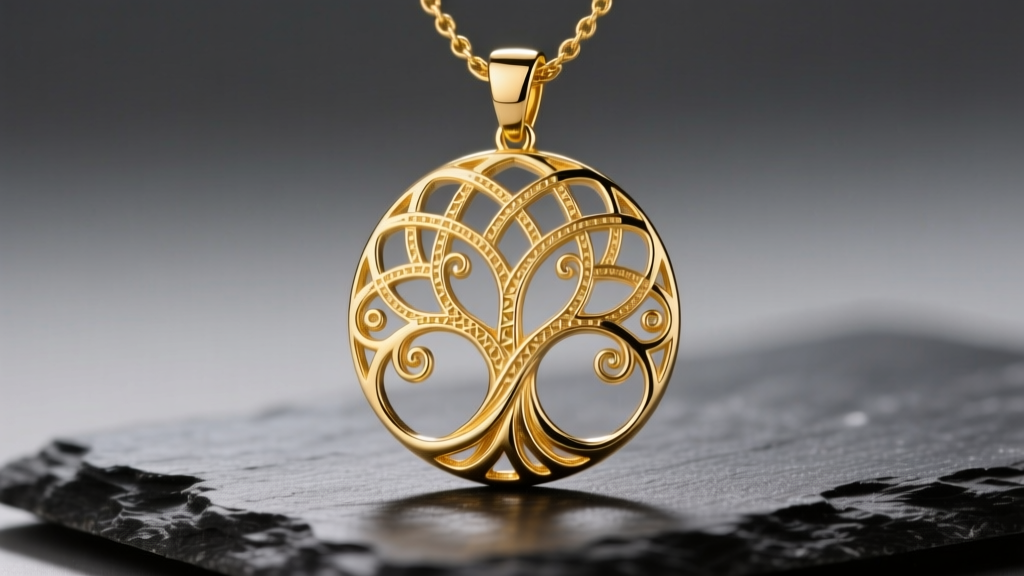
When searching for a gift that transcends fleeting fashion trends, few motifs carry the profound historical and emotional weight of the arboreal silhouette. Understanding the tree of life necklace meaning is essential for selecting a piece that truly resonates with the recipient. Historically, this symbol spans continents and millennia. In Celtic tradition, the Crann Bethadh represents the delicate balance of nature, where branches reach for the heavens while roots anchor deeply into the earth, symbolizing strength, longevity, and spiritual grounding. According to Britannica, the motif also holds deep significance in Kabbalistic mysticism as the Etz Chaim, mapping the ten Sephirot, or divine emanations, that structure the universe.
In a modern gifting context, the tree of life necklace meaning has evolved to represent familial interconnectedness, personal growth, and resilience. It is a visual metaphor for a recipient’s unique journey—acknowledging their deep roots (heritage and family) while celebrating their upward growth (achievements and future aspirations). Because of this layered symbolism, it serves as an exceptionally versatile gift, provided you match the material and design to the specific milestone.
Material Grades and Pricing Tiers
The emotional weight of the pendant must be matched by the physical durability of the metal. Gifting a piece that tarnishes or bends easily undermines the symbolism of 'strength and longevity.' Here is a technical breakdown of the most common metals used for these pendants, including their purity grades and market pricing.
| Metal Type | Purity / Grade | Durability Profile | Estimated Price Range | Best For |
|---|---|---|---|---|
| Sterling Silver | 925 (92.5% Ag) | Prone to sulfide tarnish; requires rhodium plating for daily wear. | $45 - $120 | Graduations, budget-conscious family gifts. |
| 14k Yellow/White Gold | 58.5% Au | Highly durable, excellent scratch resistance for intricate filigree. | $250 - $800 | Milestone birthdays, daily wear, Mother's Day. |
| 18k Gold | 75.0% Au | Softer, richer color; delicate branches may bend under pressure. | $600 - $1,500 | Anniversaries, luxury heirloom gifting. |
| Platinum | 950 Pt | Extremely dense, hypoallergenic, develops a patina over time. | $900 - $2,500+ | Memorials, once-in-a-lifetime legacy gifts. |
For intricate 'woven root' designs, 14k gold is often the superior choice. It provides the necessary tensile strength to hold thin, wire-wrapped branches without warping, a common failure mode in softer 18k or 22k gold alloys.
Occasion Matching: When to Gift a Tree of Life Pendant
The versatility of this motif lies in its adaptability. However, the specific design variation you choose should align with the psychological intent of the occasion.
Milestone Graduations and New Beginnings
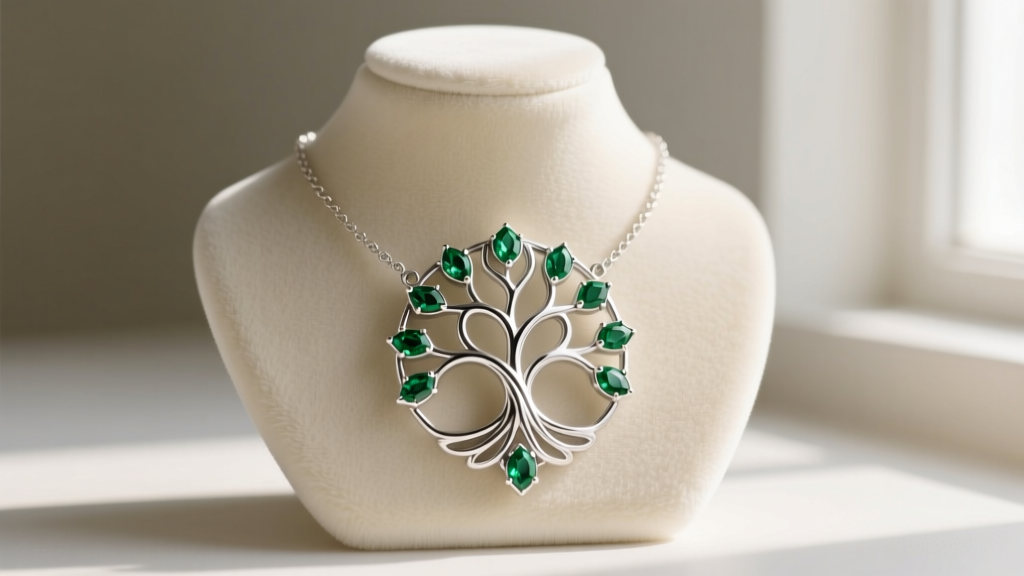
For high school or college graduations, the tree of life necklace meaning centers on 'branching out' while remembering one's roots. Opt for an openwork design (where the branches form the negative space of a circle) in sterling silver or 14k white gold. These contemporary, minimalist profiles appeal to younger demographics and transition easily from daywear to evening attire.
Mother’s Day and Family Expansions
When celebrating motherhood, the 'family tree' interpretation takes precedence. Look for pendants that incorporate birthstone accents or allow for the engraving of children's names along the trunk or inner rim of the bounding circle. A 14k rose gold setting with flush-set pink sapphires or rubies adds a warm, nurturing aesthetic that perfectly encapsulates maternal bonds.
Memorials and Sympathy Gifting
In times of loss, the tree symbolizes the eternal cycle of life and the enduring nature of memory. For sympathy gifts, avoid overly bright or flashy gemstones. Instead, choose a solid, heavy-cast platinum or 18k yellow gold pendant with a brushed or matte finish. Some specialized jewelers offer 'cremation tree of life' pendants, which feature a discreet, threaded bail or a hollowed trunk compartment designed to hold a microscopic amount of ashes or soil from a meaningful location.
Technical Specs: Chain Widths and Bail Sizing
A common mistake when gifting necklaces is ignoring the mechanical compatibility between the pendant's bail (the loop at the top) and the chain. Tree of life pendants, particularly those with circular bounding frames, tend to be front-heavy. If paired with an inadequate chain, the pendant will constantly flip backward, hiding the design.
Bail Dimensions: Most standard tree of life pendants feature a bail with an inner diameter of 4mm x 2mm.
Chain Selection: Avoid delicate 0.5mm thread chains. Instead, select a 1.0mm to 1.5mm diamond-cut cable chain or a 1.2mm box chain. The box chain provides a flat, structural surface that prevents the bail from sliding and tangling.
Clasp Mechanics: Always ensure the chain is finished with a lobster clasp rather than a spring-ring clasp. Lobster clasps offer superior tension and longevity, crucial for supporting the 5 to 12-gram weight of a solid metal tree pendant.
Gemstone Accents and Mohs Hardness
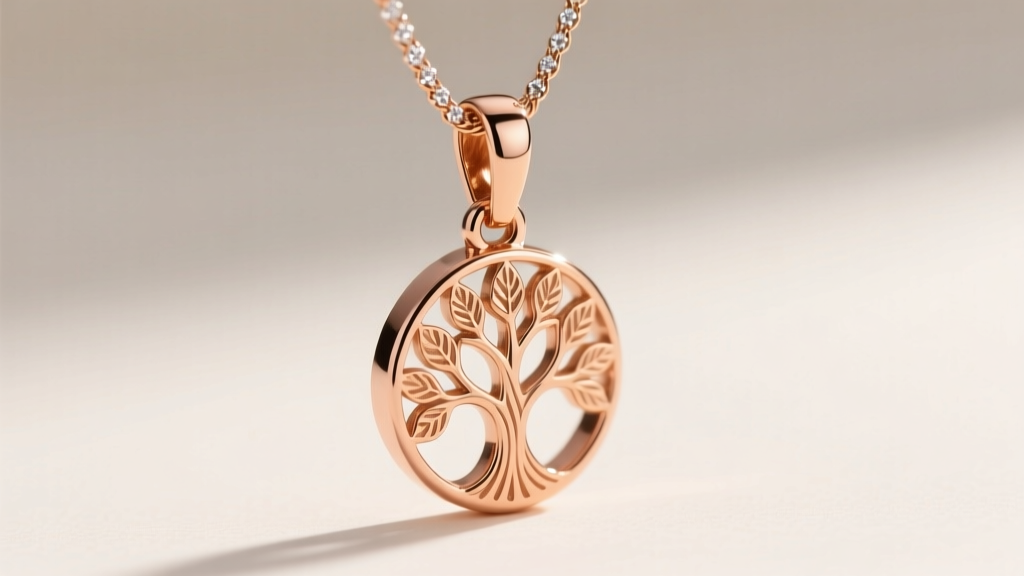
Integrating birthstones into the foliage of the tree elevates the personalization of the gift. However, as noted by the Gemological Institute of America (GIA), not all gemstones are suitable for daily-wear necklaces due to their position on the Mohs hardness scale.
- Sapphires and Rubies (Mohs 9): Excellent for daily wear. Highly resistant to scratching and chipping, making them ideal for flush-setting into the tiny leaves of the tree.
- Garnets and Amethysts (Mohs 7-7.5): Good for occasional wear. They can withstand standard prong settings but should be removed during heavy physical activity.
- Opals and Pearls (Mohs 5.5-6.5): Poor for daily wear. Opals are highly susceptible to thermal shock and dehydration, while pearls are easily scratched by metal branches or damaged by perfumes and lotions. If gifting these, ensure the stones are set in protective bezels rather than exposed prongs.
Care Protocols for Intricate Filigree
The intricate, woven branches of a tree of life pendant are notorious for trapping skin oils, lotions, and environmental dust, which can quickly dull the metal's luster. When advising your gift recipient on maintenance, warn them against using ultrasonic cleaners. The high-frequency vibrations can easily fracture porous stones (like turquoise or emeralds) often used as leaf accents, and can shake loose delicate micro-prongs.
Instead, the safest and most effective cleaning method involves soaking the necklace in a bowl of warm water with a few drops of mild, phosphate-free dish soap for ten minutes. Use a soft-bristled horsehair brush (never a hard toothbrush, which will leave micro-scratches on gold and silver) to gently sweep between the branches and roots. Rinse with distilled water to prevent hard water spots, and dry with a lint-free microfiber cloth. For oxidized sterling silver pieces where the darkened crevices are part of the design intent, skip the liquid cleaners entirely and rely solely on a dry, treated silver-polishing cloth to maintain the high-contrast aesthetic.
The Final Verdict on Gifting
The tree of life necklace meaning offers a rare opportunity to give a gift that is simultaneously a beautiful accessory and a profound talisman. By paying close attention to metal purity, mechanical chain compatibility, and the Mohs hardness of any integrated gemstones, you ensure that the physical piece will endure just as long as the sentimental roots it represents. Whether marking a new beginning, honoring a mother, or memorializing a loved one, this timeless motif remains one of the most thoughtful choices in the jewelry lexicon.


