Mastering the Necklace and Watch Pairing: 2026 Style Trends
Discover 2026 trends for pairing a necklace and watch. Learn proportion rules, metal mixing, and chain weaves for perfect wrist-to-neck harmony.

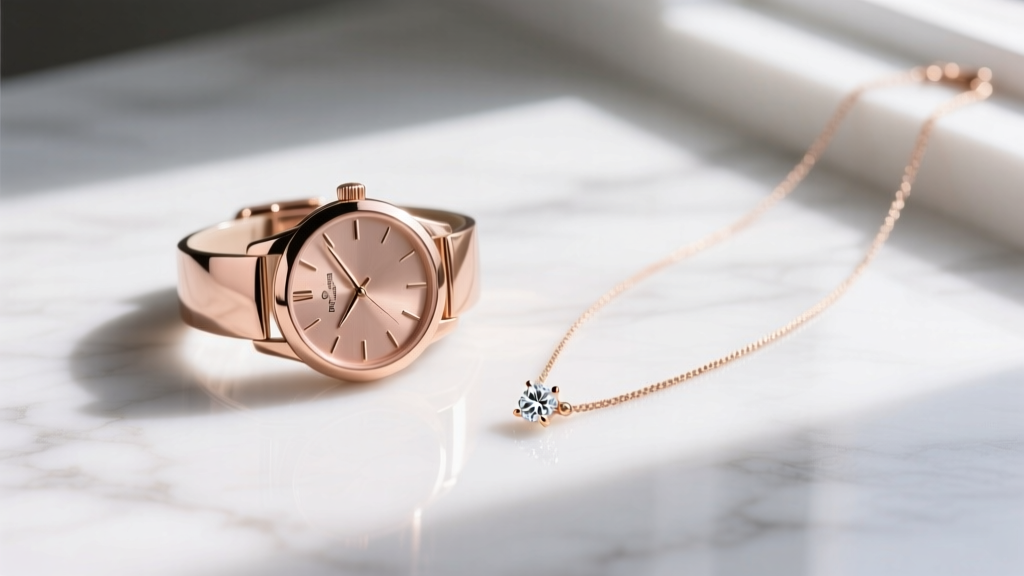
The 2026 Shift: Why Wrist-to-Neck Harmony Matters
The era of treating wristwear and neckwear as isolated afterthoughts is officially over. As we navigate the style landscape of 2026, the modern accessorizer recognizes that the visual corridor between the wrist and the neckline demands intentional curation. The interplay between a necklace and watch is no longer about rigidly matching metals; it is about balancing visual weight, understanding metallurgical undertones, and mastering spatial proportions. According to Hodinkee's proportion guides, the human eye naturally tracks the geometric weight of a watch case and subconsciously seeks a counterbalance near the face and neck. When this balance is achieved, the result is an effortless, high-impact aesthetic that elevates both the timepiece and the jewelry.
This year's trend analysis reveals a definitive move away from 'jewelry store mannequin' matching sets. Instead, 2026 champions 'asymmetrical weight distribution' and 'textural contrast.' Whether you are pairing a heavy, tool-oriented dive watch with a minimalist chain or offsetting an ultra-thin dress watch with a substantial pendant, understanding the mechanics of this pairing is essential for any serious collector or style enthusiast.
The Proportion Matrix: Matching Case Sizes to Pendant Drops
The most common failure point in styling a necklace and watch is a severe mismatch in visual mass. A 44mm titanium dive watch will completely swallow a 1.0mm delicate cable chain, making the necklace look like an accidental thread. Conversely, a heavy 25-gram Cuban link chain will visually crush a 34mm vintage dress watch, making the timepiece appear toy-like. To solve this, we use a proportion matrix based on case diameter and chain width.
| Watch Case Diameter | Watch Category | Ideal Chain Width | Pendant Weight/Size | Recommended Weave |
|---|---|---|---|---|
| 34mm - 37mm | Classic Dress / Vintage | 1.0mm - 1.8mm | 2g - 5g (Minimalist) | Cable, Box, or Snake |
| 38mm - 41mm | Modern Everyday / Field | 2.0mm - 3.0mm | 6g - 12g (Medium) | Rolo, Mariner, or Bead |
| 42mm - 45mm+ | Dive / Pilot / Oversized | 3.5mm - 6.0mm+ | 15g - 30g+ (Statement) | Figaro, Curb, or Wheat |
Oversized Watches (42mm+) with Heavy Chains
When wearing a substantial tool watch, such as a 44mm stainless steel diver, the necklace must possess enough tensile strength and visual girth to hold its own. A 4.0mm to 5.0mm Figaro or Curb chain provides the necessary industrial aesthetic. In 2026, pairing these heavy chains with matte-finished pendants—such as oxidized silver dog tags or brushed titanium geometric shapes—creates a cohesive, utilitarian narrative that complements the watch's bezel and crown guards.
Dress Watches (34-38mm) with Delicate Drops
Dress watches, characterized by their slim profiles and precious metal cases (often 18k gold or platinum), require a restrained approach. A 1.2mm or 1.5mm box chain offers a subtle, architectural gleam that mimics the refined finishing of the watch's dauphine hands. The pendant should remain lightweight (under 5 grams) and sit precisely at the collarbone or slightly below, ensuring it doesn't swing wildly and distract from the understated elegance of the wristwear.
Metallurgy and Material Grades: Beyond Basic Color Matching
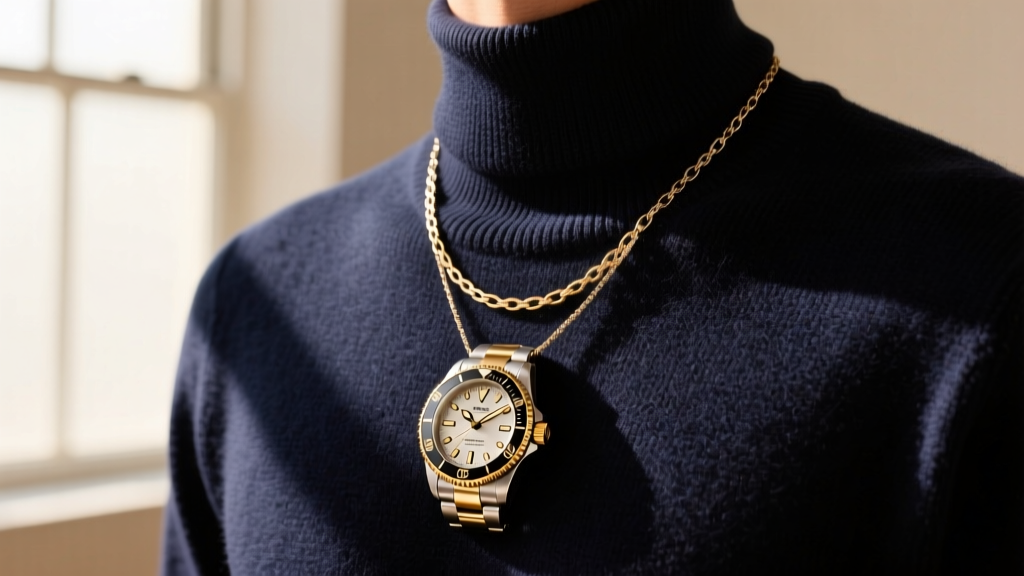
While matching yellow gold to yellow gold is the traditional route, 2026's most sophisticated stylists are engaging in intentional metal mixing, grounded in an understanding of material grades. The key to mixing metals successfully between your wrist and neck lies in matching the temperature and finish of the alloys, rather than the exact color.
For instance, if you are wearing a watch crafted from 904L stainless steel (known for its slightly brighter, more corrosion-resistant polish compared to standard 316L steel), pairing it with a white gold or platinum necklace creates a harmonious, cool-toned gradient. Conversely, mixing a warm 18k yellow gold watch (which contains 75% pure gold alloyed with copper and silver for a rich, buttery hue) with a rose gold necklace works beautifully because both share copper undertones.
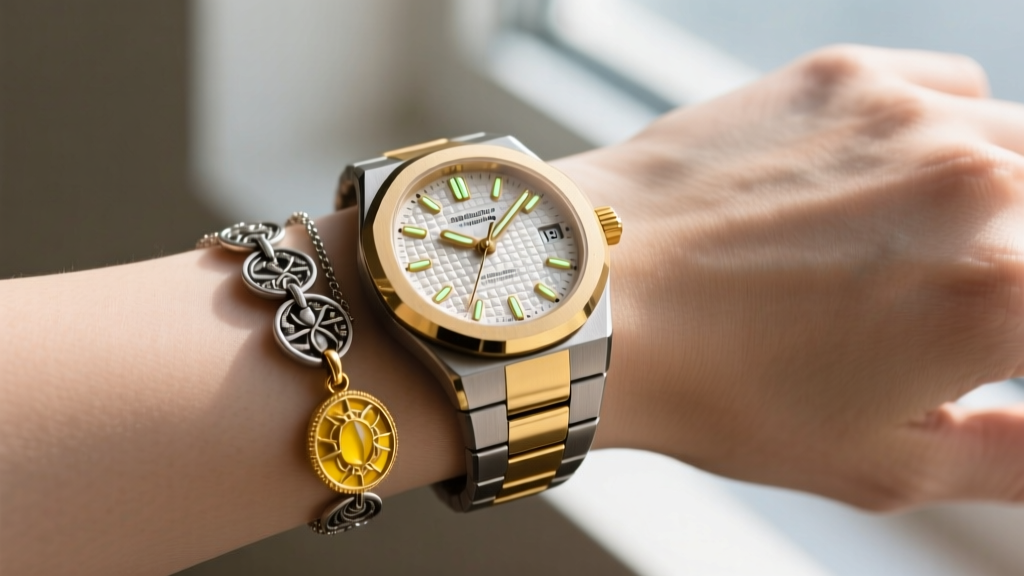
According to GQ's men's jewelry trend reports, the 'bridge piece' technique is dominating this year. This involves wearing a two-tone watch (like a steel and gold Tudor Black Bay) and anchoring it with a necklace that features mixed-metal hardware—such as a sterling silver chain with an 18k yellow gold clasp or bail. This creates a deliberate, engineered look rather than a haphazard clash of metals.
Neckline Integration: How Collars and Lapels Dictate the Pair
The physical environment of the torso dictates how the necklace and watch interact in three-dimensional space. The neckline of your garment acts as a frame, and the watch's cuff presence acts as the anchor.
- The Crewneck / T-Shirt: A standard crewneck creates a high, tight frame. This demands a shorter necklace drop (16 to 18 inches) that sits just below the collarbone. Because the arms are relaxed, the watch is highly visible. Ensure the pendant does not feature sharp prongs or bulky clasps that will catch on the cotton ribbing of the collar.
- The Spread Collar / Button-Down: The open geometry of a spread collar allows for longer matinee lengths (20 to 24 inches). Here, a pendant can rest against the sternum, creating a vertical line that draws the eye down from the face, past the necklace, and naturally toward the wrist resting on the table or desk.
- The Suit Lapel: When wearing tailored outerwear, the lapel creates a deep 'V'. A 22-inch chain with a substantial pendant (10g+) works best here, resting in the negative space of the lapel. Ensure your watch cuff slides cleanly out of the jacket sleeve; a bulky chain combined with a thick watch case will cause the shirt cuff to bunch awkwardly at the wrist.
Troubleshooting Common Clashing Mistakes
Even seasoned collectors fall into stylistic traps when coordinating a necklace and watch. Here is how to troubleshoot the most frequent 2026 styling failures:
- The 'Tangled Hazard': Wearing a long, loose chain (24+ inches) while working at a desk or wearing a dive watch with an exposed, oversized crown (like a Rolex Sea-Dweller). The chain will inevitably catch on the crown or bezel fluting. Fix: Opt for a shorter 18-inch chain or use a magnetic toggle clasp that detaches safely under tension.
- The Clasp Competition: Wearing a watch with a highly complex, micro-adjustable deployment clasp while simultaneously wearing a necklace with a massive, ornate lobster clasp. The hardware competes for attention. Fix: Hide the necklace clasp at the nape of the neck and choose seamless, continuous weaves or discrete barrel clasps.
- The Tone-Deaf Mix: Pairing a highly polished, mirror-finish dress watch with a heavily distressed, oxidized, or matte-finished chain. Fix: Match the surface treatment. Polish goes with polish; brushed/matte goes with brushed/matte. As noted in Vogue's layering masterclasses, texture harmony is just as critical as color harmony.
Expert Verdict: Building Your 2026 Capsule
Mastering the necklace and watch pairing requires moving beyond the safe confines of identical matching sets. By applying the proportion matrix, respecting the metallurgical properties of your alloys, and adapting to the geometry of your clothing, you transform two separate accessories into a unified style statement. Start by auditing your current watch collection: measure the case diameters, identify the dominant metal grades, and invest in three distinct chain weaves (a delicate cable, a mid-weight rolo, and a heavy figaro) that serve as versatile anchors for your neckline. In 2026, the goal is not to simply wear jewelry and a watch, but to engineer a cohesive visual architecture from the wrist to the neck.


