The Necklace Cause and Effect: Chain Material Guide
Explore the necklace cause and effect chain style. We compare 14k gold, sterling silver, and titanium materials to predict durability and skin reactions.

Defining the Necklace Cause and Effect
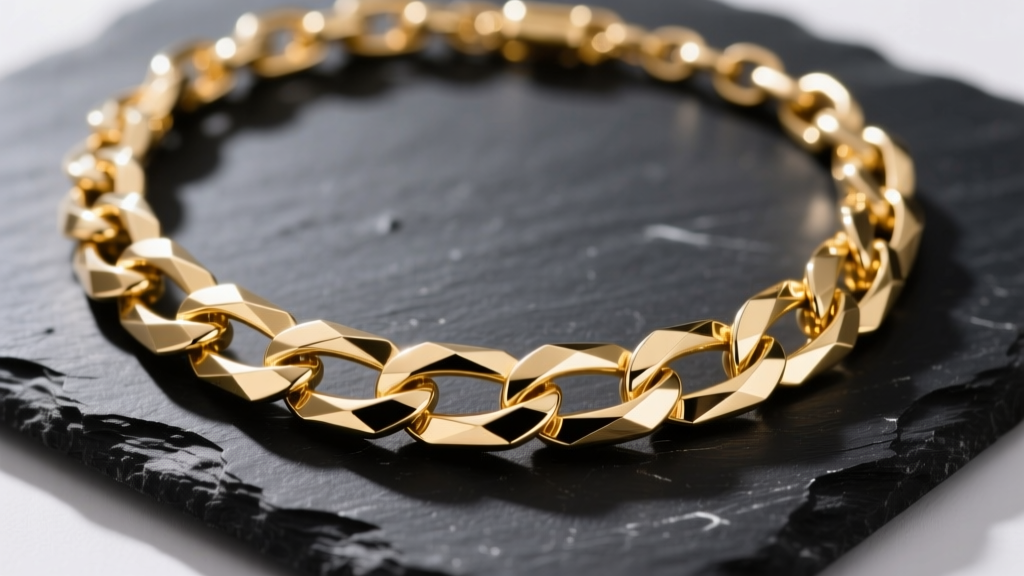
When industry experts analyze the necklace cause and effect, they are usually referencing two distinct but deeply intertwined concepts. In jewelry manufacturing, a "cause and effect" chain refers to a specific articulated link design characterized by alternating elongated oval or rectangular links interlocked with smaller circular or squared links. However, from a metallurgical perspective, the phrase describes the direct relationship between the material composition (the cause) and the resulting wearability, tensile strength, and skin reaction (the effect). Understanding this duality is critical for selecting a chain that will survive daily wear without structural failure or aesthetic degradation.
The alternating link geometry of the cause and effect chain creates a highly fluid drape, mimicking the movement of a rope chain but with a more modern, architectural profile. Because the smaller links act as pivot points within the larger links, the chain is subjected to unique localized friction and shear stress. Consequently, the base metal's Vickers hardness (HV) and yield strength directly dictate the chain's lifespan. In this 2026 material guide, we break down the exact metallurgical properties of the most common alloys used in this specific chain style.
Anatomy of the Alternating Link
Unlike a standard curb chain where links lie flat and distribute tension evenly, the cause and effect design relies on a multi-axis pivot system. The elongated links (typically 6mm to 10mm in length) bear the primary tensile load, while the smaller connecting links (usually 2mm to 4mm) absorb the shear stress during articulation. If the connecting links are manufactured from a metal with a low yield strength, repeated articulation will cause them to ovalize and eventually pull open. Therefore, the structural integrity of the entire piece hinges on the work-hardening properties of the chosen metal.

Material Causes and Their Wearability Effects
The choice of alloy fundamentally alters how the chain behaves under the stress of gravity, body heat, and environmental exposure. Below is a deep dive into the primary materials used for this chain style.
925 Sterling Silver: The Oxidation Equation
Sterling silver is an alloy consisting of 92.5% pure silver and 7.5% copper. The addition of copper is the "cause" that provides the metal with enough structural rigidity to be drawn into wire and formed into links. However, copper is highly reactive to sulfur and moisture in the air. The inevitable "effect" is the formation of silver sulfide, commonly known as tarnish. In a cause and effect chain, tarnish tends to accumulate in the micro-crevices where the small round links pass through the elongated links, creating dark, stubborn friction points. While 925 silver is affordable (typically ranging from $40 to $120 for a 2.5mm chain), it requires frequent mechanical polishing to maintain the articulation of the joints.
14k and 18k Gold: Karat Hardness vs. Malleability
Pure 24k gold is far too soft (approx. 25 HV) for an articulated chain; the connecting links would stretch and snap under minimal weight. According to the Gemological Institute of America (GIA), alloying gold with metals like copper, silver, and zinc drastically alters its mechanical properties.
- 14k Gold (58.3% Au): With a Vickers hardness of roughly 120-140 HV, 14k gold offers the optimal balance of malleability for link formation and rigidity to resist deformation. It is the premier choice for cause and effect chains intended for daily wear, especially when supporting heavy pendants.
- 18k Gold (75% Au): Softer and denser, 18k gold provides a richer color but is more susceptible to micro-scratches at the friction points of the alternating links. It is better suited for lighter, occasional-wear pieces.
Grade 23 Titanium: The Biocompatible Standard
For wearers with contact dermatitis or nickel allergies, Grade 23 Titanium (Ti-6Al-4V ELI) is the ultimate solution. As noted in research published by the National Institutes of Health (NIH), this specific ultra-low interstitial titanium alloy is highly biocompatible and entirely inert against human skin. The "cause" of its ultra-low density (4.43 g/cm³) results in the "effect" of an incredibly lightweight chain. A 5.0mm titanium cause and effect chain weighs roughly 45% less than the exact same design in 14k gold, eliminating the neck fatigue associated with heavier precious metals.
The Tensile Strength Matrix
To quantify how different materials perform under the specific shear stresses of the cause and effect link geometry, we have compiled a comparative matrix based on standard jewelry wire tempers.
| Material Grade | Yield Strength (MPa) | Density (g/cm³) | Primary Wearability Effect |
|---|---|---|---|
| 925 Sterling Silver | 310 - 350 | 10.36 | High tarnish risk; moderate link stretching under heavy pendants. |
| 14k Yellow Gold | 400 - 450 | 12.90 | Excellent shear resistance; maintains link geometry over decades. |
| Platinum 950 (Ru) | 500 - 550 | 21.45 | Extreme durability; heavy drape; work-hardens rather than wearing away. |
| Grade 23 Titanium | 830 - 890 | 4.43 | Virtually indestructible links; hypoallergenic; lacks the weight for premium drape. |
Gauge, Gravity, and Clasp Engineering
The visual and physical impact of a cause and effect chain is heavily dictated by its gauge (the thickness of the wire used to form the links).
- 1.5mm to 2.5mm Gauge: Ideal for layering and supporting lightweight pendants (under 5 grams). The smaller connecting links in this gauge are vulnerable to snapping if subjected to sudden lateral force.
- 3.0mm to 4.5mm Gauge: The structural sweet spot. This width provides enough metal mass at the pivot points to withstand daily wear and tear while remaining flexible enough to drape elegantly over the collarbone.
- 5.0mm+ Gauge: Designed as standalone statement pieces. At this width, the chain becomes rigid, and the cause and effect articulation is less pronounced.

Clasp engineering is equally critical. Because the cause and effect chain features alternating link sizes, standard spring-ring clasps often create an unbalanced visual break. According to manufacturing standards highlighted by Jewelers of America, a heavy-duty lobster clasp or a concealed box clasp with a double-safety figure-eight catch is mandatory for chains exceeding 3.0mm in width to prevent catastrophic loss.
Targeted Maintenance Protocols
Maintaining the fluid articulation of this chain style requires specific cleaning protocols. Ultrasonic cleaners, while effective for solid rings, can sometimes cause micro-vibrations that weaken the solder points on the smaller connecting links of lower-quality silver chains. Instead, use a warm bath of distilled water and a few drops of pH-neutral dish soap. Agitate the chain gently by hand, allowing the solution to penetrate the interlocking joints. Use a soft-bristled detailing brush to dislodge sebum and environmental debris from the pivot points, then dry immediately with a microfiber cloth to prevent water spots. For 14k gold and platinum, a specialized jeweler's polishing cloth can be run along the elongated links to restore the high-polish finish without removing the intentional matte or brushed textures often applied to the smaller connecting links.


