Necklace Circle Charms: Material Properties & Buyer Guide
Compare metals for necklace circle charms. Explore hardness, tarnish resistance, and engraving suitability for gold, silver, and titanium disks.

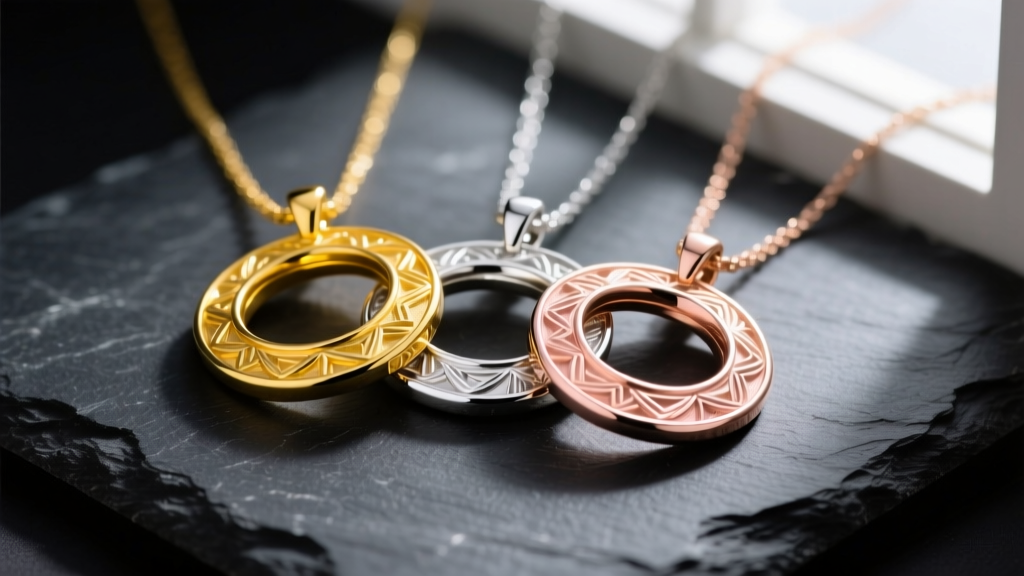
When selecting necklace circle charms, the aesthetic appeal of a perfect disk or medallion is only half the equation. Because circular charms feature broad, flat surface areas, they act as a canvas that highlights every scratch, dent, and oxidation mark. The metallurgical properties of the chosen material dictate not only the charm's longevity but also its suitability for personalization techniques like hand-stamping or laser engraving. This guide breaks down the material science behind the most popular metals used for circular pendants, providing actionable data for both daily wearers and jewelry collectors.
The Anatomy of a Circular Charm: Why Material Dictates Longevity
Unlike textured or faceted pendants that naturally hide wear and tear, flat necklace circle charms are highly susceptible to surface abrasion. The primary metric jewelers use to predict how well a charm will hold up against daily friction is the Vickers Hardness (HV) scale. A higher HV rating means the metal is more resistant to scratching, but it also becomes more difficult to manipulate, cast, or hand-stamp. Furthermore, the alloy composition determines the metal's galvanic reactivity—how it responds to sweat, cosmetics, and environmental moisture. Understanding these properties is essential before investing in a piece meant to be worn against the skin every day.
Precious Metals: Gold, Silver, and Platinum Compared
Precious metals remain the standard for fine jewelry, but their specific alloy mixes drastically alter their performance as flat disk charms.
Sterling Silver (925) vs. Argentium
Traditional sterling silver is an alloy of 92.5% silver and 7.5% copper. While the copper provides necessary structural integrity, it is also the culprit behind rapid tarnishing when exposed to sulfur and moisture. For circle charms, which require frequent polishing to maintain a mirror finish, this can be tedious. Argentium silver (typically 93.5% silver, with germanium replacing some copper) offers a superior alternative. The germanium forms a transparent, self-healing oxide layer that drastically slows tarnish, making Argentium circle charms significantly lower maintenance while retaining the bright white luster of pure silver.
Gold Alloys (14k vs. 18k) for Disk Charms
Pure 24k gold is too soft (approx. 25 HV) for jewelry. Therefore, gold is alloyed with metals like copper, zinc, and silver.
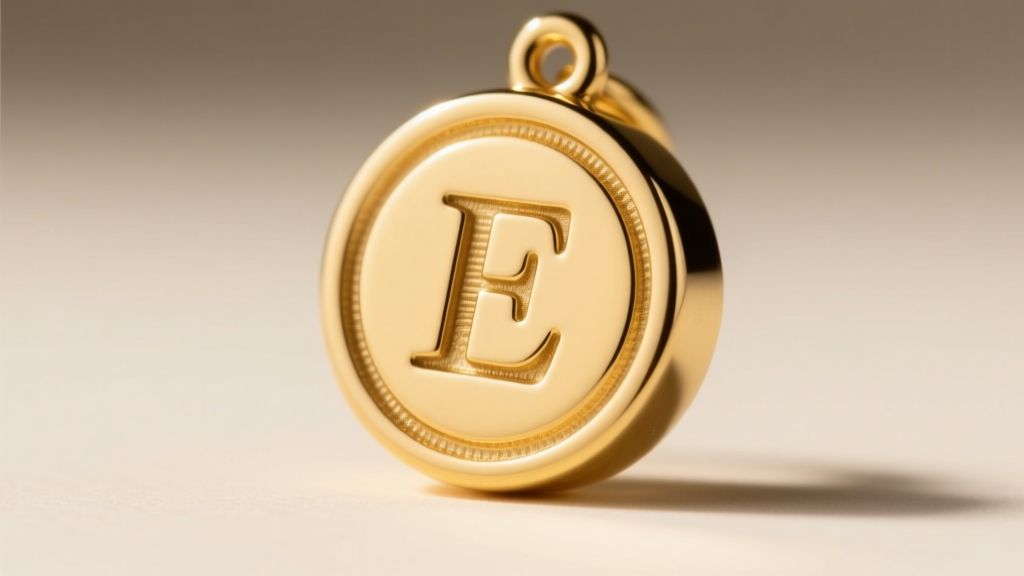
14k gold (58.5% pure gold) sits at roughly 130-150 HV, making it exceptionally durable for everyday disk charms that might bump against desks or zippers.
18k gold (75% pure gold) is softer (approx. 120 HV) and boasts a richer, deeper yellow hue. However, on a large, flat circle charm, 18k gold will accumulate micro-scratches much faster than 14k, eventually developing a patina that some lovers of vintage jewelry adore, but others may find messy.
Alternative & Base Metals: Titanium, Stainless Steel, and Brass
For those seeking extreme durability, hypoallergenic properties, or a lower price point, alternative metals offer compelling physical properties.
Grade 23 Titanium (Ti-6Al-4V ELI)
Titanium is legendary for its strength-to-weight ratio. Grade 23 titanium, often used in medical implants, is completely hypoallergenic and highly resistant to corrosion. With a Vickers hardness of around 340 HV, a titanium circle charm will virtually never scratch or bend in normal wear. The trade-off is that its extreme hardness makes traditional jewelry repair, resizing, or hand-stamping nearly impossible without specialized equipment.
316L Surgical Stainless Steel
316L stainless steel contains molybdenum, which boosts its resistance to chlorides and industrial solvents. It is heavy, highly polished, and very affordable. However, it contains trace amounts of nickel. While the nickel is tightly bound within the alloy matrix, individuals with severe contact dermatitis may still experience reactions from prolonged skin contact with a large steel medallion resting on the chest.
Material Comparison Matrix: Hardness, Tarnish, and Engraving
The following table provides a quick-reference matrix for the most common materials used in necklace circle charms, comparing their physical properties and average market pricing for a standard 15mm blank disk.
| Material | Vickers Hardness (HV) | Tarnish Resistance | Best Engraving Method | Avg. Price (15mm Blank) |
|---|---|---|---|---|
| Sterling Silver (925) | 65 - 75 | Low | Hand Stamping, Rotary | $12 - $18 |
| Argentium Silver | 70 - 85 | High | Hand Stamping, Laser | $18 - $25 |
| 14k Yellow Gold | 130 - 150 | High | Hand Stamping, Laser | $85 - $130 |
| 18k Yellow Gold | 115 - 125 | High | Hand Stamping, Laser | $140 - $200 |
| Grade 23 Titanium | 330 - 350 | Extreme | Laser Only | $20 - $35 |
| 316L Stainless Steel | 150 - 200 | High | Laser, Diamond Drag | $5 - $12 |
Engraving and Stamping: How Metals React to Personalization
Circle charms are the most popular vehicle for personalized jewelry, but the metal you choose dictates the personalization method. According to industry guidelines from Rio Grande, hand-stamping requires metals in a "dead soft" or "half-hard" state. Sterling silver and 14k gold yield beautifully to steel stamping tools; the metal displaces cleanly, creating deep, legible impressions without cracking.
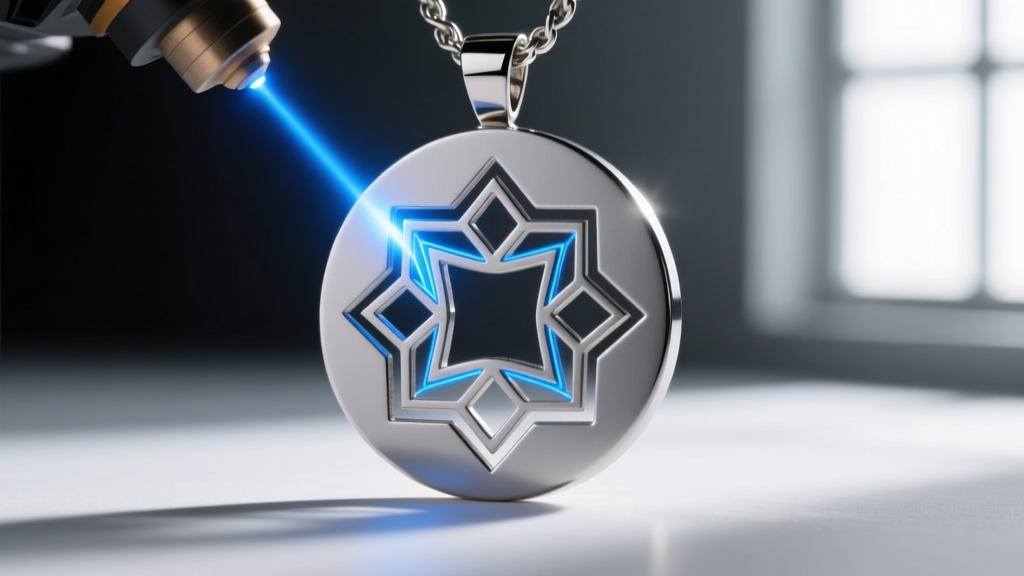
Conversely, attempting to hand-stamp Grade 23 titanium or hardened stainless steel will likely result in a shattered stamp tool or a shallow, illegible mark. For these ultra-hard metals, fiber laser engraving is mandatory. Lasers anneal the surface of the titanium, turning it a deep, permanent black without removing material, ensuring the structural integrity of the charm remains intact.
Chain Pairing and Galvanic Corrosion Risks
A frequently overlooked aspect of buying necklace circle charms is the interaction between the charm and the chain. When two dissimilar metals are in contact in the presence of an electrolyte (like human sweat or high humidity), galvanic corrosion occurs.
As noted in materials science literature via ScienceDirect, the less noble metal (the anode) will corrode rapidly to protect the more noble metal (the cathode). For example, pairing a sterling silver circle charm with a brass or copper chain will cause the brass chain to degrade, oxidize, and turn your skin green at an accelerated rate. Always pair your charm with a chain of the exact same metal, or at least one that is higher on the galvanic series (e.g., a 14k gold charm on a platinum chain is safe; a silver charm on a steel chain is risky).
Pro Tip: If you must mix metals for a two-tone aesthetic, use a physical barrier. A small silicone or rubber O-ring placed between the charm's jump ring and the chain can prevent direct metal-to-metal contact, halting galvanic corrosion entirely.
Final Verdict: Matching Material to Lifestyle
Choosing the right metal for necklace circle charms requires balancing budget, aesthetic preference, and maintenance tolerance. If you desire a heirloom piece that can be hand-stamped with family initials and passed down, 14k gold or Argentium silver are the premier choices, offering the perfect blend of workability and prestige. For active lifestyles, healthcare workers, or those with severe metal allergies, a Grade 23 titanium disk provides an indestructible, featherweight, and completely biocompatible alternative. By understanding the Vickers hardness and alloy composition of your jewelry, you ensure your circular charm remains a pristine, meaningful staple in your wardrobe for decades.


