Necklace Collar Engineering: Metals, Gauges, and Fit
Explore the technical engineering of the necklace collar. Learn about metal memory, gauge thickness, clasp mechanics, and precise fitting for rigid chokers.

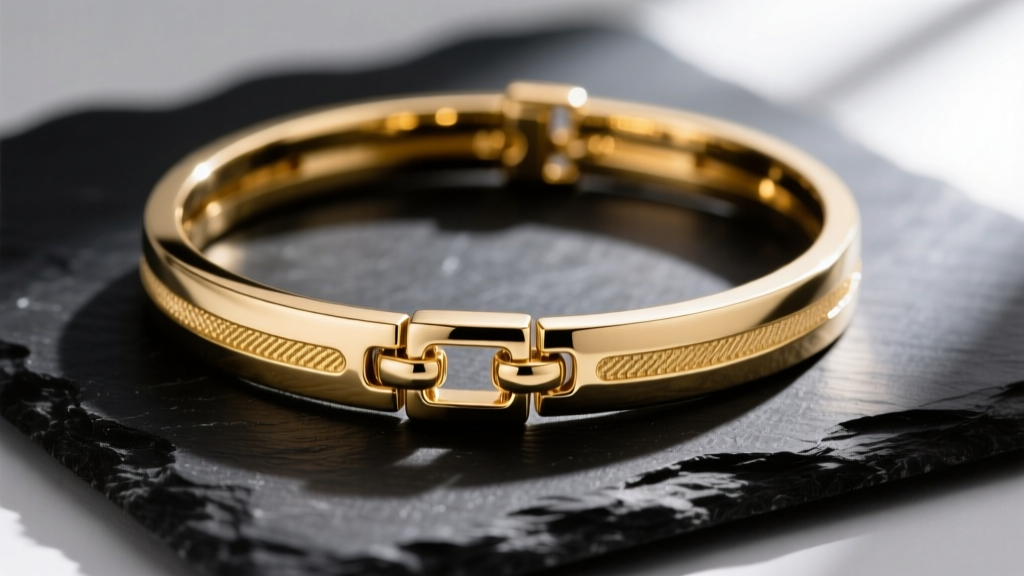
The rigid necklace collar represents one of the most structurally demanding categories in fine jewelry design. Unlike flexible chain necklaces that drape and conform to the wearer's anatomy through gravity and linked articulation, a rigid collar relies on precise metallurgical engineering, metal memory, and exact ergonomic calibration to sit flush against the clavicle and lower neck. When executed poorly, a collar becomes an instrument of discomfort, causing skin erythema, choking sensations, or structural warping. When engineered correctly, it is a masterpiece of wearable architecture.
This deep dive explores the technical specifications, material sciences, and ergonomic frameworks required to design, select, and maintain a high-performance necklace collar.
The Structural Anatomy of a Rigid Necklace Collar
A true rigid collar—often referred to in bench jewelry as a torque or a rigid choker—is typically forged from a single continuous rod or tube of metal, or constructed from tightly interlocking micro-hinged segments. The structural integrity of a solid-wire collar depends heavily on the interplay between wire gauge and the annealing process.
Wire Gauge and Metal Memory
For a necklace collar to maintain its circular or oval geometry without sagging, it must possess sufficient yield strength. Most luxury rigid collars are crafted from 8-gauge (3.26mm) to 12-gauge (2.05mm) wire. Thinner gauges, such as 16-gauge, lack the necessary rigidity and will warp under the lateral tension of daily movement.
However, a uniformly hard-drawn wire will snap if forced open to pass over the head. Master jewelers utilize a technique called differential annealing. The center curve of the collar is heated to soften the crystalline structure (allowing for micro-flex and comfort), while the terminal ends are left work-hardened to withstand the mechanical stress of the clasp mechanism and the repeated lateral pulling required to put the piece on.
Metallurgy: Choosing the Right Alloy for Skin Contact
Because a necklace collar maintains constant, uninterrupted contact with the highly sensitive skin of the anterior neck, the choice of alloy is critical. The neck area is prone to perspiration and friction, creating an environment that accelerates galvanic corrosion and metal ion leaching.
Under the EU REACH Regulation, prolonged skin contact jewelry must not release nickel at a rate greater than 0.5 µg/cm²/week. For individuals with contact dermatitis, even trace amounts of nickel found in standard white gold or lower-grade stainless steels can cause severe reactions.
| Metal Alloy | Vickers Hardness (HV) | Nickel Release | Best Application |
|---|---|---|---|
| 14k Yellow Gold | 120 - 150 | Trace / Ni-Free | Luxury, Heirloom, High-Polish Finishes |
| 316LVM Surgical Steel | 150 - 200 | Zero (Passivated) | Daily Wear, Active Lifestyles, Industrial Aesthetics |
| Grade 23 Titanium (Ti6Al4V) | 300 - 340 | Zero | Severe Metal Allergies, Ultra-Lightweight Designs |
| Sterling Silver (925) | 60 - 80 | Ni-Free (Copper Alloy) | Occasional Wear, Intricate Engraving |
Note: 316LVM (Vacuum Melted) stainless steel is vastly superior to standard 316L for collar necklaces, as the vacuum melting process eliminates microscopic inclusions where corrosion and bacterial buildup typically initiate.
Clasp Engineering and Tensile Strength
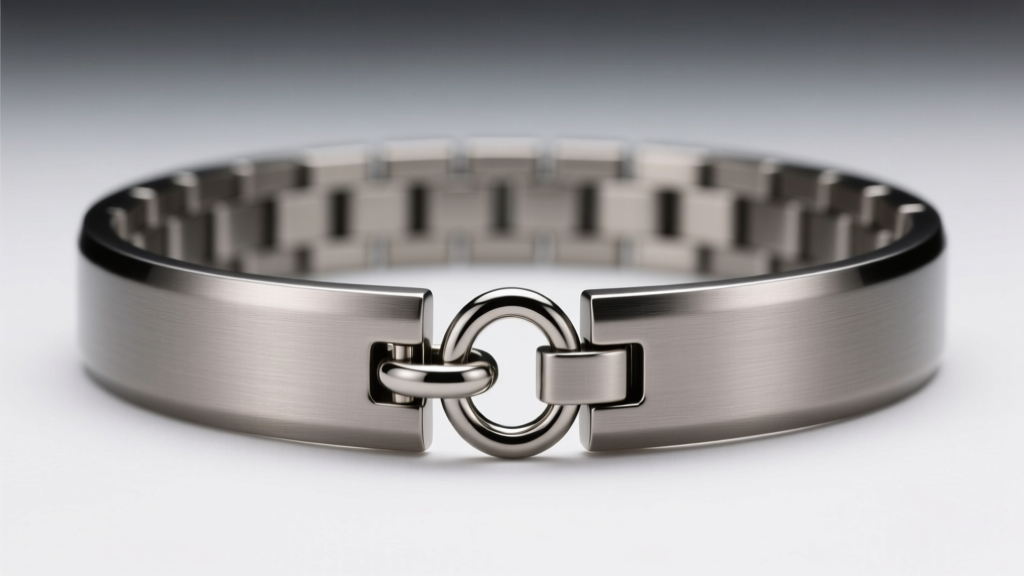
The clasp is the primary point of mechanical failure on any necklace collar. Because rigid collars cannot be stretched, the clasp must bear the entire shear force when the wearer accidentally snags the metal on clothing or environmental obstacles.
Hinge vs. Magnetic Closures
For collars weighing over 100 grams, a simple lobster clasp is mechanically insufficient. The industry standard for heavy rigid collars is the tongue-and-groove box clasp paired with a dual figure-8 safety wire. This setup distributes lateral shear forces across the internal steel tension spring of the tongue, rather than relying on a single microscopic solder joint.
Alternatively, high-end minimalist collars often utilize Neodymium magnetic closures. However, standard N42 magnets lack the shear strength required for a rigid collar. Engineers must specify N52 grade Neodymium magnets, which provide approximately 40 Newtons of pull force. Even then, magnetic clasps must incorporate a mechanical locking sleeve to prevent the collar from sliding open under rotational torque.
The Ergonomics of Fit: Calculating Neck Clearance
The most common failure in off-the-shelf necklace collars is improper ergonomic calibration. The human neck is not a static cylinder; it is a dynamic, muscular structure. The sternocleidomastoid and platysma muscles expand and contract during swallowing, speaking, and head rotation.
According to ergonomic studies cited by the FDA's medical device design guidelines for wearable cervical monitors, neck circumference can fluctuate by up to 1.5 cm during extreme articulation. Therefore, the "two-finger rule" used for flexible chains is dangerously inadequate for rigid metal.
- Step 1: Use a flexible fiberglass tailor's tape (never metal, which alters drape).
- Step 2: Measure the resting circumference at the base of the neck, aligning with the C7 vertebra in the back and the suprasternal notch in the front.
- Step 3: Swallow hard and measure the expanded circumference at the exact same landmarks.
- Step 4: Add exactly 1.5 cm to 2.0 cm to the expanded measurement. This guarantees the collar will not compress the trachea or restrict venous return when looking downward.

Surface Finishes and Skin Friction
The surface roughness of the metal, measured in Ra (Roughness average) values, directly impacts wearer comfort. A standard satin or brushed finish has an Ra value of 0.4 µm to 0.8 µm. While visually appealing, this microscopic texture acts like fine sandpaper against the delicate skin of the neck during prolonged wear, leading to friction-induced erythema.
For a necklace collar intended for all-day wear, a mirror polish is a functional necessity, not just an aesthetic choice. A true mirror polish achieves an Ra value of < 0.05 µm. This ultra-smooth surface minimizes the coefficient of friction, allowing the metal to glide over the skin rather than dragging against it. Furthermore, a mirror-polished surface lacks the microscopic valleys where sebum, dead skin cells, and environmental pollutants accumulate, making the collar inherently more hygienic.
Maintenance and Preventing Metal Fatigue
Rigid collars are susceptible to metal fatigue at the terminal ends, particularly if the wearer repeatedly forces the collar open by pulling the ends vertically apart. This vertical stress creates micro-fractures near the clasp solder joints, eventually leading to catastrophic snapping.
Bench Jeweler Tip: To open a hinged rigid collar, always twist the terminals laterally (up and down in opposite directions) rather than pulling them horizontally apart. This utilizes the metal's natural torsional flexibility and prevents stress concentration at the hinge pin.
If a collar becomes warped or loses its perfect geometry, it should never be bent back into shape by hand. Hand-bending creates uneven stress vectors and visible kinks. A professional jeweler will anneal the specific warped section, then use a rawhide mallet and a graduated steel ring mandrel to gently tap the collar back into a perfect, mathematically true circle without marring the mirror polish. For deeper insights into metalworking and alloy behaviors, the Gemological Institute of America (GIA) provides extensive research on precious metal durability and work-hardening properties.
By understanding the metallurgy, mechanical tolerances, and ergonomic requirements of the necklace collar, collectors and designers can ensure these striking pieces remain as comfortable and durable as they are visually commanding.


