Necklace and Collared Shirt Care: Prevent Friction and Tarnish
Learn how to protect, clean, and maintain your favorite necklace and collared shirt combinations. Prevent friction damage, tarnish, and chain snagging.

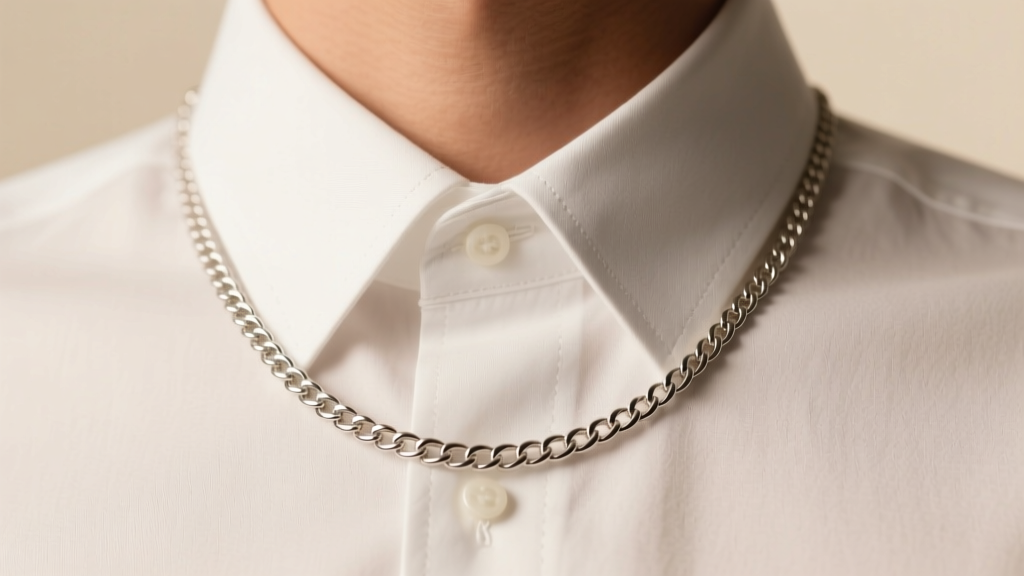
The combination of a well-fitted necklace and collared shirt is a cornerstone of both classic menswear and elevated womenswear. Whether you are pairing a delicate gold pendant with a silk blouse or a heavy sterling silver chain with an Oxford cloth button-down, the collared neckline provides a perfect visual frame. However, from a jewelry maintenance perspective, the inside of a shirt collar is a hostile environment. The intersection of stiff fabrics, trapped body heat, chemical starches, and constant kinetic friction can rapidly degrade your favorite pieces if proper care protocols are not followed.
In this comprehensive guide, we break down the specific mechanical and chemical hazards that threaten your jewelry when worn with collared shirts, and provide expert-level maintenance routines to keep your metals polished and your gemstones pristine.
The Hidden Hazards of the Collared Neckline
When you fasten the top button of a dress shirt or blouse, you create a micro-environment around your neck. This area is subject to unique stressors that do not affect jewelry worn over open-neck t-shirts or bare skin.
Fabric Friction and Metal Micro-Abrasions
Modern dress shirt collars are reinforced with interfacing—a stiff, often fusible material layered between the outer fabric and the inner lining to help the collar maintain its shape. This interfacing, combined with the constant turning of your head, turns the inside of the collar band into a mild abrasive surface. Over time, this continuous friction causes micro-abrasions on high-polish metals. Softer alloys, such as 22-karat and 24-karat gold, are particularly susceptible to developing a dull, satin-like patina from collar friction. Even harder metals like platinum and 14-karat gold will accumulate microscopic surface scratches that scatter light, reducing the overall brilliance of the piece.
Chemical Exposure: Starch, Perfume, and Dry-Cleaning Solvents
The chemical environment of a collared shirt is surprisingly aggressive. Aerosol laundry starches contain polymers and propellants that leave a microscopic film on jewelry, trapping dead skin cells and sebum. Furthermore, many professionals apply cologne or perfume directly to the neck before dressing. The alcohol and essential oils in these fragrances can degrade the anti-tarnish rhodium plating on white gold and sterling silver. Finally, if you wear dry-cleaned shirts, residual tetrachloroethylene (perc) or modern hydrocarbon solvents trapped in the collar fabric can react with the copper alloys in 14k and 18k gold, leading to localized discoloration and accelerated tarnishing.
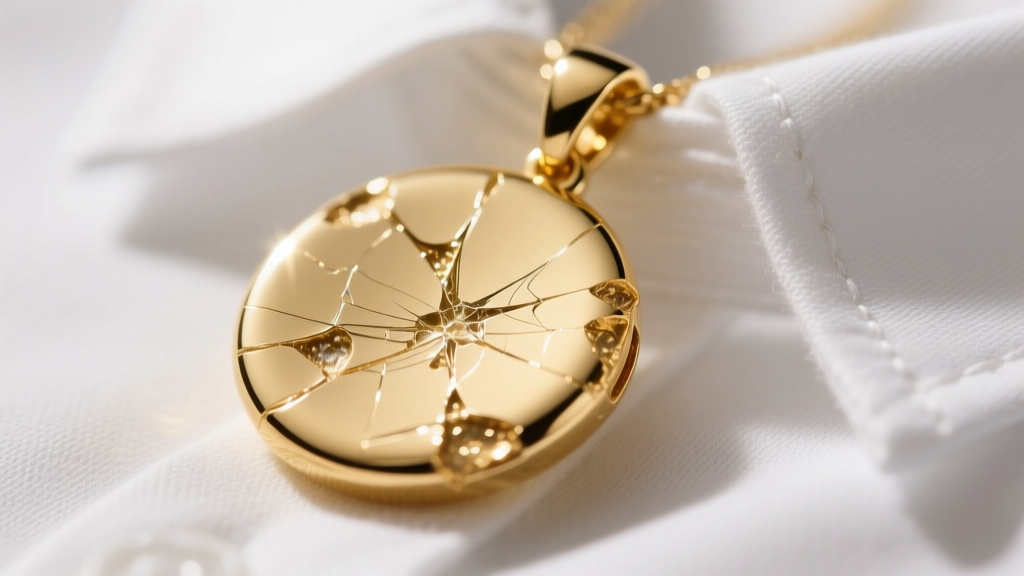
The Sweat and Sebum Trap
A closed collar traps heat and moisture against the skin. Human sweat has a pH ranging from 4.5 to 7.0 and contains salts, urea, and lactic acid. When this acidic moisture is trapped against a necklace chain by a tight collar, it accelerates the oxidation of copper and silver alloys. According to the Gemological Institute of America (GIA), sulfur compounds and acidic moisture are the primary catalysts for silver sulfide formation, which manifests as black tarnish on sterling silver pieces.
Choosing the Right Chain Gauge and Weave
Prevention is the first step in jewelry maintenance. If you frequently wear necklaces with collared shirts, selecting the correct chain weave and gauge is critical to preventing structural failure. Delicate chains are prone to catching on the rough inner seams of collar bands or the threads of buttonholes, leading to kinks and snapped links.
| Chain Weave | Collar Compatibility | Durability & Risk Factors |
|---|---|---|
| Curb / Cable (1.2mm+) | Excellent | Highly durable. Smooth, interlocking links slide easily against starched cotton without snagging. Resists kinking. |
| Herringbone | Poor | Very fragile. The flat, flush links act like a ribbon and will permanently kink if caught on a collar button or seam. |
| Snake Chain | Moderate | Prone to trapping collar starch and dead skin in its tight, smooth-looking grooves. Difficult to clean thoroughly. |
| Box Chain (1.0mm+) | Good | Strong geometric structure resists pulling. However, sharp inner corners of the box links can slowly wear down soft silk collars. |
| Rope Chain | Moderate | The twisted spiral design can easily catch on loose collar threads or rough interfacing edges, risking pulled links. |
For daily wear with stiff dress shirts, a 1.2mm to 1.5mm curb or cable chain in 14k gold or rhodium-plated sterling silver offers the best balance of durability and friction resistance.
Post-Wear Cleaning Protocol for Collar-Worn Necklaces
Because necklaces worn under collars are exposed to a concentrated mix of sweat, starch, and skin oils, they require a more rigorous cleaning schedule than pieces worn over bare skin. Implementing a two-tier cleaning routine will drastically extend the life and luster of your jewelry.
1. The Immediate Post-Wear Wipe
Every time you remove your necklace after wearing it with a collared shirt, wipe it down with a clean, untreated microfiber jewelry cloth. This removes the invisible layer of acidic sweat, starch residue, and perfume oils before they have time to oxidize the metal. Pay special attention to the clasp and the links immediately adjacent to it, as these areas rest at the back of the neck where sweat accumulation is highest.
2. The Weekly Deep Clean
Once a week, perform a mild surfactant wash to break down the sebum and starch polymers trapped in the chain links.
- Prepare the Solution: Mix a few drops of ammonia-free, phosphate-free dish soap (such as Dawn or Fairy) into a bowl of lukewarm distilled water. Avoid tap water, as chlorine and heavy minerals can leave spots.
- Soak: Submerge the necklace for 5 to 10 minutes. This softens any hardened starch or skin oils trapped in the crevices of the links.
- Agitate: Use a brand-new, ultra-soft baby toothbrush to gently brush the chain, focusing on the clasp mechanism and the bail of the pendant. Brush in the direction of the links to avoid bending them.
- Rinse and Dry: Rinse thoroughly under lukewarm distilled water. Pat dry with a lint-free cloth, then use a hair dryer on the 'cool' setting to blow moisture out of the clasp springs and hollow links.
A Warning on Porous Gemstones
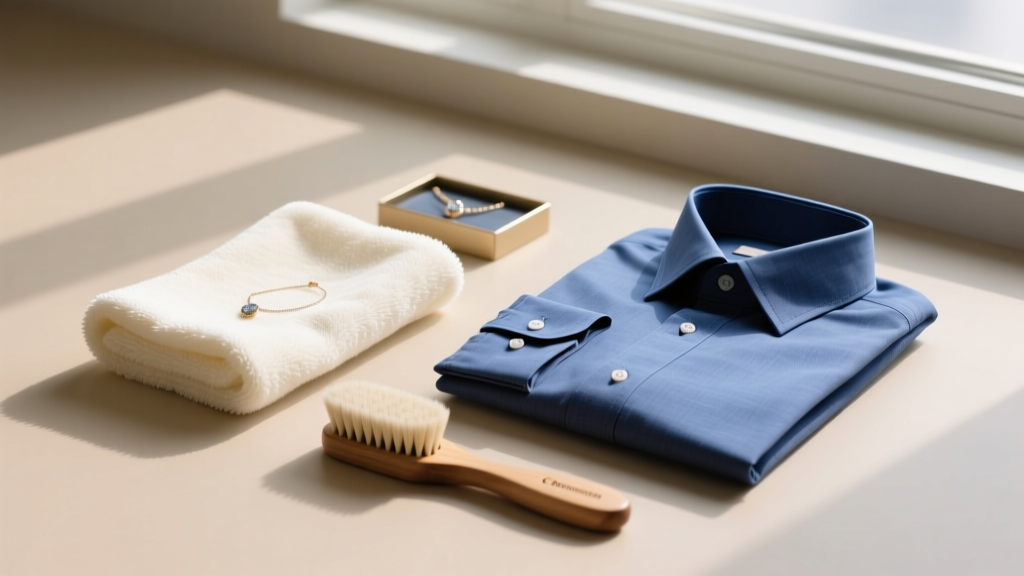
If your necklace features porous organic gems like pearls, coral, or turquoise, never soak them in water or use commercial jewelry dips. The GIA Pearl Care Guide explicitly warns that prolonged exposure to moisture and chemicals can degrade the nacre of a pearl or dissolve the epoxy used in turquoise settings. For these pieces, simply wipe them gently with a damp cloth immediately after removal and allow them to air dry completely before storage.
Proper Storage Away from Collar Stays and Haberdashery
How you store your necklaces after wearing them with collared shirts is just as important as how you clean them. Many individuals make the mistake of tossing their necklace into a dresser drawer alongside their haberdashery accessories, which can lead to catastrophic damage.
Metal collar stays, magnetic tie clips, and cufflinks are often stored in the same vicinity as necklaces. If a delicate gold chain becomes tangled with a stainless steel collar stay, the harder steel will easily scratch and gouge the softer gold. Furthermore, magnetic collar stays can magnetize the tiny steel springs inside your necklace's lobster clasp or spring-ring clasp, causing them to attract metallic dust and eventually fail to close properly.
Expert Storage Tip: Always unfasten the clasp of your necklace before storing it, and lay it completely flat in a dedicated, fabric-lined jewelry box. Hanging necklaces on open hooks can cause the chain to stretch under its own weight over time, a vulnerability exacerbated by the micro-stresses incurred while wearing it with a stiff collar.
Frequently Asked Questions
Can I use an ultrasonic cleaner for necklaces worn with starched collars?
Ultrasonic cleaners use high-frequency cavitation to blast dirt out of microscopic crevices, making them excellent for removing hardened starch from diamond and sapphire chains. However, you should never use an ultrasonic cleaner on hollow chains, as the vibrations can dent or collapse the thin metal walls. Additionally, avoid ultrasonics for any necklace with fracture-filled gems, emeralds, or organic materials, as the heat and vibrations can shatter the stones or dissolve their treatments.
Does the type of shirt fabric affect necklace wear and tear?
Absolutely. Heavy Oxford cloth and stiff poplin with heavy interfacing cause the most friction. Conversely, soft chambray, linen, and silk blouses are much gentler on high-polish metals. However, silk is highly susceptible to snagging on sharp chain weaves like box or rope chains, so you must balance the protection of the metal with the protection of the garment.
By understanding the unique mechanical and chemical environment created by a collared shirt, you can adjust your jewelry selection and maintenance routines accordingly. A little extra attention to friction, starch removal, and proper storage will ensure that your favorite necklaces remain as sharp and polished as the shirts they accompany.


