The True Necklace Definition: A Value and Pricing Guide
Explore the true necklace definition through a value assessment lens. Learn to calculate melt value, assess chain styles, and avoid retail markup traps.

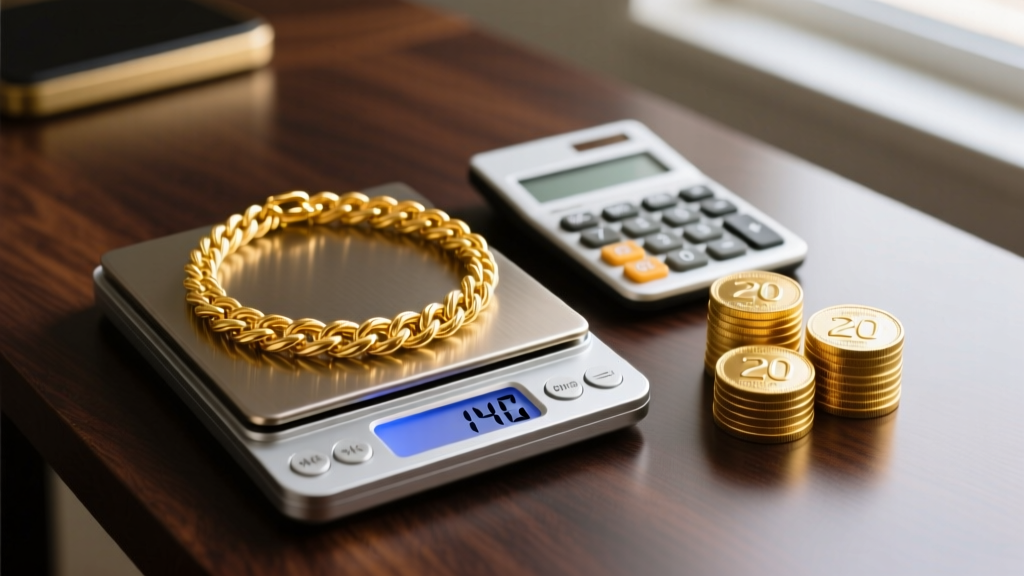
When most consumers search for the necklace definition, they are met with a simple dictionary entry: an article of jewelry consisting of a chain, string, or band worn around the neck. However, from a budget and value assessment perspective, this basic necklace definition is practically useless. In the jewelry industry, how a piece is classified, constructed, and weighed dictates its true market value. As we navigate the precious metals market in 2026, where record-high gold spot prices have fundamentally shifted baseline jewelry costs, understanding the structural and material definitions of neckwear is the only way to avoid severe retail markups.
This guide deconstructs the necklace definition through the lens of a jewelry appraiser, giving you the exact frameworks needed to assess chain styles, calculate melt values, and determine if a retailer's price tag is justified.
The Literal Necklace Definition vs. Market Classifications
To accurately assess value, we must first expand the standard necklace definition to include industry-standard length and style classifications. The length of a necklace directly correlates to its metal weight, which is the primary driver of its intrinsic value. According to the Gemological Institute of America (GIA), understanding karatage and weight is paramount to valuation, but length dictates the total mass required.
- Collar (12-14 inches): Sits tightly against the throat. Often requires rigid or semi-rigid construction, increasing labor costs despite lower overall gold weight.
- Choker (14-16 inches): Rests at the base of the neck. The most common entry-point for solid gold chains.
- Princess (18 inches): The industry standard for pendant suspension. An 18-inch 14k gold chain is the baseline metric most jewelers use for pricing comparisons.
- Matinee (20-24 inches) & Opera (28-36 inches): Require significantly more metal. A 30-inch opera-length chain will inherently cost 65% more in raw materials than an 18-inch princess chain of the exact same width and link style.
Furthermore, the Federal Trade Commission Jewelry Guides strictly regulate terms like 'gold-filled' and 'gold-plated' within the necklace definition. A 'gold-filled' necklace must contain a gold layer constituting at least 1/20th of the total metal weight, offering decades of wear, whereas 'gold-plated' neckwear features a microscopic layer (often less than 0.5 microns) that holds zero intrinsic melt value.
The Anatomy of Value: What Actually Costs Money?
When evaluating a necklace, the retail price is a composite of three factors: raw material (melt value), manufacturing labor, and brand markup. To assess true value, you must isolate these variables.
Chain Construction: Solid vs. Semi-Hollow
Not all chains that look identical share the same necklace definition in a jeweler's ledger. Solid chains are extruded or cast from a continuous wire, offering high tensile strength and a value closely tied to their gram weight. Semi-hollow or hollow chains (often seen in thick Cuban links or large rope chains) are manufactured by wrapping gold sheeting around a base metal core or resin, which is later dissolved. While hollow chains offer a massive visual footprint for a lower price, they are prone to denting, virtually impossible to repair, and hold significantly less intrinsic value. Always ask for the exact gram weight; if a 5mm hollow chain weighs the same as a 2mm solid chain, you are paying for air and structural liability.
The Clasp Multiplier
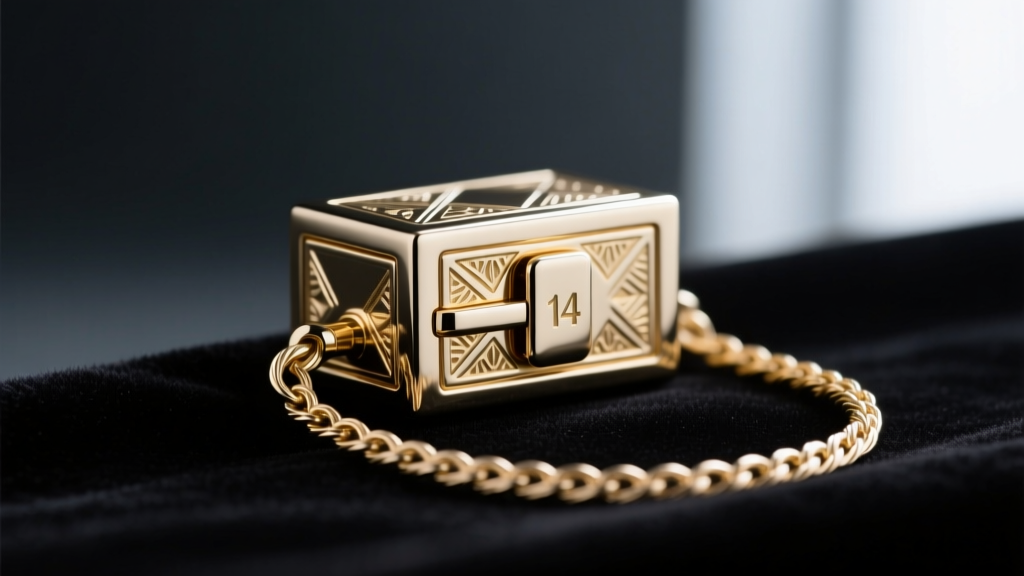
The clasp is the unsung hero of neckwear valuation. A standard spring-ring clasp costs a manufacturer less than $2, but it is fragile and difficult to operate. Upgrading to a lobster claw adds marginal cost but vastly improves security. However, high-end chains utilize a box clasp with a figure-eight safety latch. This mechanism requires precise CNC milling and hand-soldering, adding $50 to $150 in labor costs to the final piece. If you are paying a premium for a heavy chain, ensure the clasp definition matches the structural integrity of the links.
Pricing Tiers by Chain Style and Metal Purity
Different link styles require vastly different manufacturing techniques, which alters the 'labor multiplier' applied to the raw gold price. Below is a value assessment matrix for 14k Yellow Gold chains (based on an 18-inch, 3mm width baseline in the 2026 market).
| Chain Style | Avg. Weight (18") | Durability & Repair | Retail Markup over Melt |
|---|---|---|---|
| Cable | 4.5 grams | Moderate / Easy to solder | 1.5x - 2.0x |
| Curb | 8.2 grams | High / Moderate repair | 1.8x - 2.5x |
| Rope | 11.5 grams | High / Very difficult to repair | 2.5x - 3.5x |
| Figaro | 7.0 grams | Moderate / Easy to solder | 1.6x - 2.2x |
| Box | 6.5 grams | Low (kinks easily) / Hard to fix | 2.0x - 2.8x |
Data Note: Melt value is calculated using daily spot prices from Kitco Gold Charts. A 1.5x multiplier is considered excellent value for solid chains, while anything exceeding 4x enters the realm of designer brand taxation.
The 'Pendant vs. Chain' Valuation Trap
One of the most critical aspects of the modern necklace definition is the separation of the chain (the utility) and the pendant (the focal point). Retailers frequently use a pricing strategy that masks exorbitant markups by bundling these two components.

Chains are generally commoditized; their prices are tethered to the daily spot price of gold plus a reasonable labor fee. Pendants, however, are treated as 'original designs' or 'fashion artifacts.' It is common to see a 2-gram 14k gold pendant (melt value: ~$90) priced at $600 or more. This represents a 6.5x multiplier, justified by the retailer as 'design intellectual property' or 'stone-setting labor.'
The Value Hack: Never buy pre-assembled necklace sets from mall jewelers if your goal is material value. Purchase a high-quality, solid chain from a bullion or chain-specialist wholesaler (paying a 1.5x to 2x multiplier), and source your pendant separately from an independent caster or estate sale. You will secure a heavier, more durable chain and a unique pendant for 40% less than a bundled retail set.
A Buyer's Framework for Assessing Neckwear Value
Before purchasing any fine jewelry neckwear, run the piece through this three-step assessment framework to ensure the price aligns with the physical reality of the item.
- Calculate the Baseline Melt: Weigh the piece in grams. Multiply the weight by the purity percentage (0.585 for 14k, 0.750 for 18k). Multiply that result by the current spot price of gold per gram. This is the absolute floor value of the metal.
- Assess the Labor Multiplier: Divide the retail asking price by your calculated melt value. If the multiplier is under 2.5x for a complex chain (like a rope or wheat), you are getting a fair market deal. If it exceeds 4x, you are paying for a brand name, not craftsmanship.
- Inspect the Findings: Check the clasp and the jump rings. Are the jump rings soldered shut? If they are simply pushed together, the chain will pull apart under the weight of a pendant, rendering the structural value null. Soldered jump rings are a hallmark of quality manufacturing.
Conclusion: Buying with Clarity
Ultimately, the true necklace definition extends far beyond a simple string of metal around the neck. It is a complex intersection of metallurgy, mechanical engineering, and market economics. By discarding the dictionary definition and adopting an appraiser's mindset, you can navigate the 2026 jewelry market with confidence. Focus on gram weight, demand solid construction, scrutinize the clasp mechanics, and always separate the chain's commodity value from the pendant's artistic markup. When you understand the anatomy of what you are wearing, you never overpay for what you are buying.


