What Necklace to Wear With What Neckline Dress: A Styling Guide
Discover what necklace to wear with what neckline dress. Expert styling rules, exact chain lengths, and metal-to-fabric pairings for flawless proportions.

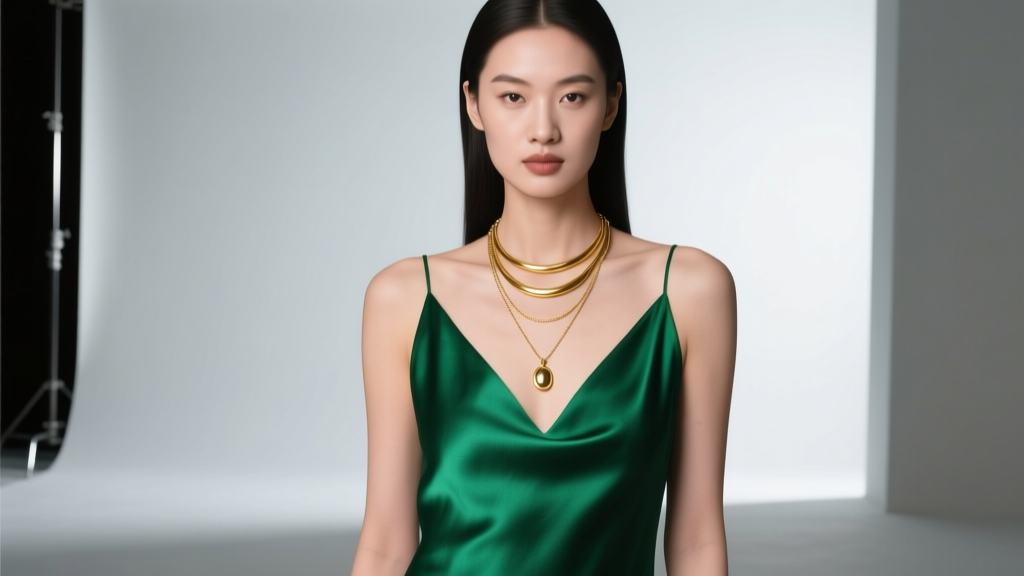
When deciding what necklace to wear with what neckline dress, the secret lies in understanding visual geometry and material friction. A mismatched chain can chop the torso, snag delicate fabrics, or compete with the garment’s structural details. As we navigate the styling landscape of 2026, the focus has shifted from arbitrary fashion rules to intentional proportion mapping. Whether you are styling a 14k gold vintage piece or a contemporary titanium lariat, matching your jewelry to your dress requires a precise understanding of chain lengths, gauge thicknesses, and neckline architecture.
The Geometry of Proportions: Standard Chain Lengths
Before analyzing specific dresses, you must master the standard jewelry measurements. The Gemological Institute of America (GIA) and master jewelers categorize necklaces into five distinct length tiers, each interacting with the clavicle and sternum differently:
- Collar (12-13 inches): Sits tightly against the base of the neck. Ideal for open necklines.
- Choker (14-16 inches): Rests on the lower neck or collarbone. Highly versatile but can clash with high collars.
- Princess (17-19 inches): The most common length, falling just below the collarbone. Perfect for V-necks and scoop necks.
- Matinee (20-24 inches): Drops to the upper chest or bust line. Excellent for layering and business-casual dresses.
- Opera (28-36 inches): Falls below the bust, often to the sternum or navel. Used for dramatic elongation over high-neck garments.
The Master Matrix: Neckline-to-Necklace Pairings
To eliminate guesswork, reference this structural blueprint when styling your wardrobe. This matrix prioritizes visual elongation and avoids structural competition between the garment and the metal.
| Dress Neckline | Ideal Necklace Length | Recommended Chain Weave | Styles to Avoid |
|---|---|---|---|
| V-Neck / Plunge | 18" - 22" (Princess/Matinee) | Box, Snake, or Y-Lariat | Wide chokers, short collars |
| Strapless / Sweetheart | 14" - 16" (Choker) or Bib | Tennis, Rope, or Collar | Long pendants that hit the bust |
| Crew / Jewel | 14" (Choker) or 28"+ (Opera) | Curb, Beaded, or Statement | 16"-18" chains that tangle in the hem |
| Boat / Bateau | 24" - 30" (Matinee/Opera) | Long Rope, Lariat, or Pendant | Chokers that widen the shoulder line |
| Halter | None, or 12" (Tight Collar) | Delicate Wire or Velvet Ribbon | Any standard pendant or choker |
V-Neck and Plunge: Elongation vs. Embellishment
The V-neck dress creates a natural arrow pointing downward, elongating the neck and torso. Your goal is to mirror this geometry. A princess-length chain (18 inches) with a V-shaped pendant or a simple teardrop gemstone perfectly traces the dress’s hemline. For deeper plunge necklines, a 20-inch to 22-inch matinee lariat is optimal. According to styling experts at Vogue, the lariat’s vertical drop draws the eye seamlessly down the sternum without interrupting the dress’s daring cut. Avoid chokers with V-necks; they create a harsh horizontal line that visually severs the neck from the torso, ruining the garment's intended slimming effect.
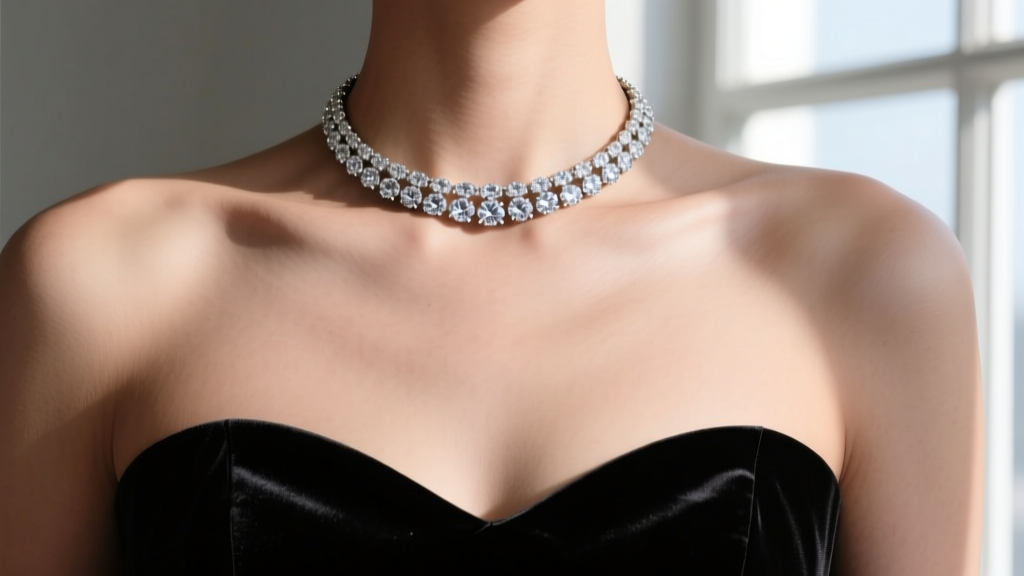
Strapless and Sweetheart: Framing the Décolletage
Strapless and sweetheart necklines leave the entire upper chest exposed, providing a blank canvas that demands framing rather than filling. The most sophisticated approach is a 14-inch choker or a 12-inch collar. A diamond or cubic zirconia tennis necklace (typically 3.0mm to 4.0mm in width) sits elegantly on the collarbone, drawing attention to the face while leaving the sweetheart bodice unobstructed. If you prefer a pendant, opt for a delicate 16-inch chain with a lightweight solitaire (under 1.5 carats). Heavy pendants on strapless dresses tend to swing outward and rest awkwardly on the bust line, disrupting the clean curve of the sweetheart cut.
Crew, Boat, and Halter: Navigating High Collars
High-necked dresses present the greatest styling challenge. A crew neck dress already creates a visual boundary at the base of the neck. Wearing a standard 16-inch or 18-inch chain will cause the metal to tangle with the fabric hem, creating a cluttered, unkempt look. Instead, you have two extreme options: go tight or go long. A 14-inch statement collar (such as a thick, 5.0mm oxidized silver curb chain) sits above the dress line, acting as a structural extension of the garment. Alternatively, a 30-inch opera-length chain drops below the bust, creating a vertical line that breaks up the expanse of fabric. For boat necks (bateau), which widen the shoulder line horizontally, a long Y-necklace is mandatory to restore vertical balance.
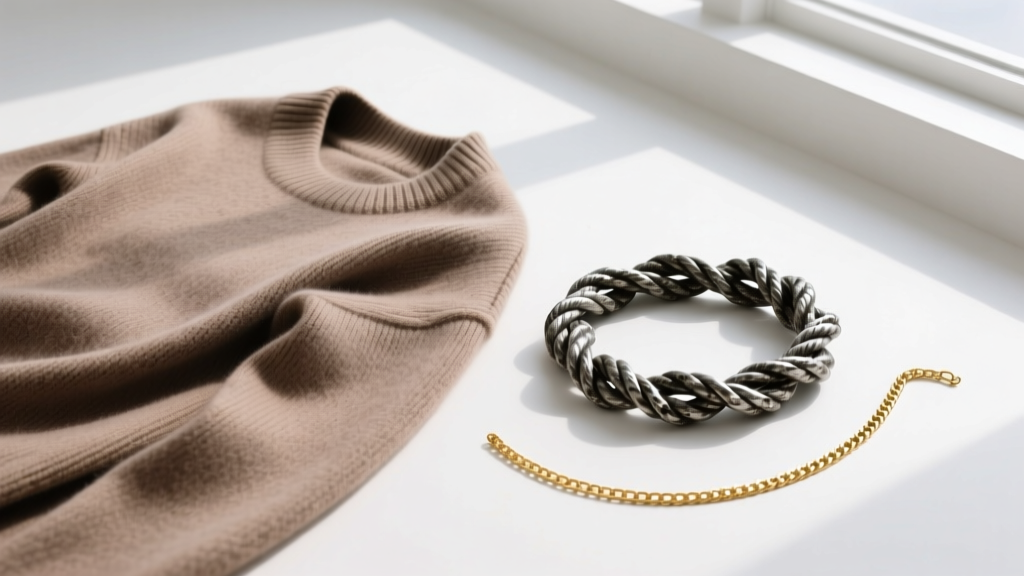
Material Friction: Matching Chain Weaves to Fabric Textures
An often-overlooked aspect of styling is the physical interaction between metal weaves and textile fibers. The Fashion Institute of Technology (FIT) frequently highlights how improper material pairings can ruin both the jewelry and the dress.
- Silk, Satin, and Chiffon: These delicate, high-friction fabrics will snag on textured chains. Avoid rope, curb, and herringbone weaves. Instead, choose a polished box chain or a seamless snake chain (1.0mm to 1.5mm gauge) which features a smooth, scale-free surface that glides over delicate fibers.
- Wool, Tweed, and Heavy Knits: Smooth, thin chains (like 1.0mm snake chains) will get lost visually and physically tangle in heavy fibers. Pair winter weight dresses with textured, robust chains like a 3.5mm rope chain or a heavy Figaro weave. The deep grooves of the metal complement the coarse texture of the fabric.
- Velvet: Velvet absorbs light, making highly polished, reflective metals (like white gold or platinum) pop dramatically. A 14k or 18k yellow gold rope chain provides a rich, warm contrast to deep jewel-toned velvet dresses.
Troubleshooting: Snags, Slips, and Clasp Failures
Even the perfect length will fail if the hardware is flawed. When wearing backless dresses or garments with delicate silk closures, the clasp becomes a critical point of failure and aesthetic disruption. Standard spring-ring clasps (often found on chains under $50) are prone to snapping under the tension of heavy pendants and are difficult to fasten blindly. Always upgrade to a lobster claw clasp (minimum 10mm for medium chains) or a magnetic neodymium clasp for seamless wearability. Furthermore, if you are layering a 16-inch and 18-inch chain on a silk slip dress, use a silicone O-ring stopper on the longer chain’s clasp to prevent the two metals from friction-welding and tangling throughout the evening.
The Final Proportion Checklist
Before stepping out, run through this rapid diagnostic checklist to ensure your styling is mathematically and aesthetically sound:
- Does the pendant sit at least one inch above or below the dress’s hemline?
- Is the chain weave smooth enough to prevent snagging the specific textile?
- Does the metal tone (warm gold vs. cool platinum) complement the dress’s undertone rather than clash with it?
- Is the clasp secure enough to hold the pendant's exact gram weight without slipping?
By treating your jewelry as an architectural extension of your clothing rather than an afterthought, you elevate your entire silhouette. Mastering these pairings ensures that your accessories enhance, rather than compete with, your carefully chosen garments.


