The Necklace in Japanese Craft: Metal Properties & Alloys Guide
Explore the necklace in Japanese metalcraft. Compare Shakudo, Shibuichi, and Mokume Gane properties, hardness, and patina techniques for fine jewelry.

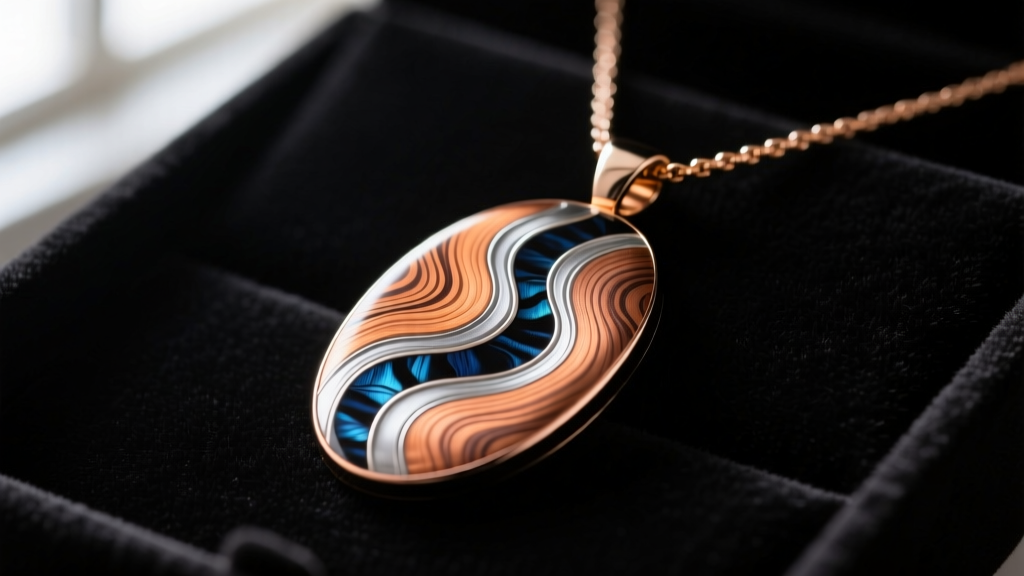
When discussing fine jewelry, the intersection of Eastern metallurgy and Western adornment offers some of the most captivating material science in the industry. If you are searching for a necklace in Japanese styles, you are likely looking beyond standard sterling silver or 14k gold. Japanese metalworking traditions introduce complex, multi-metal alloys and pattern-welding techniques that fundamentally change how a necklace wears, ages, and reacts to the skin. This guide provides a deep metallurgical breakdown of traditional and modern Japanese alloys used in necklace pendants and chains, evaluating their Vickers hardness, patina behaviors, and long-term wearability.
Linguistic & Cultural Context: The Necklace in Japanese
To understand the market, it helps to know the terminology. The modern Japanese word for necklace is nekkuresu (ネックレス), a direct transliteration of the English word. However, in traditional contexts and high-end artisanal jewelry, the term kubikazari (首飾り) is used, which translates literally to 'neck adornment.' Historically, Japanese metalwork was reserved for sword fittings (tsuba) and ceremonial items. It wasn't until the Meiji era (1868–1912) that these master metalworkers adapted their proprietary alloys for personal adornment and export. Today, authentic Japanese-crafted necklaces are prized not just for their aesthetics, but for their highly specific material properties.
Traditional Japanese Alloys: Properties & Wearability
Unlike Western jewelry, which relies heavily on karat gold and sterling silver, traditional Japanese metalwork utilizes irogane (colored metals). These are primarily copper-based alloys designed specifically to take on vibrant, stable patinas when treated with chemical solutions.
Shakudo (Copper-Gold Alloy)
Shakudo is arguably the most famous Japanese jewelry alloy. It consists of 90–95% copper and 5–10% pure gold. In its raw state, it looks like dull copper. However, when boiled in a traditional rokusho solution (a mixture of copper acetate, copper sulfate, and alum), the gold content forces the copper to oxidize into a rich, deep purple-black or raven-black patina. With a Vickers hardness (HV) of roughly 60–80, Shakudo is relatively soft. For necklace pendants, this means it is highly malleable for hand-carving but susceptible to scratching if worn against harder gemstones or steel chains.
Shibuichi (Copper-Silver Alloy)
Shibuichi translates to 'one-fourth,' referencing its classic composition of 75% copper and 25% silver. Modern variations can range from 40% to 60% silver. When treated with rokusho, Shibuichi develops a beautiful grey, olive, or muted brown patina. It is slightly harder than Shakudo (HV 70–90) and offers excellent contrast when inlaid into darker metals. As a necklace material, Shibuichi is highly responsive to the wearer's skin chemistry, meaning the patina will continue to evolve subtly over years of wear.
Kuromido (Copper-Arsenic Alloy)
Kuromido is composed of 99% copper and 1% arsenic. The arsenic acts as a catalyst to produce a glossy, jet-black patina. Safety Note: While the raw casting process is highly toxic due to arsenic fumes, the finished, oxidized, and sealed metal is completely safe for skin contact. It is frequently used as a dark background layer in multi-metal necklace designs.
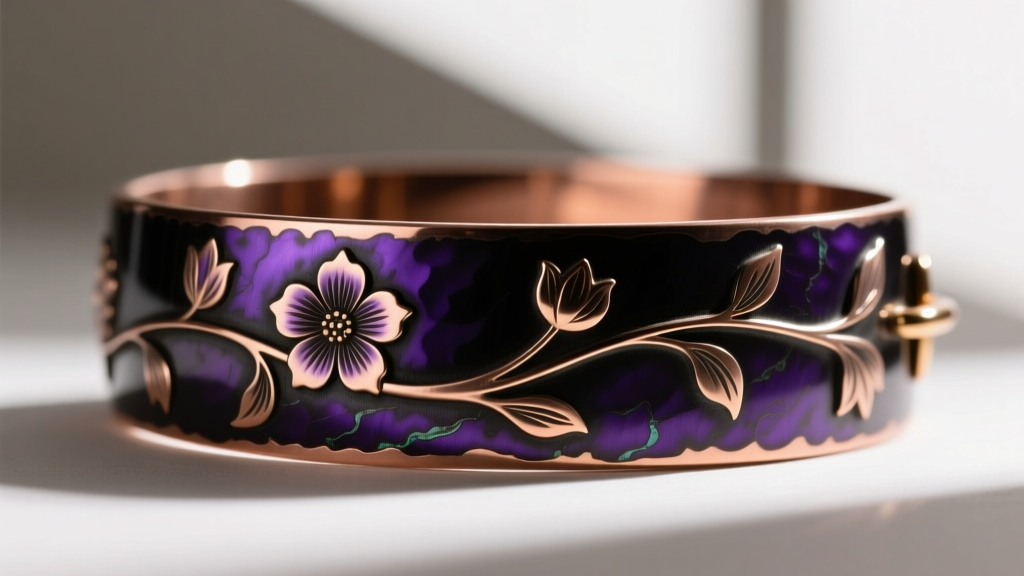
Material Comparison Table: Japanese Alloys vs. Western Standards
To contextualize these materials for everyday necklace wear, we must compare their physical properties against standard Western jewelry metals. The table below highlights why Japanese alloys require specialized care and chain pairings.
| Material | Composition | Hardness (HV) | Patina Color (Rokusho) | Tarnish & Wear Resistance |
|---|---|---|---|---|
| Shakudo | 90-95% Cu, 5-10% Au | 60 - 80 | Purple-Black / Raven | Low (Requires sealing/waxing) |
| Shibuichi | 75% Cu, 25% Ag | 70 - 90 | Grey / Olive / Brown | Medium (Evolves with skin contact) |
| Sterling Silver | 92.5% Ag, 7.5% Cu | 60 - 75 | N/A (Sulfide Tarnish) | Medium (Polishable) |
| 14k Yellow Gold | 58.5% Au, Ag/Cu mix | 130 - 150 | N/A | High (Highly durable) |
| Kuromido | 99% Cu, 1% As | 50 - 70 | Glossy Jet-Black | Low (Brittle, requires careful wear) |
The Art of Mokume Gane in Necklace Design
You cannot discuss Japanese metalwork without addressing Mokume Gane (wood-grain metal). Originally developed in the 17th century for sword hilts, Mokume Gane is not a single alloy, but a lamination technique. According to technical archives from the Ganoksin Jewelry Making Community, the process involves stacking sheets of contrasting alloys (typically Shakudo, Shibuichi, and pure silver), heating them in a kiln to a near-melting point, and pressing them into a solid billet. The billet is then carved, forged, and etched to reveal the internal layers.
For necklaces, Mokume Gane pendants are masterpieces of structural integrity. However, because the billet contains multiple metals with different galvanic potentials, wearing a Mokume Gane pendant in salt water or exposing it to harsh perfumes can cause micro-galvanic corrosion. Artisans typically seal high-end Mokume Gane necklaces with micro-crystalline wax (like Renaissance Wax) or a specialized jewelry cerakote to preserve the contrasting layers.
Modern Japanese Metals: Titanium & Damasteel
While traditional alloys dominate the artisanal space, modern Japanese jewelry designers are pioneering the use of aerospace-grade materials for lightweight, hypoallergenic necklaces.
Japanese Aerospace Titanium (Grade 5)
Japan is a global leader in titanium processing. Many high-end Japanese minimalist brands utilize Grade 5 Titanium (Ti-6Al-4V). Unlike the softer Grade 2 commercially pure titanium, Grade 5 has a tensile strength of up to 1,170 MPa and a Vickers hardness of roughly 350 HV. This allows for impossibly thin, yet unbreakable, chain links and clasp mechanisms. Furthermore, titanium can be anodized using electrical currents to produce vibrant, permanent colors (blues, purples, golds) without the use of dyes or plating.
Damasteel (Modern Pattern Welding)
Though historically rooted in Japanese sword-making (Tamahagane), modern Damasteel used in premium men's and unisex necklaces is a high-carbon stainless steel blend. It offers the visual appeal of Mokume Gane but with the corrosion resistance and high hardness (up to 60 HRC) required for heavy, everyday chain necklaces that will not scratch or bend.
Patina, Tarnish, and Skin Reactions
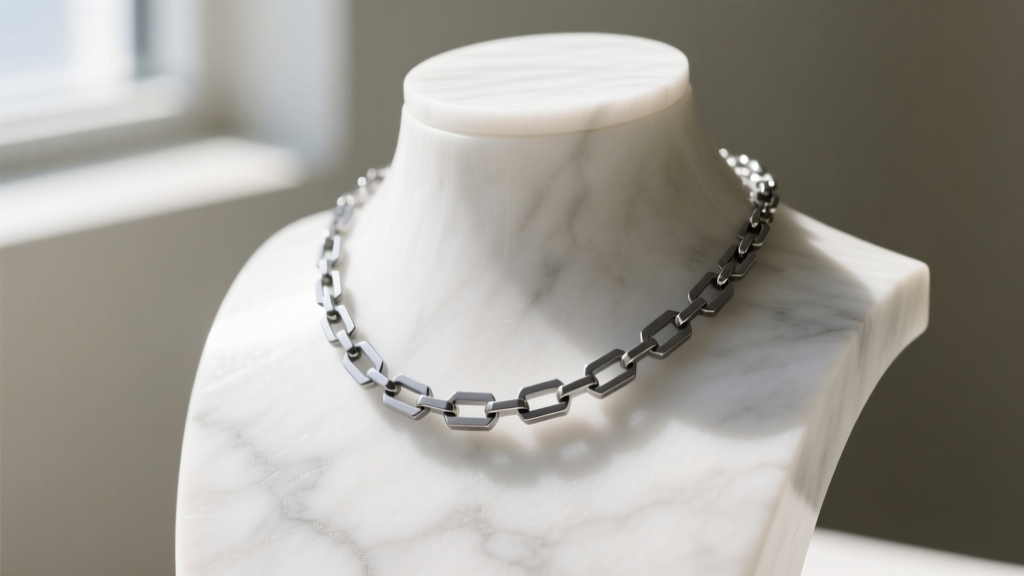
A critical aspect of owning a traditional Japanese alloy necklace is understanding skin chemistry. Copper-heavy alloys like Shakudo and Shibuichi will react to the pH and salt content of the wearer's sweat. This is not a defect; it is a feature of the material. However, if the copper reaction causes green discoloration on the skin (copper chloride formation), the pendant must be sealed.
Troubleshooting Framework for Copper-Alloy Necklaces:
- Preventative Sealing: Apply a micro-thin layer of Renaissance Wax using a soft microfiber cloth. Buff until dry. Reapply every 3–6 months depending on wear frequency.
- Chain Pairing: Never hang a raw Shakudo pendant on a sterling silver chain. The friction and galvanic reaction will degrade both metals. Use a silk cord, a leather thong, or a gold-filled chain.
- Cleaning: Never use commercial silver dips or ultrasonic cleaners on patinated Japanese alloys. The chemicals will strip the rokusho oxidation instantly, returning the metal to raw copper. Clean only with a damp cloth and mild, pH-neutral soap.
Pricing & Sourcing Authentic Japanese Metalwork
Authentic Japanese-crafted necklaces command a premium due to the intensive labor and toxic, highly regulated chemical processes required to create the alloys. As highlighted by The Metropolitan Museum of Art's guide to Japanese Metalwork, the mastery of these materials takes decades to perfect.
- Mass-Produced 'Japanese Style' Pendants: $50 – $150. These are usually standard brass or copper plated with black ruthenium to mimic Shakudo. They lack the depth and warmth of true alloys.
- Artisan Shibuichi/Shakudo Pendants: $400 – $1,200. Hand-carved, properly patinated, and signed by the maker.
- Master-Level Mokume Gane Necklaces: $1,500 – $5,000+. These involve complex billet forging, precious metal inlays, and custom-fitted silk or precious metal chains.
When investing in a necklace rooted in Japanese metalcraft, always verify the exact alloy composition with the jeweler. True mastery of these materials results in heirloom-quality pieces that age beautifully, telling a visual story of the wearer's life through the evolving patina of the metal.


