Mastering Necklace Layering: A Material Properties Guide
Discover the science of necklace layering. Learn how metal properties, chain weaves, and galvanic reactions impact your layered jewelry.

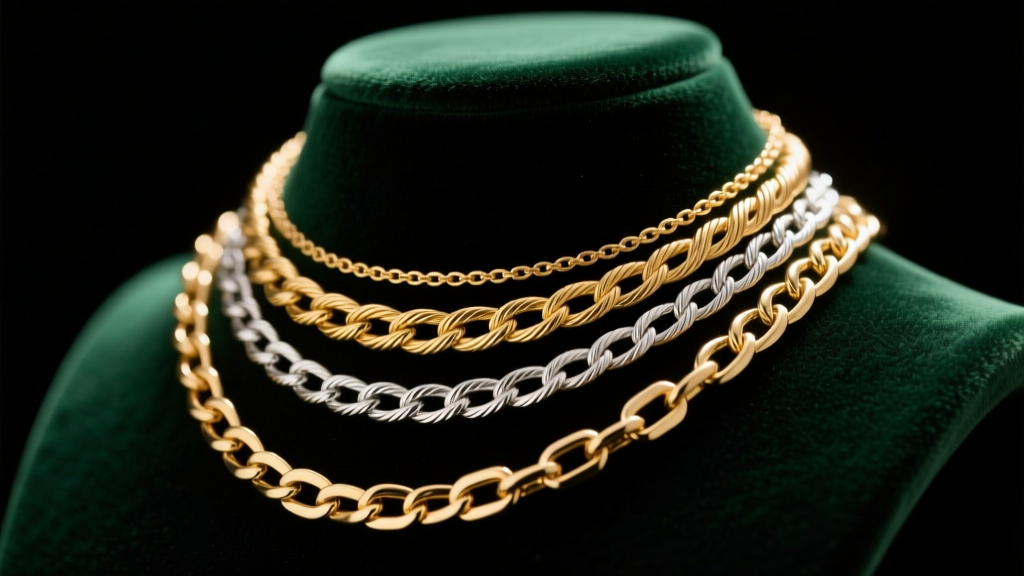
The art of necklace layering is often treated as a purely visual exercise, dictated by lengths, pendant sizes, and color palettes. However, beneath the aesthetic surface lies a complex interplay of physics, chemistry, and material science. When you stack multiple chains against the skin and each other, you are subjecting them to friction, tensile stress, and electrochemical reactions. Ignoring these material properties leads to tangled messes, stretched links, and irreversible surface damage. To truly master necklace layering, you must think like a metallurgist and an engineer. This guide breaks down the exact material behaviors that dictate how your layered necklaces will perform, age, and interact over time.
The Physics of Tangles: Chain Weave and Friction Coefficients
Tangling is the most common point of failure in necklace layering, and it is entirely governed by link geometry and surface friction. When two chains of the exact same weave and link size are layered, they act like mechanical velcro. The links find the path of least resistance and interlock.
To prevent this, you must intentionally mix chain geometries to disrupt the friction coefficient. For example, a rolo chain features flat, round links that present a wide surface area. If layered with another rolo chain, the flat edges catch and bind. Conversely, a snake chain is composed of tightly joined wavy rings that form a smooth, tubular surface with almost zero catching points. A cable chain features uniform oval links that only catch at the narrow ends.
The Golden Rule of Layering Geometry: Never layer identical weaves at similar lengths. If your base layer (16 inches) is a high-friction rolo chain, your middle layer (18 inches) should be a smooth snake or box chain, and your longest layer (20 inches) can be a standard oval cable chain. This variance in link geometry ensures that even when the chains cross over one another, the physical shapes cannot interlock, allowing them to slide apart naturally with body movement.
Galvanic Corrosion: The Hidden Danger of Mixing Metals
Mixing sterling silver and 14k yellow gold in a single layered stack is a popular stylistic choice, but it introduces the risk of galvanic corrosion. Galvanic corrosion occurs when two dissimilar metals come into physical contact in the presence of an electrolyte—in this case, human sweat, which is rich in sodium chloride and lactic acid.
When this electrochemical cell is completed, the more anodic (less noble) metal will sacrifice itself and corrode to protect the cathodic (more noble) metal. According to the Silver Institute, sterling silver is an alloy containing 92.5% silver and 7.5% copper. Copper is highly anodic compared to the gold and copper alloys found in 14k gold. Over months of daily wear, the sterling silver chain will experience accelerated tarnishing and microscopic pitting at the exact points where it rubs against the gold chain.
| Metal Combination | Galvanic Risk | Long-Term Result |
|---|---|---|
| Platinum & 18k Yellow Gold | Very Low | Safe for daily layering; minimal electron transfer. |
| 14k Gold & 14k White Gold | Low | Safe; similar alloy bases prevent rapid corrosion. |
| Sterling Silver & 14k Gold | Moderate to High | Silver will tarnish rapidly; copper alloy may pit. |
| Stainless Steel & Sterling Silver | High | Steel acts as cathode; silver will degrade quickly. |
If you insist on mixing silver and gold tones, the safest approach is to use PVD (Physical Vapor Deposition) coated titanium or gold vermeil over a uniform base metal, ensuring the underlying chemistry remains identical even if the surface colors differ. For purists, keeping your layers within the same noble metal family—such as layering 14k, 18k, and 22k gold—eliminates galvanic risks entirely, a principle heavily emphasized by the World Gold Council regarding gold alloy stability.
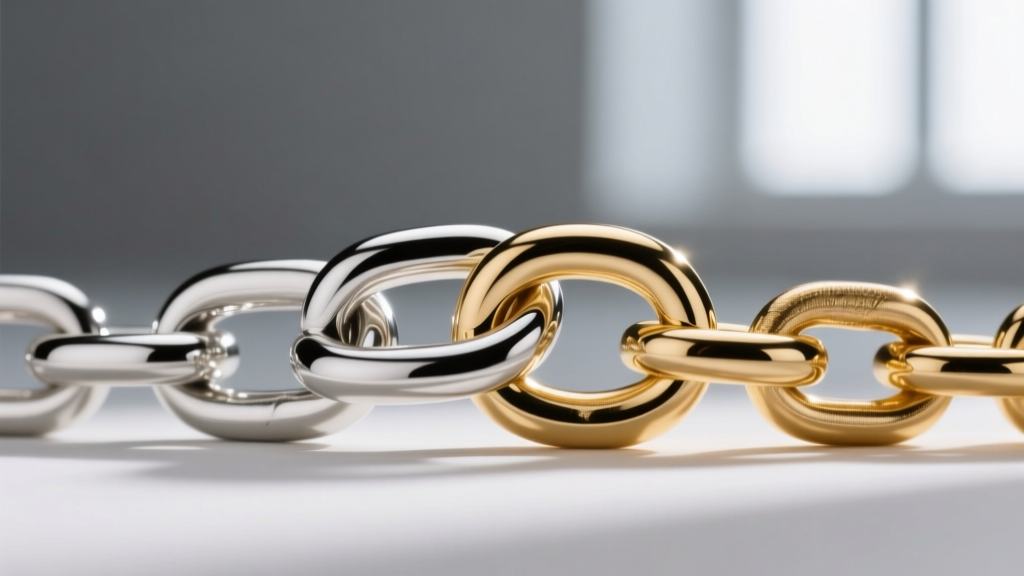
Weight Distribution, Gauge Sizes, and Tensile Limits
A critical, often overlooked aspect of necklace layering is the tensile strength of the chain wire relative to the weight of the pendants and the chain itself. Wire gauge dictates the thickness of the metal. In the American Wire Gauge (AWG) system, a higher number means a thinner wire. A delicate 24-gauge chain (0.51mm thick) has a vastly different load-bearing capacity than a robust 16-gauge chain (1.29mm thick).
Calculating Pendant-to-Chain Weight Ratios
When layering, the longest chain usually bears the heaviest pendant, while the shortest chain sits flush against the clavicle. However, the shortest chain experiences the most acute bending stress and friction from skin movement. A common mistake is pairing a heavy, solid-cast pendant with a hollow, lightweight chain. The rule of thumb for structural integrity is the 1:10 ratio: the chain should weigh at least one-tenth of the pendant it supports, and the wire gauge must be rated for the dynamic load.
- 22-Gauge to 24-Gauge (0.51mm - 0.64mm): Maximum safe pendant weight is 2 to 4 grams. Best reserved for the shortest, choker-length layer (14-15 inches) with no pendant or a micro-pavé charm.
- 18-Gauge to 20-Gauge (0.81mm - 1.02mm): Maximum safe pendant weight is 8 to 15 grams. Ideal for the middle layer (18 inches). Sterling silver in this gauge will slowly stretch over time due to its low yield strength; opt for 14k gold or titanium for better memory.
- 14-Gauge to 16-Gauge (1.29mm - 1.63mm): Maximum safe pendant weight is 25+ grams. Perfect for the longest layer (22-24 inches) bearing a substantial medallion or raw gemstone.
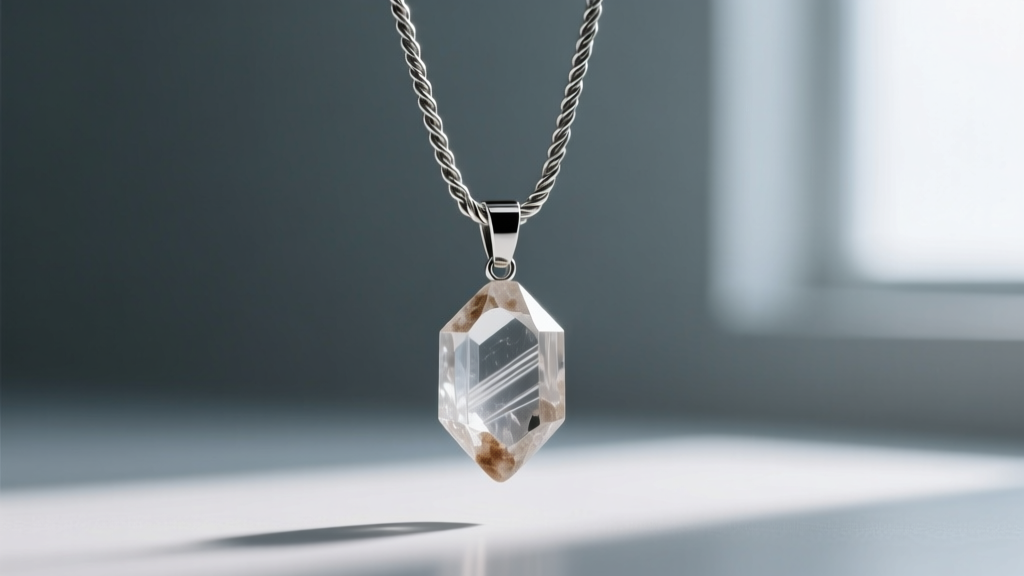
Material choice heavily influences these limits. According to the Gemological Institute of America (GIA), understanding metal durability is paramount for jewelry longevity. Pure silver and high-karat gold (22k, 24k) are highly malleable and will permanently deform (stretch) under the constant, low-grade tension of a heavy pendant. Titanium (specifically Grade 5 / Ti-6Al-4V) and 316L surgical steel possess vastly superior tensile strength and yield points, meaning a 20-gauge titanium chain can safely support a load that would permanently warp a 16-gauge sterling silver chain.
Surface Hardness and Scratch Transfer
When necklaces layer against each other, they are in a state of constant, low-impact abrasion. This brings the Mohs scale of mineral hardness into play, which applies not just to gemstones, but to the metals themselves. Scratch transfer occurs when a harder metal acts as an abrasive against a softer metal.
Platinum and palladium are significantly harder and denser than gold alloys. If you layer a platinum chain with an 18k yellow gold pendant, the platinum will act like sandpaper on a microscopic level. Over a year of daily wear, the gold pendant's bail (the loop connecting it to the chain) and the top surface of the pendant will become heavily scuffed, losing their high-polish finish and developing a matte, satin-like patina from the platinum abrasion.
Hardness Pairing Guidelines:
- Platinum (Mohs 4-4.5): Only layer with other platinum or palladium chains. Keep away from high-karat gold and silver.
- 14k & 18k Gold (Mohs 2.5-3): Safe to layer together. The slight hardness difference between 14k (harder due to more alloy metals like copper/zinc) and 18k (softer, more pure gold) is negligible enough to prevent severe scratching over normal timeframes.
- Sterling Silver (Mohs 2.5-3): Highly susceptible to scratching. Never layer a silver chain with a pendant featuring a diamond-accented bail or a sapphire bezel, as these gems (Mohs 9-10) will carve deep grooves into the silver links they rest against.
The Ultimate Material Pairing Matrix
To synthesize these physical and chemical properties into an actionable framework, use this matrix when building your layered stacks. This ensures structural integrity, prevents chemical degradation, and eliminates the frustration of tangled chains.
Stack 1: The Indestructible Minimalist
- 14" Base: 20-gauge Titanium Box Chain (Smooth, high tensile strength).
- 16" Middle: 18-gauge Titanium Snake Chain (Zero friction, prevents tangling).
- 18" Top: 16-gauge Titanium Rope Chain with a 10g solid titanium geometric pendant.
- Why it works: Uniform metal eliminates galvanic corrosion. Varying weaves eliminate tangling. Titanium's high yield strength prevents stretching.
Stack 2: The Classic Heirloom (Gold)
- 15" Base: 18k Gold Wheat Chain (Textured, interlocking weave).
- 17" Middle: 14k Gold Cable Chain (Smooth ovals, low catch-rate).
- 20" Top: 14k Gold Figaro Chain with a 12g solid gold signet pendant.
- Why it works: Staying within the gold family prevents galvanic action. The 14k gold on the longest chain provides extra alloy hardness to support the heavier pendant without stretching the links.
Mastering necklace layering requires looking past the mirror and understanding the mechanical realities of your jewelry. By respecting chain geometry, galvanic boundaries, tensile limits, and surface hardness, you transform a chaotic tangle of metals into a curated, enduring, and scientifically sound expression of personal style.


