Budget Guide: How Necklace Lengths cm Affect Chain Pricing
Discover how necklace lengths cm impact jewelry pricing. Learn to maximize your budget when buying gold and silver chains with our expert value guide.

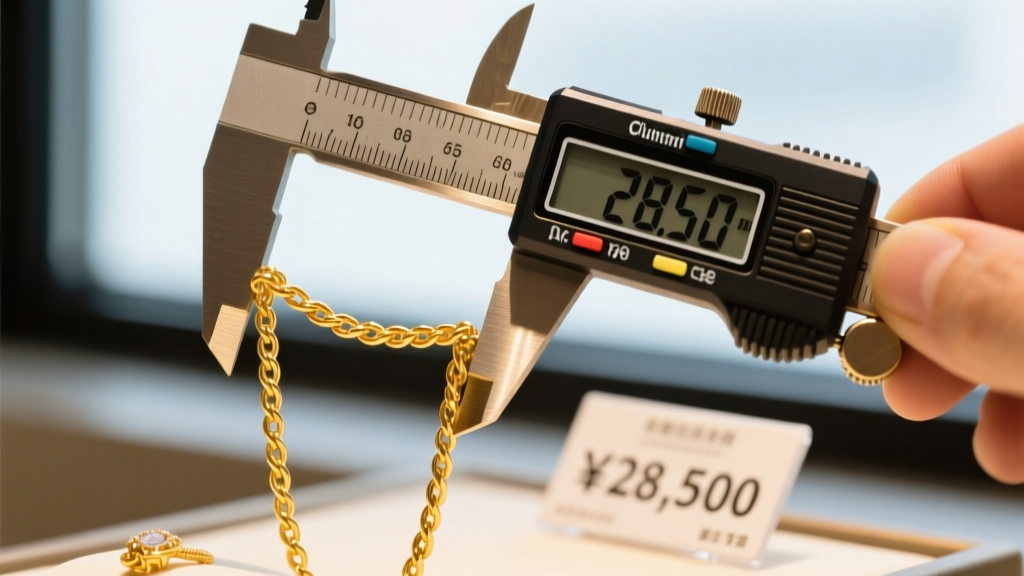
When shopping for fine jewelry, most consumers focus on the karat of the gold, the clarity of the diamonds, or the prestige of the brand. However, the most fundamental driver of a chain's intrinsic value and retail price is often the most overlooked: its physical dimensions. Understanding how necklace lengths cm correlate with metal weight, manufacturing costs, and long-term durability is the cornerstone of making a financially sound jewelry investment.
Whether you are buying a delicate 14k gold cable chain or a heavy sterling silver Cuban link, the metric system provides the most precise framework for evaluating cost-per-centimeter. In this comprehensive budget and value assessment, we will deconstruct the pricing mechanics of chain necklaces, revealing where you can maximize your budget and where hidden markups quietly drain your wallet.
The Metallurgical Reality: Why Centimeters Dictate Cost
Precious metal chains are fundamentally priced by weight. While retail brands apply massive markups for design and branding, the baseline cost of any chain is tethered to the spot price of its raw materials. According to the Gemological Institute of America (GIA), the density and alloy composition of gold and silver directly determine how much a specific volume of metal will weigh.
Because chain width (gauge) and link style remain constant within a single product line, the variable that scales the weight—and therefore the price—is the length. When you analyze necklace lengths cm, you are essentially looking at a linear multiplier of raw material. A 60cm chain of a 2mm 18k gold rope chain will contain exactly 33% more gold than a 45cm chain of the exact same design. However, retail pricing rarely scales in a perfectly linear fashion, creating opportunities for savvy buyers to exploit pricing inefficiencies.
Standard Necklace Lengths cm and Their Base Value Tiers
To accurately assess value, we must first establish the standard metric sizing used by global manufacturers. Below is a data table comparing standard necklace lengths cm, their traditional style names, and their relative cost index based on a standard 1.5mm solid 14k gold cable chain.
| Length (cm) | Style Name | Avg. Weight (1.5mm 14k) | Relative Cost Index | Value Assessment |
|---|---|---|---|---|
| 35 - 40cm | Choker | 4.2g - 4.8g | 1.1x (Premium) | Low value; high clasp-to-metal ratio. |
| 45cm | Princess | 5.4g | 1.0x (Baseline) | Excellent value; industry standard. |
| 50 - 55cm | Matinee | 6.0g - 6.6g | 1.2x (Fair) | Good value; versatile layering length. |
| 60 - 70cm | Opera | 7.2g - 8.4g | 1.5x (High) | Moderate value; high material cost. |
| 80 - 90cm | Rope / Lariat | 9.6g - 10.8g | 2.0x (Premium) | Poor value; prone to snagging and stretching. |
As illustrated above, the baseline for manufacturing efficiency sits squarely at the 45cm mark. This is the length most commonly produced in bulk, meaning the per-unit manufacturing overhead is at its absolute lowest.
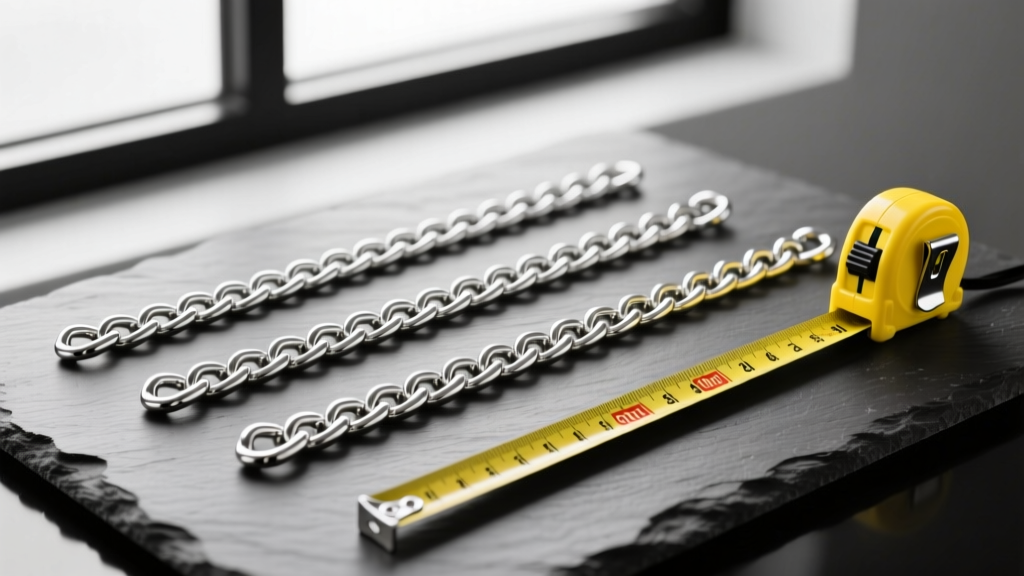
The Extremes: The Choker Tax and the Opera Premium
When deviating from the 45cm standard, buyers must navigate two distinct pricing anomalies that negatively impact budget efficiency.
The Choker Tax (35cm - 40cm)
Logically, a 38cm choker should cost less than a 45cm princess chain because it uses less metal. In reality, you will often find chokers priced identically or even higher than their longer counterparts. This is due to the 'Choker Tax.' Every chain requires a sturdy clasp (like a 12mm lobster clasp or a spring ring) and soldered jump rings. The clasp assembly accounts for a fixed weight and a fixed labor cost. On a 38cm chain, the clasp represents a much larger percentage of the total material weight and assembly time. Furthermore, because chokers are highly trendy, brands frequently apply a 'fashion premium' to these shorter necklace lengths cm, artificially inflating the retail price beyond the melt value.
The Opera Length Premium (70cm - 90cm)
Conversely, longer chains suffer from material scaling and structural vulnerabilities. A 90cm rope chain requires nearly double the raw material of a standard 45cm chain. When dealing with high-karat gold (18k or 22k), the sheer cost of the raw metal pushes these pieces into luxury price brackets. Additionally, longer chains require more labor to finish, polish, and quality-check for weak solder joints. Checking current precious metal markets via resources like Kitco reveals how drastically a 10-gram increase in 18k gold impacts the baseline cost before retail markup is even applied.
Hollow vs. Solid: The Centimeter Trap
When evaluating longer necklace lengths cm on a strict budget, consumers are often tempted by 'hollow' or electroformed chains. These chains are manufactured using a wax core that is melted away, leaving a thin shell of gold. A 70cm hollow chain might weigh the same as a 40cm solid chain, allowing retailers to offer longer lengths at seemingly budget-friendly prices.
Expert Warning: From a value retention perspective, hollow chains are a catastrophic investment. The longer the chain, the more leverage and tension is applied to the links when worn. A 70cm hollow chain is highly susceptible to kinking, crushing, and permanent deformation. Once a hollow link is crushed, it cannot be repaired or soldered by a bench jeweler. If your goal is long-term value and cost-per-wear, always opt for solid chains in the 45cm to 55cm range rather than sacrificing structural integrity for extra centimeters.
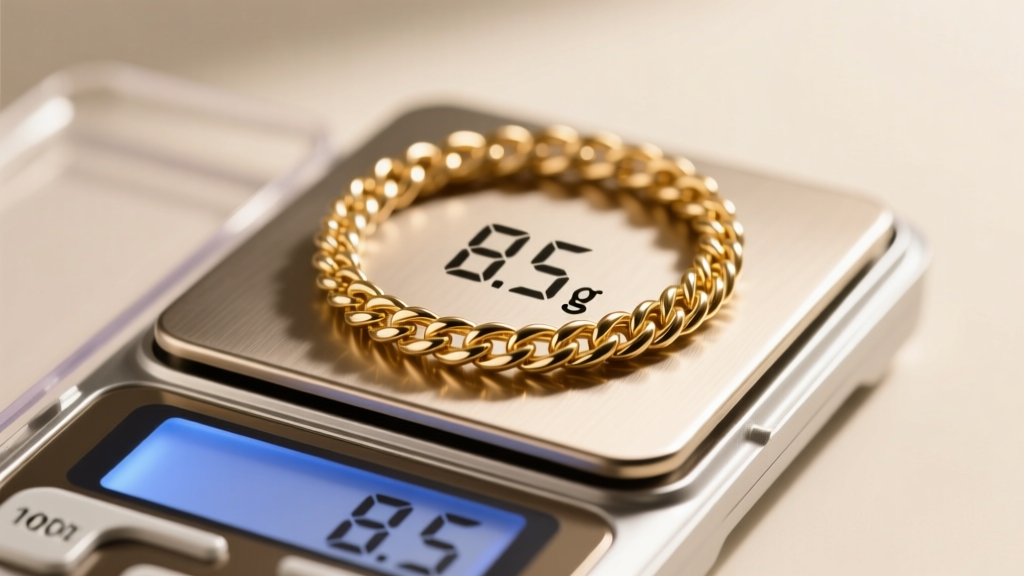
Calculating True Cost-Per-Centimeter (CPC)
To strip away brand marketing and evaluate the true financial value of a chain, jewelry appraisers use the Cost-Per-Centimeter (CPC) framework. This allows you to compare chains of different lengths, widths, and karats on an equal playing field.
The CPC Formula:
Retail Price ÷ Length (cm) = Cost Per Centimeter
The Melt-Value Delta:
(Retail Price - Estimated Melt Value) ÷ Length (cm) = Brand Premium Per Centimeter
For example, if a brand sells a 50cm 14k gold chain for $800, and the scrap melt value of its 6 grams of gold is $300, the Brand Premium is $500. Divided by 50cm, you are paying a $10 brand premium per centimeter. If another brand sells a 60cm chain of the same gauge for $900 (melt value $360), the premium is $540, equating to $9 per centimeter. The second brand offers better relative value, despite the higher absolute price tag.
Custom Sizing vs. Off-The-Rack Inefficiencies
Many buyers believe that ordering a custom-sized chain (e.g., exactly 42cm to fit a specific neckline) is a smart way to save money on unused metal. In the fine jewelry sector, this is a budget fallacy. Off-the-rack necklace lengths cm (like 45, 50, 60) are produced in massive batches using automated chain-linking machines. Custom lengths require a jeweler to manually cut, solder, and finish a bespoke piece, introducing heavy bench labor fees that vastly outweigh the few dollars saved by omitting 3cm of gold.
If a standard 45cm chain is slightly too long, the most budget-conscious approach is to purchase the mass-produced 45cm chain and have a local jeweler add a secondary jump ring at the 42cm mark for under $15. This preserves the chain's resale value and avoids the bespoke manufacturing markup.
Final Verdict: Optimizing Your Chain Investment
Maximizing your jewelry budget requires looking past the display case and analyzing the physical geometry of the piece. The most financially sound investments are found in solid, mass-produced chains resting in the 45cm to 55cm sweet spot. By avoiding the choker tax, steering clear of hollow electroformed lengths, and utilizing the CPC framework to calculate brand premiums, you can ensure that every centimeter of precious metal you purchase contributes to lasting value and enduring style.


