Necklace Scapular Troubleshooting: Fixes & Care Guide
Fix tangling, skin irritation, and chain breakage on your necklace scapular. Expert troubleshooting and material care tips for daily religious jewelry.

The Unique Anatomy of a Necklace Scapular
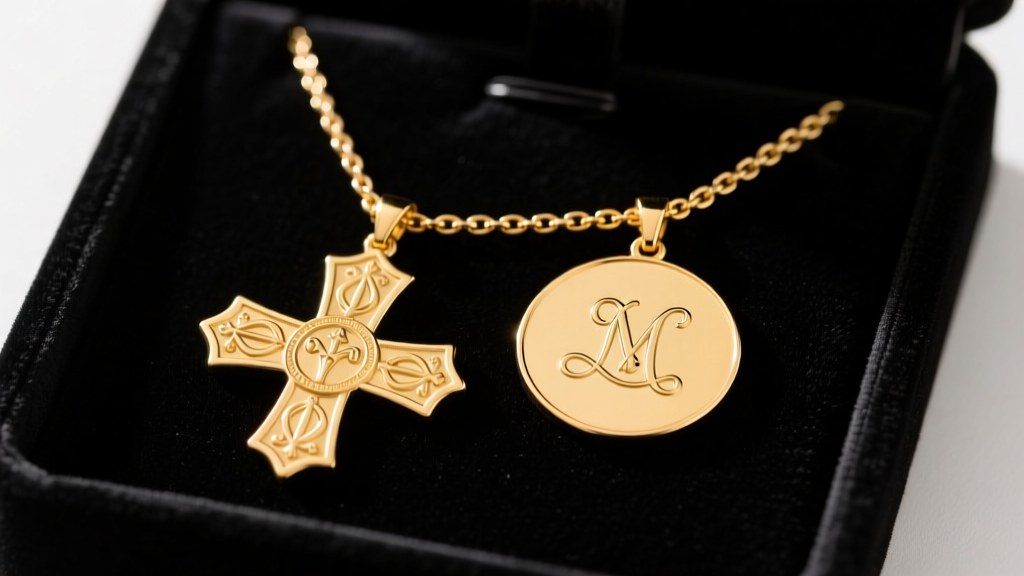
A necklace scapular—often referred to as a medal scapular—is a profound piece of devotional jewelry that presents unique structural challenges unlike any standard pendant necklace. Historically rooted in the traditional cloth scapulars of monastic orders, the metal medal scapular was officially sanctioned for daily wear by Pope Pius X in 1910. Today, it remains a staple of faith-based jewelry, featuring a front medal (typically the Sacred Heart) and a back medal (typically the Virgin Mary) connected by a continuous chain or a Y-drop configuration.
Because a necklace scapular rests against both the chest and the back, it is subjected to complex kinetic stresses, friction from clothing, and prolonged exposure to sweat. If you are experiencing chronic tangling, chain breakage at the junction, or skin irritation, you are not alone. This troubleshooting guide dives deep into the metallurgical and mechanical failures common to the necklace scapular and provides actionable, expert-level solutions to restore and protect your piece.
Problem 1: Chronic Chain Tangling at the Y-Drop
The most frequent complaint from wearers of a necklace scapular is persistent tangling, particularly where the chain splits into the Y-drop or where the continuous loop folds over itself. This is rarely a user error; it is almost always a failure of chain geometry.
The Physics of Chain Friction
Standard cable chains, which feature uniform oval links, act like microscopic gears. When the front and back medals swing out of phase during walking, the oval links catch on one another, creating a twisted knot that is difficult to undo without stressing the metal. Furthermore, cable chains have a high surface-area-to-volume ratio, meaning they easily catch on hair, sweater threads, and the fibers of your undershirt.
The Solution: Upgrade to a Box or Rope Chain
To eliminate tangling, you must reduce inter-link friction. We recommend replacing the chain with a 1.2mm to 1.5mm box chain. Box chains feature square, interlocking links that lay completely flat and slide over one another smoothly, making them virtually tangle-proof. Alternatively, a 1.5mm rope chain offers a continuous spiral geometry that resists knotting while providing superior tensile strength. If you are having a jeweler custom-make or re-chain your necklace scapular, explicitly request a box chain profile to save yourself daily frustration.
Problem 2: Skin Irritation and Metal Tarnish
The back medal of a necklace scapular rests directly against the thoracic spine, an area of the back that is highly prone to perspiration. When sweat (which contains water, salt, and urea) mixes with the wrong base metals, it triggers both rapid tarnishing and severe contact dermatitis.
Identifying the Culprit: Nickel and Copper Alloys
Many mass-produced, inexpensive scapular necklaces are cast from brass (a copper-zinc alloy) or nickel-silver (which contains no actual silver, but rather copper, nickel, and zinc). According to the American Academy of Dermatology, nickel is the most common cause of allergic contact dermatitis. When a brass or nickel-silver chain sits against a sweaty back, the acids in your skin break down the metal ions, resulting in a green or black smudge on your skin and an itchy, red rash.
Material Upgrade Guide
To wear a necklace scapular 24/7 without irritation, you must upgrade to hypoallergenic, noble, or highly stable metals. Below is a comparison of the best materials for daily-wear devotional jewelry:
| Material | Nickel Content | Tarnish Resistance | Durability & Notes | Price Range |
|---|---|---|---|---|
| 316L Surgical Steel | Trace (Safe) | Excellent | Highly durable, will not turn skin green. Best budget option for daily sweat exposure. | $25 - $60 |
| 925 Sterling Silver | None | Moderate | Contains 7.5% copper, which can tarnish with sweat. Requires rhodium plating for 24/7 wear. | $80 - $180 |
| 14k Solid Gold | Varies | High | Standard for heirloom pieces. Ensure it is nickel-free alloyed (use palladium or silver alloys). | $350 - $800+ |
| Brass / Base Metal | High Risk | Poor | Will oxidize rapidly and cause dermatitis. Avoid for continuous skin contact. | $10 - $30 |
Note: If you own a sterling silver necklace scapular and love it, ensure it has a thick rhodium plating. As noted by The Silver Institute, silver naturally reacts with sulfur and moisture; rhodium creates an inert, hypoallergenic barrier that prevents both tarnish and copper-induced skin discoloration.
Problem 3: Connector and Jump Ring Failures
If your necklace scapular keeps breaking, look closely at the Y-drop connector or the clasp jump rings. A standard necklace bears tension primarily at the clasp. A necklace scapular, however, bears the kinetic weight of two dangling medals. Every time you bend over or stand up quickly, the front and back medals pull in opposite directions, placing immense torsional stress on the Y-junction.
The Danger of Unsoldered Jump Rings
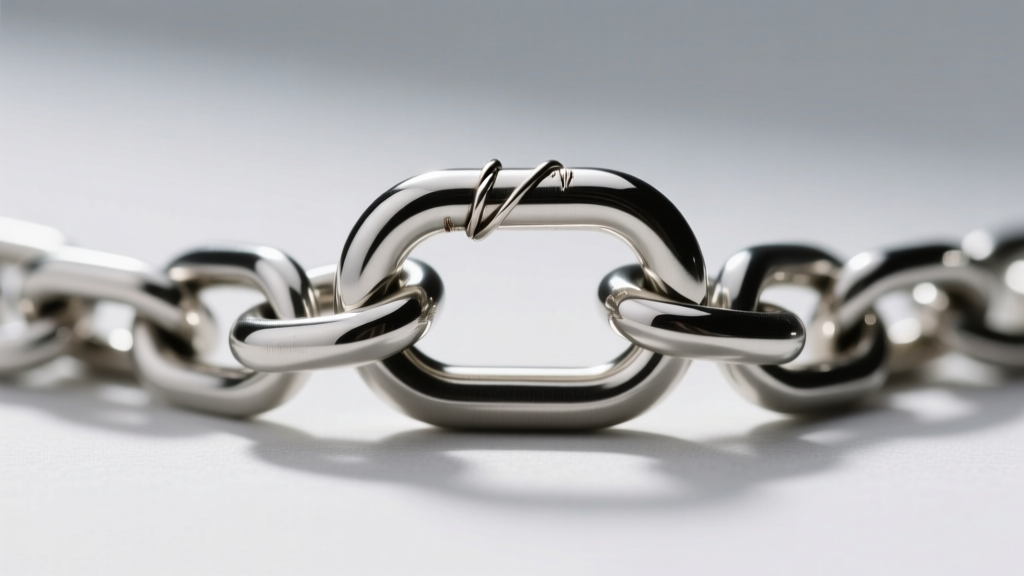
Most factory-made scapulars use 22-gauge unsoldered jump rings to connect the Y-drop. Under the opposing tension of the two medals, these thin, unsoldered rings slowly pull apart, eventually snapping or dropping a medal. Furthermore, if a previous repair person used standard chain-nose pliers to pull the ring apart laterally (rather than twisting it open), the metal wire has already been work-hardened and weakened.
The Permanent Fix: Soldering and Gauge Upgrades
To permanently fix this failure point, take your necklace scapular to a professional jeweler and request the following:
- Gauge Upgrade: Replace the Y-drop jump ring with a thicker 18-gauge or 20-gauge wire ring.
- Laser Soldering: Have the jump ring soldered completely shut. Modern laser welding can solder a jump ring shut without melting the delicate chain links or damaging the enamel on the nearby medals.
- Cast Y-Connectors: For high-end gold pieces, ask the jeweler to replace the jump ring entirely with a solid, cast-metal Y-connector, which has no seam to pull apart.
Problem 4: Scapular Medal and Enamel Degradation
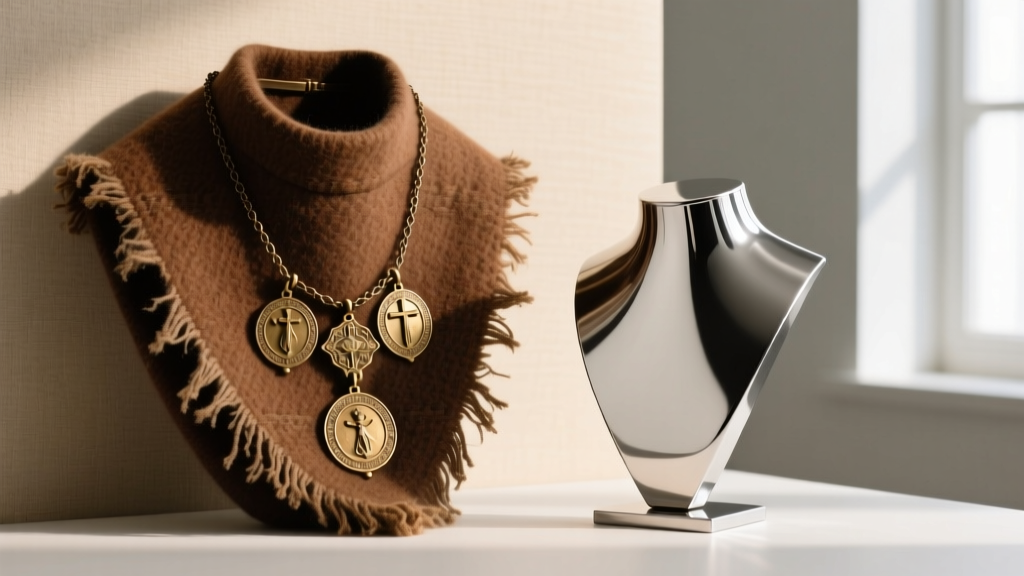
While traditional brown or green wool cloth scapulars are deeply revered, they degrade quickly when exposed to daily showering, sweat, and friction. This is why the metal medal scapular was introduced. However, not all metal medals are created equal, and the decorative enamel fills often chip or yellow over time.
Epoxy vs. Vitreous Enamel
If the colored details on your Sacred Heart or Miraculous Medal are chipping, your scapular likely uses cold epoxy resin. Epoxy is a plastic adhesive that is cheap to apply but degrades under UV light and skin oils, eventually turning yellow and flaking off. When purchasing a replacement or an upgrade, seek out medals featuring vitreous enamel. Vitreous enamel is essentially crushed glass that is fired in a kiln at over 1400°F. It fuses directly to the metal, making it impervious to sweat, water, and UV light. A vitreous enamel necklace scapular will retain its vibrant reds and blues for generations without chipping under normal wear conditions.
Daily Maintenance and Cleaning Routine
To keep your necklace scapular in pristine condition, implement a simple, non-destructive cleaning routine. Avoid harsh chemical dips or ultrasonic cleaners, especially if your medals feature vitreous enamel, soft gemstones, or oxidized antiquing in the crevices.
The Safe Cleaning Protocol
- Weekly Wipe Down: Use a microfiber jewelry cloth to wipe the back medal and the chain after wearing it in hot weather. This removes acidic sweat before it can etch into the metal.
- Monthly Deep Clean: Mix a few drops of mild, phosphate-free dish soap (like Dawn) into a bowl of lukewarm water. Submerge the necklace scapular for 3 minutes.
- Soft Brushing: Use an extra-soft baby toothbrush to gently agitate the chain links and the bail loops where the medals attach. Do not scrub the enamel faces aggressively.
- Drying: Rinse under distilled water to prevent hard water spots, and pat completely dry with a lint-free towel. Ensure the jump rings are completely dry to prevent hidden moisture buildup.
Final Thoughts on Devotional Jewelry Care
A necklace scapular is more than an accessory; it is a continuous, physical reminder of faith that accompanies you through every aspect of your day. By understanding the mechanical stresses of the Y-drop, upgrading to a tangle-free box chain, and choosing hypoallergenic metals like 316L steel or rhodium-plated silver, you can ensure that your devotional jewelry remains as resilient as your faith. Do not settle for poorly constructed base-metal pieces that cause skin irritation—invest in proper metallurgy and structural soldering to enjoy your scapular for a lifetime.


