The Necklace Setting: Metal Properties & Durability
Discover how metal properties impact the necklace setting. Compare platinum, gold, and titanium for optimal pendant durability and gemstone security.

The Metallurgy of the Necklace Setting
When evaluating pendant jewelry, collectors and buyers often fixate on the gemstone's carat weight or the chain's link style, entirely overlooking the most critical structural component: the necklace setting. The setting is the precise metallurgical interface that secures the stone to the bail and, ultimately, to the chain. A poorly chosen setting metal will result in lost diamonds, warped bezels, and snapped prongs, regardless of how carefully the piece is worn.
Understanding the material properties of the necklace setting requires a deep dive into tensile strength, Vickers hardness (HV), malleability, and work-hardening characteristics. In 2026, advanced casting techniques and new alloy blends have expanded the jeweler's toolkit, but the fundamental physics of how metals interact with gemstones remain unchanged. This guide dissects the exact material properties that dictate the longevity and security of your pendant settings.
Platinum vs. White Gold: The Premium Setting Showdown
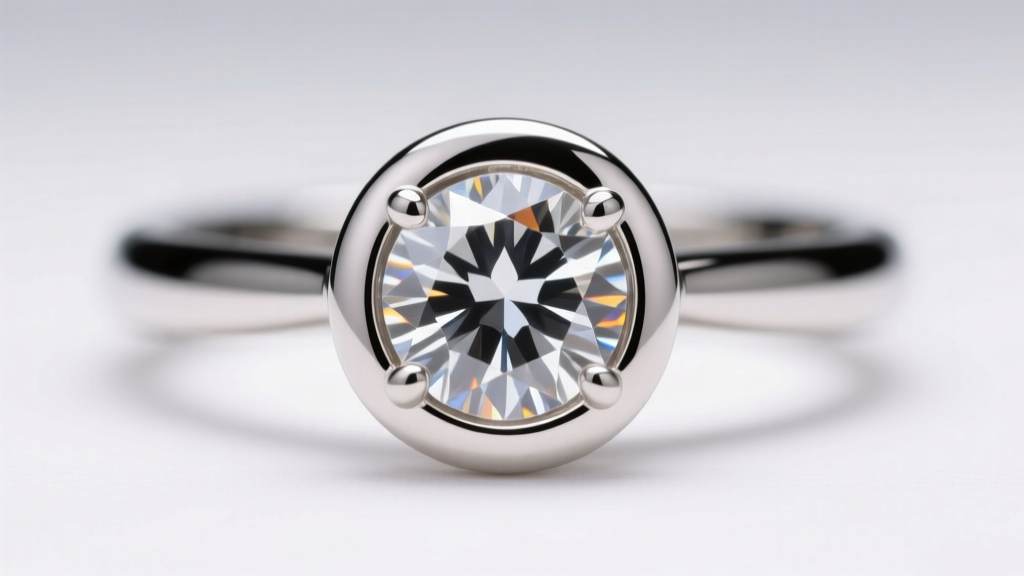
The debate between platinum and white gold for fine necklace settings centers on two distinct mechanical behaviors: malleability and memory. Platinum (typically cast as Pt950, meaning 95% platinum and 5% alloying metal like ruthenium or cobalt) is a dense, highly malleable metal. When a jeweler pushes a platinum prong over a diamond's girdle, the metal yields and stays exactly where it was placed. It possesses very low "spring-back." This makes it exceptional for securing stones, as the prong maintains constant, unyielding pressure against the gem.
However, platinum's malleability is a double-edged sword. Because it is relatively soft (averaging 120-135 HV), platinum prongs can easily catch on clothing and lift away from the stone. Unlike gold, which might snap under severe shear stress, platinum will bend. Furthermore, platinum develops a patina over time—a displacement of metal on the microscopic level that creates a matte finish. While it loses no actual mass, this displacement can cause bezel walls to thin if heavily polished over decades.
The White Gold Alternative
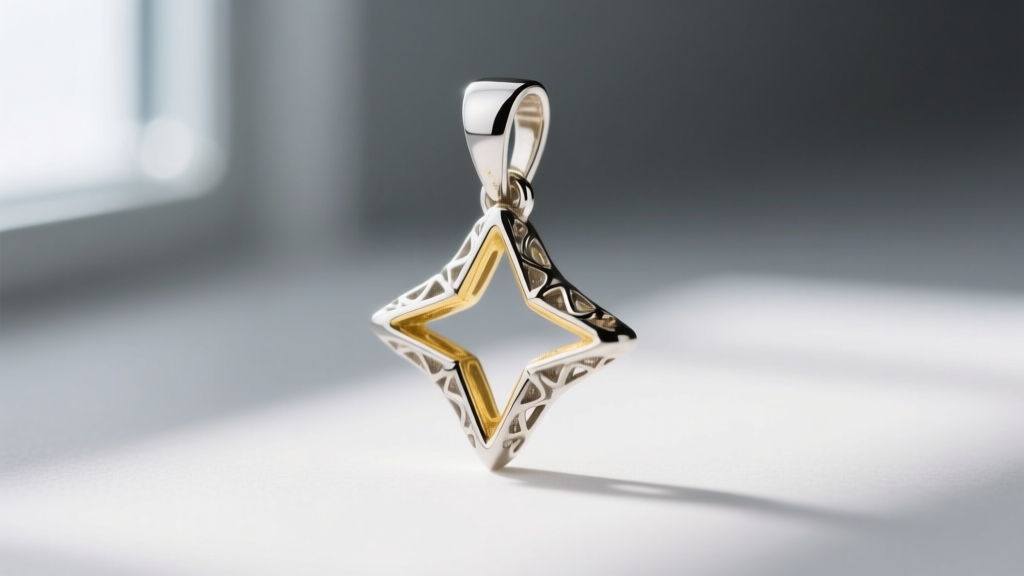
White gold (usually 14k or 18k alloyed with nickel, palladium, or manganese) behaves entirely differently. It is stiffer and possesses higher "memory" or spring-back. When a white gold prong is bent over a stone, it actively tries to spring back to its original shape, creating a tight, aggressive grip. Its Vickers hardness ranges from 140 to 160 HV, making it more resistant to everyday scratching and lifting than platinum.
The primary failure mode for white gold settings is work hardening. Repeated stress on a white gold prong (such as a pendant swinging and catching) alters its crystalline structure, making it brittle. Eventually, the prong will snap cleanly off, taking the stone with it. Additionally, white gold requires rhodium plating (typically 0.1 to 0.2 microns thick) to achieve a bright white color. As this plating wears off the high-friction areas of the setting, the underlying pale yellow alloy is exposed, requiring periodic re-plating to maintain aesthetic uniformity.
Karat Gold Alloys: 14k vs. 18k Structural Integrity
Gold purity drastically alters the mechanical limits of the necklace setting. Pure 24k gold is far too soft for any structural jewelry application, so it is alloyed with copper, silver, zinc, and sometimes palladium. The ratio of these alloys determines the setting's structural viability.
| Metal / Alloy | Purity | Vickers Hardness (HV) | Tensile Strength | Best Setting Application |
|---|---|---|---|---|
| 14k Yellow Gold | 58.5% Au | ~140 - 150 | High | Delicate prong settings, micro-pave |
| 18k Yellow Gold | 75.0% Au | ~120 - 130 | Moderate | Bezel settings, heavy channel settings |
| 14k Rose Gold | 58.5% Au (High Cu) | ~150 - 160 | Very High | High-stress tension settings, durable prongs |
| Platinum (Pt950/Ru) | 95.0% Pt | ~130 - 140 | Moderate | Heirloom bezels, secure heavy-stone prongs |
As noted by the Gemological Institute of America (GIA), 14k gold's higher alloy content (41.5% non-gold metals) provides superior tensile strength compared to 18k gold. For a necklace setting featuring intricate micro-pave or extremely thin, delicate prongs holding a 3-carat pendant, 14k gold is metallurgically superior. The copper and zinc alloys act as a structural scaffold, preventing the prongs from warping under the pendant's swinging momentum.
Conversely, 18k gold is highly prized for its rich color and hypoallergenic properties (as it contains less copper and nickel). Because it is softer, it is best reserved for bezel settings or channel settings, where a thicker, continuous wall of metal surrounds the stone. In a bezel, the sheer volume of the 18k gold compensates for its lower hardness, providing excellent protection for the gemstone's girdle without relying on the tension of thin prongs.
Alternative Metals in Modern Pendant Settings
The rise of alternative metals has introduced new possibilities—and severe limitations—to the necklace setting. Titanium (Grade 5, Ti-6Al-4V) and Tungsten Carbide are increasingly popular for men's pendant chains, but their use in the actual gemstone setting is highly restricted.
Titanium and Tungsten Realities
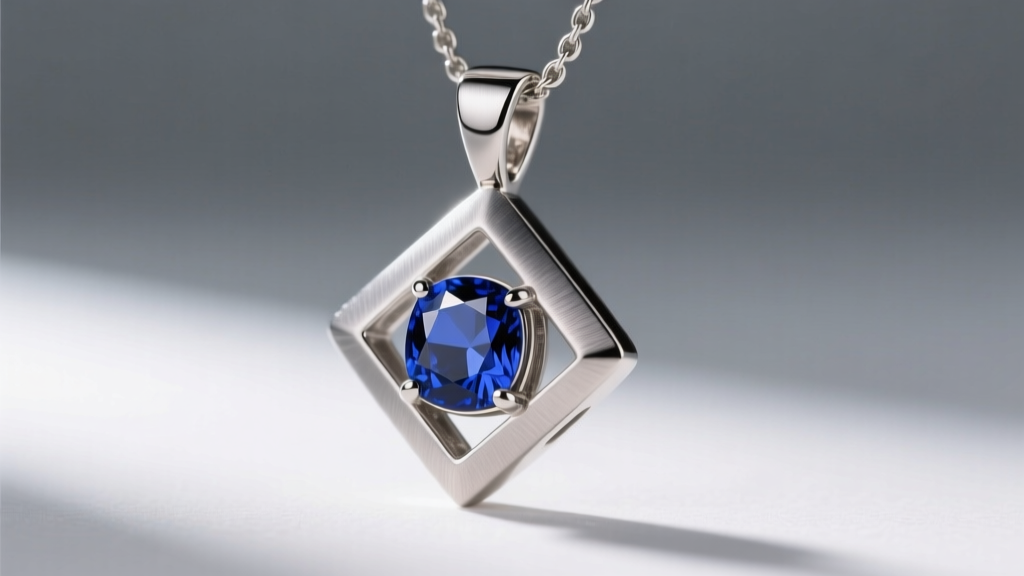
Titanium boasts an exceptional strength-to-weight ratio and is entirely hypoallergenic, making it ideal for the chain and the bail. However, its extreme hardness and lack of malleability make traditional prong setting nearly impossible without specialized hydraulic equipment. Most titanium necklace settings rely on bezel or tension designs, where the metal is machined via CNC to exact tolerances before the stone is pressed in. According to the Federal Trade Commission (FTC) Jewelry Guides, consumers must be aware that alternative metal settings generally cannot be resized or easily repaired by a traditional bench jeweler if the setting warps or the stone becomes loose.
Tungsten carbide is even more extreme. With a Mohs hardness of 8.5 to 9, it is virtually scratch-proof. However, it possesses zero ductility. If a tungsten bezel setting is subjected to a blunt impact (e.g., the pendant slamming against a granite countertop), it will not bend; it will shatter. Therefore, tungsten should only be used in necklace settings for soft, impact-resistant stones like cabochon onyx or jade, never for faceted diamonds or sapphires that require precise, shock-absorbing pressure.
Failure Modes: How Setting Metals Degrade
To truly master material selection, one must understand how necklace settings fail in the real world. Pendants are subjected to unique kinetic forces compared to rings or earrings; they swing, catch on necklines, and rest against the sternum, exposing them to sweat and friction.
- Galvanic Corrosion: If a pendant features a mixed-metal setting (e.g., a sterling silver bail soldered to a 14k gold bezel), the introduction of moisture and skin salts creates a galvanic cell. The less noble metal (silver) will rapidly corrode at the solder joint, leading to the bail snapping off the setting.
- Prong Fatigue (White Gold): As mentioned, the crystalline structure of nickel-alloyed white gold hardens over time with kinetic movement. A prong that has been retipped multiple times using a laser welder may become brittle at the heat-affected zone, leading to catastrophic failure.
- Bezel Warping (High-Karat Gold): 22k or high-alloy 18k gold bezels can slowly warp outward if the pendant is frequently slept in or pressed against hard surfaces. Unlike a ring, a pendant's setting is often subjected to blunt, broad-force impacts rather than focused abrasion.
Expert Decision Framework for Your Pendant
Choosing the right material for the necklace setting requires balancing the gemstone's hardness, the wearer's lifestyle, and the desired aesthetic. Use this framework to guide your purchase or custom commission:
The Golden Rule of Setting Selection: Match the metal's malleability to the stone's fragility. Brittle stones (like emeralds or opals) require the shock-absorbing, yielding nature of platinum or 18k gold bezels. Hard, durable stones (like diamonds or sapphires) can withstand the aggressive, high-tension grip of 14k white gold prongs.
For everyday wear pendants featuring brilliant-cut diamonds, a 14k white gold or platinum four-prong setting remains the industry standard for 2026. The 14k white gold offers superior stiffness to prevent prong lifting, provided the wearer commits to rhodium maintenance. For heirloom pieces, colored gemstones, or those who refuse to deal with re-plating, a Pt950 bezel setting offers unparalleled, multi-generational security, sacrificing a microscopic amount of light return for absolute structural peace of mind.
Ultimately, the necklace setting is an engineering marvel on a millimeter scale. By respecting the metallurgical properties of the chosen alloy, you ensure that the pendant remains not just a beautiful object, but a structurally sound legacy piece capable of surviving decades of daily wear.


