Necklace Sizes for Men: The Complete Length and Fit Guide
Discover the perfect necklace sizes for men. Learn how to choose the right chain length, thickness, and pendant drop for your neck and body type.

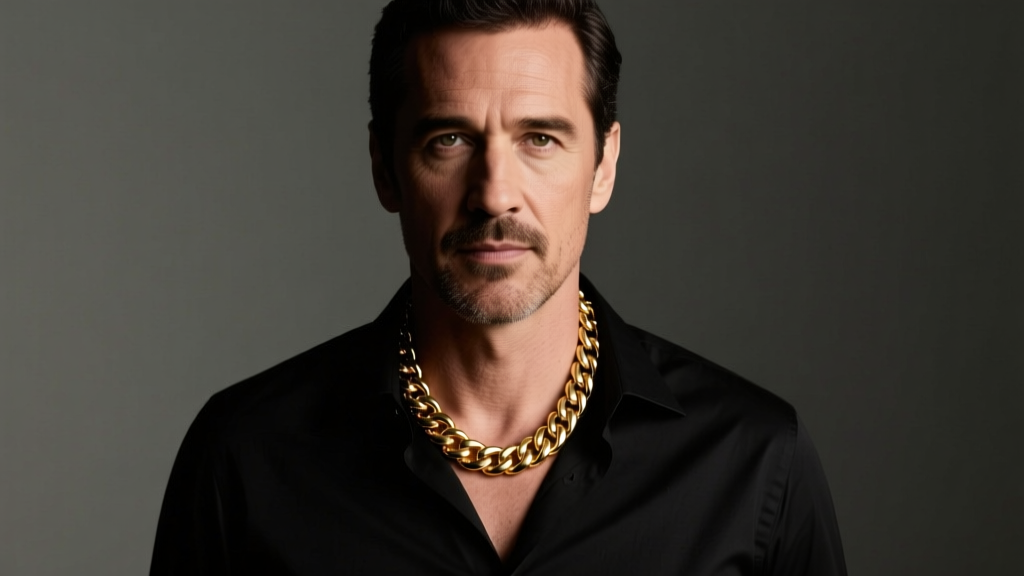
Buying a chain online without knowing your exact measurements is a gamble that usually ends in disappointment. You either end up with a choker that restricts your breathing or a belly chain that disappears under your t-shirt. Understanding the nuances of necklace sizes for men is not just about picking a number from a dropdown menu; it is about mastering proportions, understanding metal weights, and matching the jewelry to your unique anatomy.
Whether you are investing in a solid 14k gold Cuban link or a minimalist titanium rope chain, this beginner-friendly explainer will give you the exact frameworks, measurements, and material insights needed to make a flawless purchase.
The Standard Chain Lengths Explained
Men's chain lengths generally fall into four distinct categories. The right length depends entirely on where you want the chain to rest on your chest and whether you plan to wear it over or under your clothing. Below is the definitive breakdown of standard lengths and their visual impact.
| Length (Inches / cm) | Visual Drop | Best Use Case | Ideal Neck Size |
|---|---|---|---|
| 18" (45 cm) | Tight collar / Base of neck | Fashion-forward statements, thin chains (2-3mm) | Under 15" |
| 20" (50 cm) | Collarbone level | The versatile standard, worn under or over tees | 15" - 16.5" |
| 22" (55 cm) | Mid-chest / Upper sternum | Perfect for holding medium-to-large pendants | 16.5" - 18" |
| 24" to 30" (60-75 cm) | Lower chest / Solar plexus | Streetwear, layering, heavy statement pieces | 18" and above |
For most men, a 20-inch or 22-inch chain is the safest starting point. A 20-inch chain sits right at the collarbone, making it visible with unbuttoned shirts but easy to tuck away for formal settings. A 22-inch chain drops slightly lower, providing the necessary clearance so that a pendant rests flat against the sternum rather than catching on the collarbone.
Decoding Chain Thickness and Gauge
Length is only half the equation. The thickness (measured in millimeters) dictates the chain's weight, durability, and overall aesthetic. Many beginners confuse width with quality, but a thicker chain is not inherently better—it simply serves a different stylistic purpose.
- 2mm - 3mm (Subtle & Minimalist): Ideal for professional environments and holding lightweight pendants. These chains are delicate; a solid 14k gold 3mm chain will weigh roughly 10-15 grams.
- 4mm - 6mm (The Sweet Spot): The most versatile width for men. Thick enough to be noticed as a standalone piece, but refined enough to wear with a suit. A 5mm solid Cuban link weighs approximately 45-50 grams at 20 inches.
- 8mm - 12mm+ (Statement & Streetwear): Bold, heavy, and designed to be the focal point of an outfit. Warning: Anything over 8mm requires a heavy-duty box clasp with a safety latch, as standard lobster clasps will fail under the 80+ gram weight of a solid gold piece.
According to the Federal Trade Commission Jewelry Guides, always verify the hallmark stamp (like 14k, 18k, or 925) on the clasp or the first link near the clasp to ensure you are getting the precious metal purity you are paying for.
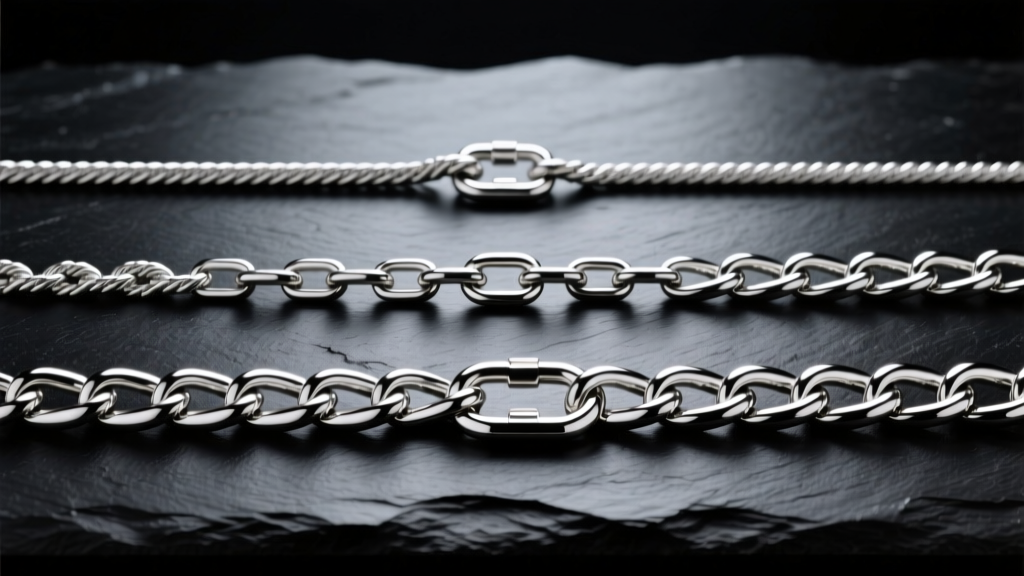
Matching Necklace Sizes to Body Type
Proportions matter. A 6mm chain on a man with a slender build and a 14-inch neck will look overwhelming, while a 2mm chain on a broad-shouldered athlete with an 18-inch neck will look like a piece of thread. Use this practical framework to match your chain to your physique:
The Neck Circumference Framework
Grab a soft fabric measuring tape and measure the circumference of your neck right where your collar naturally sits. Add two inches to this measurement to find your absolute minimum comfortable chain length.
- Slender Build (Neck < 15"): Stick to 18" to 20" lengths. Opt for widths between 2mm and 4mm. Rope and cable chains work beautifully here as they catch the light without adding visual bulk.
- Athletic / Average Build (Neck 15" - 17"): You have the most versatility. 20" to 22" lengths in 4mm to 6mm widths (like Figaro or Franco chains) will perfectly complement your frame.
- Heavy / Muscular Build (Neck > 17"): You need visual weight to balance your proportions. Look for 22" to 24" lengths and widths of 6mm to 10mm. Flat links like Cuban or curb chains lay flat against a broader chest and provide the necessary presence.
The Pendant Proportion Rule
If you are adding a pendant, the bail (the loop that attaches the pendant to the chain) must fit securely without forcing the links apart. A good rule of thumb is that the pendant's width should be roughly two to three times the width of the chain. If you have a 4mm chain, a pendant that is 8mm to 12mm wide will look balanced. A massive 30mm pendant on a 2mm chain will cause severe structural stress, eventually warping the links and snapping the chain.
Material Durability and Link Construction
When evaluating necklace sizes for men, you must also consider the material and how the links are constructed. The Gemological Institute of America (GIA) notes that pure 24k gold is far too soft for daily-wear chains, which is why 14k and 18k alloys are the industry standard for durability.
However, the alloy is only part of the story. The construction method dictates the lifespan of the jewelry:
- Solid Links: The gold or silver goes all the way through. These can be polished, soldered, and repaired if they break. They are heavy and expensive but last generations.
- Hollow Links: The metal is formed over a resin or wax core that is later removed. A hollow 10mm chain might weigh the same as a solid 3mm chain. While they offer a massive look for a fraction of the price, hollow chains dent easily upon impact and are virtually impossible to repair once crushed.
- Semi-Solid / Puffed: A middle ground that offers more durability than hollow chains but remains lighter than solid ones. Excellent for larger statement pieces where solid metal would be too heavy for the neck.
For daily wear, especially in active environments, consider Grade 5 Titanium. It is hypoallergenic, impervious to tarnish, and possesses a tensile strength that vastly outperforms sterling silver, making it an excellent choice for thinner chains that might otherwise snap under pressure.

How to Measure for the Perfect Fit at Home
Do not guess your size based on your t-shirt collar size. Follow this three-step method to guarantee the perfect fit before you checkout:
- Measure the Neck: Wrap a flexible tailor's tape measure around your neck at the base, exactly where a shirt collar would sit. Note the measurement in inches.
- Apply the Two-Finger Rule: Slide two fingers under the tape measure. This ensures you have enough breathing room and accounts for the natural swelling of the neck throughout the day or after a heavy meal.
- Simulate the Drop: Cut a piece of string to your desired chain length (e.g., 22 inches). Tie it in a loop, place it around your neck, and look in the mirror while wearing the types of shirts you normally wear. This visual test will immediately tell you if the chain will get lost in your chest hair, sit perfectly on the collarbone, or hang too low.
Pro Tip: If you are buying a chain with a heavy box clasp, remember that the clasp itself can add up to an inch of rigid length to the necklace. Factor this into your measurements, especially if you are aiming for a precise collarbone drop.
Mastering necklace sizes for men is ultimately about understanding your own proportions and respecting the physics of the metals you wear. By prioritizing precise measurements, choosing the right link construction, and balancing widths with your physique, you will build a jewelry collection that looks intentional, feels comfortable, and stands the test of time.


