The Ultimate Necklace Storage Case Guide: 2026 Trends
Discover 2026 trends for the perfect necklace storage case. Learn material science, anti-tarnish linings, and expert organization tips.

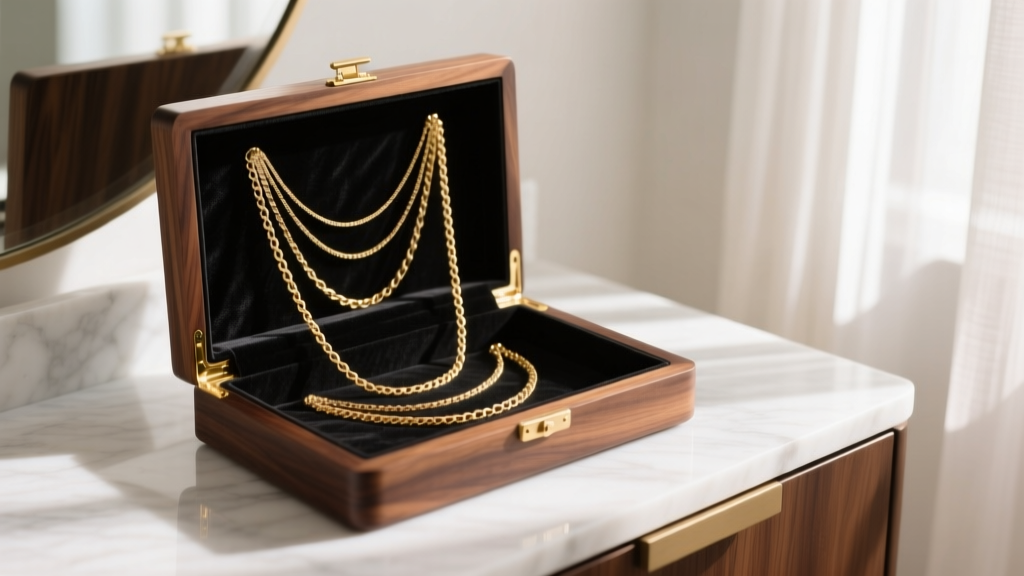
The modern jewelry collector knows that a necklace storage case is no longer just a utilitarian box shoved into a dark drawer. In 2026, jewelry organization has crossed over into the realm of interior design and material science. Whether you are safeguarding a delicate 1.2mm gold cable chain or a heavy 10mm oxidized silver Cuban link, the environment inside your storage case dictates the longevity, finish, and structural integrity of your pieces.
As vanity styling becomes a central pillar of bedroom and dressing room aesthetics, the market has responded with cases that merge museum-grade conservation techniques with high-end decor. But beneath the bouclé exteriors and fluted glass lids lies a complex web of material chemistry. Choosing the wrong interior lining or structural geometry can lead to accelerated tarnishing, clasp snagging, and irreversible chain stretching.
The Material Science of Tarnish Prevention
The most critical failure mode in budget jewelry storage is chemical off-gassing. Many mass-produced cases utilize Medium-Density Fiberboard (MDF) for the structural shell and cheap polyurethane foams for the interior padding. According to The Silver Institute, the volatile organic compounds (VOCs) and sulfur-based adhesives used in these materials actively accelerate the oxidation process. When silver or copper alloys are trapped in an airtight MDF box, the sulfur compounds react with the metal to form silver sulfide—the black tarnish layer that degrades intricate filigree and dulls high-polish finishes.
To combat this, luxury and mid-tier brands have pivoted to specialized, chemically inert linings. The gold standard in 2026 remains Pacific Silvercloth, a 100% cotton flannel embedded with microscopic silver particles that intercept and absorb corrosive gases before they reach your jewelry. For gold and platinum pieces, which do not tarnish but are highly susceptible to micro-scratching, acid-free microfiber and untreated micro-suede are the preferred materials. These fabrics feature a tight, low-loop weave that prevents the sharp edges of lobster clasps and spring rings from catching and pulling threads.
"Never store fine jewelry in cases lined with standard felt or dyed velvet. The acidic dyes and loose fiber loops will degrade soft gold alloys and permanently snag delicate pendant bails."
Structural Anatomy: Hook Spacing and Weight Distribution
A beautifully lined case is useless if the physical geometry causes mechanical damage. The most common design flaw in commercial necklace storage cases is inadequate hook spacing. When hooks are placed less than 3 inches apart, 16-to-18-inch chains will inevitably overlap and tangle at the pendant drop. This tangling doesn't just create a frustrating morning routine; it places uneven lateral stress on delicate solder rings, leading to chain snap.
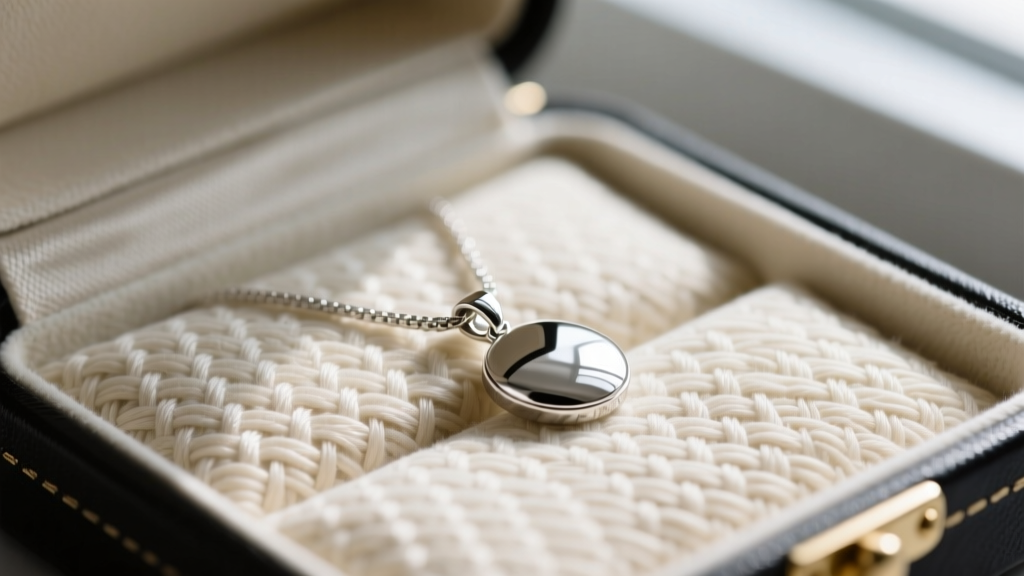
Furthermore, the weight of the necklace dictates the required hook hardware. Heavy sterling silver chains or gemstone-statement collars require reinforced solid brass hooks anchored into a hardwood backing. Plastic or thin aluminum hooks will warp over time under the continuous gravitational pull of a 150-gram chain.
Optimal Geometry Specifications by Chain Type
- Delicate Cable & Box Chains (1.0mm - 1.5mm): Require horizontal micro-suede slots or velvet rolls to prevent gravity-induced stretching. Hook hanging is discouraged for chains under 1.5 grams.
- Standard Pendant Chains (1.5mm - 3.0mm): Require vertical hanging with a minimum hook spacing of 3.5 inches to allow the pendant to hang freely without resting on adjacent chains.
- Heavy Links & Chokers (8.0mm+): Require wide, padded velvet trays or specialized broad-shouldered hooks to prevent the links from kinking or warping under their own weight.
2026 Aesthetic Trends: Storage as Decor
From a style perspective, the 2026 trend cycle has firmly rejected the traditional, bulky leatherette jewelry armoire. Today's collectors favor modularity, transparency, and tactile exterior textures that complement contemporary interior design. The fluted glass and brass aesthetic dominates the luxury market, offering a glimpse of the jewelry inside while diffusing harsh bedroom lighting. These cases often feature heavy, tempered glass lids with soft-close hydraulic hinges—a necessary engineering upgrade to prevent accidental slamming that can jolt gemstones loose from their prong settings.
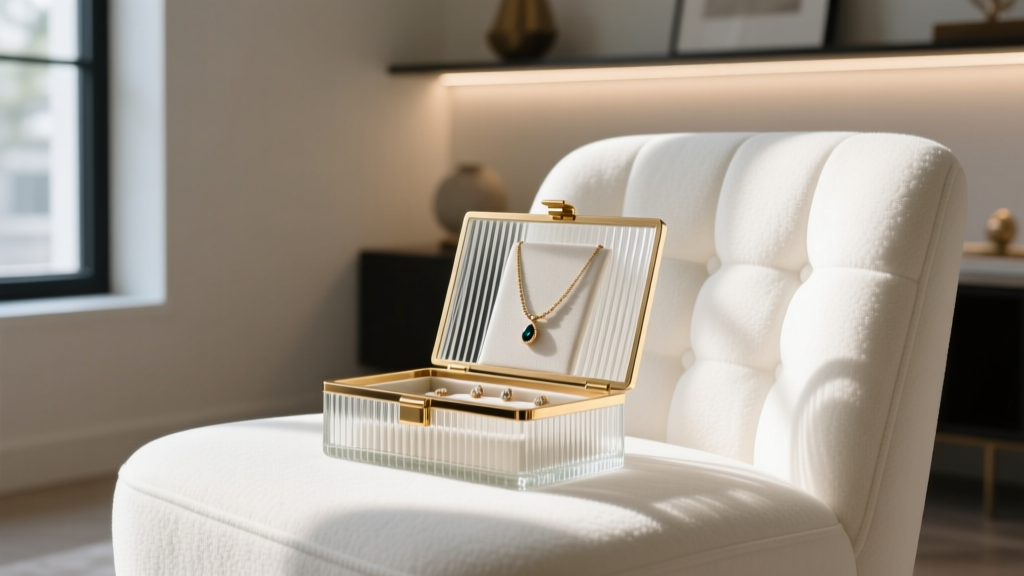
Another major trend is the rise of modular stacking systems. Brands like Stackers have popularized the use of vegan leather-wrapped, interlocking trays that allow collectors to customize their storage footprint. This modular approach is particularly popular for travel and small-space living, as users can detach a single necklace tray and slide it into a carry-on without needing to transport a massive, rigid case. Externally, bouclé fabrics, fluted walnut veneers, and matte-finished acrylics are replacing high-gloss mahogany, aligning jewelry storage with the softer, more organic textures prevalent in modern bedroom decor.
Investment Tiers & Brand Analysis
Navigating the market requires understanding what you are actually paying for at different price points. Below is a breakdown of the current landscape, highlighting the material realities of each tier.
| Tier | Price Range | Typical Materials & Hardware | Notable Brands | Best For |
|---|---|---|---|---|
| Budget | $30 - $75 | MDF shell, polyester velvet lining, plastic hooks. High risk of off-gassing. | Songmics, Misslo | Fashion jewelry, silver-plated pieces, short-term storage. |
| Mid-Tier | $100 - $250 | Engineered wood with real veneer, acid-free microfiber, metal hooks, modular stacking. | Stackers, Mele & Co. | Everyday solid gold/sterling silver, modular vanity organization. |
| Luxury | $300 - $800+ | Solid hardwood, Pacific Silvercloth, brass hardware, hydraulic glass lids, hand-stitched leather. | Wolf, Smythson, Linley | High jewelry, investment pieces, heirloom conservation, vanity display. |
When investing in the mid-to-luxury tiers, you are primarily paying for the absence of harmful chemicals and the precision of the hardware. A $500 Wolf case, for instance, utilizes specialized, non-reactive adhesives and undergoes rigorous off-gassing testing to ensure the interior micro-climate remains chemically neutral for decades.
Expert Maintenance Protocols for Long-Term Storage
Even the finest necklace storage case requires active maintenance to function optimally. The Victoria and Albert Museum's conservation guidelines emphasize that environmental control is just as vital as the physical storage materials. To maintain a pristine micro-climate inside your case, implement the following protocols:
- Integrate Anti-Tarnish Strips: Even if your case features treated lining, place 3M anti-tarnish strips in the corners of the case. These strips absorb ambient sulfur and should be replaced every six months.
- Control Humidity Silently: Moisture is the catalyst for oxidation. Include a few packets of indicating silica gel (the kind that changes color when saturated) in the storage compartments. Avoid standard desiccant packets from shoe boxes, as they can leak dust.
- The 24-Hour Rule: Never place a necklace directly into a closed case immediately after wearing it. Body oils, sweat, and cosmetics contain salts and acids that will degrade the metal and soil the lining. Wipe chains with a clean, dry microfiber cloth and let them air out on a vanity tray for a few hours before sealing them in the case.
Ultimately, a premium necklace storage case is an investment in the lifespan of your collection. By prioritizing chemically inert linings, mathematically sound hook spacing, and structural integrity over superficial aesthetics, you ensure that your necklaces remain as brilliant and tangle-free as the day you acquired them.


