How to Choose a Necklace to Wear With a Strapless Wedding Dress
Discover the perfect necklace to wear with a strapless wedding dress. Learn about lengths, metals, and neckline pairings for your big day.

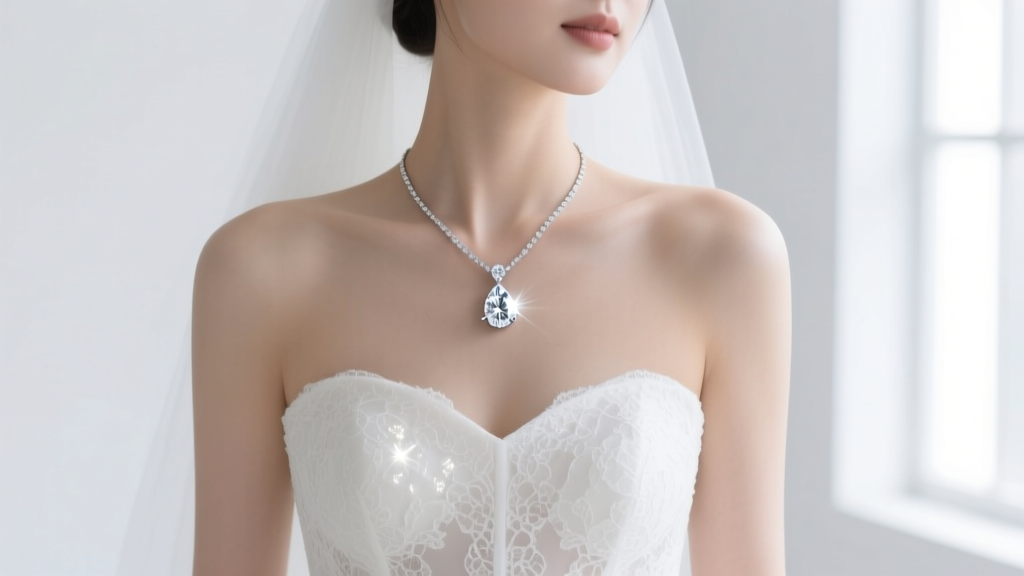
Styling a bare neckline is one of the most common dilemmas for modern brides. When you choose a strapless gown, your collarbones, chest, and neck become the primary canvas for your bridal jewelry. Finding the perfect necklace to wear with a strapless wedding dress requires balancing proportion, metal undertones, and the structural density of your bodice. As we navigate bridal trends in 2026, the industry has shifted away from heavy, restrictive parures toward modular, lightweight fine jewelry that enhances rather than overwhelms the bride.
This beginner-friendly explainer will break down the exact mechanics of pairing necklaces with strapless silhouettes, complete with material grades, clasp engineering, and photographic considerations.
The Anatomy of a Strapless Neckline
Not all strapless dresses are created equal. The shape of the top hem dictates the geometry of the necklace you should select. According to styling experts at The Knot, matching the necklace shape to the dress shape creates visual harmony.
- Sweetheart Neckline: Features a dip in the center and rises at the sides. This creates a natural 'V' shape. The ideal necklace to wear with a strapless wedding dress of this cut is a 'Y-drop' or a delicate pendant that mimics the central dip, drawing the eye downward without fighting the curves of the bodice.
- Straight-Across (Bandeau): A horizontal line that cuts straight across the chest. This geometric, modern cut pairs beautifully with collar necklaces, chokers, or horizontal station necklaces that echo the linear architecture of the dress.
- Scoop or U-Shape: A softer, rounded dip. A classic 18-inch princess-length necklace with a rounded centerpiece or a curved pavé diamond arc complements this gentle slope perfectly.
Ideal Necklace Lengths for Strapless Gowns
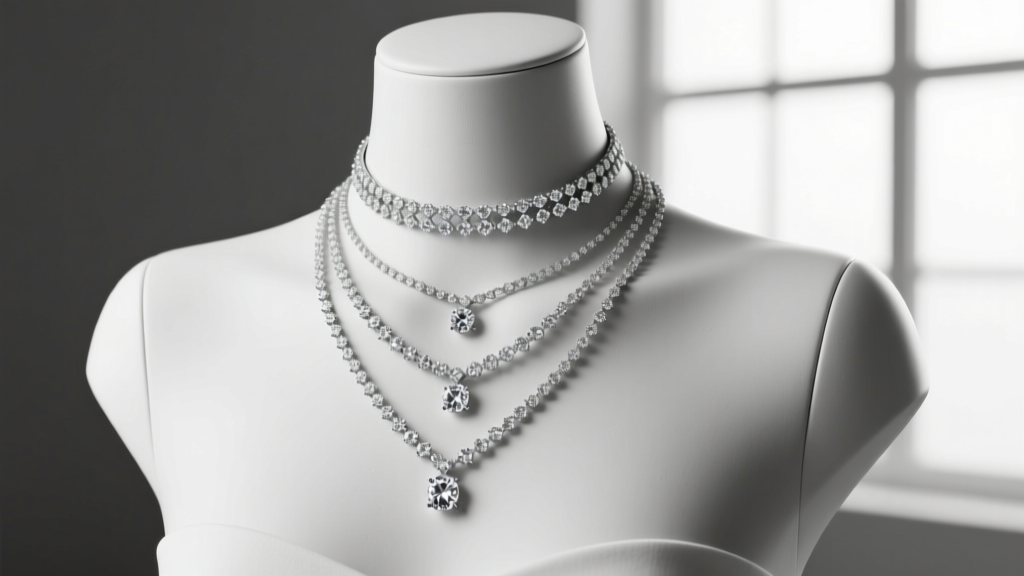
Length is the most critical variable when styling a bare chest. A necklace that sits too high can make the neck look cramped, while one that drops too low can tangle with the bodice detailing. Below is a structural guide to standard bridal lengths.
| Length Category | Measurement | Visual Drop | Best Strapless Pairing |
|---|---|---|---|
| Collar | 12 - 13 inches | Wraps tightly above collarbone | Straight-across bandeau, modern minimalist silk |
| Choker | 14 - 16 inches | Rests at the base of the neck | Universally flattering; great for sweetheart cuts |
| Princess | 17 - 19 inches | Falls on the collarbone | Classic solitaire pendants, Y-drops for sweetheart |
| Matinee | 20 - 24 inches | Drops to the upper chest/cleavage | High-neck strapless or deep-V strapless; avoid if bodice is heavily beaded |
Material & Metal Matching: Beyond Basic Gold
Choosing the right metal is not just about personal preference; it is about interacting with the specific undertone of your wedding dress and the realities of a 12-hour wear day. The Gemological Institute of America (GIA) notes that platinum's natural white luster and density make it a premier choice for bridal jewelry, but understanding the nuances of metal alloys is crucial for beginners.
Dress Undertones vs. Metal Alloys
Wedding dresses are rarely 'pure' white. They possess distinct undertones that will clash if paired with the wrong metal.
- Stark White / Diamond White: These dresses have cool, blue-ish undertones. Pair them exclusively with Platinum, 18k White Gold, or Rhodium-plated Sterling Silver. Yellow gold will look brassy against stark white fabric.
- Ivory / Champagne: These warmer, cream-toned fabrics demand 14k or 18k Yellow Gold, or Rose Gold. White metals can make ivory fabric look dingy or yellowed by contrast.
The Engineering of Bridal Clasps
A frequently overlooked detail by beginners is the clasp mechanism. A standard spring-ring clasp is notoriously difficult to fasten on yourself and is prone to snapping under the tension of a heavier pendant. For a stress-free wedding day, insist on a lobster claw clasp for chains under 20 grams, or a neodymium magnetic clasp for heavier statement pieces. Magnetic clasps offer secure, high-tensile strength while allowing the bride to fasten the necklace independently in the bridal suite.
Common Beginner Mistakes to Avoid
When selecting a necklace to wear with a strapless wedding dress, the desire to maximize the 'bridal sparkle' often leads to critical styling errors. Here is what to avoid:
1. Bodice Competition (The Beading Rule)
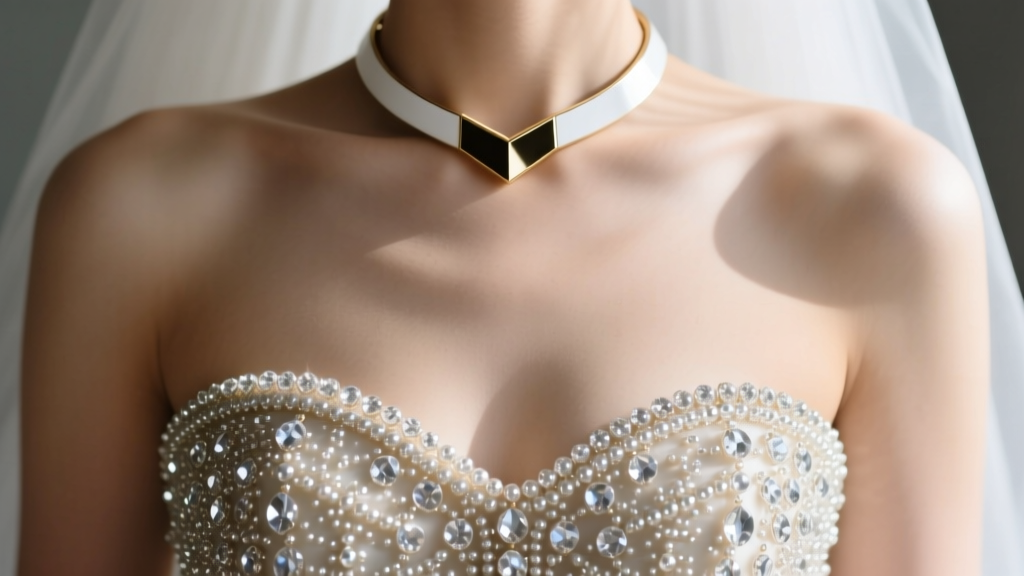
If your strapless bodice features heavy Alençon lace, 3D floral appliques, or dense crystal beading, adding a necklace creates visual clutter. The eye will not know where to rest. The Rule: If the top third of your dress is heavily textured, skip the necklace entirely and opt for statement drop earrings. If the bodice is smooth Mikado silk or crepe, a necklace is highly encouraged.
2. Ignoring the Veil and Hair Updo
A 20-inch matinee necklace might look perfect in the dressing room, but once a cathedral veil is pinned and hair is swept into a low chignon, the necklace can become tangled in the tulle or hairpins. Always do a full dress rehearsal with your necklace, veil, and final hairstyle to ensure the chain does not catch on the veil's comb.
3. Flash Photography Glare
Highly polished bezel settings or large, flat table-cut diamonds can create intense, blown-out glare under professional flash photography. To ensure your necklace photographs beautifully, opt for pavé settings, milgrain edges, or prong settings. These micro-textures diffuse light and capture the camera's flash more elegantly than solid sheets of polished metal.
Step-by-Step Selection Framework
Use this actionable checklist when shopping for your bridal necklace:
- Identify your dress undertone: Hold a piece of stark white paper next to your dress in natural light to determine if it is cool (white) or warm (ivory).
- Map the bodice density: Is it smooth (proceed to step 3) or heavily beaded (abort necklace, choose earrings)?
- Trace the neckline geometry: Sweetheart = Y-drop/Pendant; Straight = Choker/Collar; Scoop = Princess arc.
- Select the metal and verify the clasp: Match the metal to the undertone and ensure it features a lobster or magnetic clasp for day-long security.
- Consider the weight: Platinum is roughly 60% denser than 18k gold. A substantial platinum chain will lay flat against the chest and resist flipping, whereas a lightweight, hollow gold chain may require constant adjustment while dancing.
By treating your jewelry selection with the same architectural precision as your gown fitting, you ensure that the necklace you wear enhances your natural silhouette, photographs flawlessly, and remains comfortable from the first look to the final dance.


