Choosing a Necklace That Opens: Material & Hinge Guide
Discover how to choose a necklace that opens. Compare metals, hinge mechanics, and material grades for durable lockets and keepsake pendants.


When searching for a necklace that opens, most buyers focus entirely on the exterior aesthetics or the sentimental value of the hidden compartment. However, from a metallurgical and jewelry engineering perspective, a locket, urn, or puzzle pendant is a complex mechanical device. The continuous stress of opening and closing introduces friction, shear forces, and material fatigue that solid pendants never experience.
Whether you are investing in a vintage heirloom locket, a modern threaded cremation urn, or a mechanical puzzle box pendant, understanding the material properties and hinge mechanics is critical. This guide breaks down the metallurgy of moving jewelry parts, helping you select a piece that will survive decades of daily use without mechanical failure.
The Anatomy of a Necklace That Opens
Before comparing metals, it is essential to understand the structural components that allow a necklace pendant to open and close securely. According to jewelry manufacturing standards outlined by the Rio Grande jewelry supply guild, moving pendants rely on three primary mechanical systems:
- Barrel Hinges: The most common mechanism in traditional lockets. It consists of interlocking knuckles (tubes) soldered to both halves of the pendant, secured by a central hinge pin.
- Threaded Sleeves: Standard in modern urn and keepsake pendants. The inner compartment screws into the outer shell, relying on precise thread pitching and O-ring gaskets for a watertight seal.
- Friction Fits and Magnets: Used in contemporary puzzle pendants and minimalist lockets, relying on precisely milled grooves or embedded neodymium magnets to snap the pieces together.
Material Comparison: Which Metal Survives Daily Opening?
The Vickers Hardness (HV) of a metal dictates how well it will resist the abrasive wear of a hinge pin or threaded groove. Soft metals will eventually strip, warp, or suffer from pin shear. Below is a comparative analysis of the most common metals used in opening necklaces.
| Material Grade | Vickers Hardness (HV) | Hinge Durability | Thread Wear Resistance | Average Price Range |
|---|---|---|---|---|
| 925 Sterling Silver | 60 - 75 HV | Poor (Prone to knuckle warping) | Poor (Threads strip easily) | $40 - $150 |
| Argentium Silver (935) | 85 - 95 HV | Fair (Better spring-back) | Fair | $80 - $250 |
| 14k Yellow/White Gold | 130 - 150 HV | Excellent (Industry standard) | Good | $300 - $1,200+ |
| 18k Yellow Gold | 110 - 125 HV | Good (Softer than 14k) | Fair | $600 - $2,500+ |
| 316L Stainless Steel | 150 - 190 HV | Excellent (Nearly indestructible) | Excellent | $25 - $90 |
| Grade 5 Titanium (Ti-6Al-4V) | 330 - 350 HV | Superior (Aerospace grade) | Superior | $120 - $400 |
The Problem with Sterling Silver Hinges
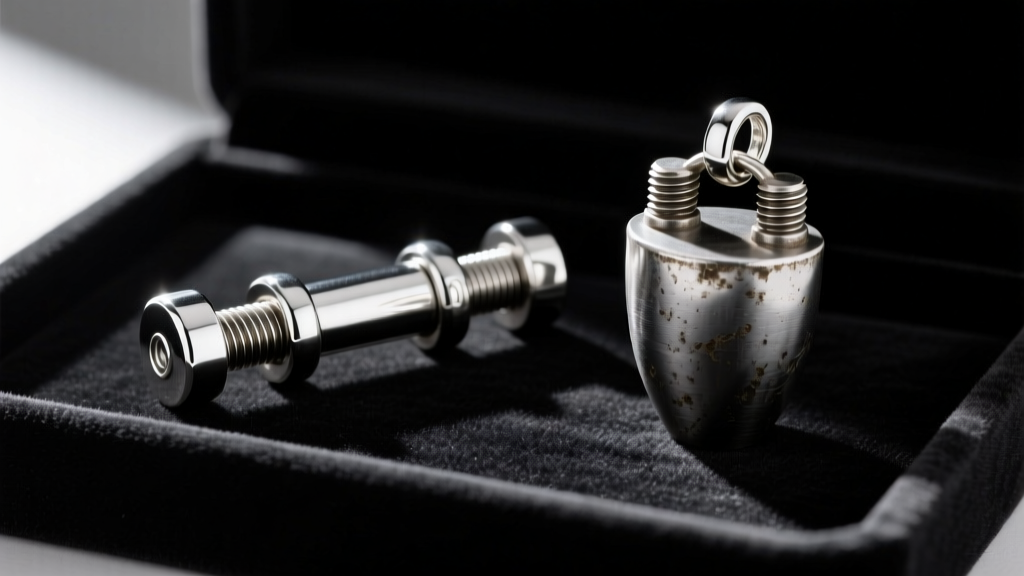
While 925 Sterling Silver is the darling of the jewelry industry, it is fundamentally too soft for high-friction moving parts. The copper alloy in sterling silver provides some hardness, but repeated opening and closing causes work hardening. Over time, the silver knuckles become brittle and crack, or the hinge pin slowly wears away the interior of the tube, resulting in a locket that no longer stays closed. If you must buy a silver necklace that opens, look for heavy-cast hinges rather than stamped sheet metal, and ensure the hinge pin is made of steel or nickel silver for added shear strength.
Gold Alloys: Why 14k Outperforms 18k for Moving Parts
Counterintuitively, 14k gold is mechanically superior to 18k gold for lockets and puzzle pendants. Because 14k gold contains a higher percentage of alloying metals (like copper, zinc, and nickel), it achieves a higher Vickers Hardness. This makes the hinge knuckles highly resistant to deformation. The Gemological Institute of America (GIA) frequently notes that while 18k gold is prized for its rich color and hypoallergenic properties in static rings, 14k gold remains the benchmark for structural integrity in complex jewelry mechanisms.
Titanium and Stainless Steel: The Modern Workhorses
For threaded urn pendants and mechanical puzzle boxes, 316L surgical stainless steel and Grade 5 Titanium are unmatched. Titanium, specifically the Ti-6Al-4V alloy, offers an incredible strength-to-weight ratio and is completely immune to galvanic corrosion. If you are purchasing a keepsake necklace meant to hold ashes or hair, titanium's threaded sleeves will never strip, cross-thread, or react with the organic materials inside.
Hinge and Clasp Mechanics: Where Necklaces Fail
Even the finest metals will fail if the mechanical engineering is flawed. When evaluating a necklace that opens, inspect the following failure points:
- Pin Shear and Galvanic Corrosion: If a gold locket uses a cheap steel hinge pin, moisture trapped inside the hinge tube will cause the steel to rust. This rust expands, cracking the gold knuckles. Always verify that the hinge pin matches the karat of the pendant or is made of an inert metal like titanium.
- Solder Joint Fatigue: The hinge knuckles are soldered to the thin walls of the locket. If the jeweler used a low-temperature "easy" solder, the heat from daily friction and minor drops can cause the solder joint to fracture. High-quality lockets use laser welding or hard-grade solders to fuse the hinge to the body.
- Catch and Snap Tension: The closure mechanism (the "catch") relies on a tiny spring or a friction-fit lip. In cheap stampings, this lip wears down within months. Look for lockets with a separate, soldered catch box rather than a lip stamped directly from the locket's backplate.
Specialty Opening Mechanisms Beyond the Standard Locket
The definition of a necklace that opens extends far beyond traditional heart-shaped lockets. Modern jewelry designers are utilizing advanced engineering to create secure, hidden compartments.
Threaded Urn Pendants and O-Ring Seals
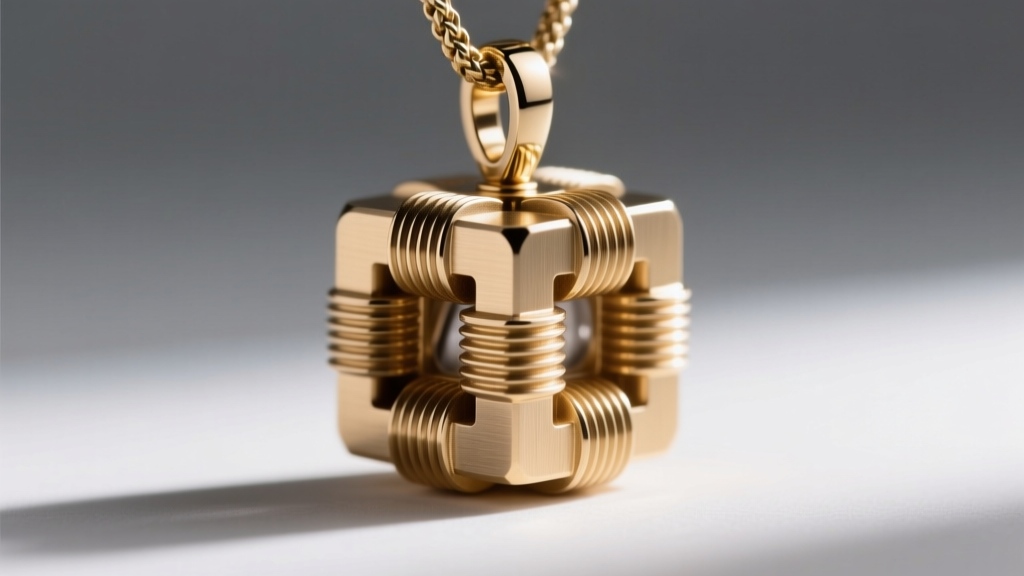
Cremation and memorial jewelry frequently utilizes threaded compartments. The highest quality versions feature an internal Nitrile or EPDM O-ring gasket. This gasket compresses when the cap is tightened, creating a watertight and airtight seal that protects the contents from moisture and skin oils. Pro-Tip: If your threaded pendant feels loose or the cap won't stay tight, wrap the male threads with a single layer of PTFE (plumber's) tape. This provides temporary friction without requiring permanent adhesives.
Magnetic Closures and Neodymium Integration
Minimalist puzzle pendants often eschew hinges entirely, relying on embedded magnets to snap the two halves together. The industry standard for these pieces is the N52 grade neodymium magnet. N52 magnets provide the highest pull force available in commercial jewelry, ensuring the pendant won't pop open if it catches on a sweater. However, buyers should be aware that neodymium magnets can lose their magnetization if exposed to high heat (above 80°C / 176°F), meaning these necklaces should never be cleaned in ultrasonic cleaners with heated solutions.
Maintenance and Lubrication for Moving Jewelry Parts
A necklace that opens requires a maintenance routine that static jewelry does not. Dirt, dead skin cells, and cosmetic powders easily become trapped inside hinge barrels and threaded grooves, acting as an abrasive paste that accelerates metal wear.
Jeweler's Maintenance Rule: Never use oil-based lubricants (like WD-40 or sewing machine oil) on jewelry hinges. These oils attract dust and turn into a grinding sludge. Instead, use a microscopic drop of dry PTFE (Teflon) lubricant, or simply clean the hinge monthly with a soft brush and isopropyl alcohol to remove debris.
Furthermore, always open a locket by gripping the edges of the metal, not by prying it open with your fingernails. Prying introduces lateral torque that bends the hinge pin and misaligns the catch mechanism. By respecting the material limits and mechanical design of your jewelry, your opening necklace will remain a functional, secure vault for your most precious memories for generations to come.


