Expert Guide: Styling a Necklace with Crew Neck Dress Silhouettes
Master the geometry of styling a necklace with crew neck dress silhouettes. Explore exact chain gauges, length zones, and fabric friction data.

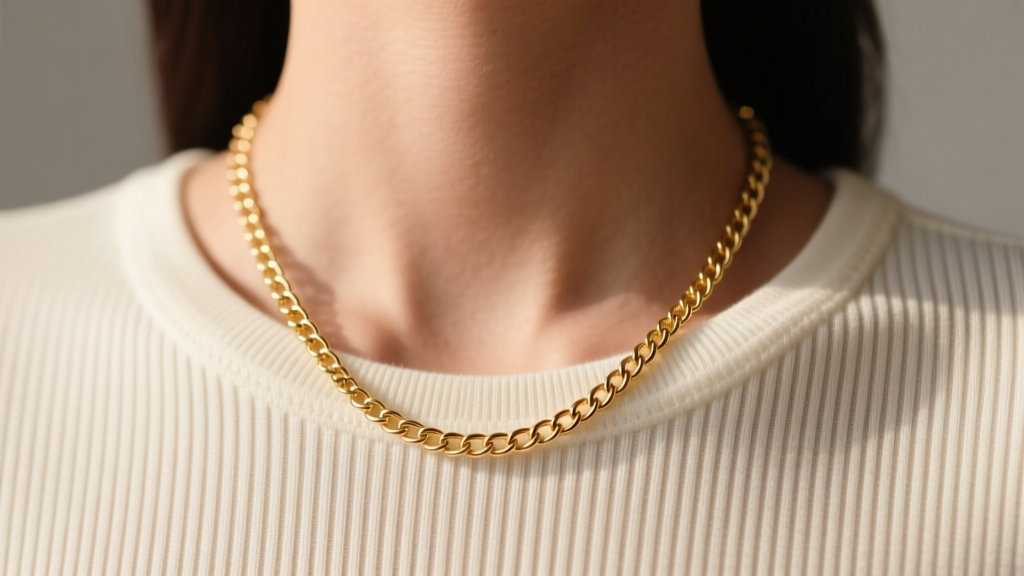
The crew neck, historically referred to as the jewel neckline, is a staple of modern wardrobes. Sitting high and rounded at the base of the neck, it offers a clean, modest canvas. However, this very structure makes it notoriously difficult to accessorize. Choosing the right necklace with crew neck dress silhouettes requires an understanding of spatial geometry, fabric drape, and metal friction. A chain that is merely half an inch too short or too long will clash with the garment's hem, creating visual clutter and physical discomfort.
In this technical deep dive, we deconstruct the exact measurements, chain gauges, and material sciences required to flawlessly pair necklaces with high, rounded necklines. Whether you are working with fine silk blends or heavy merino knits, precision is your most valuable tool.
The Geometry of the Crew Neckline: Why Most Necklaces Fail
To understand how to style this neckline, we must first map its topography. A standard women's crew neck hem typically rests between 14.5 and 15.5 inches from the nape of the neck, intersecting the clavicle. This creates a strict horizontal boundary. When a necklace drops into the 'Danger Zone'—measuring between 15.5 and 17 inches—it lands directly on top of the fabric hem.
This overlap results in two distinct failures:
- Visual Tangling: The eye cannot easily distinguish where the garment ends and the jewelry begins, resulting in a messy, unstructured appearance.
- Physical Friction: The chain links become trapped in the weave of the fabric, particularly with knits, leading to pulled threads and accelerated metal wear.
To avoid this, expert styling dictates that you must either sit distinctly above the hemline or drop decisively below it. There is no middle ground when styling a necklace with crew neck dress hems.
Precision Length Guide: The 3 Safe Zones
When selecting a chain, discard standard industry generalizations and rely on exact drop measurements. The following framework categorizes the three viable safe zones for high necklines, mapping specific chain styles to their optimal fabric pairings.
| Length Zone | Measurement | Ideal Chain Profile | Optimal Fabric Pairing |
|---|---|---|---|
| The Collarbone Choker | 14' - 15' | 2.5mm Snake or Herringbone | Silk, Chiffon, Fine Cotton |
| The Princess Drop | 18' - 19' | 1.5mm Box or Cable Chain | Ribbed Knit, Jersey, Wool |
| The Matinee Plunge | 22' - 24' | 3.0mm Rope or Curb Chain | Heavy Winter Knits, Tweed |
The Princess Drop (18-19 inches) is universally the most successful choice for everyday crew neck dresses. It clears the hemline by a minimum of 2.5 inches, resting on the upper sternum. This provides enough negative space to frame the face without competing with the garment's structural lines.
Chain Gauge and Pendant Bail Engineering
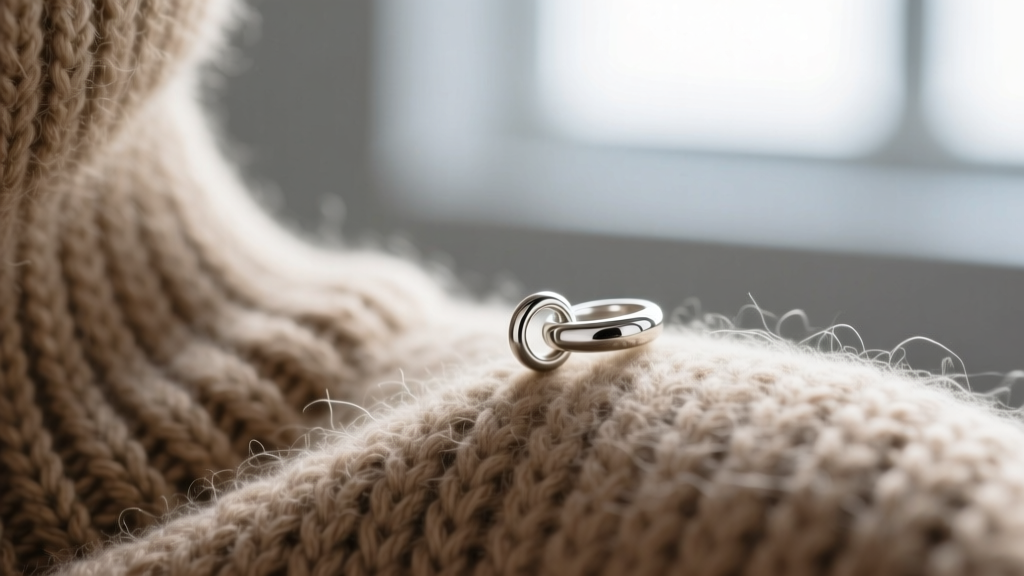
Length is only half the equation; the physical thickness (gauge) of the chain and the engineering of the pendant bail dictate how the piece behaves over fabric. Thin, delicate chains (under 1.0mm) are virtually invisible against the textured backdrop of a knit crew neck dress and are highly prone to snapping when caught in the fabric weave.
The 1.5mm to 3.0mm Sweet Spot
For cotton and light wool crew necks, a chain gauge between 1.5mm and 2.0mm provides the necessary visual weight to stand out against the matte texture of the fabric. For heavier winter knits, you must scale up to a 2.5mm or 3.0mm gauge. A 3.0mm curb or rope chain possesses the structural rigidity to drape smoothly over thick fabrics without bending or kinking.
Pendant Bail Clearance
If you are adding a pendant to your chain, the bail (the loop that connects the pendant to the chain) must be engineered for fabric clearance. Standard jewelry bails measure 3mm to 4mm in inner diameter. When worn over a thick crew neck knit, the fabric bunches up inside a standard bail, forcing the pendant to sit at an awkward angle or flip backward.
The Technical Fix: Always select pendants with oversized bails (minimum 6mm inner diameter) or opt for 'slide' pendants where the chain threads directly through a wide horizontal tube. This allows the chain and pendant to glide independently over the uneven topography of the dress hem.
Material Friction and Fabric Wear
The interaction between metal alloys and textile fibers is a critical, often overlooked variable. High necklines generate constant friction against the collarbone and nape, acting as a low-grade abrasive on your jewelry.
According to gemological and metallurgical standards outlined by the Gemological Institute of America (GIA), gold alloys possess varying levels of hardness and wear resistance. This directly impacts how they survive against different dress materials:
- Gold Vermeil & Plated Brass: The micron-thin gold layer will rapidly degrade when subjected to the friction of textured cotton or wool crew necks. Reserve these pieces exclusively for smooth silk or synthetic blend dresses where friction is minimal.
- Solid 14k Gold: Composed of 58.5% pure gold mixed with durable alloys like copper and zinc, 14k gold offers the optimal hardness to resist micro-abrasions from daily wear against ribbed cotton and light knits.
- Sterling Silver: While durable, silver is prone to tarnishing when exposed to the dyes and moisture-wicking properties of dark cotton crew neck dresses. Ensure your silver pieces are rhodium-plated to create an inert barrier against fabric dyes.
For comprehensive maintenance protocols regarding metal-to-fabric friction, authoritative guidelines from institutions like Tiffany & Co. Jewelry Care emphasize the importance of regular ultrasonic cleaning to remove embedded textile lint and fabric dyes from chain links, which can otherwise act as a grinding paste against the metal.
Advanced Layering Frameworks for High Necklines
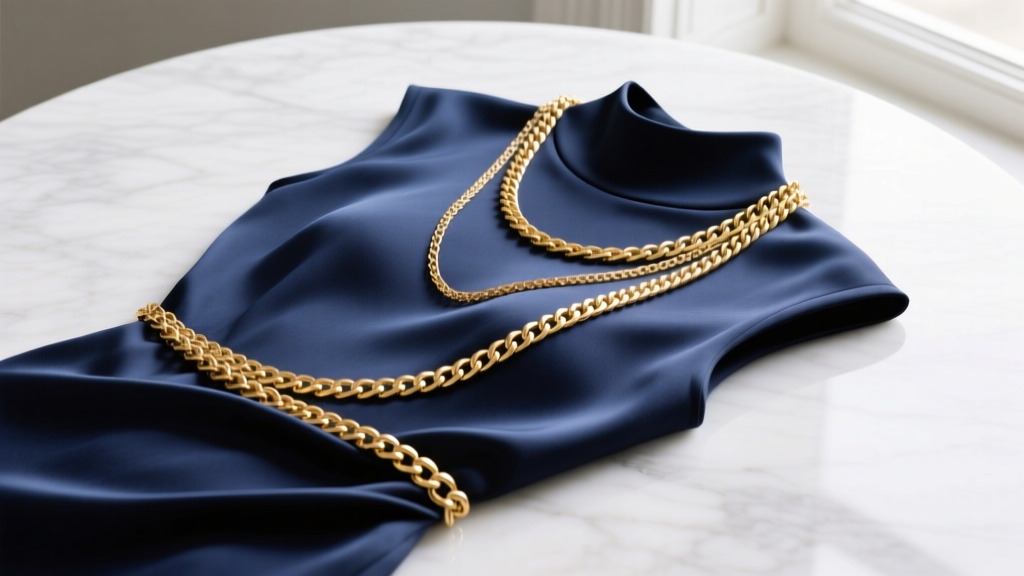
Layering over a crew neck dress is an advanced styling technique that requires strict spatial management. If you attempt to layer a 16-inch and an 18-inch chain without mechanical intervention, the friction of the crew neck hem will force the chains to twist and knot within minutes.
To execute a flawless layered look, implement the following structural frameworks:
- The 2-Inch Drop Rule: Never layer chains that are less than 2 inches apart in length when wearing a high neckline. A 15-inch choker paired with a 17-inch chain will tangle. Instead, pair a 15-inch snake chain with an 18-inch box chain to ensure distinct visual tiers.
- Use a Multi-Strand Clasp: For a permanent layering solution, utilize a 2-strand or 3-strand magnetic spacer clasp at the nape of the neck. This locks the chains into parallel alignment, preventing them from crossing over each other as they drape over the curved surface of the crew neck dress.
- Weight Distribution: The longest chain in your layered stack must carry the heaviest pendant. This acts as an anchor, utilizing gravity to keep the lower chain taut and preventing it from riding up and tangling with the shorter, lighter chains above it.
Final Calibration
Mastering the art of wearing a necklace with crew neck dress styles is not about guesswork; it is an exercise in precise measurement and material science. By respecting the 15.5 to 17-inch danger zone, scaling your chain gauge to match the weight of your textile, and engineering your pendant bails for fabric clearance, you elevate a basic garment into a masterclass of structural styling. Always prioritize solid metals over plating when dealing with high-friction knits, and rely on mechanical spacer clasps when attempting complex layers.


