How to Wear a Necklace Without Clasp: Endless & Lariat Guide
Learn how to choose, wear, and care for a necklace without clasp. Discover endless chains, lariat styles, gauge sizes, and material durability tips.

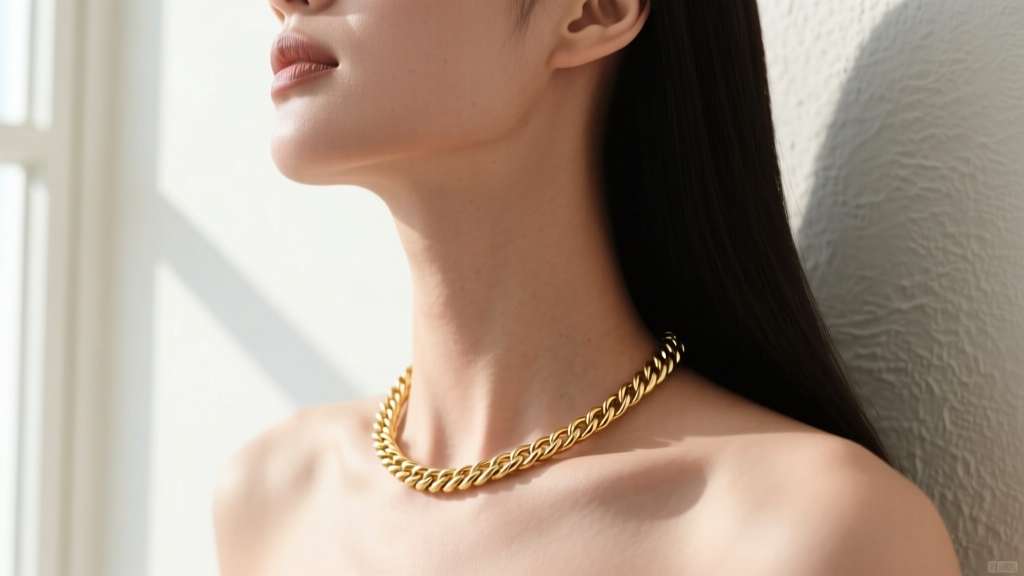
For many jewelry lovers, the tiny lobster claw clasp is a source of daily frustration. Fumbling with minuscule jump rings, dealing with broken spring mechanisms, or scratching the back of your neck are common annoyances. Enter the necklace without clasp—a sleek, uninterrupted alternative that prioritizes both elegance and ease of use. Whether you are looking at continuous endless chains, dramatic lariat drops, or slip-on designs, clasp-free necklaces offer a seamless aesthetic that traditional clasped chains simply cannot match.
However, wearing and maintaining a necklace without clasp requires a different approach to sizing, material selection, and daily care. In this comprehensive beginner-friendly guide, we will break down the mechanics of clasp-free jewelry, explore the best chain weaves for durability, and provide actionable troubleshooting tips to ensure your pieces last a lifetime.
The 3 Main Types of Clasp-Free Necklaces
When shopping for a necklace without clasp, you will generally encounter three distinct structural categories. Understanding the differences is crucial for selecting the right piece for your lifestyle and wardrobe.
1. Endless (Continuous) Chains
Endless chains are exactly what they sound like: a continuous loop of metal with no break, jump ring, or clasp. Because they must slip entirely over your head, sizing is critical. The average adult head circumference ranges from 22 to 23.5 inches. Therefore, a true endless chain must be at least 24 inches long to provide enough clearance to slip on and off comfortably without stretching the metal or catching on your ears.
2. Lariat and Y-Necklaces
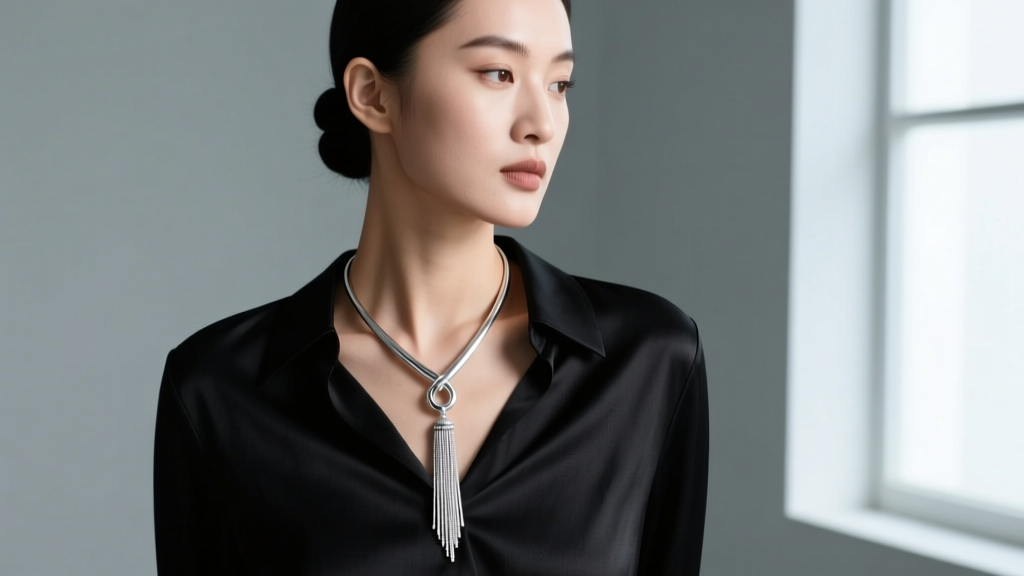
Lariat necklaces feature a long, open-ended design that typically loops through a fixed ring, a decorative slide, or simply ties in a knot. Ranging from 30 to 45 inches in length, these pieces rely on friction and gravity to stay in place. They are highly adjustable, allowing you to change the length of the 'drop' to suit different necklines.
3. Slip-On and Tension Rings
While technically featuring a hidden mechanism, slip-on necklaces use rigid metal collars or hinged tension bands that snap shut via internal springs or magnetic locks. They offer the visual illusion of a necklace without clasp while providing the security of a rigid closure. These are usually shorter, sitting snugly at the 16-inch choker or 18-inch princess length.
Material Durability & Gauge Guide for Endless Chains
The biggest risk when wearing a continuous necklace without clasp is metal fatigue and stretching. Every time you pull the chain over your head, you apply outward tension. If the metal is too soft or the gauge (thickness) is too thin, the chain will permanently stretch or snap. According to the Gemological Institute of America (GIA), precious metals like pure silver and high-karat gold are inherently malleable, making alloy composition and wire thickness critical factors.
Below is a practical decision framework for choosing the right material and gauge for an endless chain:
| Material | Minimum Gauge (Thickness) | Stretch Risk | Avg. Price Range |
|---|---|---|---|
| Sterling Silver (925) | 2.0mm - 3.0mm | High (if under 2mm) | $45 - $150 |
| 14k Solid Gold | 1.5mm - 2.5mm | Low (excellent tensile strength) | $300 - $900 |
| 316L Stainless Steel | 2.0mm - 4.0mm | Zero (highly rigid) | $25 - $80 |
| Gold-Plated Brass | 2.5mm+ | Medium (brass can warp) | $30 - $90 |
Expert Tip: If you love the look of delicate, 1.0mm chains, avoid endless styles in sterling silver. Opt for 14k gold or platinum, which possess higher tensile strength at thinner gauges, or choose a lariat style where the chain isn't subjected to the tension of slipping over the head.
Chain Weaves That Survive the 'Slip-Over' Test
Not all chain links are created equal. Jewelry manufacturers, such as those detailed by Rio Grande Jewelry Supply, engineer different weaves for specific drape and durability characteristics. When buying a continuous necklace without clasp, the weave dictates how well it handles daily manipulation.
- Rope Chain (Best Overall): The twisted, helical structure of a rope chain distributes tension evenly across multiple links. It is highly resistant to kinking and stretching, making it the undisputed champion for endless necklaces.
- Box Chain (Good, with caveats): Box chains lay flat and reflect light beautifully. However, the square links can fold backward on themselves. If you pull a box chain over your head and it catches on your hair, the links can invert and kink.
- Snake Chain (High Risk): Snake chains feature tightly joined smooth rings that create a flexible, tubular surface. While stunning, they are notoriously prone to permanent kinking. If bent sharply while slipping over the head, a snake chain will develop a weak point that eventually leads to snapping.
- Curb and Figaro Chains (Excellent): The flat, interlocking oval links of curb chains are incredibly robust and rarely tangle, making them a safe, heavy-duty choice for clasp-free wear.
How to Put On and Take Off an Endless Chain
It sounds simple, but improper handling is the number one cause of damage to a necklace without clasp. Follow this two-step method to preserve the structural integrity of your continuous loop:
- The Two-Hand Widening Technique: Never hook the chain with a single finger and pull downward. Instead, place both hands inside the loop at opposite sides (roughly at the 9 o'clock and 3 o'clock positions). Gently pull your hands apart to widen the circle, then lower it over your head.
- The Hair Check: Before pulling the chain down, use your fingers to sweep the back of your neck. Ensure no hair is caught in the links, particularly if you are wearing a box or snake chain, as pulling through tangled hair will warp the metal.
Troubleshooting Common Clasp-Free Failures
Even with careful handling, issues can arise. Here is how to troubleshoot the most common problems associated with clasp-free jewelry.
Problem: The Chain Has Stretched and Looks 'Wobbly'
The Cause: This happens frequently with thin sterling silver rope or box chains. The metal hasn't broken, but the links have elongated, causing the chain to lose its tight weave and look wavy.
The Fix: Unfortunately, metal stretch is permanent. You cannot 'shrink' a stretched chain back to its original gauge. To prevent this, always adhere to the minimum gauge recommendations in the table above. If a silver chain stretches, take it to a jeweler to have a small section removed and a clasp added, converting it into a standard necklace.
Problem: A Kink Has Formed in a Snake or Herringbone Chain
The Cause: The chain was bent sharply backward against its natural drape direction.
The Fix: Do not pull or yank the kink. Lay the necklace flat on a hard table. Take a soft microfiber polishing cloth and gently rub the kinked area in a circular motion, applying very light downward pressure. Often, you can massage the links back into alignment. If the kink is severe, a professional jeweler can use specialized flat-nose pliers to realign the links without stressing the adjacent metal.
Problem: Lariat Necklaces Keep Slipping and Loosening
The Cause: The friction slide or ring is too wide for the chain gauge, or the fabric of your clothing is too slippery (like silk or satin).
The Fix: For thread-through lariats, tie a subtle, loose overhand knot at the base of the drop to act as a physical stopper. Alternatively, use a tiny, clear silicone jewelry stopper (often sold for earring backs) on the tail end of the chain to prevent it from pulling entirely through the loop.
Styling Tips: Necklines and Layering
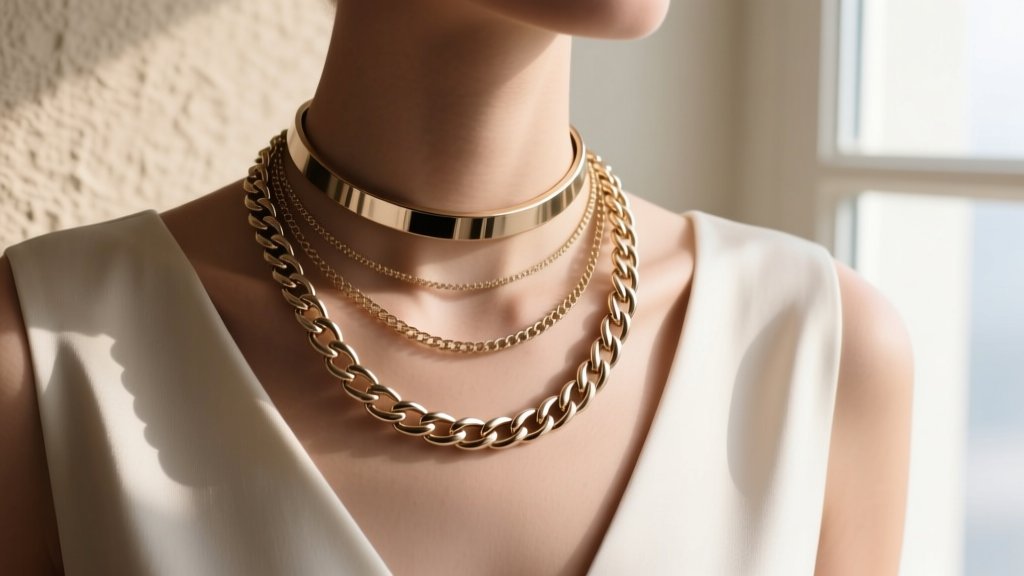
A necklace without clasp offers unique styling advantages, particularly when layering. Because endless chains lack the bulky hardware of a lobster clasp and jump ring, they lay perfectly flat against the skin and other chains, eliminating the annoying 'tangle zone' at the back of the neck.
- The V-Neck Pairing: Pair a 28-inch or 30-inch endless rope chain with a deep V-neck sweater or wrap dress. The long, unbroken line of metal visually elongates the torso and draws the eye downward.
- The Mixed-Metal Layer: Combine a 26-inch 14k gold endless chain with an 18-inch sterling silver choker that features a clasp. The contrast in lengths, metals, and textures creates a curated, modern look without the chains twisting together at the nape of your neck.
- The Lariat over Turtlenecks: In colder months, drape a 36-inch lariat necklace over a fitted turtleneck. Let the drop hang down the center of your chest to break up the solid block of fabric and add vertical movement to your outfit.
Conclusion
Choosing a necklace without clasp is a brilliant way to streamline your daily jewelry routine while embracing a sleek, modern aesthetic. By respecting the physics of head circumference, selecting the correct gauge and metal alloy, and choosing a durable chain weave like the rope or curb, you can enjoy the effortless elegance of continuous and lariat necklaces for years to come. Ditch the fumbling, embrace the seamless loop, and let your jewelry do the talking.


