Necklaces Length Guide: Budget, Pricing, and Value Assessment
Discover how chain length impacts gold weight, durability, and price. Our necklaces length guide breaks down the true budget and value of every size.

The Hidden Financial Metrics of Chain Sizing
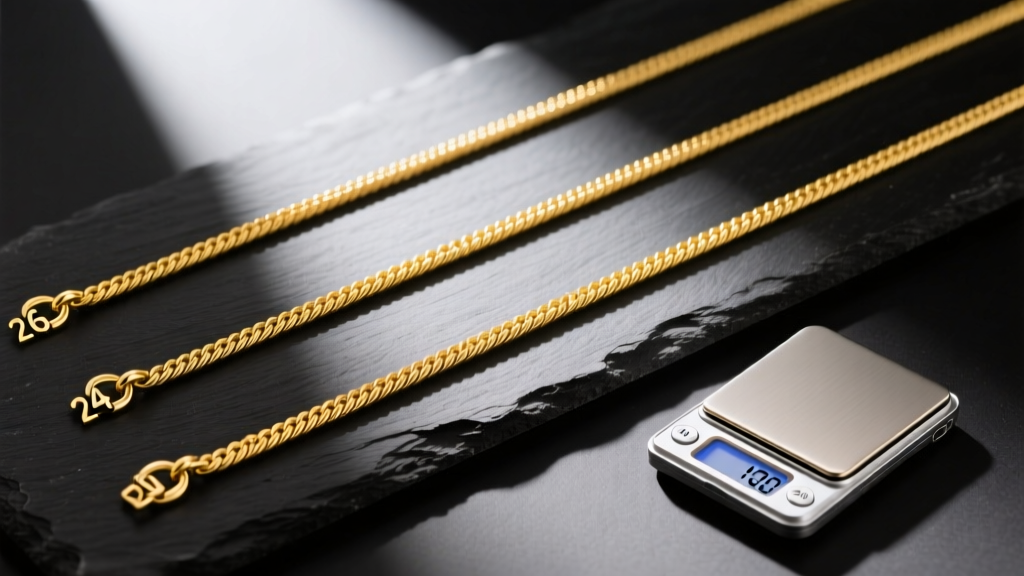
When most shoppers search for a necklaces length guide, they are exclusively looking for stylistic advice—where a 16-inch choker sits on the collarbone versus how a 24-inch opera chain drapes over a sweater. But from a budget and value assessment perspective, length is one of the most critical financial variables in fine jewelry. Every additional inch of chain dictates not only the raw material cost but also the structural integrity, long-term maintenance expenses, and the retail markup multipliers applied by jewelers.
In 2026, with precious metal markets experiencing sustained volatility, understanding the intersection of chain length, alloy weight, and tensile strength is essential for maximizing your jewelry budget. A longer chain does not just cost more because it uses more gold; it often requires thicker gauges to support its own weight, exponentially driving up the price. This guide strips away the aesthetic fluff and evaluates standard necklace lengths through the lens of raw material value, cost-per-wear, and structural longevity.
Standard Necklaces Length Guide & Material Weight Breakdown
To assess value, we must first establish a baseline for material weight. The table below calculates the estimated raw gold weight and approximate melt value for a standard 2mm cable chain across popular lengths. Note that retail prices will include a 'maker's premium' (fabrication, branding, and overhead), which typically ranges from 200% to 500% above the raw melt value depending on the brand.
| Length Category | Measurement | Avg. 14k Gold Weight (2mm) | Est. Raw Melt Value | Budget & Value Assessment |
|---|---|---|---|---|
| Collar | 14 inches | 3.5 grams | $185 - $210 | High friction against skin; requires frequent cleaning. Best for lightweight, solid gold hoops. |
| Choker | 16 inches | 4.0 grams | $215 - $240 | Excellent everyday value. Sits safely above most shirt collars, reducing snag-related repairs. |
| Princess | 18 inches | 4.5 grams | $245 - $270 | The industry sweet spot. Offers the best ROI for pendant versatility and layering potential. |
| Matinee | 20 - 22 inches | 5.2 grams | $280 - $315 | Moderate snag risk. Requires a heavier gauge (2.5mm+) to prevent link stretching over time. |
| Opera | 24 - 30 inches | 6.5+ grams | $350 - $400+ | Highest material cost and highest physical wear-and-tear. Prone to pendulum-effect breakage. |
According to the Federal Trade Commission Jewelry Guides, retailers must accurately disclose metal weight and purity. Always request the exact gram weight of a chain before purchasing. If a jeweler cannot provide the gram weight of a 24-inch chain, you are likely paying an inflated tier price that ignores actual material value.
How Length Dictates Alloy Choice and Tensile Failure
A common budget mistake is prioritizing karat purity over structural necessity based on length. Pure gold (24k) is far too soft for chains, which is why it is alloyed with metals like copper, silver, and zinc. However, the longer the chain, the more critical the alloy composition becomes to your long-term budget.
The 18k vs. 14k Dilemma for Longer Chains
An 18k gold chain (75% pure gold) is softer and more malleable than a 14k gold chain (58.3% pure gold). For a 16-inch choker, 18k is a fantastic, luxurious choice that holds its value beautifully. However, if you are purchasing a 24-inch opera chain to hold a heavy 10-gram pendant, 18k gold is a financial liability. The kinetic energy generated by the chain swinging against your body will cause the softer 18k links to micro-stretch, eventually leading to link thinning and catastrophic clasp failure.
For any chain exceeding 20 inches, 14k gold or platinum offers vastly superior tensile strength. While 14k gold has a lower intrinsic melt value per gram, its durability drastically reduces the lifetime maintenance costs associated with re-soldering stretched links and replacing broken clasps.
The Pendulum Effect: Kinetic Wear on Longer Chains
Why do 24-inch chains break more often than 16-inch chains, even when made of the same material? The answer lies in physics, specifically the pendulum effect. A longer chain has a wider swing arc. Every time you bend over, walk briskly, or shift in your seat, the heavy clasp and the links immediately adjacent to it act as a fulcrum.
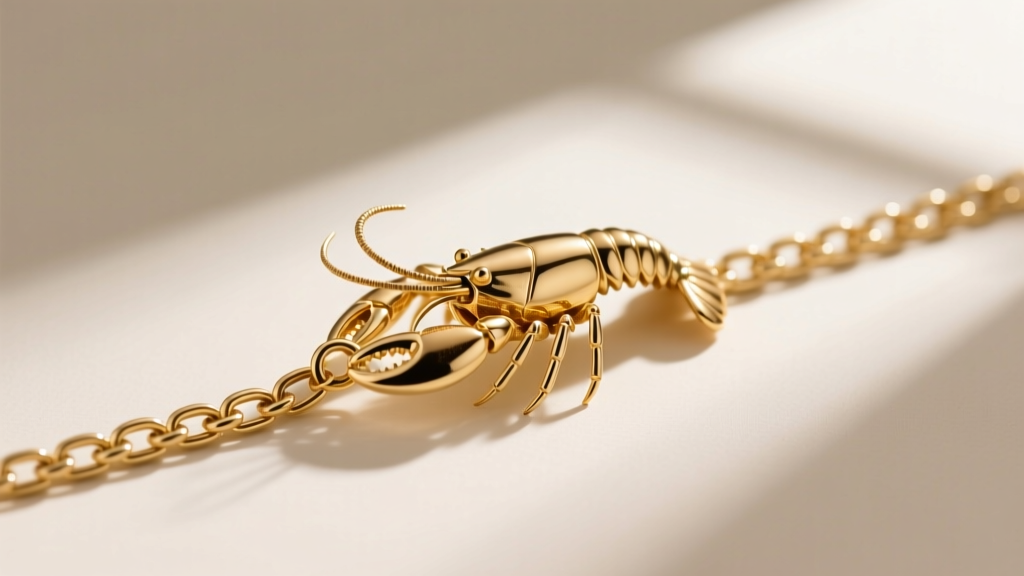
- The Weak Point: The jump ring connecting the chain to the lobster clasp endures the highest kinetic stress. On longer chains, this ring must be soldered completely shut. If a jeweler leaves the jump ring unsoldered to save time, the pendulum effect will pry it open within months, resulting in a lost chain.
- The Snag Hazard: As noted by the Blue Nile Necklace Length Guide, chains that fall below the collarbone (20+ inches) are highly susceptible to catching on door handles, seatbelts, and bag straps. A sudden snag on a 24-inch rope chain can snap a 1.5mm link instantly.
- Budget Mitigation: If you desire the look of a long chain on a budget, opt for a box chain or a wheat chain. Their interlocking, geometric link structures distribute kinetic stress far better than standard cable or curb chains, offering better long-term value retention.
Retail Tier Pricing vs. Melt Value: Spotting the Markup
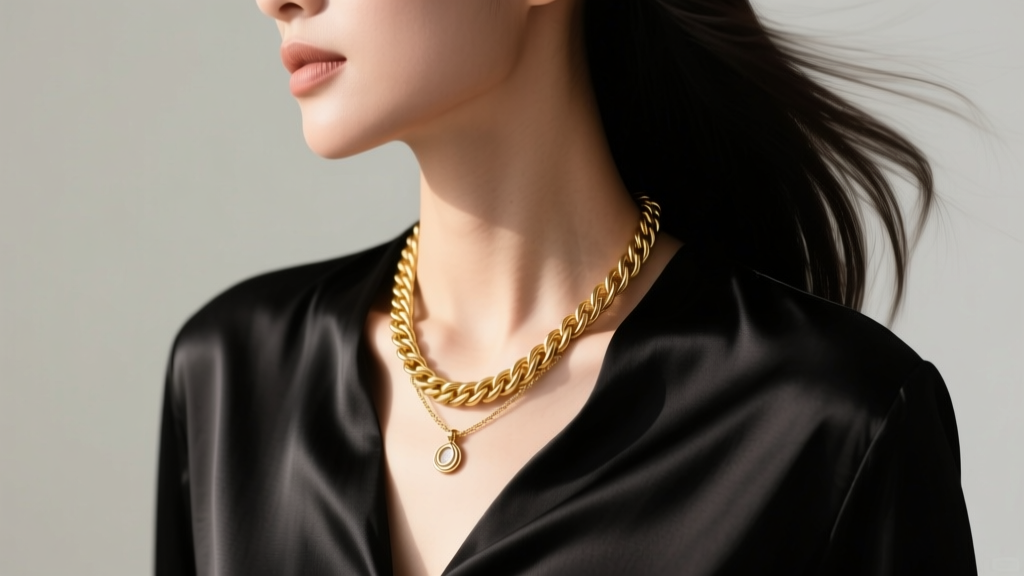
When budgeting for a necklace, it is vital to understand how retailers price by length tiers rather than strict gram weight. A brand might price a 16-inch chain at $450 and an 18-inch chain at $575. The extra two inches add roughly 0.5 grams of gold, which is worth approximately $30 in raw material. Yet, the retail price jumped by $125.
'Consumers often assume they are paying for the extra gold in a longer chain. In reality, they are paying a convenience premium because the retailer had to stock an additional SKU. Always calculate the price-per-gram to determine if the longer length is actually worth the retail markup.' — Master Bench Jeweler
To maximize your budget, identify the 'anchor length' of your preferred brand. Usually, the 18-inch Princess length is the highest-volume SKU, meaning it benefits from economies of scale and carries the lowest markup multiplier. Buying the anchor length and adding a separate 2-inch gold extender chain (which costs roughly $40-$60) is almost always cheaper than buying the brand's native 20-inch option.
Budget Hacks: Extenders, Layering, and Cost-Per-Wear
If you want to maximize the utility and value of your jewelry budget, avoid buying multiple single-length chains. Instead, leverage modular sizing.
1. The Extender Chain Strategy
Purchasing a high-quality 16-inch chain with a 4-inch detachable extender allows you to wear the piece as a choker, a princess, or a short matinee. This single purchase replaces the need for three separate chains, effectively cutting your initial capital outlay by 60% while maintaining the exact same aesthetic versatility.
2. Layering with Mixed Metals
Layering is a dominant trend, but buying three matching 14k yellow gold chains of varying lengths (e.g., 14', 16', 18') is a massive budget drain. To achieve the layered look while preserving capital, anchor your neck with one high-value 16-inch solid gold chain, and supplement it with 18-inch and 20-inch chains in alternative, budget-friendly materials like gold vermeil over sterling silver or high-grade titanium. Because the longer chains sit further apart visually, the slight color variance between solid gold and vermeil is virtually undetectable to the naked eye.
3. Evaluating Cost-Per-Wear (CPW)
Value is ultimately defined by utility. A $600 14-inch solid gold collar that sits uncomfortably tight and is only worn twice a year has a CPW of $300. Conversely, an $800 18-inch solid platinum chain worn daily for five years has a CPW of less than $0.44. When consulting a necklaces length guide, always map the physical measurement to your actual daily wardrobe and lifestyle before authorizing the purchase.
Final Verdict: Aligning Length with Your Financial Strategy
Choosing the right necklace length is not merely about matching a neckline; it is an exercise in risk management and material valuation. For tight budgets prioritizing maximum gold weight, the 16-inch choker offers the lowest entry price and the highest structural safety. For buyers focused on pendant versatility and long-term utility, the 18-inch princess length remains the undisputed champion of cost-per-wear. By understanding the hidden costs of alloy tensile strength, kinetic wear, and retail tier markups, you can navigate the fine jewelry market with absolute financial confidence.
For further education on metal durability and gemstone settings, consult the GIA Gem Encyclopedia to ensure your precious metal investments are built to last a lifetime.


