Neon Bead Necklace Guide: Glass vs. Acrylic vs. Resin
Compare glass, acrylic, and resin for your next neon bead necklace. Discover material properties, UV resistance, and stringing tips in our expert guide.

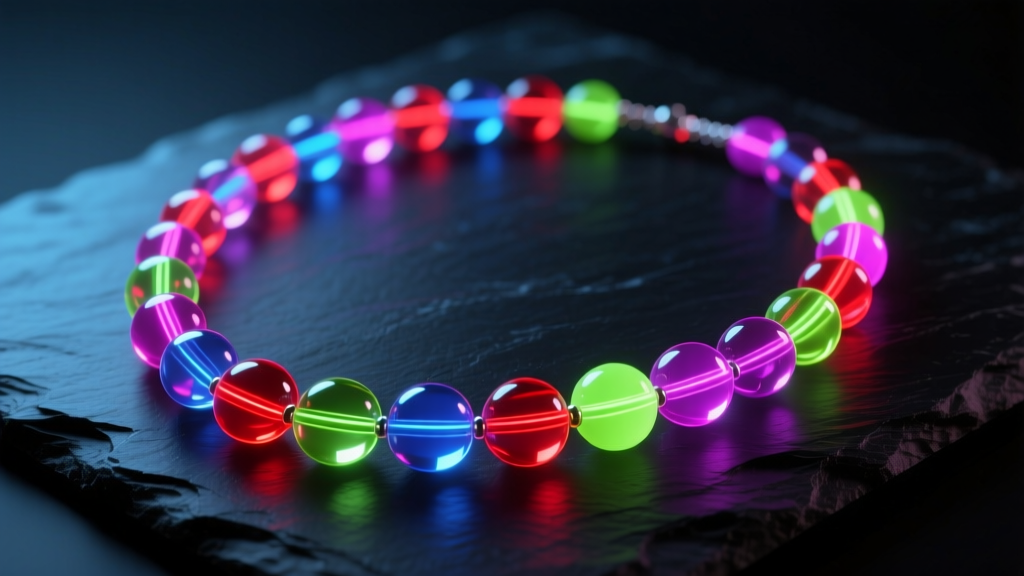
The Anatomy of a High-Quality Neon Bead Necklace
Neon bead necklaces have transcended their nostalgic roots, evolving into sophisticated, high-contrast statement pieces in 2026. However, the visual impact of a neon bead necklace is only as enduring as its underlying material science. When sourcing or designing these vibrant accessories, jewelers and collectors must navigate the distinct physical properties of glass, acrylic, and epoxy resin. Each material interacts differently with light, skin oils, and ultraviolet radiation, fundamentally altering the lifespan and wearability of the piece.
The anatomy of the bead itself—specifically the hole diameter and the specific gravity (weight)—dictates the stringing architecture. Glass beads, typically lampworked or kiln-formed, possess larger mandrel holes (usually 1.5mm to 2.0mm) and a higher specific gravity (2.5–3.0). Conversely, cast acrylic and resin beads are injection-molded or poured, allowing for tighter hole tolerances (0.8mm to 1.0mm) and a significantly lighter wear profile. Understanding these micro-differences is the first step in mastering neon bead necklace construction.
Material Showdown: Glass vs. Acrylic vs. Resin vs. Silicone
To make informed design choices, we must look beyond color and examine the empirical data. The table below outlines the critical material properties that affect durability, weight, and long-term colorfastness in neon jewelry.
| Material | Specific Gravity (Weight) | Mohs Hardness | UV Stability (1000+ hrs) | Avg. Price (16" Strand) |
|---|---|---|---|---|
| Fluorescent Glass | 2.5 - 3.0 | 5.5 - 6.5 | High (Excellent) | $25 - $85 |
| Cast Acrylic (PMMA) | 1.18 | 2.0 - 2.5 | Medium (Good with coatings) | $8 - $22 |
| Epoxy Resin | 1.1 - 1.2 | 2.0 | Low (Prone to yellowing) | $15 - $45 |
| Silicone | 1.1 - 1.5 | 1.0 - 1.5 | High (Excellent) | $5 - $15 |
Luminescent and Dichroic Glass
Glass remains the gold standard for high-end neon bead necklaces due to its exceptional Mohs hardness and optical clarity. Modern fluorescent glass achieves its neon glow through the incorporation of rare-earth elements or specific metal oxides. For instance, neodymium dopants create striking purple-to-pink color shifts, while terbium and europium are used for vivid greens and reds. According to the Gemological Institute of America (GIA), glass simulants and art glass possess a refractive index (RI) of approximately 1.5, allowing for deep light penetration and a brilliant, glassy luster that polymers cannot replicate.
Historically, uranium oxide was used to produce Vaseline glass, which fluoresces a brilliant neon green under UV light. While vintage pieces are highly collectible and safe to wear (surface radiation is negligible), modern 2026 production relies on safer, non-radioactive rare-earth alternatives that offer identical luminescent properties without regulatory shipping restrictions.
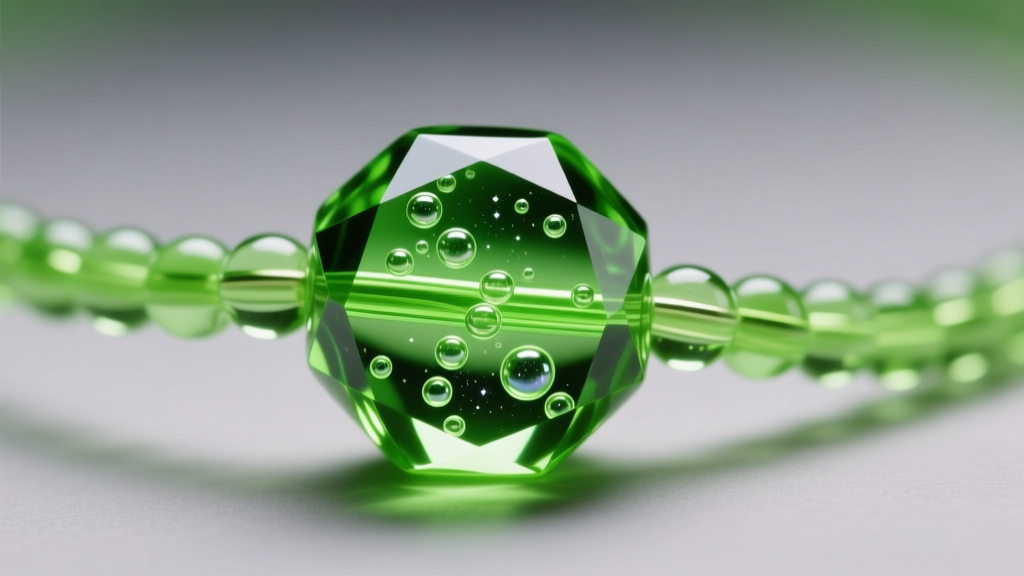
Cast Acrylic and Polycarbonate Blends
Acrylic, specifically Polymethyl Methacrylate (PMMA), is the workhorse of the fashion jewelry industry. It is incredibly lightweight, making it ideal for oversized, chunky neon bead necklaces that would cause neck strain if made from glass. However, not all acrylic is created equal. Injection-molded acrylic often suffers from mold lines and lower molecular weight, making it susceptible to micro-scratching and clouding.
For premium neon bead necklaces, jewelers should seek out cell-cast acrylic (often branded as Lucite). Cell-cast acrylic has a higher molecular weight and superior optical clarity. As noted by the British Plastics Federation, PMMA transmits up to 92% of visible light, making it an excellent canvas for neon dyes. The primary vulnerability of acrylic is its low Mohs hardness (2.5); it will easily scratch if stored in a communal jewelry box alongside quartz, glass, or metal hardware.
UV-Reactive Epoxy Resin
Epoxy resin allows for unparalleled customization, enabling artisans to suspend neon mica powders, glitter, and fluorescent pigments in a crystal-clear matrix. Resin beads can be poured into intricate molds, offering shapes that are impossible to achieve with glass. However, resin is chemically vulnerable. Without the addition of a Hindered Amine Light Stabilizer (HALS) and a UV absorber (like benzotriazole), the polymer chains in epoxy will undergo photo-oxidation when exposed to sunlight.
This chemical reaction causes the neon pink and orange pigments to fade rapidly, while the resin matrix itself undergoes yellowing and embrittlement. When purchasing resin neon beads, always verify with the manufacturer that a high-grade UV stabilizer was used in the casting process, especially for pieces intended for daily outdoor wear.
The UV Degradation Factor: Yellowing and Fading
The most common failure mode for vintage and poorly manufactured neon bead necklaces is UV degradation. When high-energy ultraviolet photons strike the polymer chains in resin or low-grade acrylic, they cleave the carbon-carbon bonds. This creates free radicals that react with ambient oxygen, leading to a breakdown of the polymer structure. Visually, this manifests as a sickly yellow or brown tint that muddies the neon color, alongside a chalky surface texture known as 'crazing'.
Glass and silicone are entirely immune to this specific type of photo-oxidation. Silicone, while lacking the optical brilliance of glass or acrylic, offers incredible UV resistance and flexibility, making it a popular choice for sporty, waterproof neon bead necklaces designed for beachwear and athletic use.
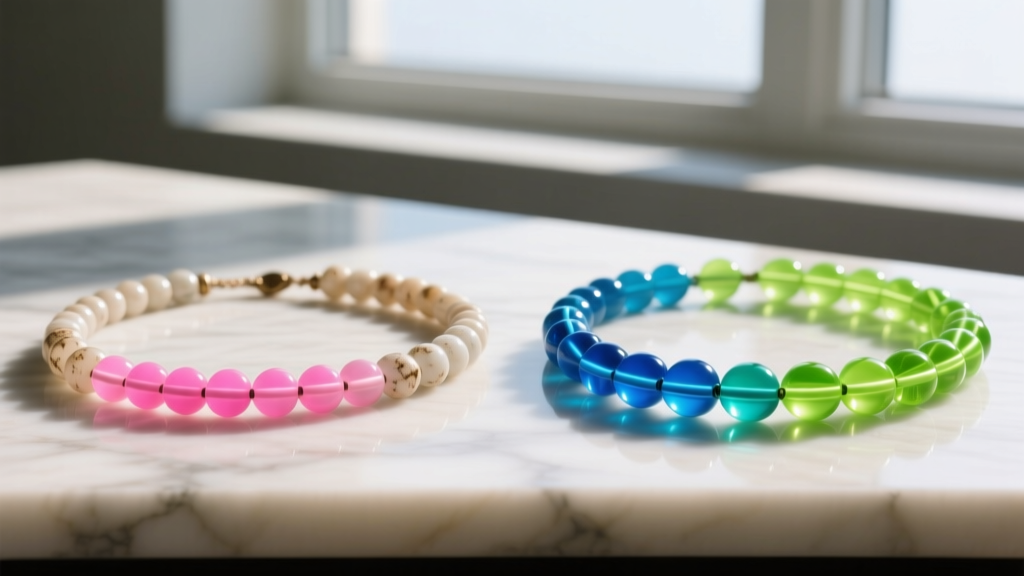
Stringing Materials and Clasp Hardware for Heavy Beads
The structural integrity of a neon bead necklace relies heavily on the stringing medium. A common mistake is using standard nylon thread for heavy glass beads; over time, the sharp edges of the glass bead holes will act as a saw, fraying and snapping the thread. For glass neon beads, a 49-strand stainless steel wire with a nylon coating (0.018" or 0.024" diameter) is mandatory. The Fire Mountain Gems Encyclopedia recommends using crimp tubes made of soft sterling silver or copper, as they compress securely around the steel wire without cutting it, unlike harder brass or aluminum crimps.
For lighter acrylic and resin beads, a 49-strand wire can be overkill and may cause the softer bead holes to deform or crack under tension. Instead, use a high-tenacity bonded nylon thread (such as C-Lon Tex 45 or Wildfire beading thread). These threads offer excellent tensile strength while remaining flexible enough to allow the necklace to drape naturally against the collarbone. Always finish your neon bead necklace with a secure lobster clasp or a magnetic neodymium clasp, ensuring the jump rings are soldered shut to prevent accidental loss.
Care, Maintenance, and Storage Protocols
Maintaining the electric vibrancy of a neon bead necklace requires specific cleaning protocols. Never use ultrasonic cleaners or harsh chemical solvents (like acetone or rubbing alcohol) on acrylic or resin beads; these will instantly cloud the surface and dissolve the polymer. Glass beads can tolerate mild solvents but may shatter in an ultrasonic cleaner if they possess internal stress fractures from the lampworking process.
The safest and most effective cleaning method for all neon bead materials is a solution of warm water and a few drops of pH-neutral dish soap. Gently agitate the necklace, rinse with distilled water to prevent hard water spotting, and dry immediately with a lint-free microfiber cloth. Store your neon bead necklaces flat in a dark, climate-controlled environment, individually wrapped in acid-free tissue paper to prevent micro-scratches and protect the fluorescent dyes from prolonged ambient light exposure.


