Expert Care Guide: Cleaning Your Nugget Turquoise Necklace
Learn how to safely clean, store, and maintain your nugget turquoise necklace. Expert tips on handling porous stones, silver settings, and stabilization.

Understanding the Unique Anatomy of Nugget Turquoise
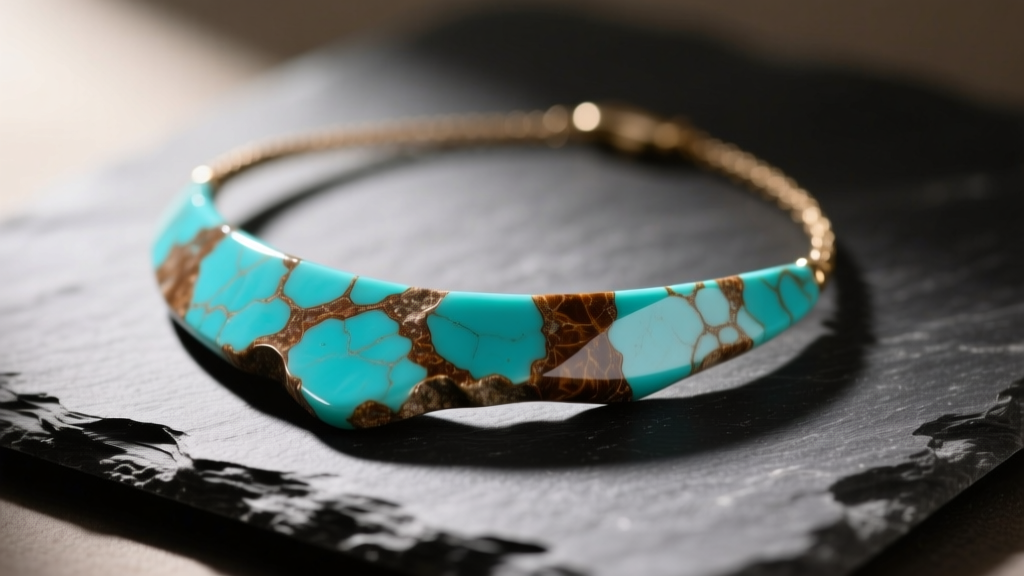
To properly care for a nugget turquoise necklace, you must first understand the mineralogical reality of the stone. Turquoise is a hydrous phosphate of copper and aluminum, registering between 5 and 6 on the Mohs hardness scale. According to the Mindat Mineralogy Database, its defining characteristic in jewelry is its high porosity. Unlike faceted gems such as diamonds or sapphires, turquoise acts like a microscopic sponge.
The 'nugget' cut exacerbates this vulnerability. Nugget turquoise is typically left in its natural, rough, or semi-polished state to preserve maximum carat weight and showcase the organic, asymmetrical beauty of the stone. However, this uneven topography creates microscopic crevices, pits, and matrix veining (the brown or black host rock) where dirt, skin oils, and cosmetics aggressively accumulate. Furthermore, you must determine if your necklace features natural or stabilized turquoise. Natural stones are highly reactive to environmental factors, while stabilized stones have been treated with epoxies or resins (like the Zachery process) to reduce porosity and enhance color stability.
The Enemies of Turquoise: What to Strictly Avoid
Before reaching for a cleaning cloth, you must know what will permanently destroy your necklace. The Gemological Institute of America (GIA) explicitly warns against several common jewelry cleaning methods when it comes to porous gems.
- Ultrasonic Cleaners: The high-frequency cavitation bubbles generated by ultrasonic machines can easily fracture porous turquoise, especially along natural matrix fault lines.
- Steam Cleaning: Sudden thermal shock and pressurized moisture can cause the stone to crack or alter its internal hydration, leading to a permanent cloudy appearance.
- Harsh Chemicals: Ammonia, bleach, and commercial liquid silver dips (which often contain thiourea and sulfuric acid) will instantly bleach, pit, or dissolve the surface of natural turquoise.
- Cosmetics and Aerosols: Sunscreen, perfume, hairspray, and lotions will seep into the unpolished crevices of a nugget bead, creating a gummy, discolored buildup that is nearly impossible to extract.
Step-by-Step Cleaning Routine for Nugget Beads
When your necklace loses its luster or accumulates debris in its natural crevices, follow this meticulous, low-impact cleaning protocol.
1. Preparation and Dry Dusting
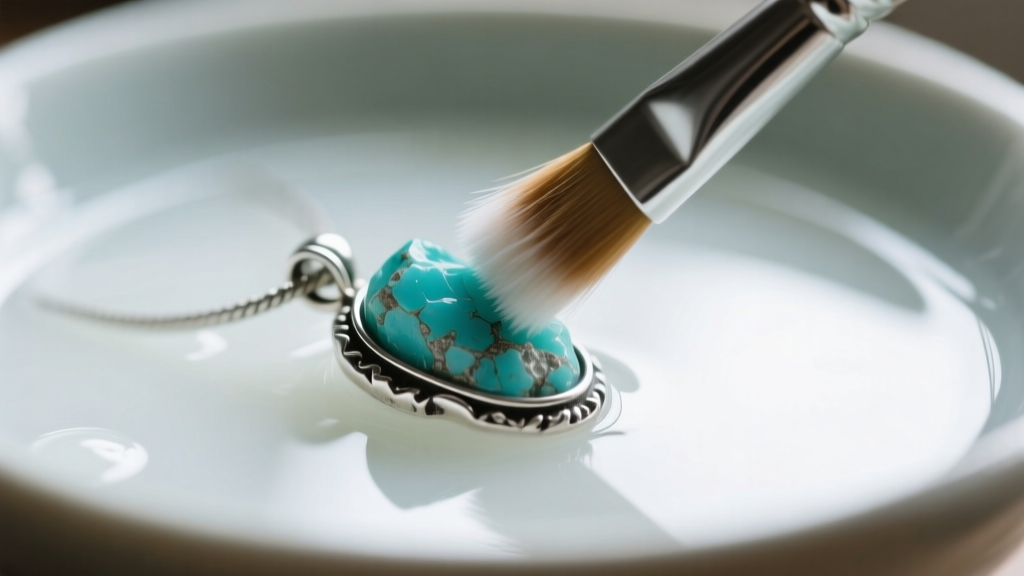
Never submerge turquoise in water. Instead, prepare a cleaning station with a bowl of lukewarm water and a single drop of pH-neutral dish soap (like Dawn). Before introducing any moisture, use a clean, dry, ultra-soft makeup brush to gently sweep out loose dust and dry debris from the deep crevices of the nugget beads. Dust often contains microscopic quartz particles (Mohs 7), which will scratch the turquoise (Mohs 5-6) if rubbed in with a wet cloth.
2. Targeted Damp Cleaning
Dip a soft microfiber cloth into your soapy water and wring it out until it is barely damp. Gently wipe the surface of each nugget bead. For stubborn grime trapped in the matrix veining, use a baby toothbrush with extra-soft bristles. Dip only the tip of the bristles in the soapy water and lightly agitate the crevices. Do not scrub aggressively; let the bristles do the lifting.
3. Rinsing and Drying
Dampen a second clean cloth with plain, distilled water (to avoid hard water mineral deposits) and wipe away any soap residue. Immediately pat the necklace completely dry with a lint-free towel. Allow the necklace to air dry flat in a cool, well-ventilated room for at least four hours before storing or wearing it again. Trapped moisture against the metal settings can accelerate tarnishing or degrade the stringing material.
Caring for the Metal Settings and Stringing
A nugget turquoise necklace is rarely just the stone; it usually features sterling silver settings, spacers, or a heavy silver chain. Sterling silver tarnishes when exposed to sulfur in the air, but you must clean the metal without touching the stone.
Use a treated silver polishing cloth (such as a Sunshine cloth) to buff the metal components. Fold the cloth to a fine point to reach into the bezels or wire-wrapping around the nugget beads. Never use silver paste, baking soda pastes, or aluminum foil electrolysis baths. These methods are highly abrasive or chemically reactive and will permanently ruin the adjacent turquoise. If your necklace is strung on silk or nylon thread, avoid getting the string wet, as moisture weakens the fibers and causes them to stretch or rot over time.
Storage and Long-Term Maintenance Framework
How you store your necklace is just as critical as how you clean it. Turquoise is softer than most gems in your collection, meaning it must be isolated to prevent scratching.
| Care Factor | Natural Nugget Turquoise | Stabilized Nugget Turquoise |
|---|---|---|
| Water Exposure | Avoid completely; causes structural weakening | Brief exposure is safe; wipe dry immediately |
| Skin Oils & Sweat | Will alter color over time (develops a patina) | Resistant to color change; wipe clean after wear |
| Storage Environment | Needs slight ambient humidity; avoid airtight plastic | Can be stored in standard airtight anti-tarnish bags |
| Sunlight Exposure | Prolonged UV and heat can dehydrate and crack the stone | UV resistant, but heat can soften some epoxy resins |
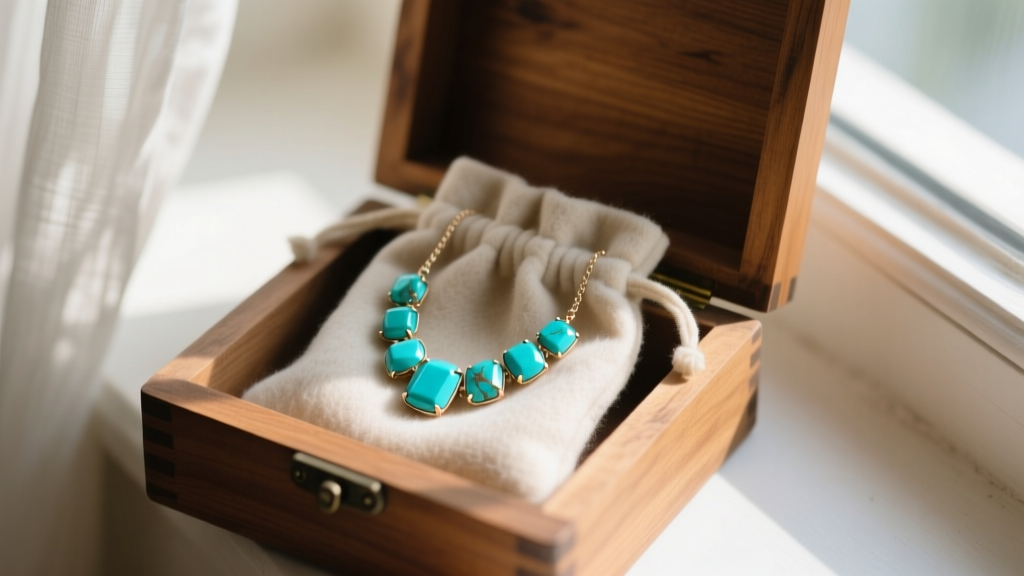
Always store your necklace in a soft, untreated flannel pouch or a dedicated compartment in a lined jewelry box. Avoid storing natural turquoise in completely airtight plastic ziplock bags for years on end; natural stones require a minuscule amount of ambient moisture to prevent dehydration and subsequent crazing (a network of fine surface cracks).
Troubleshooting Common Turquoise Issues
My turquoise is turning green/brown. Is it ruined?
Not necessarily. Natural turquoise is highly reactive to the acids and oils in human skin. Over years of wear, a bright blue stone may develop a deeper green or brownish hue. In the vintage and Native American jewelry markets, this is often considered a desirable 'patina' that proves the stone's authenticity and age. However, if the color change happened overnight after exposure to a chemical, the stone may be permanently stained.
There is a white, crusty buildup on the stone.
This is usually hard water deposits or dried soap trapped in the porous matrix. Dampen a cotton swab with a tiny amount of distilled water and gently roll it over the crust. If it does not yield, do not pick at it with a metal needle, as you will gouge the stone. Take it to a professional lapidary.
Expert Tip: Always put your nugget turquoise necklace on after applying makeup, perfume, and hairspray, and take it off before showering, swimming, or doing household chores. This simple habit will extend the life and vibrancy of your jewelry by decades.


