O Pendant Necklace Materials: Gold, Silver & Titanium
Discover the best metals for your o pendant necklace. We compare gold, silver, titanium, and steel for durability, skin safety, and everyday wear.

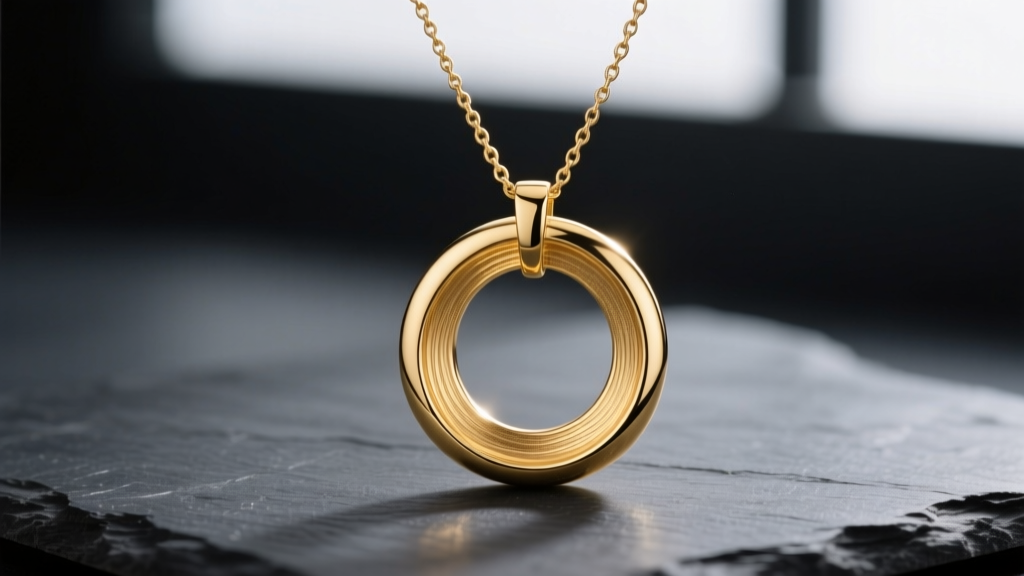
The circular motif has dominated minimalist jewelry for decades, but the specific architecture of an o pendant necklace presents unique structural challenges. Whether the 'O' represents an initial, an eternity ring, or a geometric interlocking design, its continuous loop lacks internal cross-bracing. This means the metal you choose dictates not just the color and price, but the pendant's resistance to hoop stress, warping, and everyday friction. In this comprehensive material guide, we break down the exact metallurgical properties, failure modes, and pricing tiers of the most popular metals used for O pendants in 2026.
The Structural Physics of the O Pendant
Unlike a solid bar or a cross pendant, an O-shaped ring distributes kinetic force evenly along its circumference. When an O pendant catches on a sweater or is pulled accidentally, the metal experiences 'hoop stress.' If the pendant's cross-sectional thickness is under 1.2mm and the metal is highly malleable, the circle will warp into an oval. Once an O pendant loses its perfect geometry, it is notoriously difficult to reshape without leaving visible tool marks or compromising the integrity of the soldered bail. Therefore, selecting a metal with high tensile strength and an adequate yield point is critical for long-term wearability.
Precious Metals: Gold Alloys and Sterling Silver
14k vs. 18k Solid Gold
Gold is the traditional choice for fine jewelry, but pure 24k gold is far too soft for an O pendant. The industry standard relies on alloys to increase hardness. According to the Gemological Institute of America (GIA), 18k gold contains 75% pure gold, offering a rich, warm hue but remaining relatively soft. For an O pendant, 14k gold (58.5% pure gold) is vastly superior. The higher concentration of alloyed metals like copper, zinc, and silver increases the tensile strength, allowing the O ring to resist bending even at a delicate 1.5mm thickness. Expect to pay between $250 and $450 for a quality 14k solid gold O pendant, depending on the diameter and gram weight.
925 Sterling Silver and Rhodium Plating
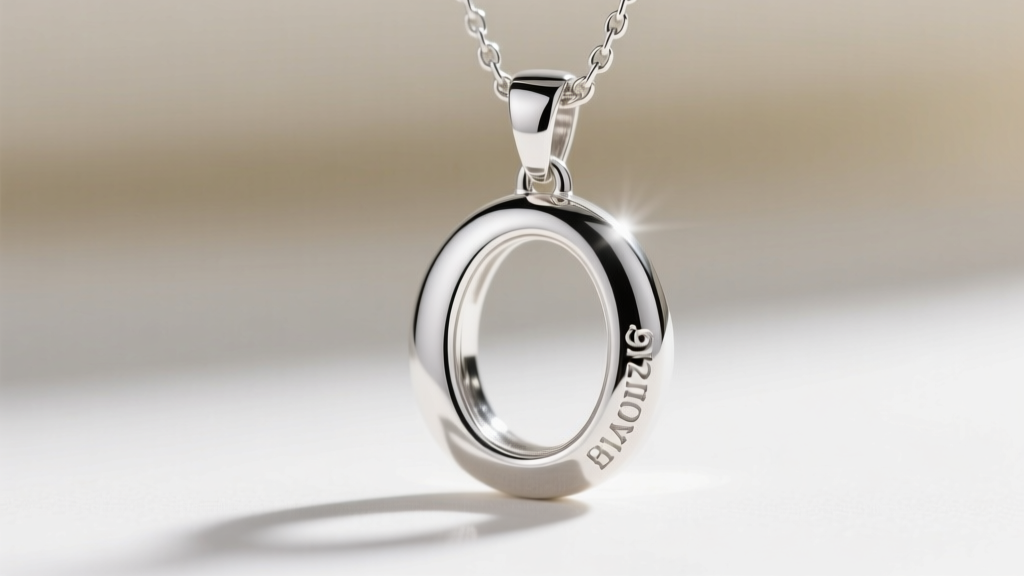
Sterling silver (92.5% silver, 7.5% copper) is highly affordable, typically ranging from $40 to $90. However, the copper content makes it highly susceptible to oxidation and tarnish. To combat this, most high-end silver O pendants are plated with rhodium. When evaluating a sterling silver O pendant, look for a rhodium thickness of at least 0.3 to 0.5 microns. Thinner 'flash' plating (under 0.1 microns) will quickly wear away at the bail—the loop where the chain threads through—due to constant metal-on-metal friction, exposing the tarnish-prone silver beneath. For deeper insights into silver's natural properties and oxidation rates, refer to data from The Silver Institute.
Hypoallergenic Powerhouses: Titanium and Surgical Steel
ASTM F136 Grade 5 Titanium
For wearers with severe metal allergies or those who refuse to take their jewelry off in the shower, titanium is the ultimate choice. Specifically, you want ASTM F136 Grade 5 (Ti-6Al-4V) implant-grade titanium. This alloy is incredibly lightweight yet boasts a tensile strength that virtually guarantees your O pendant will never warp or bend under normal duress. The primary drawback is that titanium cannot be easily soldered or resized by traditional jewelers if the bail breaks. Pricing is highly accessible, usually sitting between $50 and $120 for premium machined pieces.
316L Surgical Steel
Surgical steel is a staple in fashion jewelry, prized for its dark, cool-toned luster and resistance to corrosion thanks to the addition of molybdenum. However, 316L steel contains between 8% and 10.5% nickel. While the nickel is tightly bound within the alloy matrix and generally safe for the majority of the population, individuals with severe contact dermatitis may still experience reactions from prolonged skin contact, especially in hot, humid environments where sweat accelerates ion leaching.
Material Comparison Matrix
| Material | Yield Strength | Tarnish Risk | Nickel Content | Price Range |
|---|---|---|---|---|
| 14k Solid Gold | High | None | Usually None | $250 - $450 |
| 18k Solid Gold | Moderate | None | Usually None | $350 - $600+ |
| 925 Sterling Silver | Low-Moderate | High (if unplated) | None | $40 - $90 |
| Grade 5 Titanium | Extremely High | None | 0% | $50 - $120 |
| 316L Surgical Steel | High | Very Low | 8% - 10.5% | $25 - $60 |
Chain Pairing: Matching the O Bail to the Right Gauge
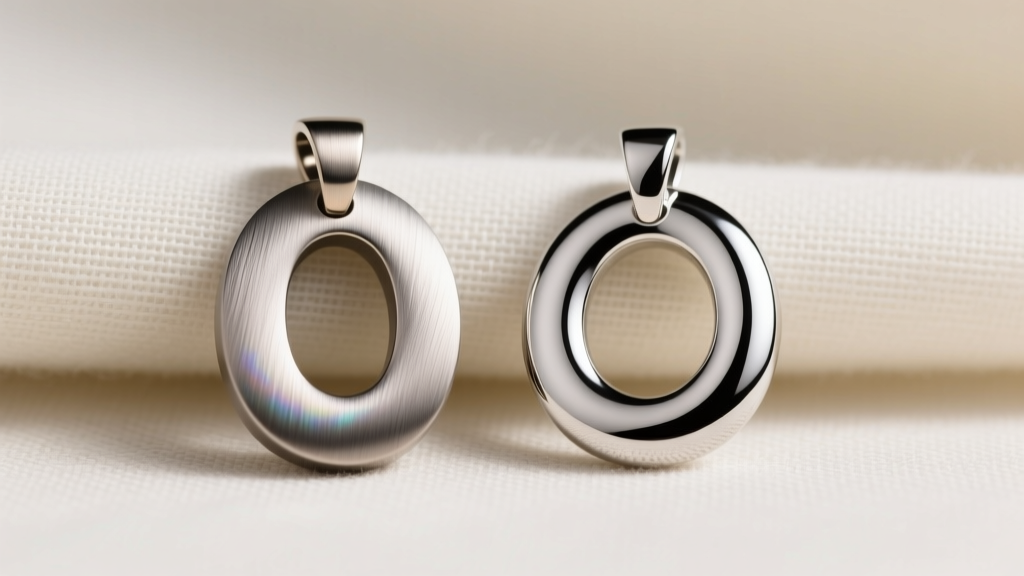
The material of your O pendant must be paired with a chain that respects its weight and bail size. A common failure mode in O pendant necklaces is the bail wearing through due to friction from an incompatible chain.
- Cable Chains (1.2mm - 1.5mm): The most versatile choice. The rounded links create minimal friction against the interior of the pendant's bail, preserving the rhodium or gold finish.
- Box Chains (1.0mm - 1.2mm): While visually striking, the sharp 90-degree edges of box chain links act like microscopic files against softer metals like 18k gold or sterling silver, slowly shaving away the bail over months of wear.
- Snake Chains (1.5mm+): Too rigid for most standard O pendants. The tight interlocking rings prevent the pendant from laying flat against the collarbone, causing it to flip awkwardly.
Always ensure the chain's clasp can pass through the O pendant's bail. A standard lobster clasp on a 1.5mm chain requires a bail interior diameter of at least 3.5mm. If you are buying a minimalist, micro-O pendant, you may need to thread the chain through the bail before attaching the clasp, or opt for a specialized spring-ring clasp with a lower profile.
Maintenance and Polishing Protocols
Maintaining the perfect circular geometry of your pendant requires specific care based on its material. For gold and silver, use a soft, untreated microfiber cloth to wipe away sebum and lotion buildup. Never use liquid silver dips on rhodium-plated O pendants, as the harsh thiourea chemicals will strip the plating and leave the underlying silver dull and porous. For titanium and steel, an ultrasonic jewelry cleaner with a mild dish soap solution is highly effective at removing debris from the tight crevices where the bail meets the O ring. By understanding the metallurgical properties of your chosen metal, you ensure your O pendant remains a perfect, unbroken circle for years to come.


