Persian Necklace Buying Guide: Firouzeh, Minakari & Chain Weaves
Discover how to authenticate and buy a genuine Persian necklace. Expert tips on Neyshabur turquoise, Isfahan Minakari enamel, and Persian chain weaves.

Decoding the 'Persian Necklace' Search Intent
When collectors and jewelry enthusiasts search for a 'Persian necklace,' they are typically navigating two entirely distinct categories of adornment. The first encompasses authentic, heritage-rich Iranian fine jewelry—specifically pieces featuring Neyshabur turquoise (Firouzeh) and Isfahan Minakari (enameling). The second refers to the 'Persian weave,' a highly complex, interlocking chainmaille pattern popular in artisan metalworking. As a buyer in 2026, understanding the material grades, authenticity markers, and structural mathematics of both categories is essential to avoid mass-produced imitations and secure a piece with genuine artistic or structural integrity.
This comprehensive buying guide will break down exactly what to look for, how to authenticate heritage pieces, and the technical specifications required for a properly executed Persian chain weave.
Authentic Firouzeh: Evaluating Neyshabur Turquoise
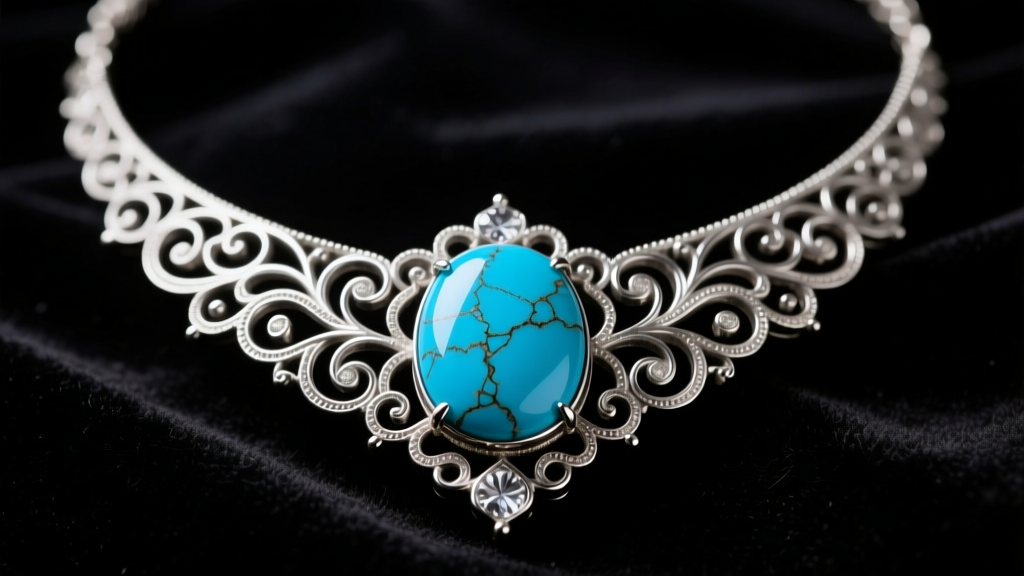
The cornerstone of traditional Persian jewelry is Firouzeh, sourced primarily from the historic mines of Neyshabur in Iran. Unlike the chalky, heavily stabilized turquoise often found in commercial Southwestern American jewelry, high-grade Neyshabur turquoise is renowned for its intense, untreated 'sky blue' color and remarkable hardness. According to the Gemological Institute of America (GIA), turquoise is a porous copper aluminum phosphate, making its stability and treatment history critical factors in valuation.
Identifying Genuine Neyshabur Cabochons
When evaluating a Persian turquoise pendant, examine the stone's matrix and backing. Authentic Neyshabur stones often feature a delicate, golden-brown or black limonite spiderweb matrix. However, the most prized 'Ajami' cut stones are completely matrix-free, displaying a uniform, robin's-egg blue.
- The Brass Backing Test: Traditional Persian lapidaries frequently back thin turquoise cabochons with a thin layer of brass or copper. This historical technique enhances the stone's blue hue by reflecting light back through the semi-translucent gem and prevents the fragile stone from cracking during the setting process. A brass backing is a strong indicator of authentic Middle Eastern craftsmanship, not a defect.
- Beware of Zachery Treatment: Developed in the late 20th century, the Zachery treatment enhances turquoise with a potassium-based solution that is notoriously difficult to detect without destructive testing. If a vendor claims a stone is 'untreated' but it lacks the microscopic surface pitting typical of natural turquoise, request a gemological certificate.
- Dyed Howlite Imitations: Mass-market 'Persian-style' necklaces often use dyed howlite or magnesite. Under a 10x jeweler's loupe, dye concentrations will be visible in the crevices of the faux matrix, appearing as dark, web-like ink stains rather than natural mineral inclusions.
Isfahan Minakari: The Art of Persian Enameling
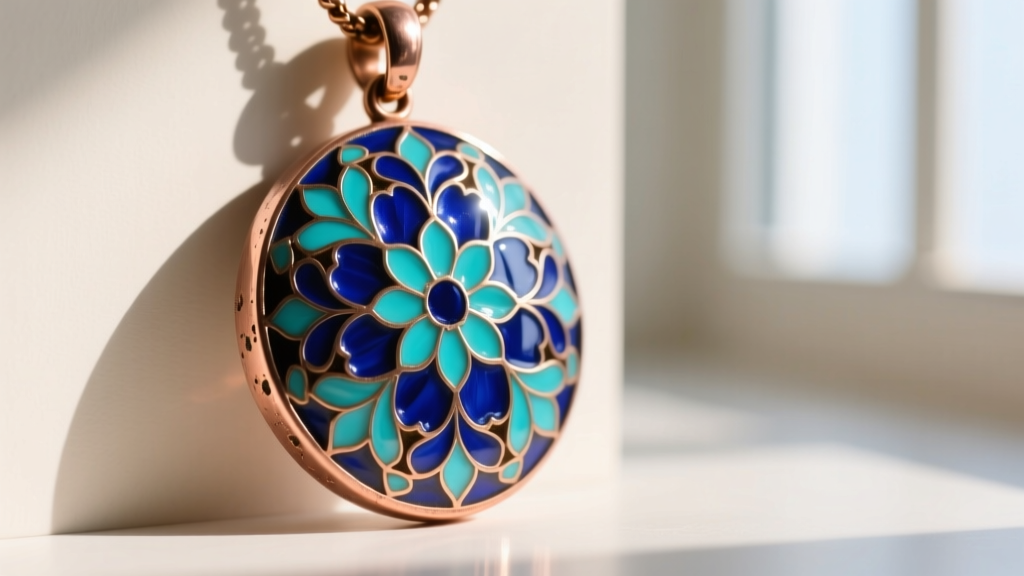
Minakari is the intricate art of painting and firing vibrant enamel onto metal, a craft that reached its zenith in Isfahan during the Safavid dynasty. Today, authentic Minakari necklaces and pendants are highly sought after, but the market is flooded with stamped or decal-transferred imitations. True Minakari requires a master artisan (Ostad) to hand-paint microscopic floral and arabesque motifs using metal-oxide pigments before firing the piece in a kiln at temperatures exceeding 750°C.
Hand-Painted vs. Mass-Produced Decals
To authenticate an Isfahan Minakari pendant, you must look beyond the vibrant cobalt and turquoise colors. Use a macro lens or a high-powered loupe to inspect the black outlining (usually derived from copper oxide).
'In true Minakari, the black outlines are slightly raised and possess organic, fluid variations in thickness. Decal prints will show a uniform dot-matrix pattern under magnification, and the colors will sit flat against the copper base without the glassy, vitrified depth of fired enamel.' — Master Artisan Evaluation Guidelines
Furthermore, authentic pieces are almost exclusively crafted on a copper base, occasionally overlaid with silver or gold leaf accents before enameling. The Victoria and Albert Museum notes that historical Islamic metalwork heavily relied on copper and brass alloys for enameling due to their excellent thermal expansion properties, which prevent the glass enamel from cracking during the cooling process. If the base metal is magnetic or appears to be cheap pot-metal alloy, the piece is a modern factory reproduction.
The Persian Chainmaille Weave: A Technical Breakdown
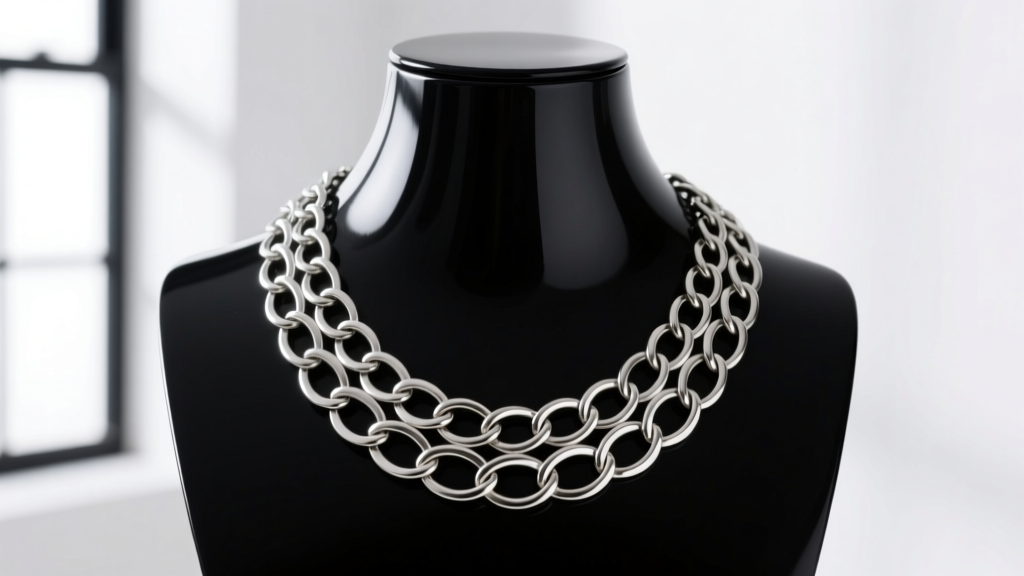
Shifting from cultural heritage to structural metalwork, the 'Persian weave' is a beloved chainmaille pattern characterized by its dense, textured, and highly flexible drape. Unlike simple 4-in-1 European weaves, the Persian chain utilizes a complex 6-in-1 ring configuration that creates a tubular, rope-like appearance. For jewelers and armorers crafting a Persian necklace, the mathematical relationship between wire thickness and ring diameter—known as the Aspect Ratio (AR)—is non-negotiable.
Aspect Ratio (AR) Mathematics for Jewelry
If the AR is too low, the jump rings will bind, resulting in a stiff, rigid chain that refuses to drape around the neckline. If the AR is too high, the chain will collapse, looking loose and losing the distinct Persian structural geometry. The formula is simple: AR = Inner Diameter (ID) / Wire Diameter (WD).
| Wire Gauge (AWG) | Wire Diameter (mm) | Ideal Inner Diameter (mm) | Target Aspect Ratio | Chain Drape & Density |
|---|---|---|---|---|
| 18 AWG | 1.02 mm | 3.50 mm - 3.75 mm | 3.4 - 3.6 | Heavy, structured, excellent for statement collars |
| 20 AWG | 0.81 mm | 2.75 mm - 3.00 mm | 3.4 - 3.7 | Versatile, ideal for standard pendant chains |
| 22 AWG | 0.64 mm | 2.25 mm - 2.50 mm | 3.5 - 3.9 | Delicate, fluid, perfect for layering and chokers |
When purchasing a pre-made Persian chainmaille necklace, check the jump ring closures. High-end artisans use soldered jump rings or meticulously tight butt-cuts with hardened metals (like Argentium silver or titanium) to prevent the rings from pulling apart under the weight of a heavy Firouzeh pendant.
Pricing Framework & Authentication Checklist
Understanding the fair market value of a Persian necklace prevents overpaying for treated stones or factory-made enamels. Below is a realistic 2026 pricing framework based on material grades and artisan provenance.
- Entry-Level ($40 - $120): Small, stabilized turquoise chips set in brass; mass-produced Minakari pendants with decal transfers; machine-made or loose-AR Persian chainmaille in plated copper.
- Mid-Range ($150 - $450): Genuine Neyshabur turquoise with visible matrix, set in 925 sterling silver with traditional brass backing; hand-painted Isfahan Minakari signed by an apprentice artisan; hand-woven 20 AWG sterling silver Persian chains.
- Investment/Heritage ($600 - $2,500+): Large, untreated, matrix-free Ajami turquoise cabochons in intricate Ghalamzani (hand-engraved) silver settings; Master-level (Ostad) Minakari with gold-leaf inclusions; heavy 18 AWG Argentium silver or 14k gold Persian weaves.
Care & Maintenance for Heritage Pieces
Persian necklaces require specialized care due to the organic and porous nature of their materials. Never place a Firouzeh or Minakari necklace in an ultrasonic cleaner. The high-frequency vibrations can shatter the glass enamel of the Minakari and strip the natural oils from the turquoise, causing it to turn a dull, permanent green. Furthermore, avoid commercial silver dips, as the harsh acids will etch the copper oxides used in the enamel outlines. Instead, clean the metal components with a soft, dry microfiber polishing cloth, and gently wipe the turquoise with a barely damp cloth, drying it immediately. Store your Persian necklaces flat in a velvet-lined box to prevent the heavy cabochons from pulling on the silk threads or chainmaille links over time.


