The Mechanics of Wearing a Rosary as a Necklace: A Technical Guide
Discover the technical mechanics of wearing a rosary as a necklace. Learn about chain gauges, bead friction, clasp security, and structural durability.

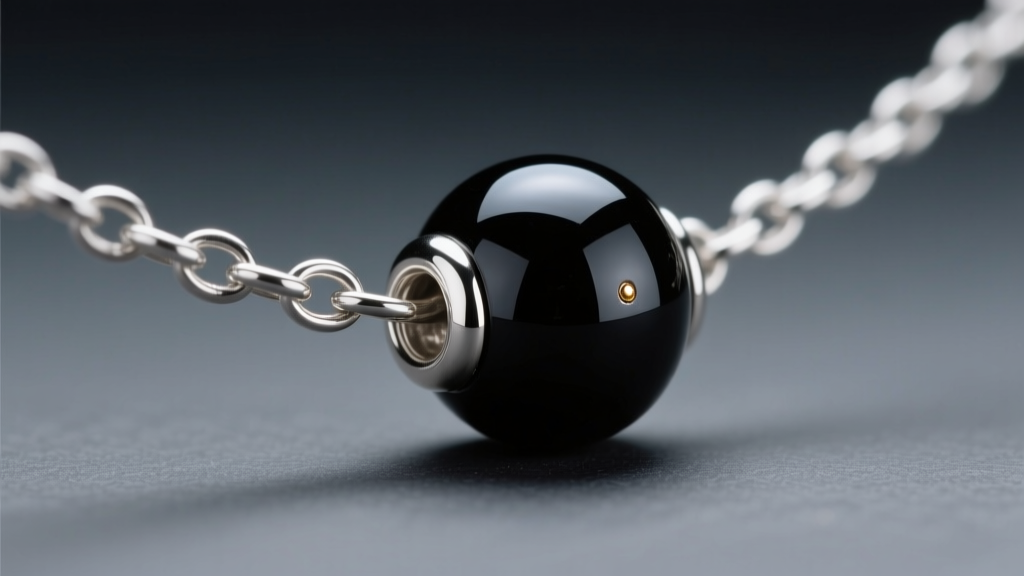
The Structural Anatomy of a Rosary Necklace
The intersection of devotion and fashion has popularized the trend of wearing a rosary as a necklace. However, from a metallurgical and structural engineering perspective, a traditional rosary is fundamentally different from a standard fashion necklace. Traditional rosaries are engineered for the low-impact, repetitive kinetic motion of prayer, typically resting in the hands or a pocket. When adapted for daily neck wear, the piece is subjected to continuous tensile stress, friction, perspiration, and unpredictable snagging forces. Understanding the mechanical limitations of rosary construction is critical for jewelers and consumers aiming to transition these pieces into durable, everyday necklaces without compromising their structural integrity or sentimental value.
A standard five-decade rosary consists of a crucifix, an introductory chain of five beads, a centerpiece (the five-way junction), and five loops of ten beads (decades). When worn as a necklace, the traditional 24-inch to 28-inch drop length creates a pendulum effect, concentrating kinetic stress on the nape of the neck and the centerpiece junction. To successfully adapt or manufacture a rosary for fashion wear, one must address chain gauge, wire temper, bead friction, and clasp mechanics.
Chain Gauge and Wire Tensile Strength
The most common point of catastrophic failure in mass-produced rosaries is the wire gauge used for the chain links and bead wrapping. Traditional wire-wrapped rosaries frequently utilize 24-gauge (0.51mm) or 22-gauge (0.64mm) wire. While sufficient for static holding, these gauges lack the tensile strength required for the dynamic loads of neck wear. According to jewelry manufacturing standards outlined by Rio Grande, a 22-gauge dead-soft sterling silver wire has a tensile strength that is easily compromised by repetitive bending, leading to rapid work-hardening and eventual brittle fracture.
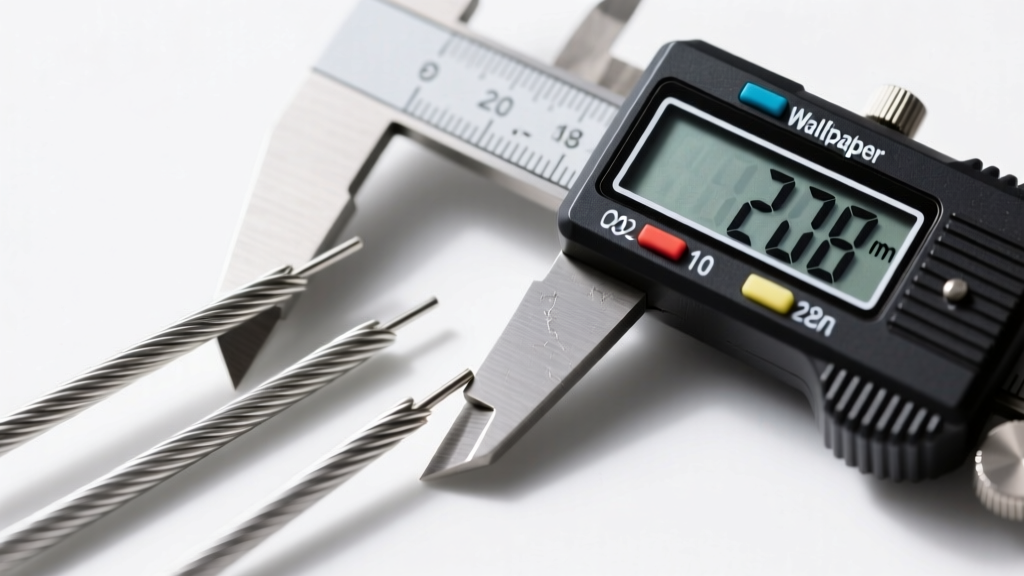
For a rosary intended for daily fashion wear, the chain or wire must be upgraded. An 18-gauge (1.02mm) or 16-gauge (1.29mm) chain is the minimum recommendation for the main loop. If wire-wrapping is preferred for the beads, the artisan must use half-hard or full-hard temper wire rather than dead-soft. Half-hard wire has been drawn through a die to compress its crystalline structure, increasing its yield strength and resistance to deformation. When a 20-gauge half-hard wire is used to create wrapped loops, the mechanical lock at the base of the bead resists the lateral shear forces generated when the necklace is pulled or caught on clothing.
Bead Friction and Material Degradation
When wearing a rosary as a necklace, the beads act as abrasive agents against the metal wire or chain passing through them. This is a critical variable often overlooked in jewelry design. The Gemological Institute of America (GIA) utilizes the Mohs scale of mineral hardness to classify gemstones and materials. Sterling silver has a Mohs hardness of approximately 2.5 to 3, making it relatively soft. If a rosary features glass beads (Mohs 5.5), quartz (Mohs 7), or hematite (Mohs 5.5-6.5), the beads are significantly harder than the silver wire.
As the necklace moves against the wearer's chest, the hard edges of the bead holes microscopically ream and file away the softer silver or copper wire. Over months of daily wear, this friction can reduce an 18-gauge wire to the structural equivalent of a 24-gauge wire at the exact point it enters the bead, leading to a hidden, sudden snap. To mitigate this, technical jewelers employ microscopic metal eyelets or flush-set metal tubes inside the bead holes to shield the structural wire from direct abrasive contact.
Material Hardness and Wear Rates
| Bead Material | Mohs Hardness | Wire Wear Rate (Sterling Silver) | Mitigation Strategy |
|---|---|---|---|
| Wood / Olive | 1.5 - 2.0 | Negligible | Standard wire wrapping |
| Sterling Silver Beads | 2.5 - 3.0 | Low (Galling may occur) | Use anti-tarnish coating |
| Glass / Crystal | 5.5 - 6.0 | Moderate to High | Insert metal eyelets |
| Agate / Quartz | 7.0 | Severe | Use steel wire or bead liners |
| Hematite | 5.5 - 6.5 | High (Plus galvanic corrosion) | Isolate with rubber spacers |
Clasp Mechanics and Jump Ring Security
The termination point of a rosary necklace requires heavy-duty hardware. Traditional rosaries often lack a clasp entirely, relying on a continuous loop, or they use lightweight spring-ring clasps attached to unsoldered jump rings. In a fashion necklace context, a standard spring ring clasp is a mechanical liability; the internal tension spring frequently fails, and the small lever can snag on textiles, pulling the clasp open.
For structural reliability, a lobster clasp or a magnetic neodymium clasp with a secondary safety chain is required. More importantly, the jump rings connecting the clasp to the chain must be soldered shut. An unsoldered jump ring will fail under tensile stress by pulling apart at the seam. A soldered jump ring, however, forces the metal to reach its absolute tensile breaking point before failing, which is typically far beyond the force required to break the chain links themselves. When evaluating a rosary for daily wear, inspecting the seam of the nape jump ring with a 10x jeweler's loupe is a mandatory quality control step.
The Centerpiece Junction: A Critical Failure Point
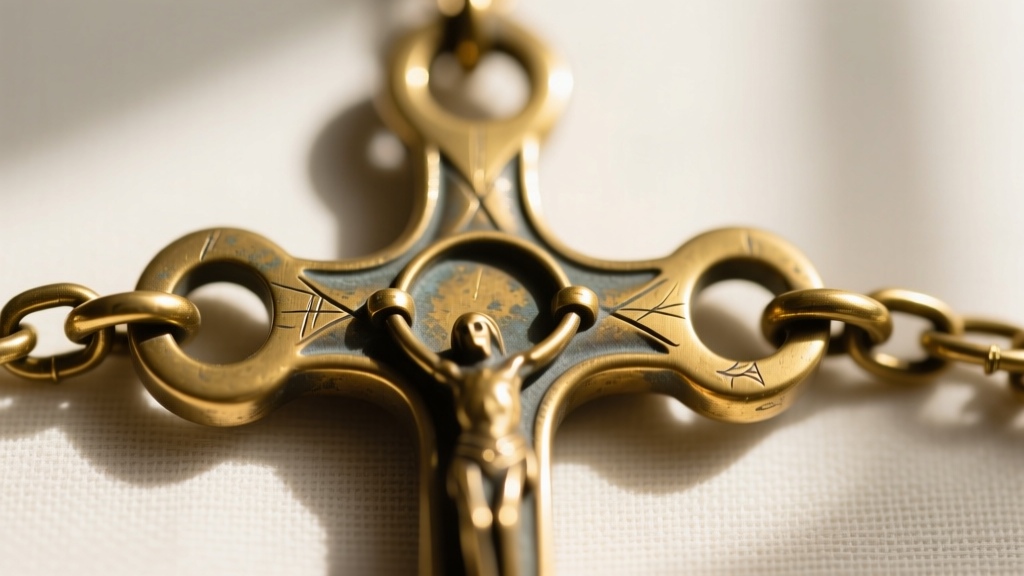
The centerpiece, or the five-way connector, is the most complex structural node on a rosary. It joins the drop chain (leading to the crucifix) with the continuous loop of the five decades. In a standard 24-inch rosary worn as a necklace, the centerpiece rests on the sternum. This area is highly susceptible to impact (bumping against tables or steering wheels) and lateral pulling.
Mass-produced cast centerpieces often suffer from porosity—microscopic air bubbles trapped in the metal during the casting process. This porosity drastically reduces the structural integrity of the loops where the chains attach. A technically sound rosary necklace will feature a die-struck or CNC-machined centerpiece, which compresses the metal grain structure, eliminating porosity and ensuring the loops can withstand asymmetric tension without snapping. Additionally, the jump rings connecting the decades to the centerpiece should be oriented in alternating directions (e.g., one horizontal, one vertical) to prevent metal-on-metal grinding at the exact same friction plane.
Sizing, Drop Lengths, and Kinetic Stress
The physics of a necklace dictate that longer chains experience greater kinetic acceleration at the pendant drop point. A traditional rosary often measures 24 to 28 inches in total circumference, with an additional 2-inch drop to the crucifix. When worn over clothing, this length acts as a pendulum. Every time the wearer stops walking, the momentum of the heavy crucifix and drop chain transfers a shockwave of tensile stress directly up the main chain to the nape of the neck.
To adapt a rosary for modern fashion layering, jewelers often re-engineer the circumference to a standard 20-inch or 22-inch princess or matinee length. This shorter drop reduces the pendulum effect, keeping the piece closer to the body's center of gravity and significantly minimizing the kinetic shock transferred to the chain links and jump rings. If the traditional long length is desired for styling over heavy winter garments, the chain gauge must be proportionally increased to absorb the higher kinetic loads.
Maintenance and Tarnish Prevention
Because rosaries are frequently handled, the oils, acids, and salts from human skin accelerate the oxidation of the metal. Sterling silver (92.5% silver, 7.5% copper) tarnishes when the copper alloy reacts with sulfur and moisture in the environment. When wearing a rosary as a necklace, the metal rests directly against the skin, absorbing perspiration and skincare products.
To maintain the structural and aesthetic integrity of the piece, a rigorous maintenance protocol is required. Ultrasonic cleaners should be avoided for rosaries featuring wire-wrapped beads or porous gemstones like turquoise or lapis lazuli, as the high-frequency vibrations can loosen the wire wraps and fracture the stones. Instead, the necklace should be cleaned using a mild, non-ammonia-based silver dip or a specialized polishing cloth. Storing the piece in an airtight polyethylene bag with an activated charcoal or silver-tarnish-inhibiting strip will neutralize airborne sulfur compounds, preserving both the metal's finish and its mechanical flexibility over decades of wear.


